To Err is Human: Mundane Civil War Mistakes With Major Consequences (Part II)
In the first part of this series, we looked at clerical errors and a poor choice of language. We now turn to other types of mistakes.
A claimed spelling error (temporarily) salvages a soldier’s reputation
In February 1864, U.S. Maj. Gen. Judson Kilpatrick launched an audacious cavalry raid upon Richmond. The goal was to dash into the city and free thousands of Union prisoners held there. The raid failed. Papers found on the body of Col. Ulric Dahlgren—leading one of Kilpatrick’s columns—revealed a more sinister purpose of the raid. Dahlgren supposedly had written that “once in the City it must be destroyed & Jeff. Davis and Cabinet killed.” Jefferson Davis had photographed copies of the Dahlgren papers published. Confederates were outraged, calling Dahlgren “Ulric the Hun.” In the North, however, the papers were deemed forgeries. Defenders of Dahlgren’s reputation, including his father, Admiral John Dahlgren, pointed out that the photographed papers showed that his last name was misspelled (“Dalhgren”). Clearly, the rebels had made this mistake in their rush to manufacture propaganda.[1]
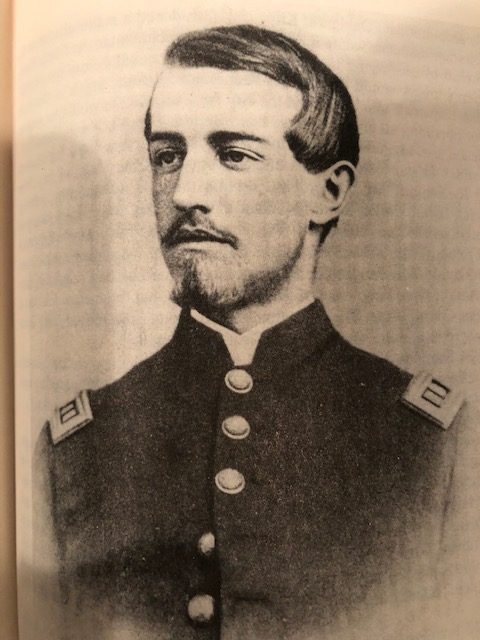
This “misspelling” defense has been employed ever since. For example, in his classic A Stillness At Appomattox, Bruce Catton argued that in the “photographic copies of the Dahlgren papers…it is fairly easy to see that the signature is misspelled…which would hardly be the case if it were genuine.”[2] Thus was Dahlgren’s memory preserved unsullied, at least for a while.
Yet Stephen Sears’s review of the evidence concludes that the Dahlgren papers indeed are genuine. The alleged misspelling is explained by the fact that ink from the opposite side of the page on which the signature appears seeped through the thin paper. When photographed, it appeared—incorrectly—that Dahlgren’s name was misspelled. In addition, a lithographer who worked with the photographed papers similarly misspelled the name.[3] Disposal of the “misspelling” myth brings Dahlgren’s reputation back into question. But the decades-long debate arose over a simple purported spelling error.
Correction of a mistake salvages (in part) a major Civil War figure’s reputation
For years Maj. Gen. George B. McClellan has been condemned for not acting quickly after being presented with the intelligence coup of the war: a copy of Lee’s Special Order No. 191, revealing the scattered disposition of Lee’s forces during the 1862 Maryland Campaign.
The argument that McClellan botched his golden opportunity (“the opportunity of a lifetime”)[4] to defeat Lee’s forces in detail rests in substantial part on the timing historians affixed to a September 13 telegram McClellan sent to Abraham Lincoln. In that telegram, published in the Official Records as sent at “12 m.,” McClellan crowed “I have all the plans of the rebels, and will catch them in their own trap if my men are equal to the emergency.”[5] Multiple historians interpreted “12 m.” as 12 meridian—noon—and judged McClellan’s subsequent activity by that temporal measure, finding him inexcusably slow in capitalizing on his intelligence coup.[6]
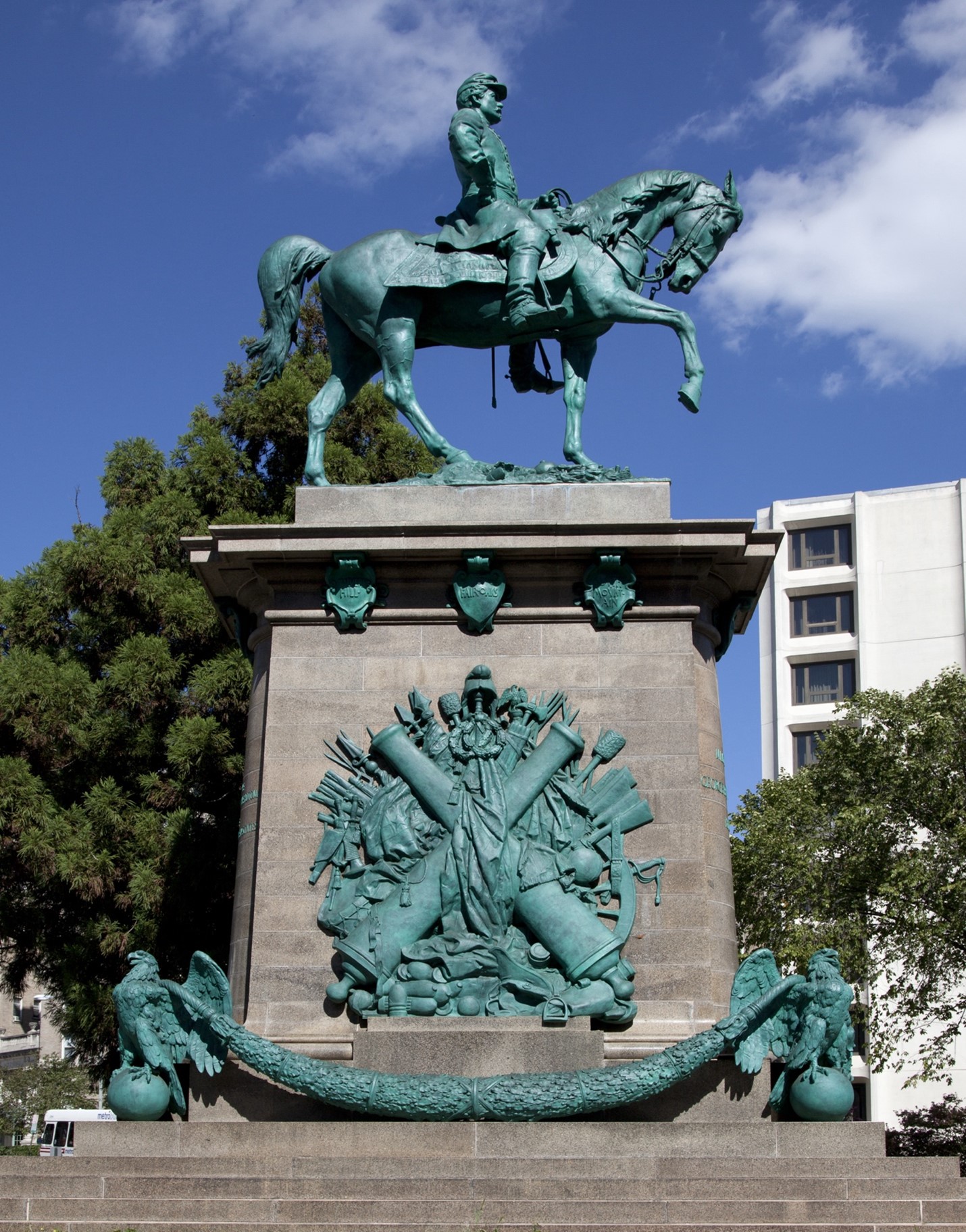
That damning interpretation is based upon a mistake. Review of the actual telegram received by the War Department shows that it was sent at 12 midnight, supporting the argument that McClellan only first saw Lee’s order that evening.[7] Yet the prior mistaken belief tarnished the analysis of McClellan’s performance during the Maryland Campaign.

[1] John A. Dahlgren, Memoir of Ulric Dahlgren (J.B. Lippincott & Co., Philadelphia, PA, 1872), p. 233, https://archive.org/details/memoirulricdahl00dahlgoog/page/n236/mode/2up.
[2] Bruce Catton, The Army of the Potomac: A Stillness At Appomattox (Doubleday & Company, Inc., Garden City, NY, 1953), p. 393 & n. 19; see also John McNeer, “Dahlgren’s 1864 Raid on Richmond Generates an Ongoing Controversy,” History Arch (March 2, 2018) (“…highly unlikely Dahlgren would misspell his own name”), https://web.archive.org/web/20201109030325/http://historyarch.com/2018/03/02/dahlgrens-1864-raid-on-richmond-generates-an-ongoing-controversy/.
[3] Stephen W. Sears, “The Dahlgren Papers Revisited,” History Net (June 12, 2006), https://www.historynet.com/the-dahlgren-papers-revisited/.
[4] Stephen W. Sears, George B. McClellan: The Young Napoleon (Ticknor & Fields, New York, NY, 1988), p. 282.
[5] OR, Ser. I, Vol. XIX, Pt. 2, p. 281, https://babel.hathitrust.org/cgi/pt?id=uc1.31210001708468&seq=287.
[6] Sears, pp. 281-285; id. at 283 (“Not even his remarkable good fortune inspired him to change his deliberate habits”); Stephen W. Sears, Controversies and Commanders: Dispatches from the Army of the Potomac (Houghton Mifflin Company, New York, NY, 1999), pp. 115-118, https://www.google.com/books/edition/Controversies_Commanders/HZ7iBAAAQBAJ?hl=en&gbpv=1&dq=%22officers+who+left+frederick+this+morning%22&pg=PT139&printsec=frontcover (18 hour delay); Edwin C. Fishel, The Secret War for the Union: The Untold Story of Military Intelligence in the Civil War (Houghton Mifflin Company, New York, NY, 1996), pp. 222, 227 (McClellan’s “habitual foot-dragging”).
[7] Tim Reese, ‘McClellan Reacts to the “Lost Order”: September 13, 1862,’ Antietam on the Web,https://antietam.aotw.org/exhibit.php?exhibit_id=358; see also Kevin Pawlak, ‘Was Lee’s “Lost Order” a Turning Point? (part two),’ Emerging Civil War (December 5, 2017), https://emergingcivilwar.com/2017/12/05/was-lees-lost-order-a-turning-point-2/.


Great series. You should do more.
When they would write something like “12m” – my ancestor did it frequently in his Civil War diary and it always meant “noon” based on the context – did they mean “meridian” or “median”? – the definition of the former being “a circle of constant longitude passing through a given place on the Earth’s surface and the terrestrial poles” while the latter is “denoting or relating to a value or quantity lying at the midpoint of a frequency distribution of observed values or quantities; situated in the middle; the middle value of a range of values.”
Good flyspecking and insightful sleuthing from a trained attorney