The Union “has already failed”: Confidence or Delusion from Henry Hopkins Sibley in 1861?
164 years ago today, Confederate Brigadier General Henry Hopkins Sibley proclaimed that his army had arrived to liberate the New Mexico Territory “from the yoke of a military despotism.”[1] With 3,000 Texas cavalry, and a battery of small mountain howitzers, his Army of New Mexico had grand ambitions to secure the Southwest for the Confederacy, including Colorado’s gold mines and California’s Pacific ports.
The proclamation issued by Sibley on December 20, 1861 had the self-confidence, or perhaps the hubris, to match those ambitions. It’s a fascinating historical document, albeit once that verges on the absurd in hindsight.
Born in Louisiana, Sibley resigned his commission as a major in the United States Army when the Civil War began. He traveled to Richmond and convinced Confederate President Jefferson Davis that the New Mexico Territory – present-day New Mexico and Arizona – was ripe for the picking. Davis would have been a receptive audience, having long been interested in the region as an outlet for Southern expansion. With the government’s blessing, Sibley returned to Texas, where he recruited, organized and equipped several regiments.
After some predictable delays, Sibley rode west across the desert in late 1861, arriving in the New Mexico Territory as fall gave way to winter. His offensive was meant to follow in the footsteps, and build on the successes, of Lt. Col. John Baylor, who had stormed into southern New Mexico in the summer of 1861. With a few hundred mounted troops and some local support, he captured a significant portion of the Federal forces in the region at the battles of Mesilla and San Augustine Springs. He also propped up the nascent leadership of the recently self-proclaimed Confederate Territory of Arizona, consisting of the southern portions of present-day New Mexico and Arizona.
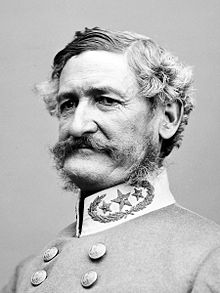
Remarkably, Sibley’s proclamation never mentions Arizona, an early and subtle sign of his disconnect from the realities on the ground, and a virtually nonexistent working relationship with other Confederate officials in the region. He did, however, make clear his belief that a Confederate victory was assured. He declared that the Union “has already failed”, and went on to state that his army was “ample to seize and to maintain possession of New Mexico against any force which the enemy now has or is able to place within its limits.”[2]
What fueled that remarkable level of confidence?
The strongest point in his argument was Baylor’s string of successes in 1861, which had meaningfully reduced the Federal forces available to defend New Mexico – an accomplishment that may have loomed larger if Sibley had arrived much sooner. But by the time of Sibley’s arrival nearly six months later, Baylor had done little to extend the Confederacy’s control, or to build up supplies for a larger force to operate in the region. In contrast, the Union command had begun enlisting thousands of volunteers and militia, concentrated their forces, stockpiled supplies, and fortified key positions.
Sibley also cited Confederate victories at “the battles of Bull Bun, of Manassas, of Springfield, of Lexington, of Leesburg, of Columbus.” While some of those battles loomed larger in 1861 than they would later in the war, even a contemporary reader would have noticed that Bull Run and Manassas accounted for one victory by two names.
The surrender of several hundred Union troops outside of Mesilla had undoubtedly reinforced Sibley’s perception that Union soldiers wouldn’t fight him. He had recently served in New Mexico, and believed that U.S. Regulars were sympathetic to the Confederacy, or at least likely to stay neutral. He was also convinced that locally enlisted volunteers and militia had no loyalty to the Union that would inspire them to risk their lives in combat – a belief shared in part by the Union leadership in New Mexico as well. A significant portion of Sibley’s proclamation sought to convince these soldiers to switch sides, or at least lay down their arms and walk away.
Both the Confederate and Union leadership believed that the Confederacy enjoyed significant clandestine support on the ground. While this never had the impact that the Rebels hoped for and the Federals feared, it certainly existed, and threatened to play a meaningful factor in the campaign. Some prominent civilians in New Mexico were openly supportive of the Confederacy, and sought to stockpile supplies for Sibley. Civilian leadership was openly concerned about local secessionists as far north as Denver, and one recruit claimed after the war that as many as 600 Confederates were ready to operate in Colorado.[3]
Perhaps most important to Sibley’s confidence was the living memory of General Stephen Kearny’s 1846 New Mexico Campaign during the Mexican-American War, in which he secured the same region for the United States with a similar number of troops.
It’s easy to mock Sibley today, but for a time in 1862, it looked like his early proclamation might not go down in history as a delusional punchline. His army won two tactical victories at Valverde and Glorieta Pass, and occupied Santa Fe for a time – one of the few Union state or territorial capitals that fell to Confederate forces.
But we know now that Sibley’s confidence was badly misplaced. Securing the entirety of the American Southwest in 1862 was a goal that far exceeded the realistic grasp of a few thousand poorly-led, ill-equipped, and half-starved cavalry operating hundreds of miles from their base of supply.
Especially in the fog of war, facing the era’s limited communications, the difference between delusion and confidence could be a fine line in the sand.
The full text of Sibley’s proclamation is below, and if you’re interested in reading more about his 1862 New Mexico Campaign, keep an eye out this spring for the upcoming release in the Emerging Civil War Series.
Full text:
Proclamation of Brig. Gen. H. H. Sibley, Army of the Confederate States, to the people of New Mexico.
An army under my command enters New Mexico, to take possession of it in the name and for the benefit of the Confederate States. By geographical position, by similarity of institutions, by commercial interests, and by future destinies New Mexico pertains to the Confederacy.
Upon the peaceful people of New Mexico the Confederate States wage no war. To them we come as friends, to re-establish a governmental connection agreeable and advantageous both to them and to us; to liberate them from the yoke of a military despotism erected by usurpers upon the ruins of the former free institutions of the United States; to relieve them from the iniquitous taxes and exactions imposed upon them by that usurpation; to insure and to revere their religion, and to restore their civil and political liberties.
The existing war is one most wickedly waged by the United States upon the Confederate States for the subjugation and oppression of the latter by force of arms. It has already failed. Victory has crowned the arms of the Confederate States wherever an encounter worthy of being called a battle has been joined. Witness the battles of Bull Bun, of Manassas, of Springfield, of Lexington, of Leesburg, of Columbus, and the capture in the Mesilla Valley of the whole force of the enemy by scarcely half their number.
The army under my command is ample to seize and to maintain possession of New Mexico against any force which the enemy now has or is able to place within its limits. It is my purpose to accomplish this object without injury to the peaceful people of the country. Follow, then, quietly your peaceful avocations, and from my forces you have nothing to fear. Your persons, your families, and your property shall be secure and safe. Such forage and supplies as my army shall require will be purchased in open market and paid for at fair prices. If destroyed or removed to prevent me from availing myself of them, those who so co-operate with our enemies will be treated accordingly, and must prepare to share their fate.
It is well known to me that many among you have already been forced by intimidation or inveigled by fraud into the ranks of our foes. The day will soon arrive when you can safely abjure their service. When it comes, throw down your arms and disperse to your homes, and you are safe. But persist in the service, and you are lost.
When the authority of the Confederate States shall be established in New Mexico, a government of your best men, to be conducted upon principles with which you are familiar and to which you are attached, will be inaugurated. Your religious, civil, and political rights and liberties will be re-established and maintained sacred and intact. In the mean time, by virtue of the powers vested in me by the President and Government of the Confederate States I abrogate and abolish the law of the United States levying taxes upon the people of New Mexico.
To my old comrades in arms, still in the ranks of the usurpers of their Government and liberties, I appeal in the name of former friendship : Drop at once the arms which degrade you into the tools of tyrants, renounce their service, and array yourselves under the colors of justice and freedom! I am empowered to receive you into the service of the Confederate States; the officers upon their commissions, the men upon their enlistments. By every principle of law and morality you are exonerated from service in the ranks of our enemies. You never engaged in the service of one portion of the old Union to fight against another portion, who, so far from being your enemies, have ever been your best friends. In the sight of God and man, you are justified in renouncing a service iniquitous in itself and in which you never engaged.
Done at headquarters of the Army of New Mexico by me this 20th day of December, A. D. 1861.
H. H. SIBLEY,
Brigadier-General, Army C.S.
[1] United States. War Records Office, et al.. The War of the Rebellion: a Compilation of the Official Records of the Union And Confederate Armies, Series I, Volume IV, Chapter XI. 1880, 89-90.
[2] United States. War Records Office, et al.. The War of the Rebellion: a Compilation of the Official Records of the Union And Confederate Armies, Series I, Volume IV, Chapter XI. 1880, 89-90.
[3] Conner, Daniel Ellis. A Confederate in the Colorado Gold Fields. University of Oklahoma Press. 1956. 133-147.


Great Post, Patrick. I’ve always been interested in Sibley, especially how alcohol effected his usefulness. I am looking forward to the release of your new book.
My guess is that a bottle was involved. GIGO …
Sibley was a queer fish… Jerry Thompson’s biography is highly recommended.