Reimagining the Civil War Round Table: Inside the CWRTC’s Innovative Workshops
 Emerging Civil War welcomes back guest writer Melissa Winn.
The Civil War Round Table Congress (CWRTC) has long served as a gathering place for enthusiasts, historians, and community leaders dedicated to exploring and preserving Civil War history. This year, we held two workshops for Round Table leaders to discuss the sustainability of Round Tables and attendees found something new: an energetic call to rethink what Round Tables can be—and, more importantly, what their meetings can look like in the twenty-first century.
For decades, many Civil War Round Tables have followed a familiar formula—monthly gatherings featuring a lecture, Q&A, and light refreshments. While this structure continues to serve many groups well, CWRTC leaders and presenters encouraged participants to imagine broader possibilities. As modern audiences consume content in more varied and interactive formats, Round Tables must consider how to adapt to sustain engagement and attract new members.
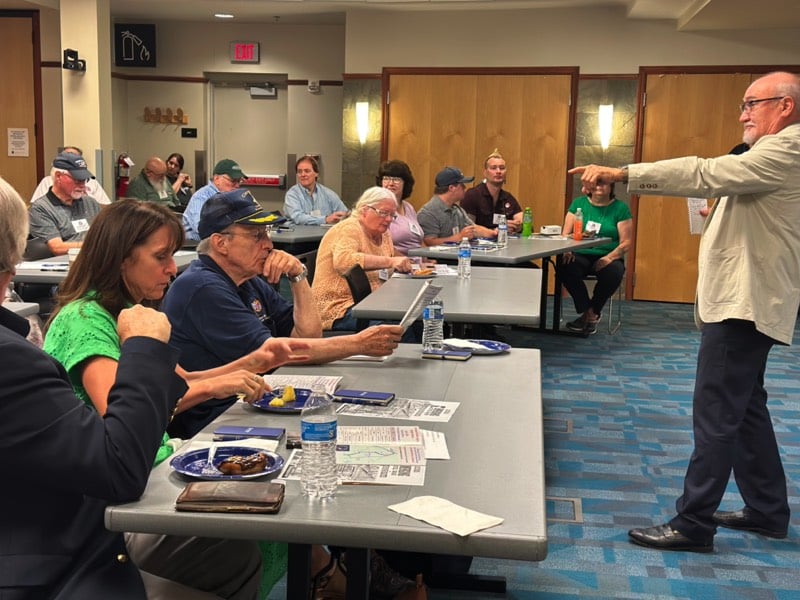
A key theme throughout the workshops was experimentation. Presenters and participants shared examples from across the country where Round Tables had successfully redefined the meeting experience. Some groups have integrated multimedia to complement traditional speaker programs. Others have embraced the digital world, broadening their lineup of speakers by bringing in highly sought after speakers via Zoom in lieu of expensive travel fees that can’t be sustained. One Round Table has even embraced younger audiences with a Civil War game night—an idea that would have seemed radical for historical organizations only a decade ago.
The group’s representative highlighted the growing popularity of historically grounded Tabletop and digital games. The group’s game night has been wildly popular and successful, he said, and draws younger participants.
Round Tables have also begun experimenting with nontraditional formats such as panel discussions and debate-style programs. For groups seeking deeper engagement, some participants discussed themed “mini-conferences” or workshop nights that focus on a single topic—such as Civil War medicine, mapping, or material culture—and offer multiple short activities instead of one central talk.
The workshops emphasized that innovation does not require abandoning tradition. Many Round Tables have found success by blending classic structures with new elements—for instance, supplementing speakers with pre-meeting social hours, member spotlights, or short digital previews recorded by upcoming presenters. Others host occasional outdoor meetings at local historical sites or partner with museums and re-enactment groups to create memorable experiences beyond four walls.
Ultimately, the CWRTC workshops underscored that a “meeting” is simply an opportunity: a chance to learn, to share, to connect with fellow enthusiasts, and to keep Civil War scholarship vibrant in local communities. By embracing creativity—whether through podcasts, gaming, multimedia, or more dynamic in-person formats—Round Tables can continue to fulfill their mission while reaching audiences in new and meaningful ways.
Melissa A. Winn is on the Board of Directors of the CWRT Congress, President of Bull Run Civil War Round Table, and Director of Marketing and Communications for the National Museum of Civil War Medicine.


Melissa,
Your article addressing the challenges and proposed solutions facing the sustainability of local Civil War Round Tables serves as an excellent summary of the outreach provided by the CWRT Congress. For those who missed the Workshops this past Summer, it’s a wonderful reminder of the services that the CWRT Congress offers every day to help Round Tables far and wide to survive and thrive. Thank you!