Book Review: Opium Slavery: Civil War Veterans and America’s First Opioid Crisis

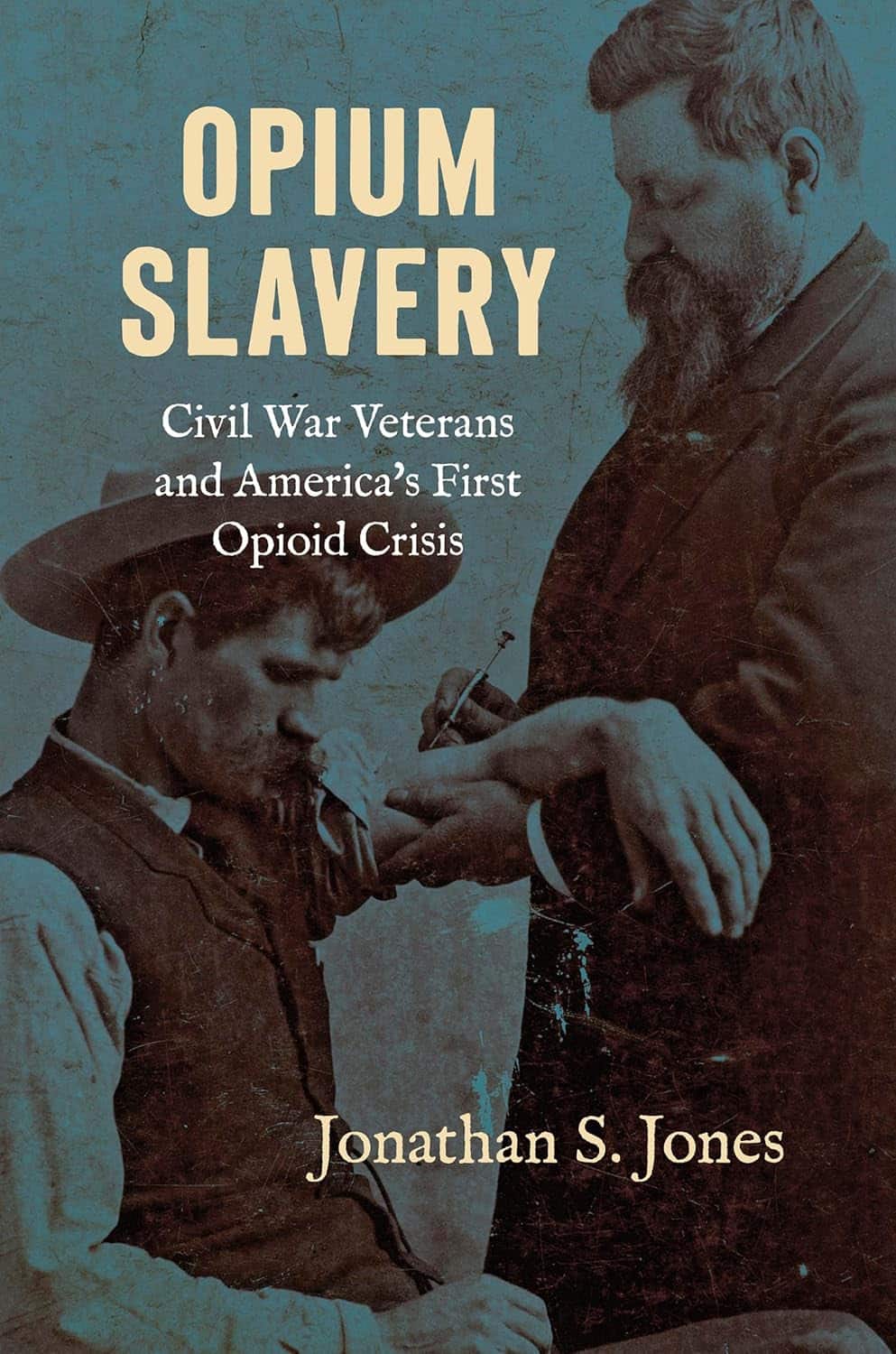
Opium Slavery: Civil War Veterans and America’s First Opioid Crisis. By Jonathan S. Jones. Chapel Hill, NC: University of North Carolina Press, 2025. Softcover, 412 pp. $39.95.
Reviewed by Tim Talbott
The studies that have appeared in the last couple of decades focusing on the many challenges that Civil War veterans faced in transitioning from the front lines back to home life have offered readers previously underappreciated perspectives and thus much food for thought. Whether discussing veterans’ struggles with losing a limb, battles with mental illness, attempts at political organizing, memorializing their lost comrades, or fighting for civil rights, works about former Civil War soldiers continue to examine the plethora of trials they experienced after peace arrived.
Making a remarkable contribution to this body of scholarship is Opium Slavery: Civil War Veterans and America’s First Opioid Crisis by Jonathan S. Jones. Jones explains the book’s relevance in its introduction: “By better documenting addiction in the Civil War era, Opium Slavery helps contextualize today’s opioid epidemic with the United States’ long, tragic history of recurring opioid crisis.” Additionally, “investigating veterans’ experiences with addiction not only illuminates the human costs and medical legacies of the Civil War, central aims of this book, but also reveals more about addiction among other nineteenth-century Americans than it obscures.” (8-9)
The author organizes the book into three parts: Origins, Experiences, and Reactions. The first two parts contain three chapters each and the final part has two chapters. An epilogue, “The Army Disease,” concludes the study.
Jones does an excellent job of providing context for the reader by explaining the place that opium and its various derivatives held in antebellum American medical practice and pharmacology. “By the time the Civil War erupted in 1861, American doctors viewed opiates as the most important drugs in their arsenal,” Jones explains. (19) However, not until about 1820 did opiates finally become widely available to try to combat a variety of symptoms prominent in that era’s population including muscular aches and pains, coughs, and diarrhea. Increased accessibility of opiates through doctors’ prescriptions and direct purchase in a day before a physician’s order was required led to a greater number of addicts. However, opium’s efficacy outweighed the possibility of addiction in the eyes of many American doctors and citizens.
One of Opium Slavery’s many strengths is Jones’s use of veterans’ case studies. By using a wide variety of primary source records, such as veterans’ pension files, court records, mental institution and hospital records, prison records, newspaper stories and advertisements, and of course private letters, Jones gives readers a real picture of the torment these men and their families went through battling an addiction that began more often than not with their service in the Union and Confederate armies.
Just as antebellum doctors found opium amazingly effective, so did Civil War surgeons and assistant surgeons. As Jones notes, “the Civil War created a health crisis on a scale unprecedented in American history, leaving millions of soldiers sick and in pain.” (61) Treating many of the same symptoms in the army as they had in the civilian population, but on a much grander scale due to the poor diets and living conditions in which soldiers existed, army doctors often first turned to opiates as a treatment option.
The variety of intriguing issues that Jones covers related to veterans’ opium addiction is impressive. Viewed often as a mental failure and or character flaw, addiction landed many veterans in insane asylums where conditions and recovery success rates varied. As one might imagine, the pension bureau frowned upon addiction as a “vicious habit” that often negated one’s eligibility for benefits. There is always money to be made in others’ misery. Opium addiction was no different. Patent medicines emerged as curatives that sellers advertised widely, but that brought little if any relief. All of these issues and more are covered well. One minor quibble that readers may have is that there is little discussion of what differentiates certain opiates, such as laudanum and morphine, from each other.
Opium Slavery is a timely and much needed piece of scholarship. It fills a previously yawning gap in our understanding about the service-related trials and tribulations that veterans faced upon returning home from the Civil War’s dangerous battlefields and camps. It, like other scholarship about veterans, also reminds us about the long, dark shadow that war casts on a nation’s direct participants and its society at large.


Interesting topic. My great grandfather, Cyrus Loose of the 202nd Pennsylvania, injured his back whepn Mosby derailed the train that he was riding on. This happened on October 10, 1864. He mentions in his diary that he injured his back and passed down through my father, he became a morphine addict, even though he attended Jefferson Medical College and became a doctor after the war.