Echoes of Reconstruction: “A service which gives liberty to slaves”
Emerging Civil War is pleased to welcome back Patrick Young, author of The Reconstruction Era blog.
In the late 1870, Reuben Mussey took on a position as a professor at Howard University in Washington, D.C. Howard had been established in 1867 to provide advanced education for African Americans at a time when most colleges only accepted white students. The school was named for Maj. Gen. O. O. Howard, who had fought with the Army of the Potomac and had commanded a corps in Sherman’s March through Georgia. While his military career invited some scrutiny, his post-war service as the founder of the Freedmen’s Bureau made him a hero to many African Americans. Howard later became the president of Howard University.
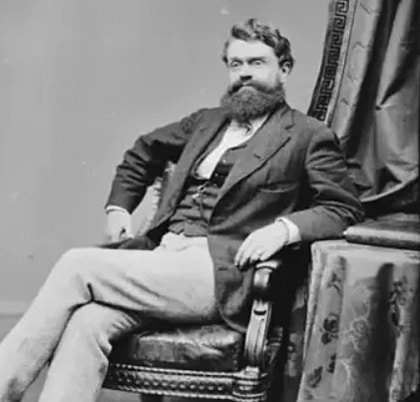
Reuben Mussey, with his Ivy League education, might seem like an unlikely candidate for a position at an all-Black college. However, a bit of background makes it clear that this choice was by no means unexpected. Mussey was born in New Hampshire, and he graduated from Dartmouth College. He went into teaching. By the end of the 1850s, he switched professions and became a journalist. By 1859 he was the Washington correspondent for the Cincinnati Gazette where he came into regular contact with major political figures. In his late 20s he became a supporter of Abraham Lincoln and campaigned for him in the 1860 presidential election. He even became a Wide Awake,
After Fort Sumter was fired on, Mussey applied for a commission in the 19th United States Infantry Regiment, and he was granted it on May 14, 1861. The unit would serve in the Western Theater. While he was in Kentucky and Tennessee, Mussey became an advocate of Black enlistment in the Union Army. After the Emancipation Proclamation was issued, he helped recruit for the new units of the United States Colored Troops (USCT).
On March 4, 1864, The Liberator in Boston published a notice put out by Capt. Mussey looking for officers for Black regiments. Units of the USCT had white officers commanding Black troops. Many white officers were either contemptuous of Black troops or patronizing towards them. That is not what Mussey wanted. His notice said, “No person is wanted in a regiment who ‘feels that he is making a sacrifice in accepting a position in a colored regiment,’ or who desires the place simply for higher rank or pay.” Mussey said that his purpose was to “make colored troops equal, if not superior, to the best of white troops in drill, discipline, and officers.” Mussey explained that “it is more than possible that colored troops will hereafter form no inconsiderable portion of the permanent army of the United States and it should be the aim of every officer of colored troops to make himself and his men fit for such an honorable position.” He wanted Black soldiers to be treated no differently from whites.
Mussey wrote that apart from helping the Union reunite that country, “It can be no ‘sacrifice’ to any man to command in a service which gives liberty to slaves and manhood to chattels, as well as soldiers to the Union.” Mussey expected USCT officers to be proud of their commands and their men. He warned officers that “should incompetent or bad men find their way accidentally into one of these regiments, they will be weeded out immediately.”
After helping to recruit for several Black regiments, Mussey became the colonel of the 100th United States Colored Troops, which was trained in Kentucky and which helped defend Nashville against John Bell Hood’s Army of Tennessee in December 1864.
After the Civil War, Mussey became a prominent lawyer in Washington. After his first wife died, he married Ellen Spencer, one of the first female lawyers in the United States who practiced under his license. He partnered with her for their law firm, and he left it to her when he died in 1892. In 1896, she was one of the first women admitted to practice before the United States Supreme Court. She would later help establish the first law school founded by women, which is today part of American University School of Law.
Reuben Mussey’s political, military, and educational career helped to advance equality for African Americans and women in the United States.


No mention of Captain P.B.S. Pinchback?…Governor Pinchback?