Shrouded Veterans: NYC Fireman, Forty-Niner and Mexican War Hero
An obituary in The New York Times noted that “Charles [H. Innes] was one of the old volunteer firemen, and was once saved from certain death at a fire on Broadway by Harry Howard. He was also one of the old ‘Leatherhead’ watchmen who policed the city before the Metropolitan force came into existence.”
Whether Innes was actually rescued by arguably the 19th century’s most famous firefighter is debatable, but his life was marked by adventure. Camp fever cut his promising Civil War military career short in 1862.
When the United States went to war with Mexico, Innes enlisted in the 1st New York Volunteers and fought with Winfield Scott’s army as it marched on Mexico City. On Aug. 20, 1847, he was slightly wounded at the Battle of Churubusco and was wounded a second time in September during the storming of Mexico City. At the Battle of Chapultepec, Innes was said to have been the first officer and the fifth man to have gone over the walls into the castle. The Legislature of the State of New York conferred the brevet rank of major on him for gallant and meritorious conduct, and he received a silver medal from the citizens of New York City.
Innes returned to New York City a hero but didn’t remain idle. In February 1849, the brig Isabella Reed transported him and about 50 United Pacific Gold Co. recruits to Veracruz, Mexico, and from there they marched overland to Mazatlán, catching a steamer for San Francisco, California. Innes remained in California for a few years but returned east and was appointed a U.S. Customs inspector in New York.
He was instrumental in raising the 36th New York Infantry, and on June 11, 1861, he was appointed colonel. On July 9, before departing Rikers Island by steamer and then rail for Washington, D.C., a splendid flag of blue silk manufactured by Paton & Co. was presented to the regiment.
The New York Herald shared Innes’ reply to receiving the flag:
My tongue refuses to utter the sentiments and emotions that fill my heart to-day. I am about to depart from my native city to engage in a conflict, the purpose of which is to lift on high and sustain the constitution of the United States, of which these colors are the emblems. With the aid of the noble men who follow me in this just cause, these colors shall be planted alongside of the banner of Christianity on the impregnable rock of ages. A glorious emblem of freedom in the past, a still more glorious emblem for future ages. The Thirty-sixth regiment will never see this flag disgraced; on the other hand, I am satisfied that each man will appropriate to himself every star emblazoned on its ample folds, as a peculiar badge of honor for heroic deeds done in the service of his country. And every stripe will be a seven-fold scourge to the enemies of our country. Ladies and friends of the regiment, to you we owe much. Your smiles of approval, encouraging words and generous deeds, will in the heat of battle be fixed in our memories, and serve us to more heroic deeds, and, if needs be, to die content, if, by the sacrifice, our honors may remain untarnished, our flag and country be sustained, and the noble, generous women of this and future generations may be permitted to enjoy the blessings of constitutional liberty under its protecting folds. My friends, farewell. We know our duty, and will do it.
His remarks were received with applause from the men of the regiment. After the presentation of the colors, Adjutant William G. Ulshoeffer stepped forward from the ranks and presented Innes with a sword and sash on behalf of the officers of the regiment.
The 36th New York arrived in the capital on July 13 and was temporarily quartered in Old Trinity Church and Assembly Rooms. Two days later, The New York Herald reported that Innes was wounded when a fellow officer accidentally shot him in the right leg, refuting reports that he had been mortally wounded, maimed for life, or had died.
Major Nathaniel Finch wrote to the newspaper’s editors from Camp Innes, Meridian Hill, Washington, D.C., on July 26, assuring them, “The wound being only a flesh one, caused by the accidental discharge of a revolver in the hands of an officer and firm friend in our regiment, I am happy to inform you that he will be able, in the course of a week, to take the field again.”
Innes recovered as Finch had anticipated, and in March 1862, the officers of the regiment petitioned the War Department to promote him to brigadier general. “We have unbounded confidence in him as a soldier, knowing, as we do, how well he served his country during the Mexican War,” they noted. “If our prayer should be granted we most earnestly petition that our regiment may be permitted to serve in his brigade, for we know that where he leads us, victory awaits us.”
The promotion didn’t come, but on May 31, Innes succeeded to brigade command after Brig. Gen. Charles Devens was wounded at the Battle of Seven Pines. Devens afterward praised Innes in his battle report “for the firmness with which he held the position assigned him and the resolution with which, when compelled to make good his retreat to a tenable position — taking more prisoners from the enemy, who endeavored to intercept him, than he lost — [is] entitled to much credit.” The regiment was one of the last to leave the field.
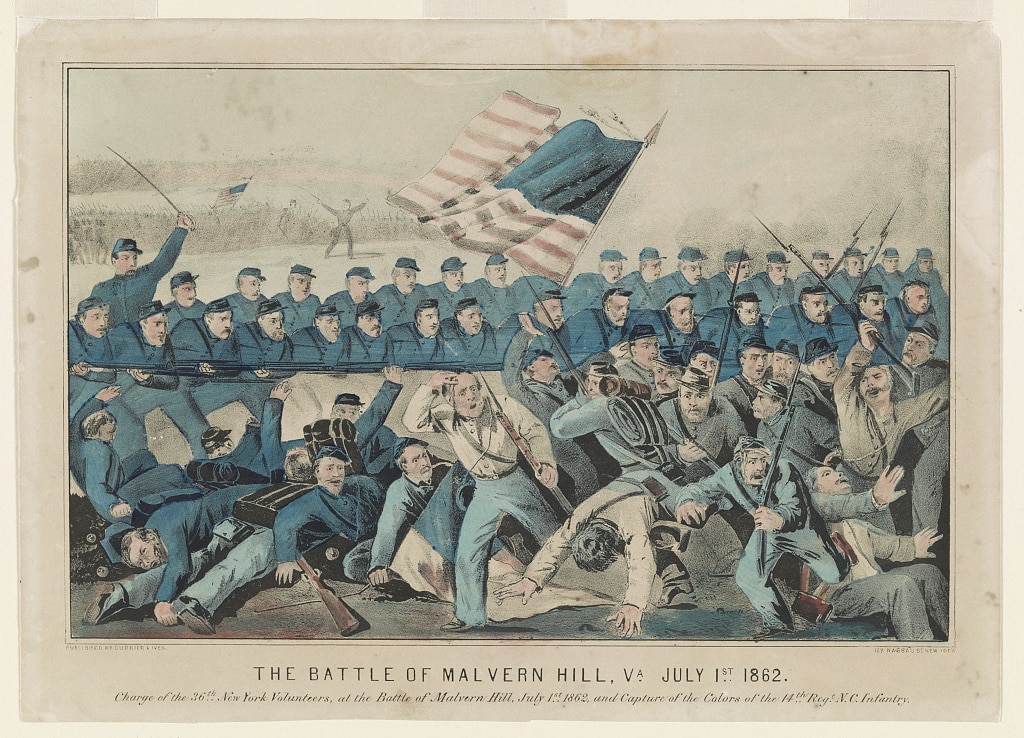
On June 7, Innes returned to the 36th New York when Brig. Gen. Innis N. Palmer took command of the brigade. Innes commanded the regiment at the Battle of Malvern Hill on July 1, where four companies of the 36th New York charged and captured the colors of the 14th North Carolina Infantry and 65 prisoners but sustained a loss of 143 killed, wounded, and captured. Innes abruptly resigned five days later, which he attributed to poor health caused by camp fever contracted during the Peninsula Campaign.
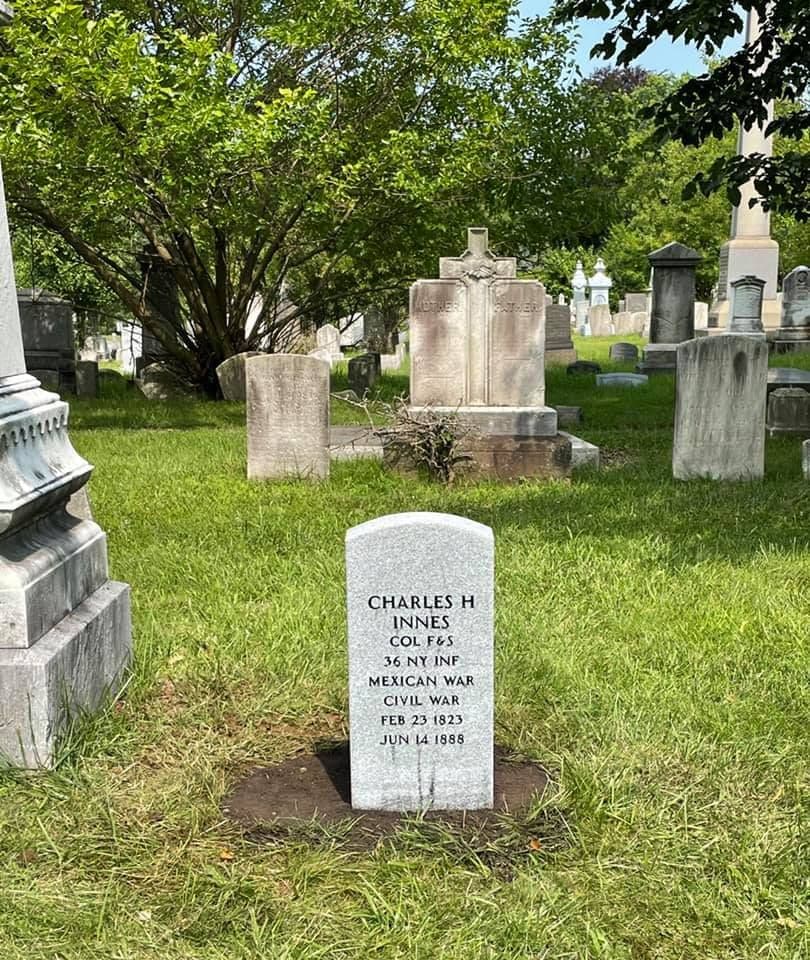
After retiring from military service, Innes went into business as an ice dealer and worked as a surveyor. On June 14, 1888, he died at the age of 65, leaving behind a widow and four children. A veteran headstone was placed at Innes’ unmarked grave at Moravian Cemetery in New Dorp on Staten Island.
Shrouded Veterans is a 501(c)(3) nonprofit organization dedicated to rescuing the neglected graves of 19th-century veterans, primarily Mexican War (1846-48) and Civil War (1861-65) soldiers, by identifying, marking, and restoring them. You can view more completed grave projects at facebook/shroudedvetgraves.com.
We’re now on Substack! We’ll gradually be adding past and recently completed headstone projects.


