Allegiance & Faith at Alexandria’s Christ Church
Congregants at Alexandria’s Christ Church Episcopal experienced difficulty renting meeting space in their own town during its Union occupation. Their historic house of worship, constructed in 1773, had been commandeered by the United States Army. In a September 1863 letter to the parishioners, Military Governor John P. Slough declared that “I must decline to deprive loyal people of a place to give it to the disloyal.” He asserted that the congregation was “composed of entirely disloyal persons…who omit the Prayer for the President of the United States and other portions during its regular service.” In the military government’s mind, the confiscated church should not be returned to “enemy chaplains” and subversives who “expatriated” themselves out of a right to the property, due to their allegiance to the Southern cause.[1]
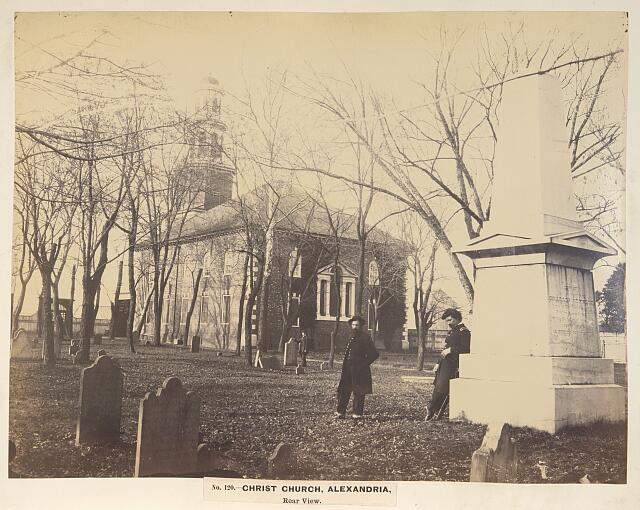
At the outset, this seems wholly unjustified and blatantly crude. How can military forces remove parishioners from their church? What authorization did Slough have to prohibit citizens retaking property that belongs to them? Christ Church closed its doors like other denominations in the city, and their experience was not uncommon. St. Paul’s Episcopal closed in February 1862 after Reverend Kinsey Stewart omitted Slough’s mentioned prayer, and was then converted into a hospital in the city’s Second Division. Baptist Church also faced a similar fate because their pastor refused to support the Union, and was subjected to confiscation as hospital. Second Presbyterian Church later transformed into a wartime medical center for military officers.
Secessionism was not tolerated during Alexandria’s Union occupation. Citizens who remained under martial law either took the Oath of Loyalty or vacated the city. Unionism extended past public spaces, like businesses, to privately-uttered sentiments in one’s own home and houses of worship. As entire congregations followed their clergy into the Confederacy, the military government stamped down on subversion from the pulpit and closed operations at many locations. One temple, however, was exempt from these demands: Christ Church Episcopal, in whose pews both George Washington and Robert E. Lee once prayed. The church doors remained open to those who were loyal, although the original parishioners who remained in the city were forced to find a new place to worship.
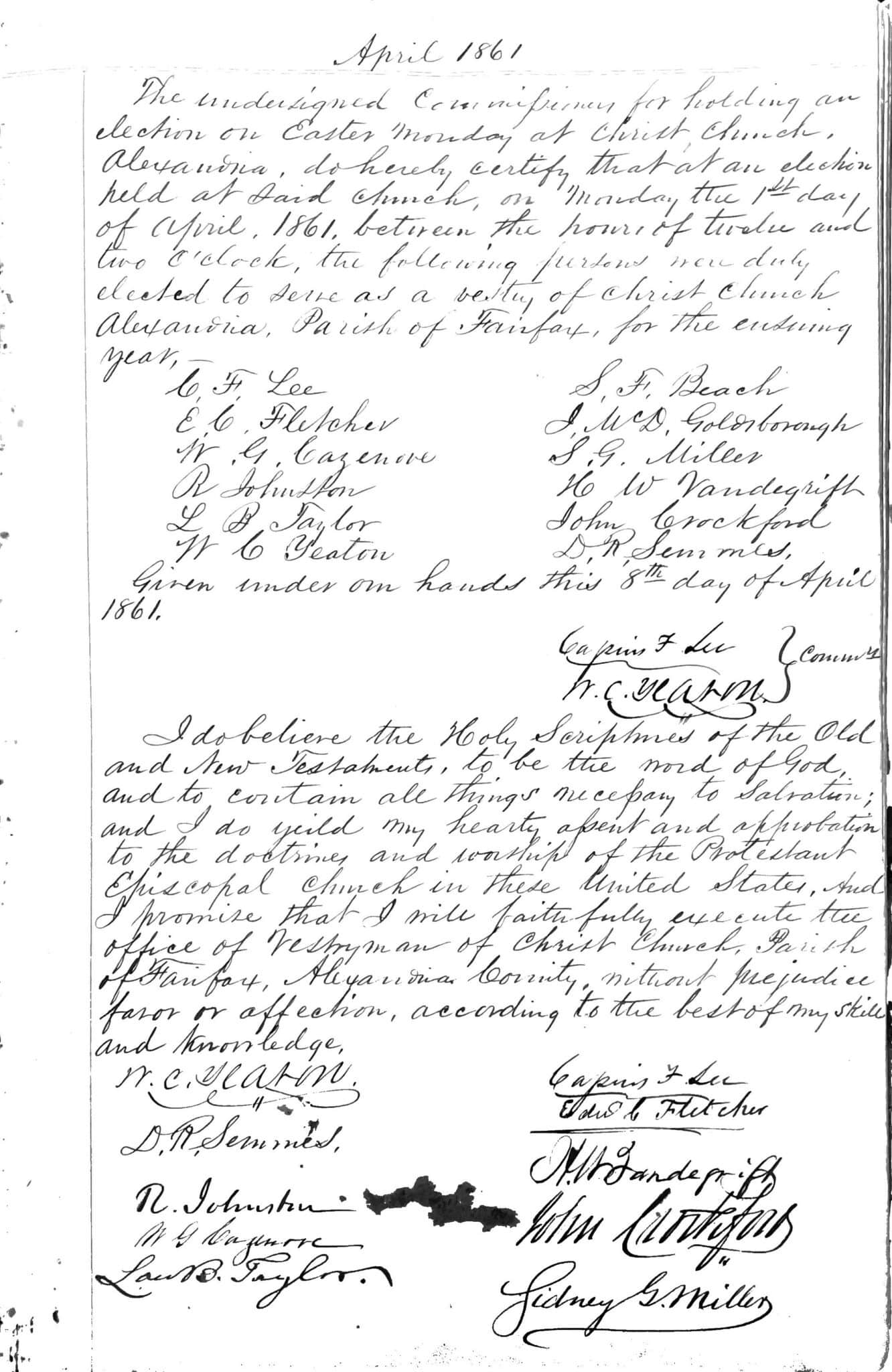
The final vestry minutes were scribed in 1860. There are no official parish records from this point until spring 1866. However, on April 8, 1861, a few days before Virginia passed the Ordinances of Secession, a vestry election took place. The first name on this pronouncement, approving the organization of said election, was Cassius F. Lee, cousin to Robert E. Lee and prominent Secessionist (it was at Cassius’s Alexandria residence where Lee accepted command of Confederate forces). The incoming federal invasion would render this election void.
The church was thereafter occupied by U.S. Army chaplains for the duration of the war. The grounds themselves are quite historic. It is where you can find some of the earliest burials in Alexandria, dating to the 1770s. The historic structure maintains authenticity and minimal renovations. George Washington’s pew, carefully preserved, demonstrates his attachment to this port city. Robert E. Lee’s pew tells a different story, one of a tremendously divided Alexandria.
Around Easter 1865, a new vestry was elected by an “independent organization,” likely comprised of Union-approved members. The following year, a Union-sympathizing rector was installed. In-fighting among members and between citizens and the government were no longer the primary concerns now that the war concluded. Christ Church needed to honor “pre-war pew rentals,” ones that belonged to rebel parishioners who fled South. A balance was key: It was critical to maintain relationships with original members and also to not agitate nearby Washington, whose presence lingered in the city through 1869.
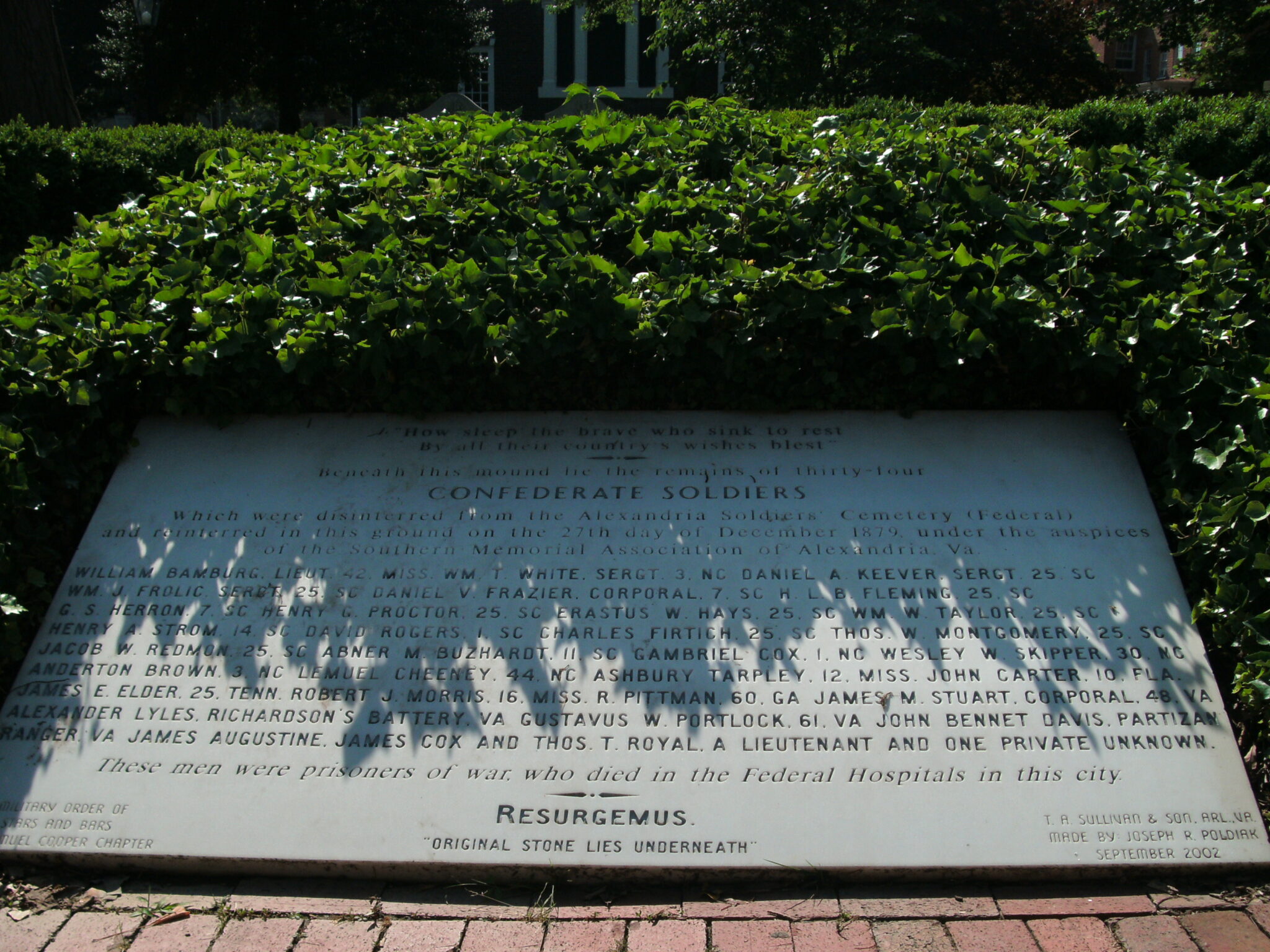
In 1879, the Southern Ladies Memorial Association reinterred 34 Confederates onto the grounds of Christ Church. In a movement that swept the South, fallen Confederates were belatedly provided proper burials, formal cemeteries, and “Lost Cause” commemorations. These 34 rebels were previously buried at Alexandria National Cemetery, which is the final resting place for close to 4,000 Union soldiers. It solidified Alexandria’s identity as a Southern city, rejecting its prior occupation and conquest by Union forces.
This story can be viewed from multiple angles. It is a true tale of disappointment, loyalty, overreach, and state security in the midst of national conflict. Today’s Christ Church is an institution that promotes toleration and acceptance; all are welcome! It is difficult to imagine that this key attraction in Alexandria once symbolized division and dissolution. It once represented the connection and interwovenness between faith and ideology, and the battle that was launched during those tragic four years of the Civil War.
Madeline Feierstein is an Alexandria, VA historian and founder of the educational and historical consulting company Rooted in Place, LLC. A native of Washington, D.C., her work has been showcased across the Capital Region. Madeline is a member of Emerging Civil War’s Social Media Team. She has also written for Emerging Revolutionary War and the National Museum of Civil War Medicine. She leads significant projects to document the sick, injured, and imprisoned soldiers that passed through Alexandria and Washington, D.C. Madeline holds a Bachelor of Science in Criminology from George Mason University and a Master’s in American History from Southern New Hampshire University. Explore her research at www.madelinefeierstein.com.
[1] Primary source material for this article available in the archives of Christ Church Episcopal in Alexandria, VA. Please contact the author or the Church directly for information.


