‘A Tragic Affair’: The Death of Brigadier General Frank Patterson
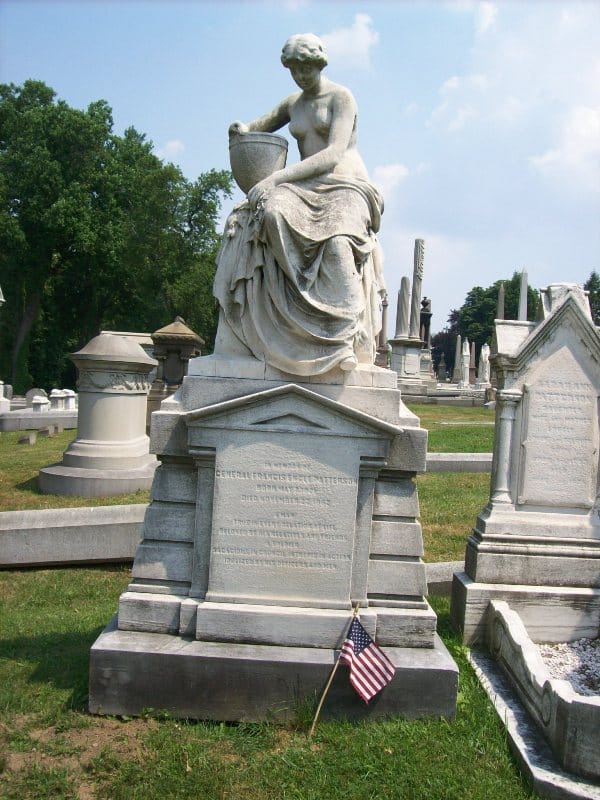
In Philadelphia’s Laurel Hill Cemetery stands an impressive marble monument with a faded inscription that reads:
A Man
True in Every Relation of Life.
Beloved by His Relatives and Friends.
A Soldier
Sagacious in Council, Intrepid in Action.
Idolized by His Officers and Men.
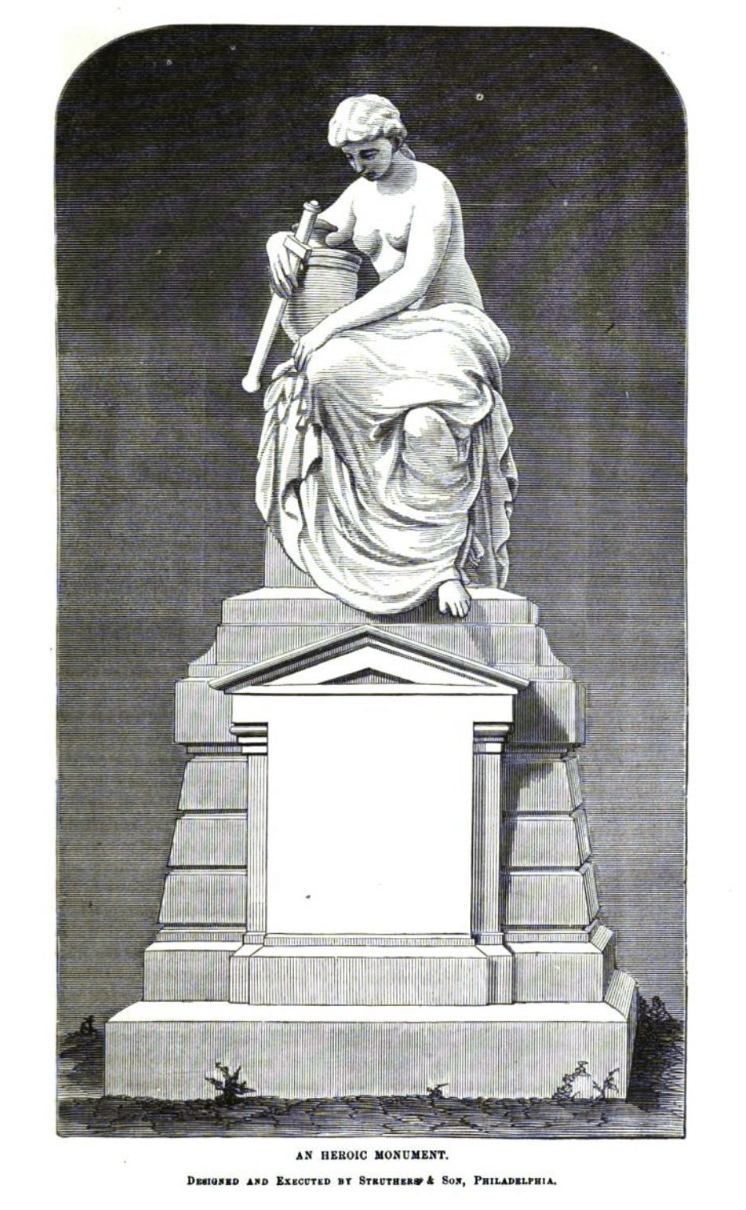
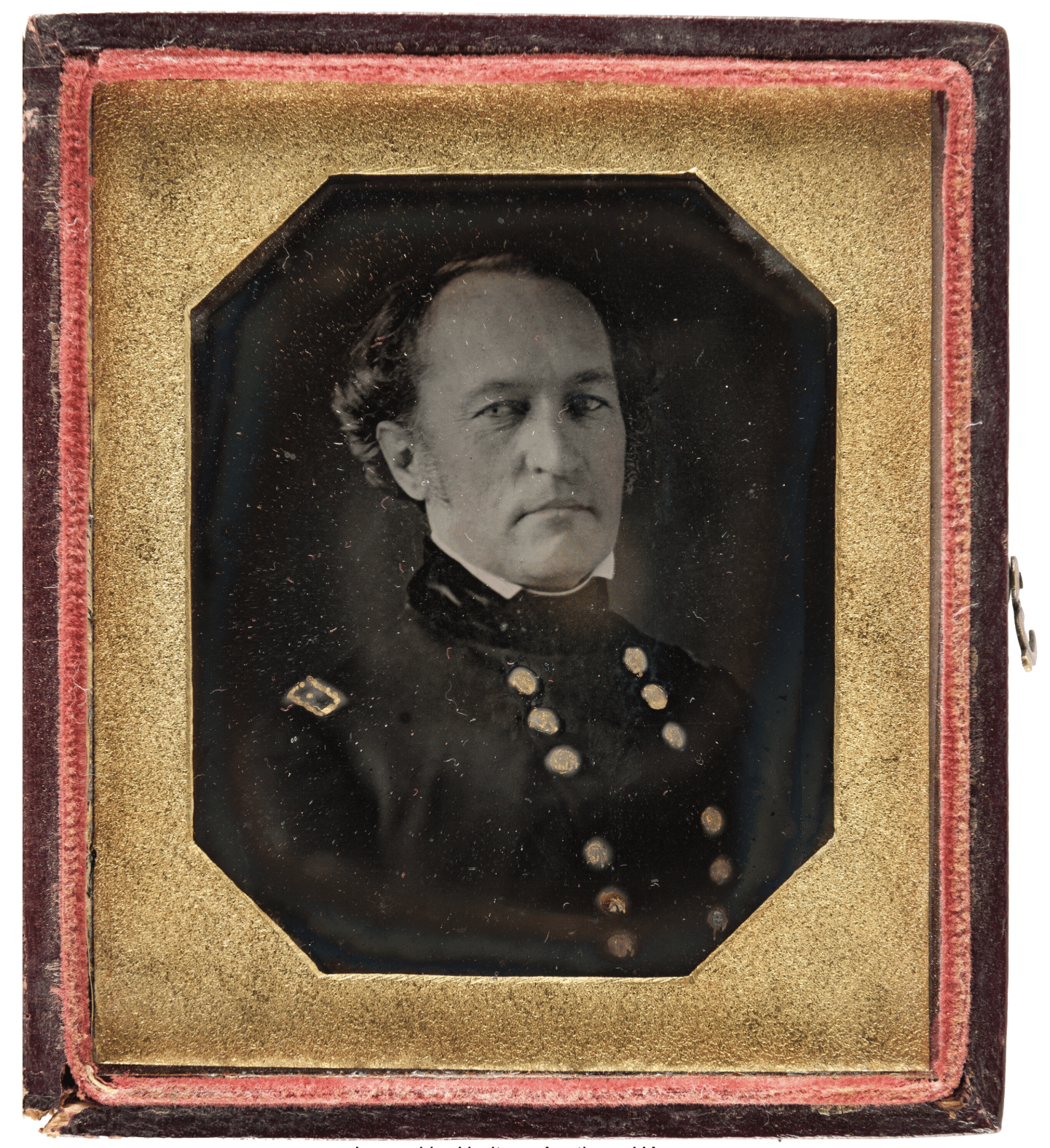
These are the words used to describe Frank Patterson, the only full-rank Union general to die by his own hand during the Civil War. In November 1862, following accusations of poor conduct near Catlett’s Station, Patterson was found dead in his tent from a single gunshot wound to the chest. Rumors quickly circulated that, by taking his own life, he had dodged a shameful court of inquiry questioning his behavior and actions.
Accounts of Patterson’s Civil War service reveal that he earned the respect and loyalty of the men under his command, but was troubled by erratic behavior and persistent illness. Dying so early in the war and under a heap of controversy has left Patterson’s military career shrouded in obscurity.
‘A Capital Fellow, but Over Sensitive’
In June 1847, Francis Engle Patterson was commissioned as a second lieutenant in the 1st U.S. Artillery, likely through the influence of his father, Robert Patterson, an influential Philadelphia businessman and major general during the Mexican War. Frank was promoted to first lieutenant the following October.
He spent a good amount of time with Abner Doubleday, a fellow lieutenant in the regiment. Doubleday noted in his diary that “Lieutenant P[atterson]” was “a capital fellow, but over sensitive.”
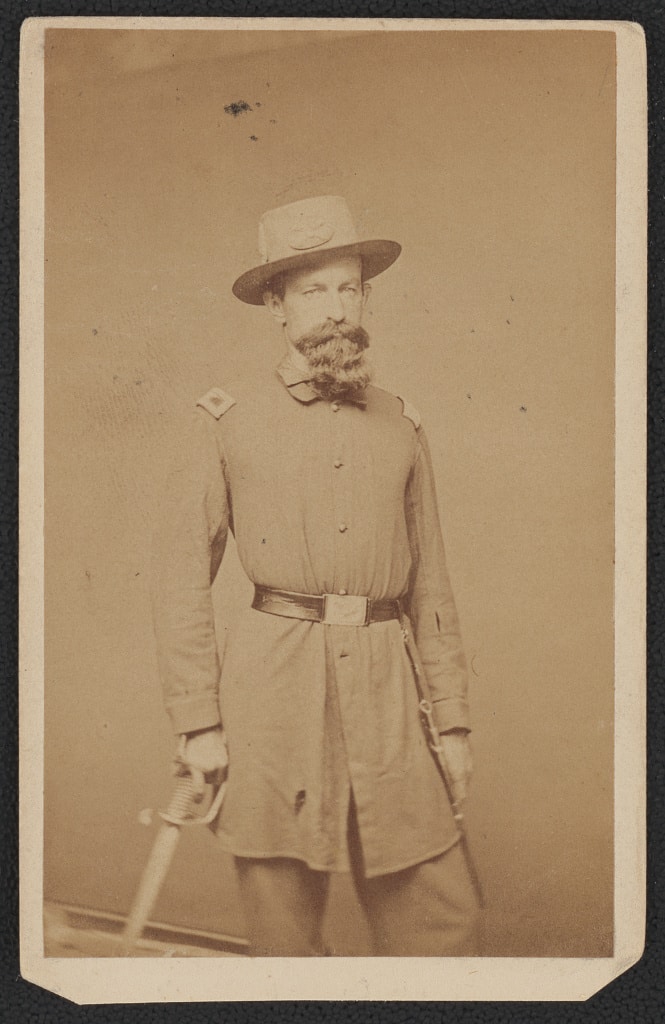
Doubleday documented an incident that offered a glimpse of the sensitive side of Patterson to which he referred.
“It seems he took a fancy that I looked down upon him because he was not a graduate of West Point,” Doubleday recalled.[1]
A fight broke out between the two young lieutenants at a dinner party, and and Patterson quickly transformed from a friend into a bitter antagonist.
“[H]e took more wine than he should have done,” Doubleday observed. “To my astonishment under the effect of the liquor he expressed a good deal of resentment for the feeling he supposed I entertained toward him said he was as good a man as I was and went on in a strain that became quite offensive. It was at my own table and he was hardly in a condition to know what he was saying.”[2]
The next morning, Doubleday wrote to Patterson to give him the opportunity to “make any explanation if he desired to do so.” When Doubleday heard a knock at his door, he answered it, and Patterson walked in and “bowed stiffly.” He apologized for his actions following the advice of a fellow officer.
While the awkward incident could have easily ruined their friendship, Doubleday and Patterson remained friends. Doubleday later boasted, “P. and myself were fast friends after that and years afterward when his nomination for Genl was pending before the Senate Committee and about to be thrown out, I interceded and had him confirmed.”[3]
Patterson remained in the army after the Mexican War, transferring to the 9th U.S. Infantry and receiving a promotion to captain. While stationed in California, he rented a house in Newtown for a short time and shared it with fellow officers John B. Magruder, George Stoneman, and Adam J. Slemmer, all three of whom became generals during the Civil War. In May 1857, Patterson resigned his army commission and returned to Philadelphia, where he wrote a book and likely joined his father in business.[4]
‘The Troops Are Well Pleased with Him’
At the outbreak of the Civil War, Patterson was commissioned colonel of the 90-day 17th Pennsylvania Infantry.[5] The regiment saw some service along the Potomac River until it was mustered out on August 2, 1861.
Patterson was left unemployed, but soon found a new assignment with the Army of the Potomac. On April 11, 1862, through the influence of Maj. Gen. George B. McClellan, Patterson was promoted to brigadier general and placed in command of a New Jersey brigade in Brig. Gen. Joseph Hooker’s division.[6]
The Pennsylvanian was generally well liked by the soldiers of his “New Jersey Blues” for his relaxed and pleasant personality.[7]
First Lieutenant James F. Rusling of the 5th New Jersey Infantry shared some insight into the brigade’s estimation of Patterson in a letter sent to friends on May 8, 1862:
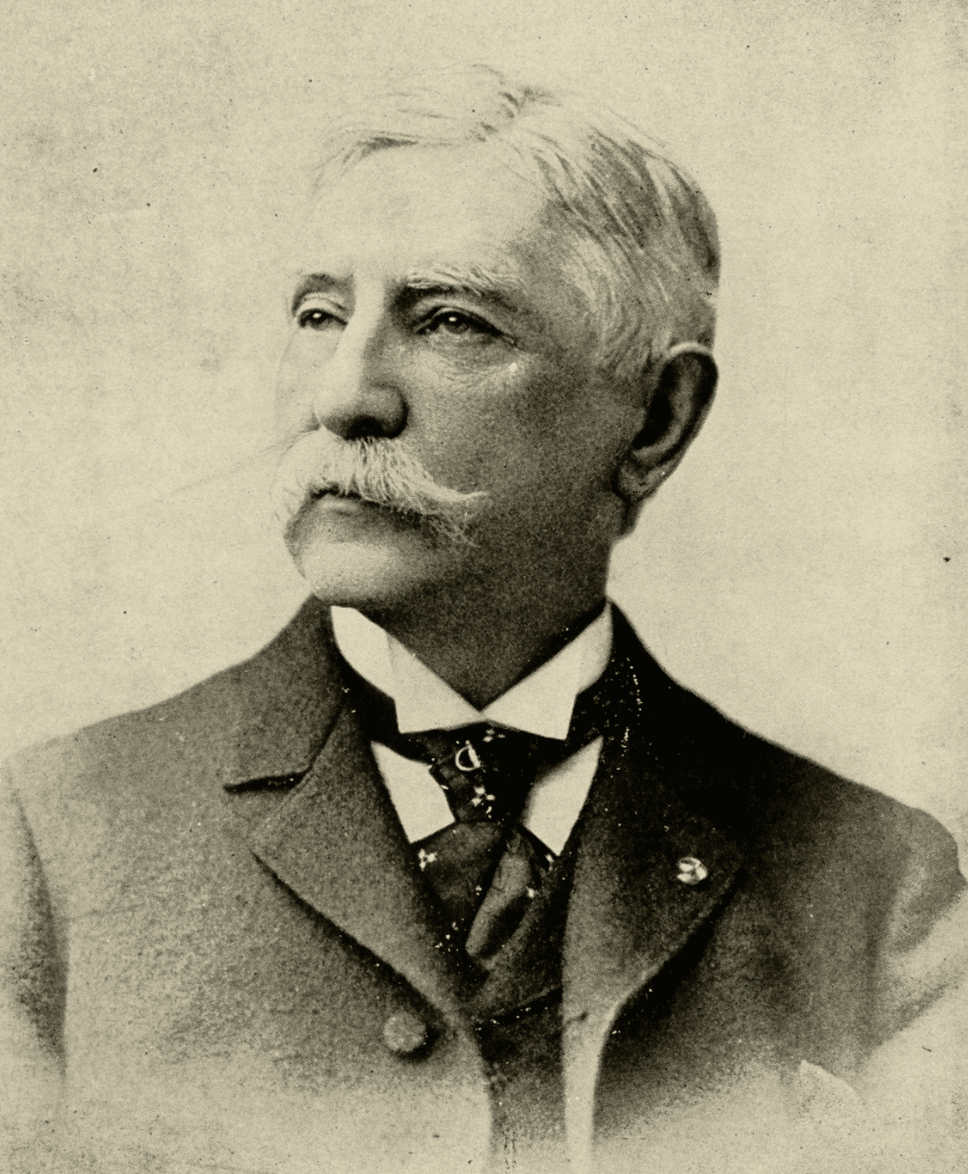
“He is more pleasant and affable than Starr [Colonel Samuel H.]; anybody can approach him; he is cool and quiet and says but little. In the fight, he was as calm as if on parade or drill, and fought the brigade splendidly. He says he never saw men and officers behave better under fire, and is enthusiastic in his praise of the Jerseymen. The troops are well pleased with him.”[8]
Rusling was referring to the battle of Williamsburg, where the brigade suffered 526 casualties, including 42 officers.
By May 31, 1862, Patterson was ill and unable to command his brigade, but accompanied his troops anyway. The next day, he relinquished his command because of typhoid fever before his brigade arrived to take part in the grisly fight at Seven Pines. Rumors circulated that this was because of faint-heartedness about taking part in the battle. Patterson departed on sick leave on June 7 and did not return until July.[9]
Patterson returned in time to command his brigade at the battle of Malvern Hill. There, Patterson again exhibited strange behavior. Warren H. Cudworth, chaplain of the 1st Massachusetts Infantry, recorded that he had seen Patterson, apparently drunk, during the morning hours of the battle. He reported that Patterson was rambling nonsense, stating he had “admitted an enemy into his mouth which had stolen away his brains.”
Col. Joseph B. Carr, who commanded a regiment in the brigade, was also concerned by Patterson’s odd behavior and his disappearance from the field. General Hooker temporarily relieved Patterson and placed Carr in command of his brigade. Was this a case of blatant alcohol abuse during the battle, or was Patterson suffering from the effects of typhoid fever?[10]
Illnesses contracted in the humid Florida swamps and wetlands, specifically malaria, had led to delirium, depression, and altered mental states among U.S. troops during the Seminole War. The neurological complications may have even driven some men to drink, act erratically, and, in some cases, commit suicide.
For instance, a promising officer in his 20s, Col. John F. Lane, while alone in his tent, placed the hilt of his sword on the ground and ran it through his eye into his brain, killing himself instantly. He had been acting strangely and was agitated in the days leading up to his death. His fellow officers believed the suicide was the result of “a fit of insanity produced by brain fever,” while Andrew Jackson attributed it to Lane’s humiliation for “acting rashly and without orders” and his inability to find and defeat Osceola. Lane’s shame may have only exacerbated his mental anguish, possibly caused by fever.[11]
McClellan’s troops on the Virginia Peninsula dealt with similar illnesses while fighting in the swampy, low-lying terrain.
Patterson continued to suffer from periods of poor health for months afterward. Rusling mentioned an injury that further debilitated Patterson and hindered his ability to assume an active role with his brigade when, on September 28, he noted that “General Patterson is here, hobbling about on crutches. His foot, sprained by the fall of his horse at Harrison’s Landing, is still very lame; and he is unable to do anything. He looks badly; and, it is believed, will never resume command of the brigade.”[12]
But by November, Patterson was back in command of his brigade.
‘Everybody Felt it Like a Personal Sorrow’
Hooker’s division was under the temporary command of the notorious Brig. Gen. Daniel Sickles and on picket duty along the Potomac. Patterson’s brigade was tasked with repairing and rebuilding the tracks near Catlett’s Station along the Orange and Alexandria Railroad. There were rumors of a considerable-sized Confederate cavalry force to the south of Patterson’s position, and he reported, “The whistles of cars are going freely, indicating the arrival of troops.” Acting on the belief that he was outnumbered and his position untenable, Patterson ordered a retreat back to his old camp at Bristoe Station on November 9. Sickles believed Patterson’s withdrawal was unnecessary and unauthorized, relieving him of command and calling for a court of inquiry.[13]
For nearly two weeks, Patterson awaited investigation, apparently quite ill and trying to keep dry, like his troops, from incessant rainfall. On November 22, 1862, Rusling observed his old brigade commander near his tent, “ill and acting strangely all the evening.” Rusling said that “about 2 A.M. suddenly his pistol went off, accidentally or otherwise, and poor Patterson was no more.”
Patterson was discovered dead in his tent only a little more than seven months after being appointed a brigadier general. Although it appeared he had been killed by the accidental discharge of his pistol, rumors circulated that he had committed suicide.[14]
Two days after his death, The Philadelphia Inquirer noted that Patterson was in the habit of placing a revolver under his pillow when he retired for the night. That morning, he woke “and, for some purpose, displaced the revolver from under the pillow on which he slept, with his right hand, and while changing it to the left, probably with the intention of handing the weapon up near his couch, it exploded.”
The barrel, at that moment, was pointed at him, and when it discharged, the ball passed through his left breast, likely striking his heart and killing him instantly.[15]
“The news spread with lightning rapidity through the camp, and a scene of excitement was the result,” the paper continued. “It was with difficulty that a guard could preserve the quarters of the General free from the intrusion of the men he commanded. The tumult was such, that as soon as the news spread it was deemed advisable to remove the remains at once.”[16]
Patterson’s death led to mixed reactions in the ranks. Col. Robert McAllister of the 11th New Jersey Infantry viewed Patterson’s death as an attempt to escape the embarrassment of a lengthy investigation. He wrote to his wife the same day as Rusling. “We have just got the news of the death of Genl. Patterson. He shot himself through the heart last night,” he told her. “I have not heard any causes given for it. I suppose it was mortification at his failure at not holding a position he had at or near Washington. He retreated, and afterwards half of his men advanced and drove the enemy…”[17]
McAllister also mentioned Patterson in a letter to his daughter the following day. “Night before last, Genl. Patterson shot himself,” he wrote. “The cause that induced Genl. Patterson to do it I do not know—though it was said it was owing to his mistake in not taking Warrenton Junction when he could have so easily taken it and immortalized his name.”
McAllister told her that Patterson was not regarded as a good officer in the division, even though he admitted that he knew little about the general.[18]
Rusling had nothing but sympathy for his fallen chief. “Another gallant spirit snuffed out! Good old soldier, brave heart, generous soul, hail and farewell! It was a tragic affair. It cast a deep gloom over the whole division, and everybody felt it like a personal sorrow. He was a very capable officer, and will be missed sadly.”[19]
A battery was detailed to fire a blank round at 30-minute intervals between sunrise and sunset in honor of Patterson.[20]
Some of Patterson’s men were resentful toward Sickles for his part in Patterson’s death and accused him of murdering his second man (the first being Teresa Sickles’ lover, Philip Barton Key). The men of the brigade would recite, “Johnny stole a ham and Sickles killed a man,” close enough for Sickles and his troops to hear.[21]
‘In a Sound, Quiet Slumber’
Patterson’s remains were transported in an ambulance from the camp to Washington, D.C., and from there brought on the first train to his hometown of Philadelphia. His body was taken to General Robert Patterson’s mansion. The Philadelphia Inquirer mentioned that “owing to some inadvertence the family received no information of the sad occurrence until the remains reached the dwelling.”[22]
From 10 a.m. to 1 p.m. on the day of the funeral, Frank Patterson’s body lay in state for public viewing in the western parlor of Robert Patterson’s home. The coffin was covered in black cloth, mounted with silver. On the coffin’s lid sat a wreath and bouquet of exotic flowers, along with the late general’s sword. His body was dressed in the full uniform of a brigadier general. “The features of the deceased wore a remarkably natural appearance, and seemed as though in a sound, quiet slumber,” The Philadelphia Inquirer observed. A continuous stream of citizens passed in and out of the parlor to view Patterson’s remains, and hundreds purchased cartes de visite of him taken by photographer Frederick Gutekunst. Afterward, a military escort and mourners conveyed his remains to Laurel Hill Cemetery.[23]
Patterson’s struggle with typhoid fever may be one of the best explanations for his strange behavior during the Peninsula Campaign. The disease has been known to cause confusion and, in severe cases, delirium. Assuming shooting himself was not an accident and he chose to take his own life, the investigation into Patterson’s conduct and the shame associated with it may have pushed him, already emotionally fragile and ill, to act rashly. Like Col. John F. Lane during the Seminole War, the combination of illness and humiliation may have been too much for him to bear.
Despite the tragic circumstances of his death, Patterson deserves to be recognized for his service and ultimate sacrifice to the Union cause, whether his death was accidental or by his own hand. Those friends, comrades, and family members closest to him thought so, leaving the succinct, but elegantly written epitaph on his tombstone, though faint, still evident 163 years later.
Endnotes
[1] Abner Doubleday, My Life in the Old Army: Reminiscences of Abner Doubleday, ed. Joseph E. Chance (Fort Worth: Texas Christian University, 1998), 118.
[2] Doubleday, My Life in the Old Army, 118-119
[3] Doubleday, My Life in the Old Army, 119.
[4] Thomas Settles, John Bankhead Magruder: A Military Reappraisal (Baton Rouge: Louisiana State University Press, 2009), 92; Francis E. Patterson, Hints Bearing on the United States Army: With an Aim at the Adaptation, Availability, Efficiency and Economy Thereof (Philadelphia: Henry B. Ashmead, Book and Job Printer, 1858); Ezra J. Warner, Generals in Blue: Lives of the Union Commanders (Baton Rouge: Louisiana State University Press, 1964; repr., 1992), 362-363.
[5] His father was appointed a major general of Pennsylvania volunteers and commanded the Army of the Shenandoah, and his brother, Robert Emmett, served as colonel of the 115th Pennsylvania Infantry.
[6] Warner, Generals in Blue, 363; President Abraham Lincoln to Maj. Gen. George B. McClellan, Executive Mansion, Washington, D.C., January 4, 1862, in Abraham Lincoln, The Collected Works of Abraham Lincoln, vol. 5, ed. Roy P. Basler (New Brunswick, N.J.: Rutgers University Press, 1953), 90.
[7] Walter H. Hebert, Fighting Joe Hooker (New York: Bobbs-Merrill, 1944; repr., Gaithersburg, MD: Butternut Press, 1987), 79.
[8] James F. Rusling to Dear Friends, Camp Near Williamsburg, Virginia, May 8, 1862, in James Fowler Rusling, Men and Things I Saw in Civil War Days (New York: Eaton & Mains, 1899), 248.
[9] Jerry Thompson, Civil War to the Bloody End: The Life & Times of Major General Samuel P. Heintzelman (College Station: Texas A&M University Press, 2006), 189; Jack D. Welsh, Medical Histories of Union Generals (Kent, Ohio: Kent State University Press, 1996), 253.
[10] Hebert, Fighting Joe Hooker, 116.
[11] C. S. Monaco, The Second Seminole War and the Limits of American Aggression (Baltimore: Johns Hopkins University Press, 2018), 147-148; C. S. Monaco, “Malaria and War in the Age of Jackson with C.S. Monaco,” John Hopkins University Press, March 27, 2018, https://www.press.jhu.edu/newsroom/malaria-and-war-age-jackson-cs-monaco.
[12] James F. Rusling to Dear Friends, Headquarters Patterson’s Brigade, Grover’s Division, September 28, 1862, in Rusling, Men and Things I Saw in Civil War Days, 277.
[13] Rick Barram, The 72nd New York Infantry in the Civil War: A History and Roster (Jefferson NC: McFarland & Co., Inc., Publishers, 2014), 103-104; “Brig. Gen. Daniel E. Sickles to Lt. Col. Chauncey McKeever, Asst. Adjt. Gen. Hdqrs. Defenses of Washington, Hdqrs. Sickles’ Division, Third Army Corps, Camp at Manassas Junction, November 9, 1862,” in The War of the Rebellion: A Compilation of the Official Records of the Union and Confederate Armies, Series I—Volume XIX—In Two Parts. Part II—Reports (Sept. 20-Nov. 14, 1862), Correspondence, Etc. (Sept. 3-Nov. 14, 1862) (Washington, D.C.: Government Printing Office, 1887), 562-563.
[14] James F. Rusling to Dear Friends, Washington, D.C., November 25, 1862, in Rusling, Men and Things I Saw in Civil War Days, 285; Welsh, Medical Histories of Union Generals, 253; Barram, The 72nd New York Infantry, 104.
[15] “Death of Brigadier-General Francis E. Patterson,” The Philadelphia Inquirer (Philadelphia, PA), November 24, 1862.
[16] “Death of Brigadier-General Francis E. Patterson,” The Philadelphia Inquirer.
[17] Robert McAllister to Ellen McAllister, Wolf’s Shoals Ford, Virginia, November 22, 1862, in Robert McAllister, The Civil War Letters of General Robert McAllister, ed. James I. Robertson (Baton Rouge, LA: Louisiana State University Press, 1998), 225.
[18] Robert McAllister to Henrietta McAllister, Wolf’s Shoals Ford, Virginia, November 23, 1862, in McAllister, The Civil War Letters of General Robert McAllister, 225-226.
[19] Rusling to Dear Friends, Washington, D.C., November 25, 1862, Rusling, Men and Things I Saw in Civil War Days, 286.
[20] James E. Smith, A Famous Battery and Its Campaigns, 1861-‘64: The Career of Corporal James Tanner in War and in Peace. Early Days in the Black Hills with Some Account of Capt. Jack Crawford, the Poet Scout (Washington, D.C.: W. H. Lowdermilk & Company, 1892), 86.
[21] Wilmer L. Jones, Generals in Blue and Gray: Lincoln’s Generals, vol. 1 (Westport, CT: Greenwood Publishing Group, 2004), 192; Barram, The 72nd New York Infantry, 104.
[22] “Death of Brigadier-General Francis E. Patterson,” The Philadelphia Inquirer (Philadelphia, PA), November 24, 1862.
[23] “General F.E. Patterson,” North American and United States Gazette (Philadelphia, PA), November 25, 1862; “Funeral of Brig.-Gen. Francis E. Patterson,” The Philadelphia Inquirer (Philadelphia, PA), November 27, 1862; “Funeral of Brig. Gen. Patterson,” The Dollar Newspaper (Philadelphia, PA), December 3, 1862; ‘The Late General Patterson, and Gen. Franz Sigel,” The Press (Philadelphia, PA), November 26, 1862.


Frank, nice but tragic story. How did Patterson come to your attention?
Thanks, Kevin. I’ve always been interested in Civil War generals, especially the obscure ones and those who died in unfortunate circumstances during or after the war.
This is a sad and tragic story. Robert Patterson features in my own research but I didn’t know he had a son who was a general. I wonder how much his father’s shadow hung over him? A lot of people blamed the elder Patterson for the loss at Bull Run. Maybe his son felt that he had something to prove? That made criticism of his own actions much worse.
All valid points, M.A. Kleen.