Where “Must” Meets “Should”: The Difference Between What Is Legal and What Is Ethical
 Imagine you are a Civil War soldier on picket duty. The enemy’s rifle pits are uncomfortably close. There was brutal fighting over this ground the day before. After the enemy killed one of your comrades who was dragging a wounded friend to safety, your regimental commander has expressly ordered all pickets to shoot any foe who shows himself. And one does, slipping out of a trench and crawling towards your position. As you level your rifle, you notice that the man appears to be carrying several canteens. The enemy soldier apparently intends to bring water to his wounded comrades strewn between the lines. You have your orders. Do you shoot him?
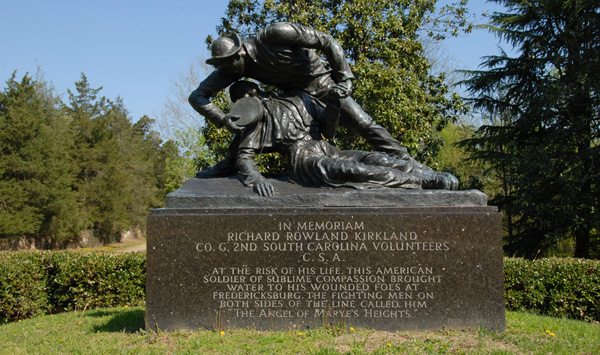
This scenario represents the difference between what is legal and what is ethical. Under the “law” (the order from the commanding officer), the picket not only has the legal right to shoot the enemy soldier but the duty to do so. But would it be the “right” thing to do? To answer that question requires the picket to consult his personal value system, his sense of what is morally correct. That inquiry is far more complicated.
Reduced to its essence, the “law” is any rule adopted by a governing authority that will be enforced against those subject to the authority’s jurisdiction. Properly written, a law provides clear notice of what conduct is forbidden or permitted and is not subject to debate or discretion. Some laws are proscriptive, i.e., they forbid certain action (e.g., do not drive over 60 mph). Other laws are permissive (e.g., allowing charitable tax deductions). But the law is imposed from above, is objective, and mandatory. The law intends to produce predictable results.
The concept of “ethics” differs from the law. Ethics spring from within individuals, arise from multiple sources that create our personal values system, and are anything but mandatory. We learn our values from family, religion, society in general, and particular social groups with whom we interact. Our acquired values are experientially based, and thus highly subjective. Moreover, when we seek to act in what we believe to be an “ethical” fashion, we are applying our values to a particular situation to make a decision. Ethics are complicated, and the result of applying such unpredictable.[1]
Another key difference between law and ethics is that the former tends to be static. Laws stay on the books unless they are repealed or amended. Conversely, an individual’s (and even societal) ethics may develop and change over time, based on new experiences or changing mores. Further, one’s personal ethics may lead to conflict with controlling law.
The pre-Civil War period furnishes an excellent illustration of this last point. The 1850 Fugitive Slave Law gave slaveholders a powerful legal tool to force the rendition of escaped enslaved persons. Many in the North accepted the situation, because it was “the law.” Even Abraham Lincoln repeatedly expressed support for the law, because the right of rendition was enshrined in the Constitution itself. Others, however, could not reconcile the law with their personal ethics, which led them to assist escapees even to the point of violently assaulting law enforcement officers.[2]

Yet the clash of individuals’ ethics with existing law can lead to momentous legal reform. Thus, increasing popular resistance to the perceived oppression and undemocratic features of the Fugitive Slave Law contributed to changing public attitudes (in the North at least) towards the evils of slavery, a factor that contributed to the outbreak of the Civil War. Then, as public mores continued to evolve during and after the conflict, the way was paved for political action to destroy slavery forever. Not only was the Fugitive Slave Act repealed, but pro-freedom legislation was enacted, ultimately culminating in Constitutional Amendments that enshrined freedom and citizenship rights to the formerly enslaved, including by overturning the infamous Dred Scott Supreme Court decision that had held that African Americans never could be citizens. This triumph of ethics over law is reflected in the fact that whereas in 1850 Lincoln’s future Secretary of State William Seward had relied on an ethical opposition to slavery, when he proclaimed that there was a “higher law than the Constitution,” referring to a moral law established by “the Creator of the universe,”[3] by the time the 14thAmendment was ratified in 1868, the law finally had caught up to the new ethics of society.
The war itself offers numerous examples of law vs. ethics situations. U.S. officers returned escaped enslaved persons to their purported masters early in the conflict because they believed the law mandated that course. Some commanders considered it both lawful and ethical to force enemy POWs to walk in front of their troops when they suspected buried torpedoes (landmines) in the road. General Thomas Ewing’s infamous anti-guerilla General Order No. 11 forced thousands of Missouri residents to abandon their homes. Other actions against civilians and their property raised difficult issues throughout the conflict. Meanwhile, the Lieber Code—adopted by the Lincoln Administration to set forth the laws of war—cautioned individual soldiers that they remained accountable for their wartime conduct, piously intoning: “Men who take up arms against one another in public war do not cease on this account to be moral beings, responsible to one another and to God.” [4] Yet words are easy. Applicability to difficult situations is not.
Ideally, a society’s laws enshrine its generally accepted values, its ethics. But a society is composed of individuals; it is not a monolith with a single mind. Law and ethics are not, and probably never will be, one and the same.
So, would you shoot the canteen-carrying enemy soldier?

[1] For an excellent discussion of the differences between the law and ethics, one relied upon in writing this post, see Ilan Fuchs, Ph.D., “Law vs. Ethics: The Debate Over What’s Legal and What’s Right,” American Public University(December 23, 2024), https://www.apu.apus.edu/area-of-study/security-and-global-studies/resources/law-vs-ethics/.
[2] For Lincoln’s expressed support of the Fugitive Slave Act (with the caveat that it should be amended to ensure the rights of free persons), see Henry Louis Gates, Jr., and Donald Yacovone, Editors, Lincoln on Race & Slavery (Princeton University Press, Princeton, NJ, 2001), pp. 58, 138, 216. For examples of resistance to the Act, see generally Steven Lubet, Fugitive Justice: Runaways, Rescuers, and Slavery on Trial (The Belknap Press of Harvard University Press, Cambridge, MA 2010).
[3] William H. Seward, ‘Freedom in the New Territories (Appeal to a “Higher Law”), March 11, 1850,’ Classic Senate Speeches, United States Senate, Reprinted from Robert C. Byrd, The Senate, 1789-1989: Classic Speeches, 1830-1993(Government Printing Office, Washington, D.C., 1994), https://www.senate.gov/artandhistory/history/common/generic/Speeches_Seward_NewTerritories.htm.
[4] The War of the Rebellion: A Compilation of The Official Records of The Union and Confederate Armies, Series III, Vol. III, pp. 148 – 164 (U.S. Government Printing Office, Washington, D.C., 1880 – 1901) (specifically Code, Article 15).


Thanks for this post, Kevin. This is an important distinction to consider as we talk about ethical choices, right/wrong, etc.
Thank you for this excellent discussion of the difficult terrain between law and ethics. It’s one of the best treatments of the challenge since “A Few Good Men” hit the big screen. And so very relevant in a nation where the Commander-in-Chief has begun ordering federal troops to assault their fellow citizens in largely “blue” cities. It’s my understanding that military law has a provision under which a soldier can refuse to obey a lawful order if it violates moral values and decency. I keep hoping to hear or read that National Guard forces are grappling with those nefarious orders and risking severe punishment by standing up and saying, No! Same goes for ICE officers, who are being ordered to snatch unaccompanied immigrant children from the homes where they’re being cared for and shipped to god-knows-where. Thank you for finding space in your excellent publication to raise such an important issue. From my perspective nothing less than the soul of our nation is at stake.
I think that female Ukranian refugee might have disagreed with you. Or the victims of crime in DC. Or the victims of the shootings in Chicago during the long weekend. Etc. Etc. Etc. Rash generalization and over reaction are exposing your political ideology which is not going to garner trust regarding historical objectivity.
Shoot the water bearer. If the injured survive because of the water, and are returned to active combat, they will certainly try to kill your comrades. I really do not see this as a deeply agonizing decision. I don’t even need an order to do it. I regret a certain responder saw the need to fantasize a military revolt against a President he dislikes. I suppose the same logic could have been applied to the Armies of the Potomac and others for not overthrowing Lincoln because of his arbitrary arrests and imprisonments.
“War is Hell”. There is no wrong answer to the particular scenario presented. An enemy soldier appears. He has several canteen. For what purpose? Is it REALLY to provide water to wounded soldiers on the battlefield? Or, is he attempting to perhaps fill those canteen for his comrades? If the soldier who is observing this has standing orders to “shoot the enemy”, those sound like ‘lawful orders’ to me. It’s obviously a fluid battlefield situation.
What distinguishes a mob from an army? An army has a hierarchy of leaders that is recognized and identifiable; an army’s leaders – called officers — manage the violence inflicted by that army. And the prime tool utilized by officers to control members of the army ranked below them: lawful orders. Without obedience to lawful orders – each soldier deciding for himself or herself how to engage with the enemy – the army soon devolves into nothing more than a collection of angry individuals intent on committing mayhem, otherwise known as a mob.
There were several instances during the American Civil War – an officer issuing orders later determined to be unseemly or unlawful – that resulted in that officer’s removal from command. Colonel W. James Morgan was in process of organizing the 18th Missouri Infantry (Union) late in 1861 and got caught up in the neighbor vs. neighbor terror that was prevalent north and west of St. Louis during the early months of the war. While operating in vicinity of Platte City, Colonel Morgan ordered two rebel sympathizers in his custody as prisoners to be shot; Morgan was removed from command, replaced by Madison Miller. Another more familiar example: Major General John C. Fremont issued an emancipation proclamation to be applied in Rebel Missouri in August 1861. President Lincoln, trying to keep border states in the Union, felt embarrassed by Fremont’s proclamation, and ordered it be rescinded. Grounds were “discovered” during subsequent investigations that “Major General Fremont is incompetent,” and he was removed from command of the Department of the West in October 1861. And a few weeks later Henry Halleck assumed command of Federal forces in Missouri.
As for the example presented by Kevin Donovan: the Union picket has no way of knowing – for certain – WHAT are the intentions of the rogue Rebel moving forward from his own lines. [The White Flag was not only used as “sign of surrender,” but as Flag of Truce; and the Rebel soldier appears to have failed to make use of a Flag of Truce in conducting his “mercy mission.”] The Union picket has three options: 1) fire upon the Rebel soldier with intent to hit and kill him; 2) fire upon the Rebel soldier in such a way that the Rebel is not hit (and then reload his single-shot rifle-musket fast as possible, in case the Rebel does not withdraw… or show the “unseen-until-now” White Flag) or 3) bring the situation to the attention of a more senior soldier, if one is immediately available.
To do nothing… to allow the rogue Rebel “to do whatever it is he intends to do,” without the protection of a Flag of Truce – is not an option.
Great post as usual … although I don’t see the ethical dilemma quite the same way … missing from your essay is the idea of intent … from the picket’s perspective, the adversary in question is not engaged in a hostile act or demonstrated hostile intent … he is clearly giving relief to wounded men, some of whom might be the sentry’s comrades.
During the Civil War, General Order 100, also known as the Liber Code, introduced the concepts of military necessity, proportionality, and distinction which, for example, prohibited the use of violence for the sake of suffering or revenge. The intent of the Liber Code was to ensure that military action was both legal and ethical.
While the picket would not be aware of the legal niceties of this general order, his instincts not to shoot would be upheld in a non-judicial proceeding or a military court. So, no, I do not shoot the enemy soldier.
I would not shoot the canteen bearer, and I know my great-great-grandfather did not, because he told his grandson many stories of meeting Confederates on picket duty, and what they talked about, and how it was forbidden to shoot at each other – and my grandpa related the stories to me.
Like sailors in all wars – they have a special affinity for each other, and will go to great risks to save the crew of a ship sunk in battle – the soldiers in the Civil War, especially the longer it went on, gave each other a lot of grace. This was because they were all Americans and, I believe, because with each successive battle, with each passing year, they became more and more disgusted with the politicians who were keeping them at war, in this most unnecessary of wars. Federals and Confederates were far more likely to be less savage with each other than, say, a Continental soldiers and a Hessian mercenary, or a 101st Airborne trooper and a Waffen SS trooper. On countless occasions, men showing exceptional courage were spared by their enemies; on countless more, men in extremely vulnerable situations heard calls of “Come over to the side of the Lord!”, to surrender rather then be shot down. This too was another aspect of the grace that Civil War soldiers gave each other – the vast majority were Protestant Christians, which they recognized in each other. Not surprisingly, by 1863 a great religious revival was ongoing in the camps of both armies.
As for Secretary of State William Seward proclaiming there was a “higher law than the Constitution,” we must be very careful in deciding that what we get emotional about should be acted upon by breaking the law. Civil disobedience is one thing, as MLK valiantly showed, but to arrogate to oneself the position of “a higher moral standard” veers dangerously toward the narcissism of Fascism, or, National Socialism. Today in America we have thousands of cases of Governors, Mayors, Judges, District Attorneys, even Presidents declaring that their morality trumps the Constitution – and throwing open the borders to flood the country with dangerous, unvetted illegal aliens – who, in the past ten years, have murdered 1 million Americans – releasing dangerous criminals into the streets to repeat offend again and again – ten, twenty, fifty, a hundred times – to give sanctuary to drug cartel criminals, rapists, murderers, pedophile rapists, Islamic terrorists – at a great cost in blood to our people.
And we must never forget when a pompous, arrogant, megalomaniacal FBI Director declared that he did not answer to the Constitution but to “a higher calling” and this granted him special rights to openly, brazenly commit treason, to attempt to derail a Presidential candidate’s campaign by falsely claiming him to be a Russian spy, and then, having bungled that – because he was, above all else, grossly incompetent in everything he did – he then committed treason again by attempting a coup d’état to overthrow this candidate once he had become President. It nearly destroyed the country, we still have not recovered from it, and it boggles the mind that this man was only fired from his job instead of hanged.
The greatest minds that have ever existed wrote the rules of life in the Torah – the Old Testament – because they received these laws from God Himself; and wrote the Gospel of the New Testament because these rules were expanded upon and broadened by the Son of God; and wrote the Constitution of the United States. Before anyone anoints himself to be above the Torah, or the Gospel, or the Constitution, he – and we – had better think long and hard before allowing it. One who did was John Brown, who declared himself above the law and above God – and then proceeded to be nothing but a cheap murderer and braggart. He got his just desserts for his blasphemy – he was hanged.
Killing enemy soldiers is the point of warfare. It’s a ugly business. The 15th Alabama(I recollect) attributed their lack of success against the 20th Maine at Little Round Top, in part, to the lack of water. It’s still a nasty business.
A discussion of the “ethics” of a war should be confined to the casus belli (the causes of the war). If a soldier decides to consult an ethics (or law) book before shooting, that’s a good way to get yourself killed. On a battlefield, both law and ethics intertwine with the soldier’s desire to stay alive–which desire is both ethical and legal. Thus the decision to shoot the enemy soldier (who could come back later to shoot you) is both legal and ethical.
Via the memorial, and the information conveyed to us by our Park Service tour guide, “The Angel of Mary’s Heights” had been so named because he had provided water for both his fellow soldiers and foe. This certainly complicates this scenario rendering opinion on the question more difficult. With that information in mind I would not have shot him. Regarding the initial question stating only that he was providing water to his wounded comrades, was that intentional? Otherwise it is misleading.
Dale, I appreciate your comment. In answer to your question, I deliberately described the soldier as providing water to HIS comrades – rather than the wounded of both sides – to highlight the ethics question, and perhaps make it more difficult.
Thanks Kevin. I appreciate you taking the time to respond. I just wanted to ensure I was interpreting the question correctly. Always enjoy your contributions and insight. Take care.
The “Rules of War” have been around since at least circa 1600. The Lieber code simply codified them for that specific time period. They were again codified in the two Geneva conventions after WW I. Every officer in the US Civil War on both sides was required to observe the Rules of War. But, until the post-Viet Nam era, an order from a commanding officer would override any one person’s application of the Rules of War. That was one of the Army reforms after the Viet Nam war.
There was the story told to myself and others at the Basic Infantry Officer course in 1984: in the Viet Nam war, a US soldier was wounded and separated form his unit, He crawled for over a day hoping to find water. Finding water, he stretched his neck to reach the water. Looking up, he saw a rifle barrel pointed at him. A VC fighter looked intently at the wounded US soldier for a few seconds, then lowered his rifle and walked away into the bush. I doubt that VC soldier knew that the Rules of War forbade killing unarmed soldiers. VC were not trained soldiers, though they had some limited training. It was his own personal sense of accountability.
Tom