From Eliza Hamilton’s Orphanage to the Battlefield
After a decade since its debut, CBR.com reported that Lin-Manuel Miranda’s musical Hamilton has grossed over $1 billion in ticket sales. Adore it or abhor it, there’s no denying that it has sparked renewed attention and interest in Founding Father Alexander Hamilton and his wife, Eliza Hamilton.
Interestingly, three of Alexander Hamilton’s grandsons served in the Civil War. One grandson, Alexander Hamilton, served as an aide-de-camp to New York State Militia Maj. Gen. Charles Sanford, and another, Alexander Hamilton Jr., was a volunteer aide-de-camp to Maj. Gen. John E. Wool. Schuyler Hamilton served as a major general in command of a division until his resignation in February 1863 due to the lingering effects of typhoid fever. He also suffered from disabilities stemming from a brutal Mexican War wound. Schuyler wasn’t the only hero of the Mexican conflict associated with the Hamiltons — even if he wasn’t a Hamilton by blood.
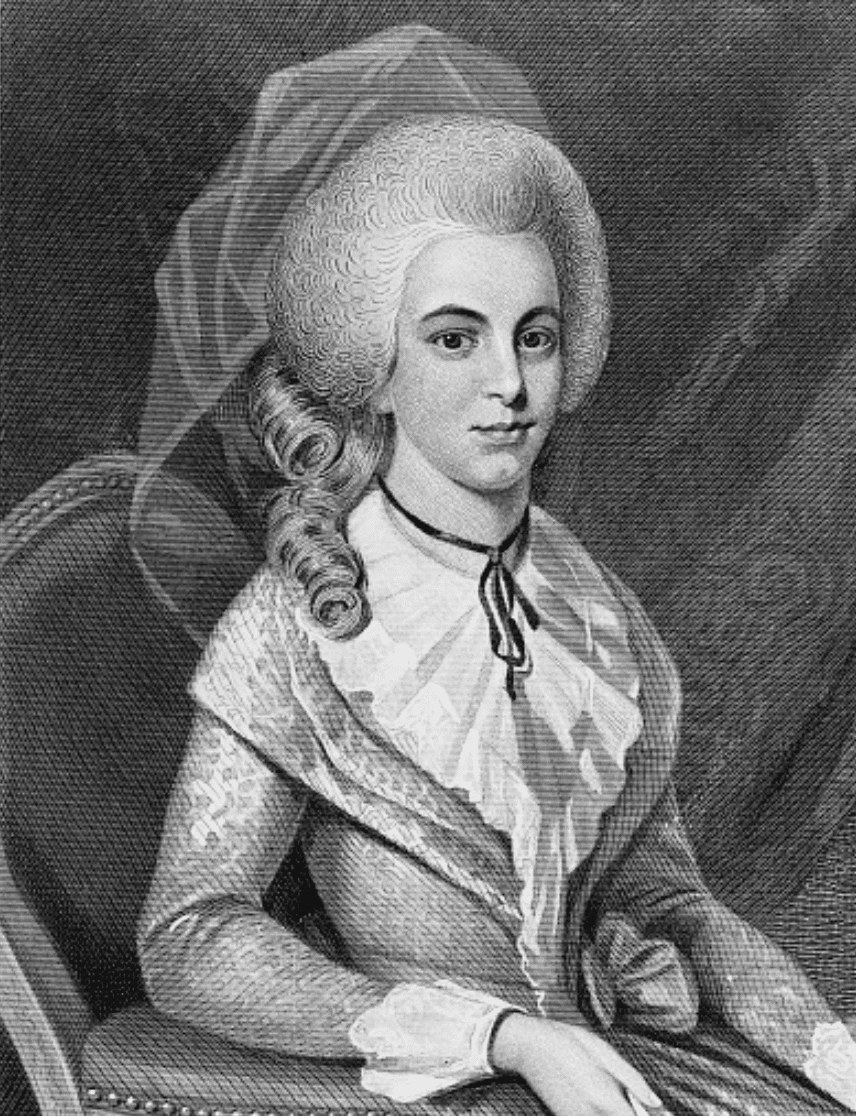
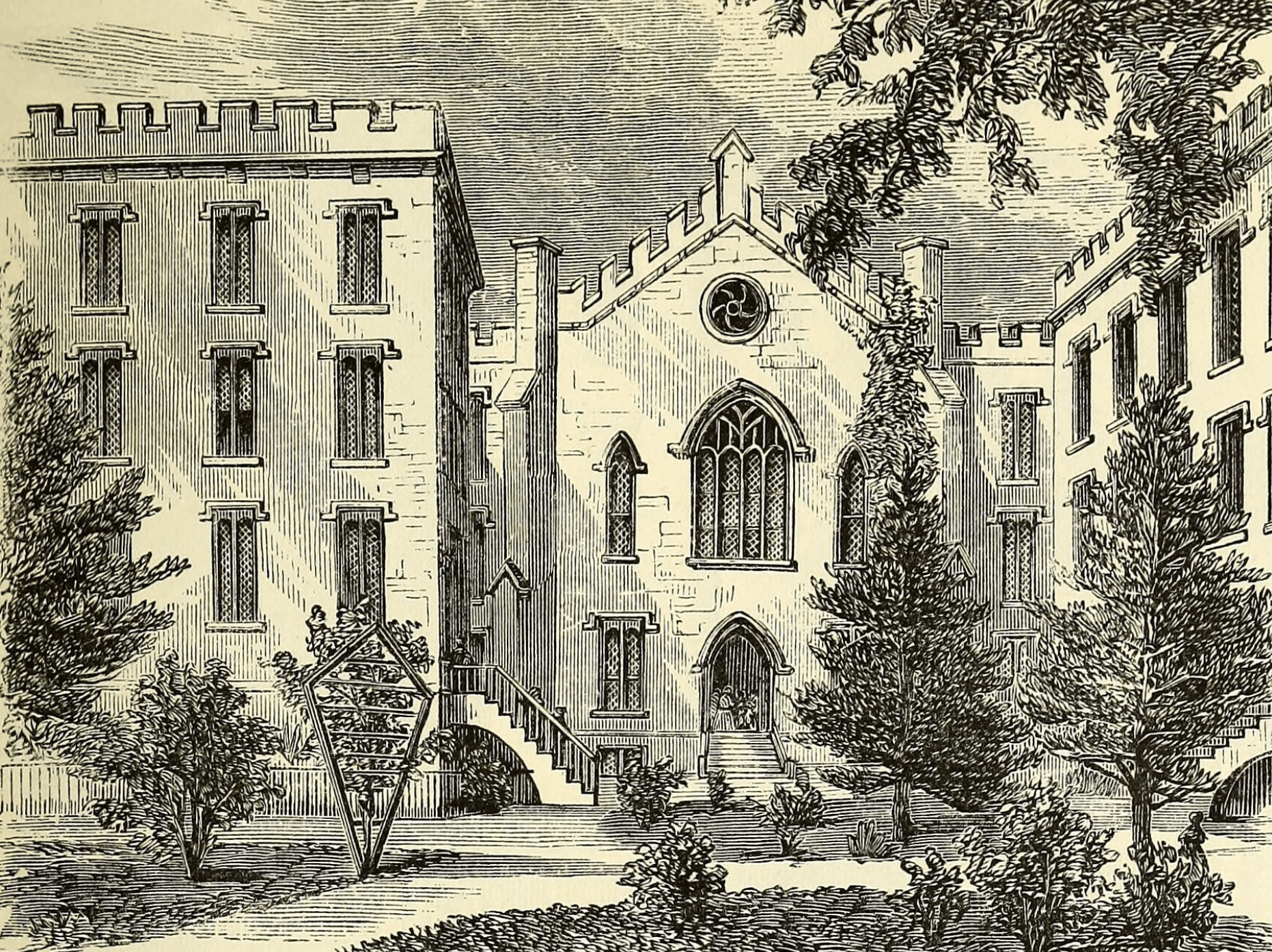
On January 9, 1823, an Irish couple perished in a fire at their New York City home, leaving their only child an orphan. Eliza Hamilton, Alexander Hamilton’s widow and the first directress of the Orphan Asylum Society, took pity on the child and instructed the fireman carrying the boy to take him to her orphanage, paying for the carriage fare and giving him her calling card with directions to tell her colleagues that she had sent him.
While she didn’t legally adopt the boy, named Henry McKavett, she paid special attention to his well-being and education. An original entry from the orphanage noted his remarkable quickness and aptitude for arithmetic. Through Hamilton’s influence, she secured for him an appointment to the U.S. Military Academy when he turned 16. McKavett never forgot the kindness and care he had received at the orphanage, contributing $5 annually as soon as he received his first paycheck after being appointed a brevet second lieutenant in the 7th U.S. Infantry upon graduation. He promised to read his Bible and remember the religious instruction he had received at the orphanage wherever his duties took him.
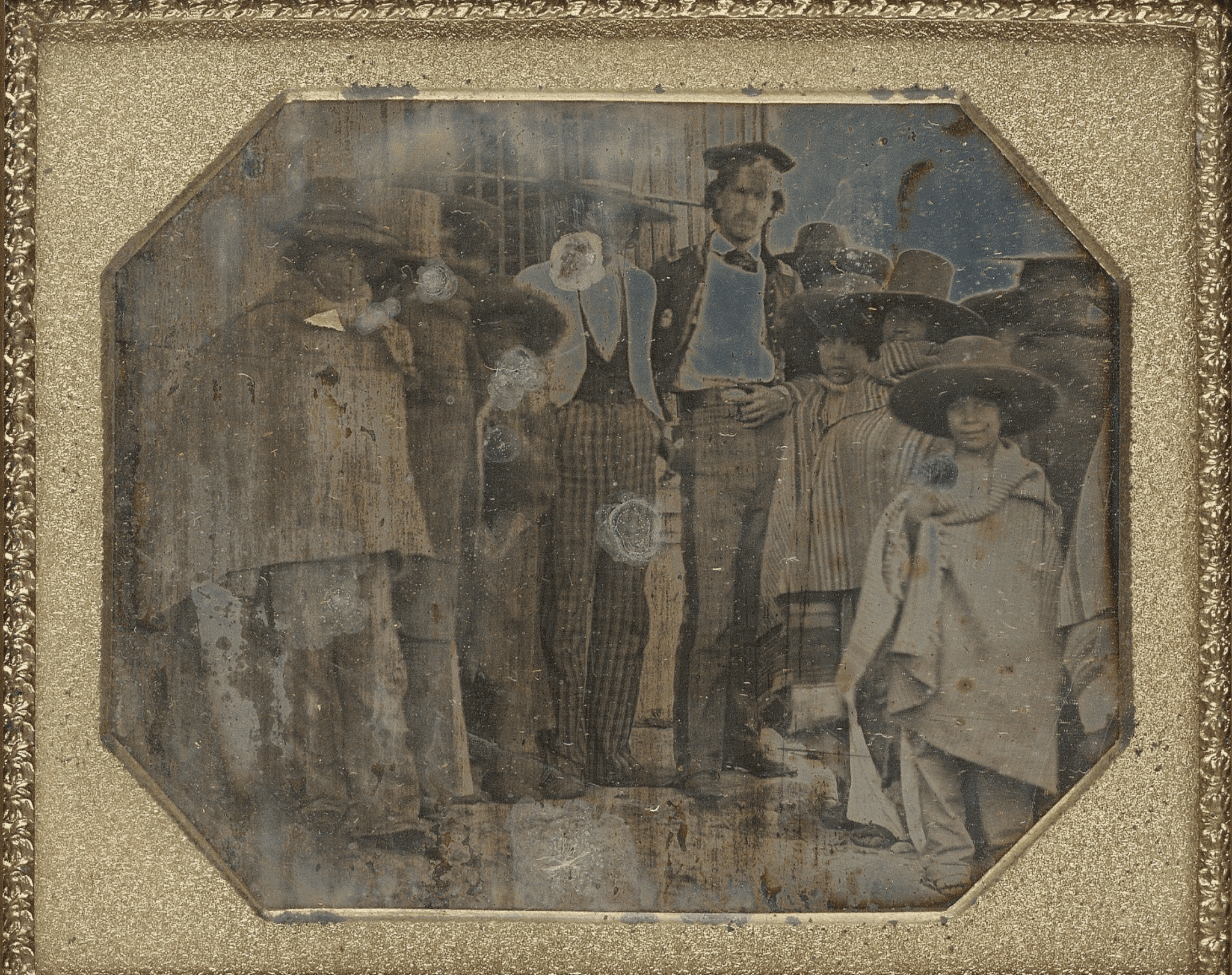
They took McKavett all over the United States, from Florida during the war against the Seminoles, to New York during the Canadian boundary dispute, to Arkansas while removing Native Americans there. He eventually rose to the rank of captain in the 8th U.S. Infantry by 1840.
In 1846, he headed to Mexico with the regiment, fighting in the war’s first two battles at Palo Alto and Resaca de la Palma. While at the town of Cerralvo, he became sick with dysentery and was confined to his tent. Stephen Compton Smith, an acting surgeon with Brig. Gen. Zachary Taylor’s Army of Occupation, attempted to dissuade him from rejoining his regiment as it prepared to march on Monterrey and a battle on the horizon.
With “a melancholy smile” McKavett told Smith, “I must proceed to Monterey; I feel an irresistible impulse urging me onward,—an impulse which I would not overcome. I know I shall be the first officer to fall before the town, and I would not shrink from my destiny.” He thanked Smith for his concern, bade him farewell, and assured him it would be the last time they would meet in this life.
As he had predicted, McKavett was killed early in the battle on September 21 as he marched down the Saltillo Road under fire from Mexican batteries on Independence Hill and Federation Hill. Abner Doubleday, a second lieutenant in the 1st U.S. Artillery, was drawn to a group of soldiers holding a hasty funeral by the side of the road and approached them. He soon discovered that the body was that of his friend McKavett, whom he had come to know well at Cerralvo. Doubleday had heard that his friend had prophesied his own death. He was told (likely by one of the soldiers in the burial party) that as the column was advancing, McKavett had looked up toward a small cloud in the sky and muttered, “It is my evil destiny.” A moment later, an enemy cannonball passed by McKavett, just missing him. Then a second shot came from the same battery, this time striking him and cutting him in two.
“I turned away when the body was brought up for I had no desire to see what lay beneath that bloody blanket,” Doubleday recalled. “He sleeps his last sleep in a lovely spot. The corn waves above his tomb, the brook murmurs as it passes by and far above him the cloud capped sierras rear their heads as an eternal monument.”
After his death, McKavett’s will was discovered in his trunk, leaving the Orphan Asylum Society all his property, amounting to around $1,800, roughly $75,000 today.
Numerous memorial tablets in the orphanage’s original chapel honored those who left a lasting impact and made financial contributions to the institution. “These inscriptions, seen in the golden sunset light of an autumn evening, are given at some pains, for like illuminated manuscripts of the olden time, they tell of the Asylum’s history and its work,” an observer noted in 1876. Among the names inscribed on the tablets were those of Eliza Hamilton and McKavett. His tablet read:
Sacred to the memory of Capt. Henry McKavitt. He was reared in this institution, graduated at West Point, and died in the service of his country at the battle of Monterey, September, 1846. He bequeathed all his property to this asylum.
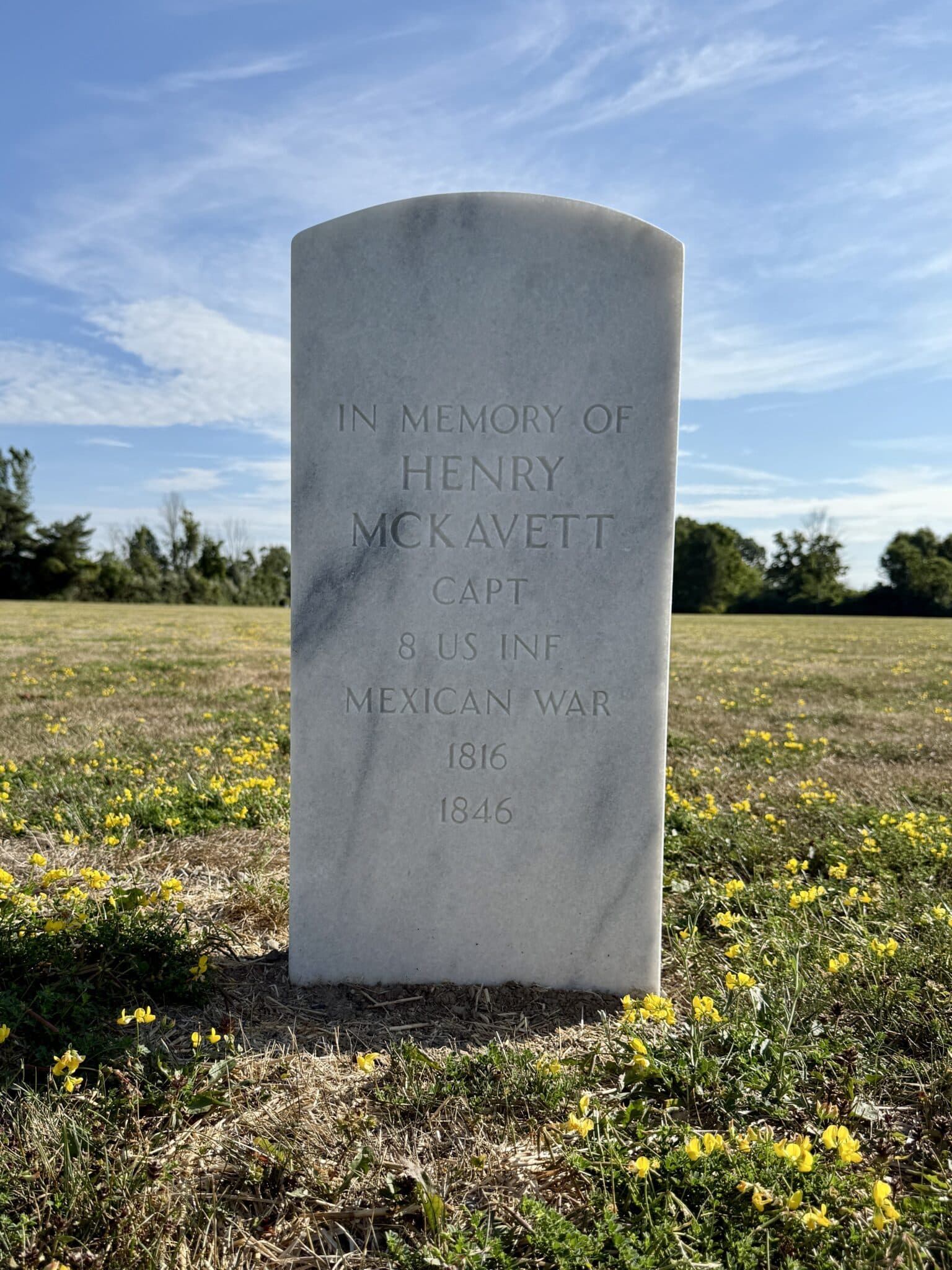
The chapel is gone, and the site of McKavett’s grave is no longer as peaceful as Doubleday remembered it in 1846. If any trace of his remains still exists (which is unlikely), they lie entombed beneath modern-day San Jerónimo Avenue. To honor him, a government-issued memorial headstone was installed at New York State Veterans Cemetery – Finger Lakes (also known as Sampson Veterans Memorial Cemetery) in Romulus, New York.
Shrouded Veterans is a 501(c)(3) nonprofit organization dedicated to rescuing the neglected graves of 19th-century veterans, primarily Mexican War (1846-48) and Civil War (1861-65) soldiers, by identifying, marking, and restoring them. You can view more completed grave projects at facebook/shroudedvetgraves.com.


Thanks for resurrecting Captain KcKavett’s story and remembering his service and the generosity of his benefactor, Mrs. Hamilton.
Thank you, Frank, for the good work of the Shrouded Veterans Foundation.