Introduction: Battle’s Thunderous Roar
 Napoleon Bonaparte once famously stated that, “It is with artillery that war is made.” He may have been biased, being an artillerist himself, but there’s little reason to doubt that, some 50 years after Napoleon’s forced retirement, artillery played a critical role in the Civil War.
By one estimate, 12% of Civil War casualties were caused by artillery – a small percentage compared to small arms fire, but still tens of thousands of men killed and wounded. Some of the war’s most important battles were dramatically influenced by artillery. From the massed batteries at Malvern Hill, to the Confederate guns at Hazel Grove, to Henry Hunt’s overwhelming firepower against Pickett’s Charge, artillery repeatedly shaped the course of America’s bloodiest conflict.
In large part, it was Confederate artillery at Fredericksburg. that inspired Lee’s famous quote, “It is well that war is so terrible, otherwise we should grow too fond of it. On the Union side, no less of a general than Sherman declared that “A battery of field artillery is worth a thousand muskets.”
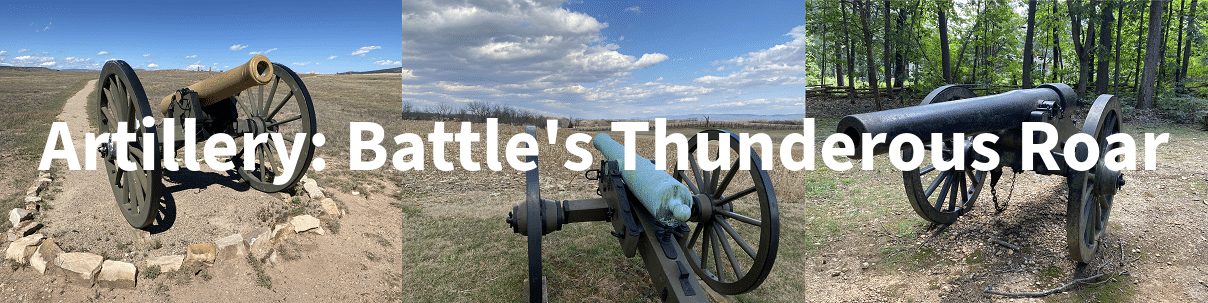
Today, artillery pieces are one of the most striking visual elements of preserved battlefields. Almost all of us have taken the time to photograph a particularly distinctive artillery piece. (Use the comments to guess where the photos in the banner were taken! Artillery reenactments are relatively unusual, but unforgettable to see in person.
With that in mind, over the next couple of weeks, we’ve asked Emerging Civil War’s writers and historians – along with a guest or two – to dig into the stories of the big guns that shaped the Civil War. You can look forward to the first of these posts later today.


Missed an opportunity to use the expression “king of battle”
Mendenhall’s Battery at Stones River breaking Breckinridge’s assault.