Michigan Schoolteacher Survives Wound, Sickening Losses at Chickamauga
The prophet Elijah was a teacher in Israel and engaged in spiritual warfare against the prophets of Baal, affirming that Yahweh was the true God. (“Elijah” literally translates to “Yahweh is my God.”) More than 2,700 years later, his namesake, Elijah Henry Crowell — also a teacher and a devout believer in God — went to war, but for a different cause.
On July 18, 1862, Crowell, a 33-year-old schoolteacher from Greenville, was appointed second lieutenant of the 21st Michigan Infantry. In 1848, he graduated from the New York State Normal School in Albany (today the University at Albany) and went west, teaching in Utah and California. By August, he was promoted to captain and took command of Company F, one of the regiment’s 10 companies.
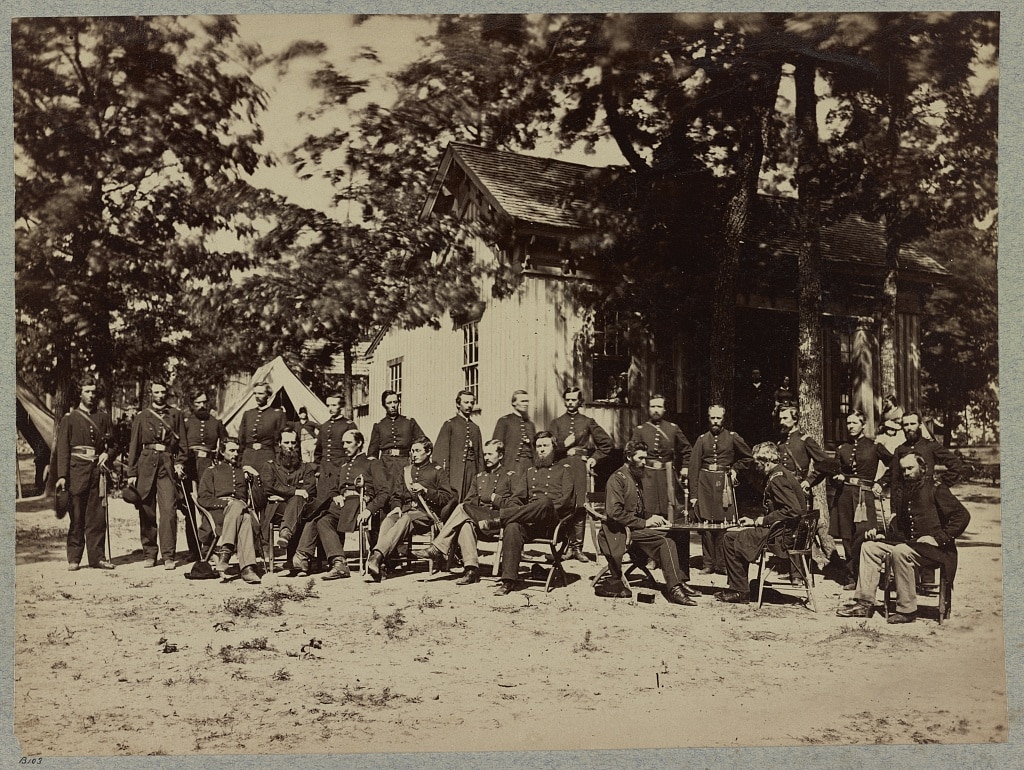
The Wolverines under his command found him to be “a first-rate captain,” and Pvt. Chauncey H. Peck noted that “we like him better every day.” The post delivered hard news in mid-August, when Crowell received a devastating letter saying his young son had died, which Peck said left him “very much afflicted.”
The next month, at the Battle of Chickamauga, Crowell’s brigade, under Brig. Gen. William H. Lytle’s command, was badly cut up when it encountered Lt. Gen. James Longstreet’s assaulting troops. Lytle was among those killed. Crowell’s colonel was wounded three times and captured, and his lieutenant colonel was wounded twice, the second shot mortally wounding him. Crowell was wounded in the left knee but managed to evade capture when the regiment retreated under overwhelming pressure.
Col. Francis T. Sherman of the 88th Illinois Infantry, who had missed the battle, wrote home to his father after speaking with Crowell, stating that the brigade’s loss was “terrible and sickening.” In Crowell’s regiment alone, of the 311 engaged, 106 were killed, wounded, or missing — more than one-third of the regiment.
At the end of November 1863, the 21st Michigan’s veterans were assigned to duty with the Engineer Brigade in the Department of the Cumberland and assisted in building bridges and hospitals, erecting storehouses, running mills, and completing other projects around Chattanooga. From January until the regiment was relieved from engineer duty in September 1864, Crowell served as provost marshal of the brigade.
On November 14, 1864, Crowell was unanimously elected colonel of the 21st Michigan, but poor health kept him from taking the field again at the head of the unit and participating in Maj. Gen. William T. Sherman’s campaign in Georgia. He was honorably mustered out of service on June 8, 1865.
Crowell exchanged an officer’s field desk for an educator’s desk after the war and, in 1871, was elected superintendent of public schools in Montcalm County, Michigan. In 1876, Joseph K. Fairchild, editor of the Montcalm County Journal, noted that the county’s public schools under Crowell’s direction were staffed by “excellent and able teachers” organized under five department heads — all women, including Crowell’s wife, Sarah — and served 277 students.
“Regarding Prof. Crowell, principal, and his excellent wife, instructor in the B Primary department,” Fairchild wrote, “we speak from long personal acquaintance, and know them to possess rare talented qualities as tutors.”
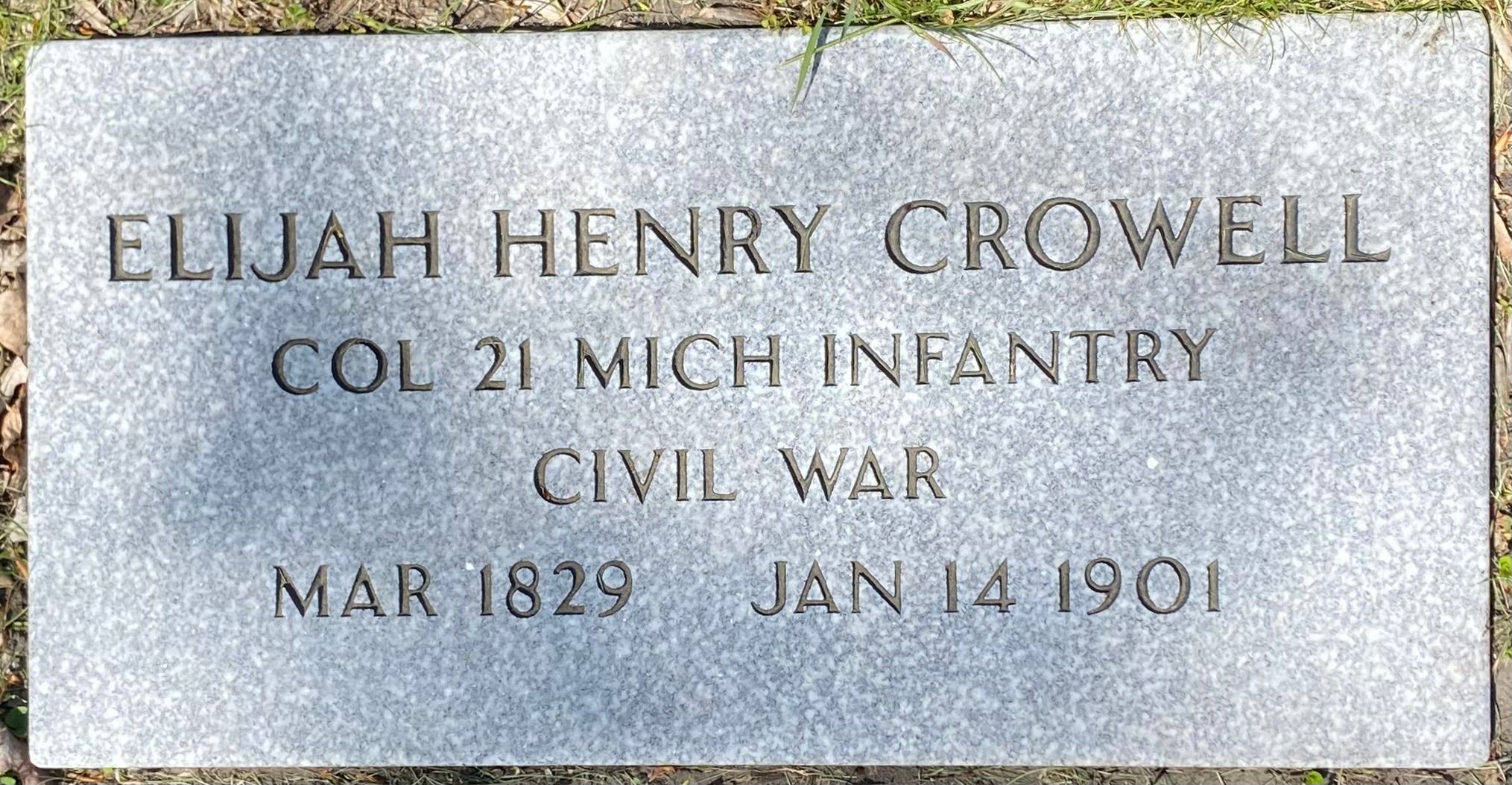
Crowell died on January 14, 1901, in New Jersey, at age 71, and his body was stored in a vault at Mount Pleasant Cemetery in Newark until the spring. On March 31, his remains were interred at Woodmere Cemetery in Detroit. Veterans of the Fairbanks Post, G.A.R., escorted his casket to the burial plot, with six serving as pallbearers. The post quartet sang during the funeral service. A government-issued headstone was placed at his previously unmarked grave.
Shrouded Veterans is a 501(c)(3) nonprofit organization dedicated to rescuing the neglected graves of 19th-century veterans, primarily Mexican War (1846-48) and Civil War (1861-65) soldiers, by identifying, marking, and restoring them. You can view more completed grave projects at facebook/shroudedvetgraves.com.


Frank, thanks for bringing to life the story of a Michigan Civil War soldier and educator with such care, diligence, and respect. Through meticulous research and thoughtful narrative, this biography restores individuality and dignity to a man whose service helped preserve the Union but whose personal story and grave might otherwise have been lost to time.
As always, thank you so much for taking the time to leave such a nice comment on one of my blog posts, Bill. It means the world to me and keeps me motivated to continue sharing my Shrouded Veterans projects here.
Thanks for the story. So many lost to history. It’s great to recognize and bring light those and their stories who otherwise may have gone unnoticed and without a grave to mark their final resting place.