A Holiday Season of Departing Secessionists: Christmas 1860 on USS Richmond
Following Abraham Lincoln’s election as president in November 1860, the country’s eyes turned south to see reactions that rather quickly resulted in the secession of states that then formed the Confederacy. On December 20, 1860, South Carolina approved its ordnance of secession declaring “that the union now subsisting between South Carolina and Other States, under the name of ‘The United States of America,’ is hereby dissolved.”[1]
This ordnance triggered reactions amongst the officers of the Federal government from South Carolina. Decisions needed to be made about loyalty to the United States or to South Carolina itself. Many of those officers were contemplating their decisions far from home, with a cluster of South Carolina officers spending the 1860 Christmas holiday preempting official word of their state’s secession far off on USS Richmond in the Mediterranean Sea.
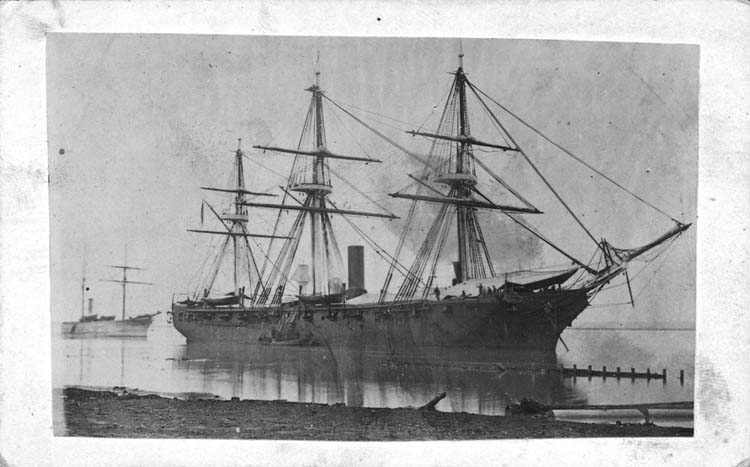
Richmond was a new ship, only completed and commissioned earlier in 1860. The steam-sloop was on its maiden deployment, serving as flagship of Flag Officer Charles H. Bell’s Mediterranean Squadron. When it left the United States in October, the sloop mustered some 30 officers and 260 sailors. Richmond crossed the Atlantic, reaching Gibraltar on November 8, two days after Lincoln’s election. The ship then steamed east, docking in Sardinia and Genoa before the end of the month.
While in Italian waters, Richmond’s southern-born officers learned of Lincoln’s election, with many wondering if secession was inevitable. The sloop was packed with southern officers, with a large concentration of those being from South Carolina. Richmond’s skipper was Palmetto State native Captain Ducan Ingraham. Among its five lieutenants was South Carolinian Alexander Warley and North Carolinian Francis Sheppard. Among the ship’s other southern officers was its sailing master, South Carolinian William Dozier, its chief engineer, James H. Warner, Virginia engineer Virginius Freeman, Florida engineer Henry Fagan, and Virginia carpenter Edward Williams.[2]
All these officers ended up in Confederate uniform, but in in November 1860, with word of Lincoln’s election, an organized Confederacy was still far away, and the officers spent much time discussing what each should do if their state were to secede. The South Carolinians, with Captain Ingraham amongst them, led these discussions. At Christmas approached, decisions were being made.
The first of Richmond’s officers to depart was William Dozier, the sloop’s sailing master. On December 3, 1860, he wrote a short letter to Flag Officer Bell explaining “it being my intention to resign my commission as a Lieutenant in the U.S. Navy,” he requested “permission to return to the United States for that purpose.”[3] Bell quickly granted permission, and on December 4, 1860, Dozier “left the ship,” 16 days before his native state approved its own secession.[4]
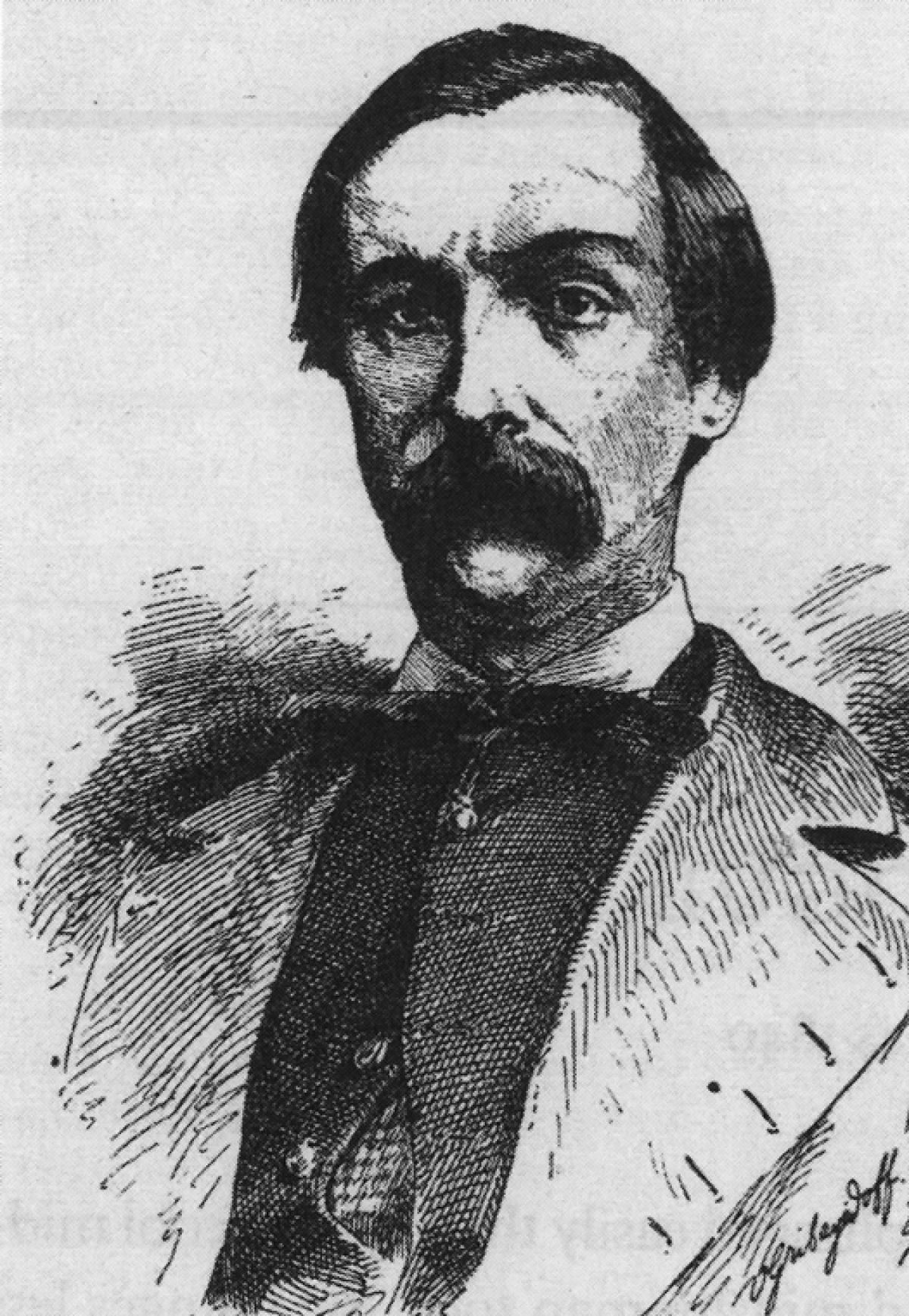
Dozier’s departure only increased talk amongst Richmond’s wardroom regarding their own decisions. On Christmas Eve, Lieutenant Alexander Warley wrote his own letter requesting “permission to return to the United States for the purpose of resigning my commission.”[5] Warley stepped off Richmond’s deck on Christmas day, 1860. The ship’s log recorded that “on his departure the crew gave him three cheers.”[6] Those cheers must have been quite mixed. For Ingraham and other Southern officers, perhaps they were cheers of encouragement, but for Landsman Evans Covington, a Black freeman, they surely were cheers of confusion.[7] It was not the last Richmond’s crew would see of Warley; just ten months later, Warley commanded the Confederate ironclad Manassas when it rammed Richmond at the battle of the Head of Passes.
Captain Ingraham was next. On December 28, he received a letter advising that “there not seems the least doubt” that South Carolina would secede, and the captain wrote Flag Officer Bell asking permission to also leave the ship.[8] He departed Richmond on January 2, 1861, as sailors “manned the rigging and gave three cheers.”[9] This left Richmond without a captain. Flag Officer Bell himself stood in temporarily until Captain John Pope arrived from the United States on March 19 to assume command.
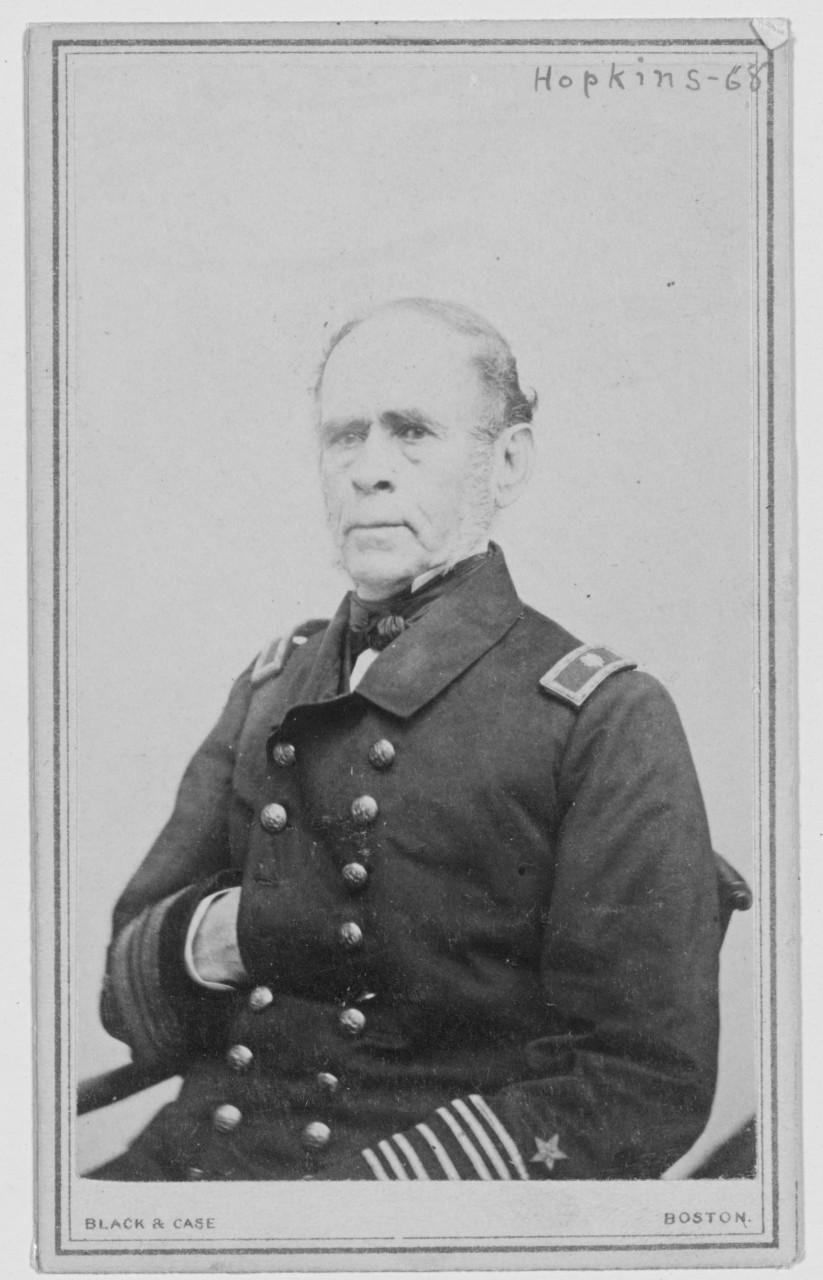
Two days after Ingraham departed, Warley’s good friend, Lieutenant Thomas B. Huger, the executive officer of fellow-Mediterranean Squadron sloop USS Iroquois, submitted his own letter to Bell to depart, citing that “information from my family leads me to believe that the State of So Ca of which I am a Citizen will secede from the Confederation.” Dozier, Warley, Ingraham, and Huger were all present in Charleston on April 12, 1861, commanding land batteries and improvised harbor defense vessels, all while on that same April 12 their former Richmond shipmate, U.S. Marine Private John C. Applegate, passed away in Italy.
Richmond’s 1860 Christmas season was certainly one of deep introspection, goodbyes, and officers and sailors questioning loyalties and fellow crew members. It may have been one of the earliest instances of such activity, but was merely one example of many where Southern officers confronted all this amidst the secession crisis.
Endnotes:
[1] Declaration of the Immediate Causes Which Induce and Justify the Secession of South Carolina from the Federal Union; and the Ordnance of Secession (Charleston, SC: Evans & Cogswell, 1860), 11.
[2] A full listing of Richmond’s officers in its 1860 cruise can be found in USS Richmond Log 1860 Journal of a Cruise in the U.S. Steam Sloop Richmond, MSS 0097, Item 0041, University of Delaware Library, Museums and Press.
[3] Dozier to Bell, December 3, 1860, Mediterranean Squadron, Letters Received by the Secretary of the Navy from Commanding Officers of Squadrons, M89, RG 45, U.S. National Archives.
[4] December 4, 1860, Journal of a Cruise in the U.S. Steam Sloop Richmond.
[5] Warley to Bell, December 24, 1860, Mediterranean Squadron, Letters Received by the Secretary of the Navy from Commanding Officers of Squadrons.
[6] December 25, 1860, Journal of a Cruise in the U.S. Steam Sloop Richmond.
[7] For more on Evans Covington, see Neil P. Chatelain, “Evans Covington: Freeman, Husband, Sailor, Soldier,” The Hellfighter: The Online Journal of African American Military History, Vol. 2, No. 3, Fall 2024, 11-18.
[8] Ingraham to Bell, December 28, 1860, Mediterranean Squadron, Letters Received by the Secretary of the Navy from Commanding Officers of Squadrons.
[9] January 2, 1861, Journal of a Cruise in the U.S. Steam Sloop Richmond.


Excellent, gap-filling, thought-provoking and otherwise informative article. Thank-you!
It is of interest that there were two “Warrington Navy Yards” during the Civil War: one at Charleston, South Carolina and the other at Pensacola, Florida. And Captain Duncan Nathaniel Ingraham served at both…
From a letter dated 2 April 1861 and sent from the Navy Yard [at Pensacola] to Captain H.A. Adams, Commanding U.S. Naval Forces in the Gulf of Mexico south of Pensacola, Captain Ingraham, CSN bemoans the loss of Lieutenant O.H. Berryman, commanding USS Wyandotte, who died “suddenly and unexpectedly” while on duty. U.S. Naval Officer Berryman was buried at what is now called Barrancas National Cemetery; his service was attended by officers of the United States Navy and the Confederate States Navy.
And Captain Ingraham’s old ship, USS Richmond, also made an appearance in the Gulf off Pensacola: over two days in November 1861, USS Richmond and USS Niagara used their powerful guns to blast Confederate-occupied Fort McRee NEARLY to smithereens. [The destruction of Fort McRee was completed in a subsequent bombardment January 1862… which is why there are no longer FOUR masonry forts guarding Pensacola Bay and its Navy Yard.]
All the best
Mike Maxwell