Book Review: Thoughts that Burned: William Goodell, Human Rights, and the Abolition of American Slavery

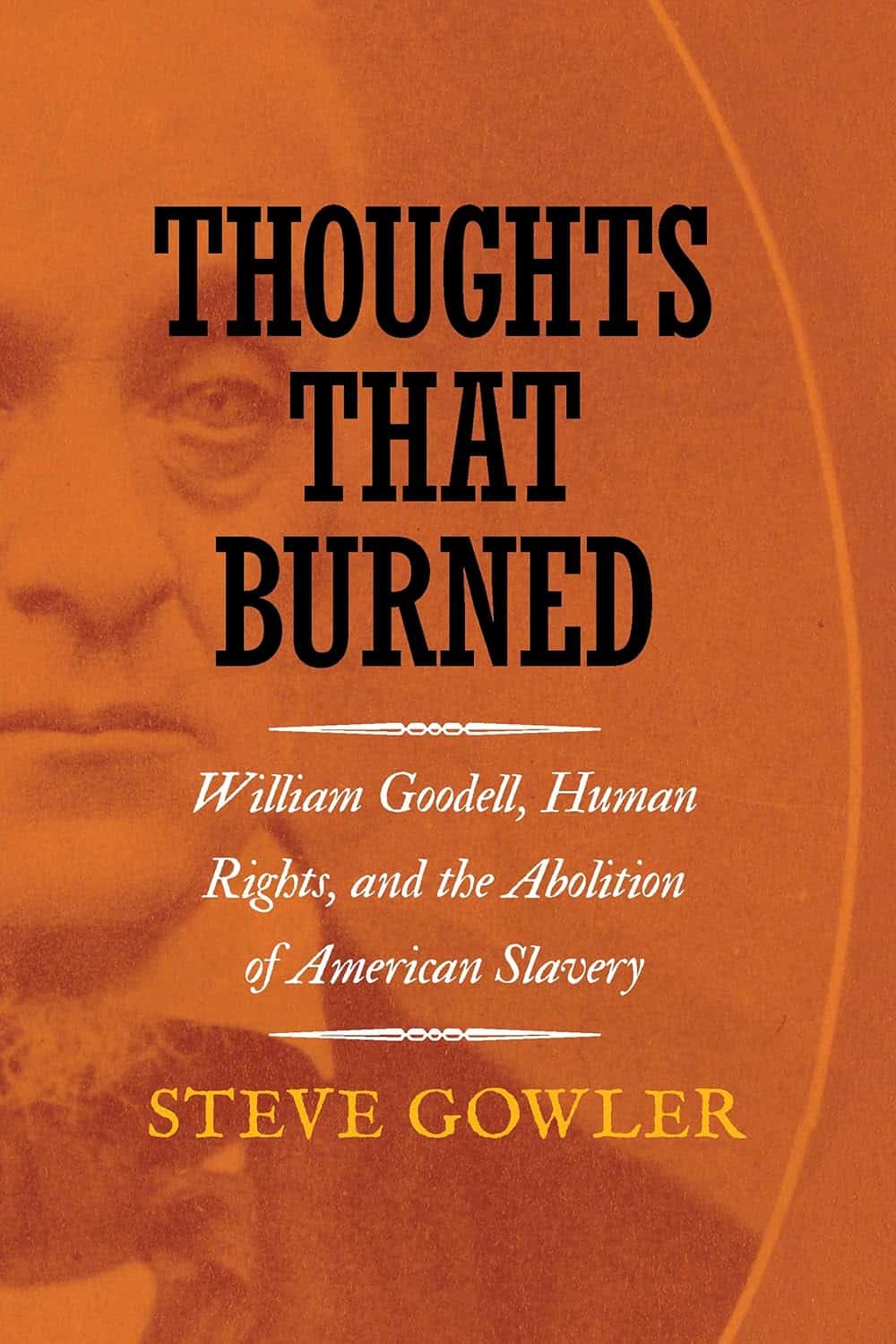 Thoughts that Burned: William Goodell, Human Rights, and the Abolition of American Slavery. By Steve Gowler. Ithaca, NY: Cornell University Press, 2025. Hardcover, 288 pp., $51.95.
Reviewed by Tim Talbott
A generation into the future, when we look back, we may just recognize that we are currently experiencing a golden age in abolitionist biographies. The last decade has produced a plethora of scholarship about the recognized, as well as the more obscure, movers and shakers of the 18th and 19th century’s most important human rights movement. The past year alone brought new life studies about Thomas Wentworth Higginson, Jermaine Loguen, Charles Sumner, John Brown, Elisha Tyson, Anthony Benezet, and George Boutwell. Adding to the list of 2025 abolitionist biographies is Steve Gowler’s Thoughts that Burned: William Goodell, Human Rights, and the Abolition of American Slavery.
William Goodell’s name is probably not among the antebellum abolitionist activists that immediately spring to most present-day American’s minds. However, Gowler’s biography provides a much-needed spotlight on a man who has unfortunately become largely forgotten. As Gowler explains in the book’s introduction, “A Moral Steam Engine,” Goodell, “For forty years . . . labored on the front lines of the nineteenth century human rights movement to abolish slavery in the United States. As editor, lecturer, organizer, and writer he exposed the evil of a system that made property of persons, and he proclaimed the urgency of bringing that evil to an immediate end.” (2)
Goodell’s pre-abolitionist background included periods spent running businesses in places like Wilmington, North Carolina and Alexandria, Virginia, where he had the opportunity to see first hand the enslaved and slavery as it was practiced. As a young man he also was able to travel to China, India, and Europe while serving as a ship’s clerk. As Gowler explains, “Goodell departed Integrity with fresh eyes and a habit of questioning received ideas. He discerned and often noted the common humanity of the diverse peoples he encountered.” (23)
Despite Goodell being a bit older than many of his immediate abolition contemporaries (he was born in 1792), he was just as fervent and vocal in his demands for the end of slavery as individuals like William Lloyd Garrison and Wendell Phillips. Growing up when he did, as part of the first generation of the early American republic, influenced Goodell’s thinking and actions. Gowler notes that, “Along with a few likeminded interpreters, such as Lysander Spooner, Gerrit Smith, Alvan Stewart, Joel Tiffany, and Frederick Douglass, Goodell promoted a radical liberatory reading of the Constitution.” (7) Whether editing reform newspapers, playing a leading role in forming organizations like the American Anti-slavery Society, the American Missionary Association, or the Liberty Party, Goodell continued to believe that the Constitution was an instrument for realizing abolitionist goals. While this view put him at odds with some abolitionists like Garrison, it helped form strong bonds with others who were of similar mind.
Gowler organizes his study of Goodell into three parts. Part One: Moralist in the Making has two chapters; Part Two: Abolitionist Agonistes contains three chapters; and Part Three: True to the End, concludes the book with two chapters. Gowler’s research, as witnessed by almost 70-pages of notes and bibliography, mines a wealth of primary sources including Goodell’s private and public letters, newspaper editorials and articles, and speech transcripts. A handful of images spread throughout the book help readers visualize some of the personalities mentioned within the book. A helpful “Chronology of William Goodell’s Life and Work” is also included.
Thoughts that Burned is a welcome addition to abolitionist historiography. Readers will find within its covers a well-researched and written biography of a man who was ahead of his time in both his thinking and actions in the effort for the advancement of human rights.


