Attack of the Mules: The Battle of Valverde’s Most Unexpected Sacrifice
William Faulkner once wrote that, “A mule will labor ten years willingly and patiently for you, for the privilege of kicking you once.” For some Union soldiers fighting in New Mexico, that may have hit a little too close to home.
While most of the attention paid to “heroes with hooves” in the Civil War is given to horses, mules more than pulled their weight moving supplies, wounded soldiers, and occasionally entire mounted units. These famously stubborn animals played a critical role for both the Union and Confederate armies. Theirs was typically a thankless job, but for one brief moment, two mules nearly earned a dubious kind of glory.
In early 1862, Confederate Brigadier General Henry Hopkins Sibley invaded the New Mexico Territory with 3,000 mounted Texans. They were opposed by Colonel Edward R.S. Canby, the famous frontiersman Kit Carson, and a rough collection of U.S. Army regulars, New Mexico volunteers and militia, and a single company of Coloradans. The Union forces had spent months concentrating around Fort Craig, which blocked Sibley’s route up the Rio Grande River toward the territorial capital of Santa Fe, and beyond that, the recently-discovered gold mines of Colorado.
Sibley’s force was too poorly supplied to successfully besiege the fort. In terms of artillery, he was armed with just a battery of mountain howitzers – light guns that could be broken apart and carried in pieces over long stretches of rough terrain. These were helpful for lending some extra firepower to a mobile frontier expedition, but were never going to be enough to batter Fort Craig into submission.
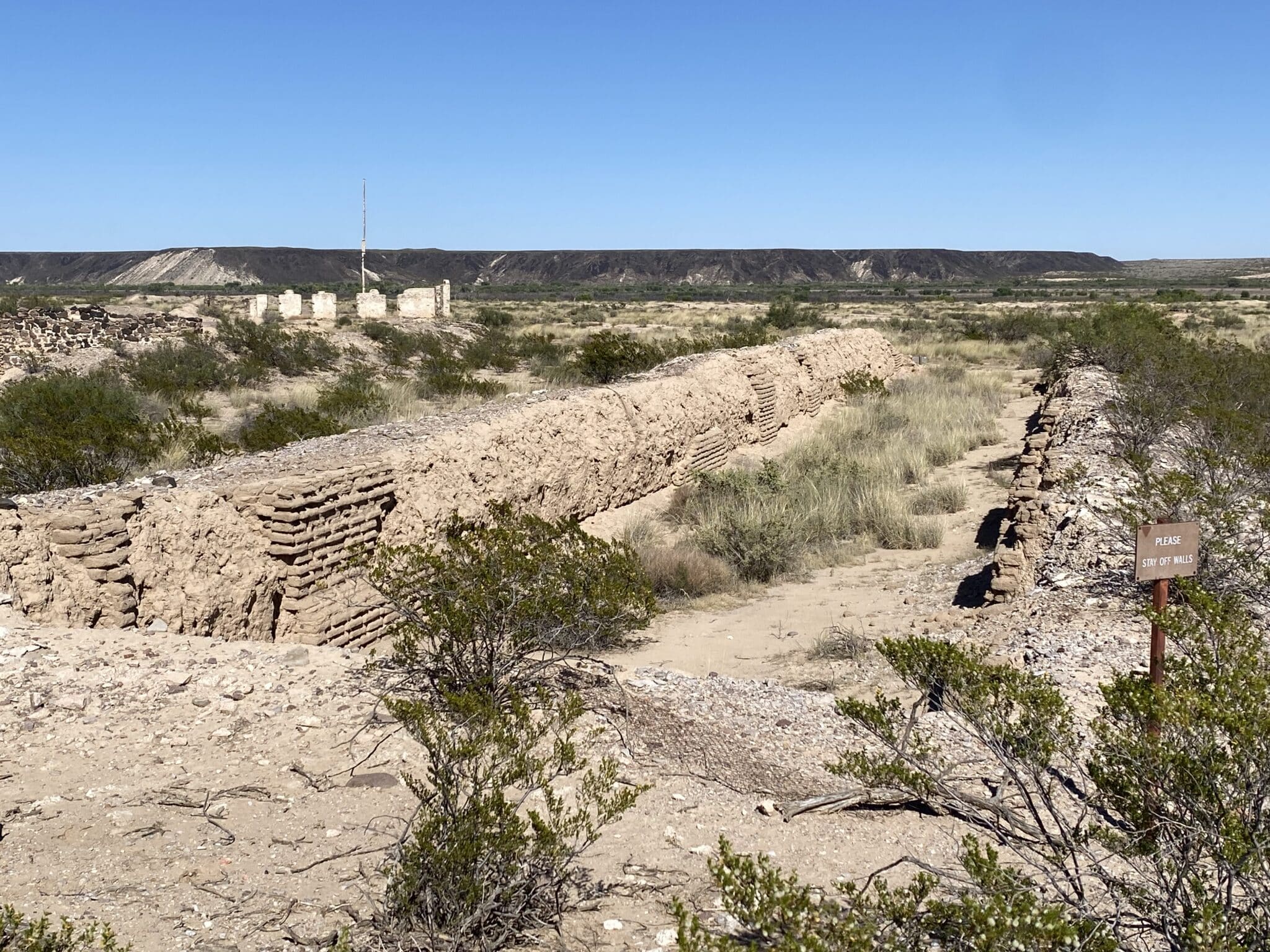
Instead, Sibley’s self-proclaimed Army of New Mexico undertook a multi-day flank march. Swinging wide around Fort Craig, they forded the Rio Grande River, and marched north along a particularly brutal stretch of desert. Their plan was to block Canby’s supply lines, hoping to force him to leave his fortifications and fight them out in the open.
Being mounted gave the Texans a strategic advantage in terms of speed and mobility. This was especially valuable while crossing the sparsely populated, lightly defended deserts of the Southwest. But thousands of horses also dramatically increased the logistical burden of the Confederate Army of New Mexico. If a typical army marches on its stomach, then a mounted army is riding around with twice as many mouths to feed.
Veterans of frontier warfare, Canby and Carson had spent months plotting how to take advantage of the Confederates’ mounted Achilles’ heel. After a failed attempt to attack and disrupt Sibley’s flanking column as it was strung out on the march, the Union leadership turned to less conventional means.
This campaign was fought over incredibly arid terrain, known locally as the Jornada del Muerto, or Dead Man’s Journey. The only significant source of fresh water was the Rio Grande River, which lay between the two armies. The long flank march had left Sibley’s men and animals desperately thirsty. One Confederate recalled, “But they and their animals were exhausted and suffering the pangs of a consuming thirst. The cry of the horses and mules in their agony was most pitiful.” [1]
As legend has it, the Federal leadership hatched a new plan to fend off the Confederate offensive. Spearheaded by Captain James “Paddy” Graydon, they gathered up a pair of trusty pack mules. Both were loaded with wooden boxes full of 24-pounder artillery shells, and quietly brought across the Rio Grande. In the dark of night, their plan was to lead the two mules to the edge of Sibley’s camp, light the fuses, and let the booby-trapped animals wander among the Texans’ and their horses to sow chaos.
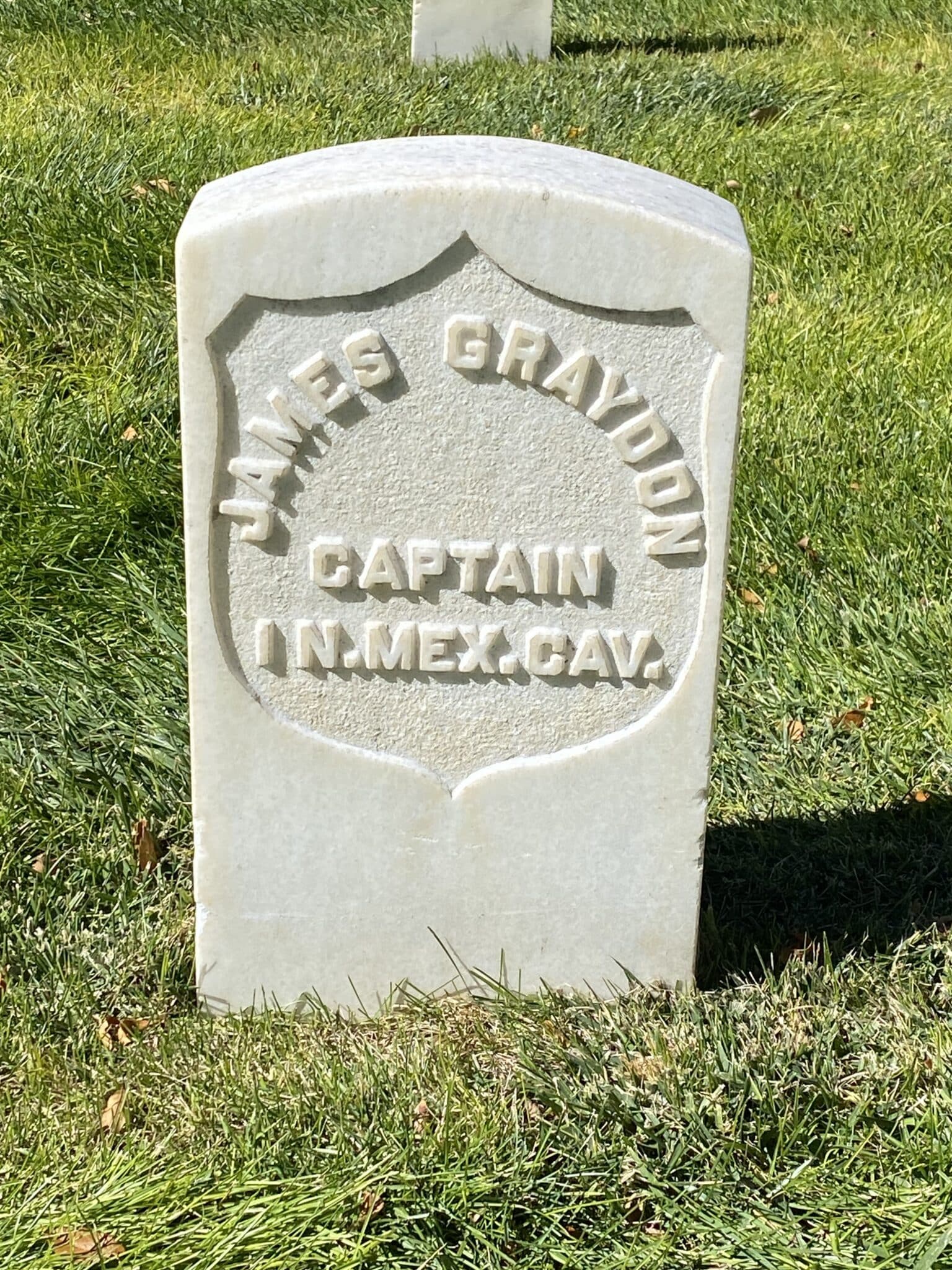
But as Faulkner might have warned them, army mules are as stubborn and cantankerous as they come. Once the fuses were lit, the would-be Union saboteurs fell back…only to discover that the mules were following them. The exploding artillery alerted the Confederate camp, and Graydon and his troopers had to beat a quick retreat back to Fort Craig.[2]
While the impromptu clandestine operation didn’t quite work as intended, the disruption seems to have spooked Sibley’s pack animals and mounts, hundreds of which stampeded into Union lines overnight.[3]
The small number of participants in this campaign left behind just a handful of good firsthand accounts. While primary sources describing the mule attack are scarce, the resulting stampede is well-documented. And with their efforts to rehydrate having been thwarted on the night of February 20 – 164 years ago today – the Confederates went into the resulting battle of Valverde desperately needing to reach fresh water.
There were countless ways to die in the Civil War, none of them pleasant: Disease, gunshot wounds, artillery, and the occasional bayonet combined to claim hundreds of thousands of lives through the four years of conflict.
But being intentionally blown up by your own side? That fate may have been reserved for a couple of unlucky mules in New Mexico.
————
Sibley’s invasion of New Mexico, and the lengths the Union went to in order to preserve their position in the region, have often been forgotten in favor of the larger battles and campaigns further east. If you’d like to read more about the fight for the Southwest, keep an eye out for our upcoming installment in the Emerging Civil War Series, Desert Empire: The 1862 New Mexico Campaign.
[1] Thompson, Jerry. Civil War in the Southwest: Recollections of the Sibley Brigade. Texas A&M University Press, 2001, 46.
[2] George H. Pettis. “The Confederate Invasion of New Mexico and Arizona,” Battles and Leaders of the Civil War, 1888, 103-111.
[3] Thompson, Jerry. Civil War in the Southwest: Recollections of the Sibley Brigade. Texas A&M University Press, 2001, 46; United States. War Records Office, et al.. The War of the Rebellion: a Compilation of the Official Records of the Union And Confederate Armies, Series I, Volume IX, Chapter XXI. 1880, 488.


In the parlance of the day, “torpedo mules.”
Neat story, although hard on the poor mules.
Good article. I’m looking forward to “Desert Empire”!
Great article. Having occasionally had to follow an outfitter with pack mules on a trail into the mountains on climbing trips, Canby and Carson could have foregone the ordnance, and just made sure the mules were fed a large meal of grass. Sibley’s troops would have bolted back to Texas. LOL
Nice article, Pat, Loved the Faulkner quote. Always great to read about the exploits of horses and mules in the Civil War.
No one should dare follow closely behind a mule, whether it be pulling a wagon, or a plow or any other implement. Like all living organisms, mules frequently answer a call to nature to expel waste from the processing of nourishment. The removal of said waste products can be in the form of solids, liquids or gas, and mules offer no warnings, perhaps intentionally, of the impending event.
To anyone following closely, extreme vigilance is necessary to either dodge the solid “shots” or the liquid “showers.” And under no circumstance should a close follower dare to posses any source of ignition such as a pipe, cigar or cigarette, or a lighted match.
This tale is retold from a narrative of a young Georgia boy from Depression times who’s labored with a plow behind a mule who made the mistake of attempting to dispel the odor of a mule fart by striking a match. And so it was that the young lad learned to the explosive power of methane gas.