High-Bounty Men in the West: A Preliminary Look
ECW welcomes guest author Edwin Rutan.
Civil War historians have long derided the men who joined the Union army later in the war, after the Enrollment Act had been adopted and when higher bounties were offered, as mercenaries who made poor soldiers.[1] Alexandre Caillot and I have each effectively challenged that criticism for the later-enlisting volunteers in the Army of the Potomac.[2] However, neither of us addressed whether the “poor soldier” accusation is valid for the later-enlisting volunteers in the Union’s Western armies.
To take a preliminary look at that question, I selected six regiments from the Army of the Ohio—the 120th, 123rd, 124th, 128th, 129th and 130th Indiana. They were recruited from late 1863 through early 1864 when the bounties offered in Indiana were “high” (although not the highest compared to other states).[3]
These regiments were manned predominantly by new volunteers.[4] They were actively engaged in combat throughout their service—first in the Atlanta Campaign, then in the various engagements leading to the battles of Franklin and Nashville, and finally in North Carolina in early 1865. (While tested in battle, they were never tested in an especially hot sector of a battle that created a “bloodbath” for the regiments engaged in that sector.) They initially comprised Brig. Gen. Alvin P. Hovey’s (First) Division XXIII Corps, were then dispersed into the Second and Third Divisions, and finally rejoined in Brig. Gen. Thomas H. Ruger’s Division of Brig. Gen. Jacob D. Cox’s Provisional Corps.[5]
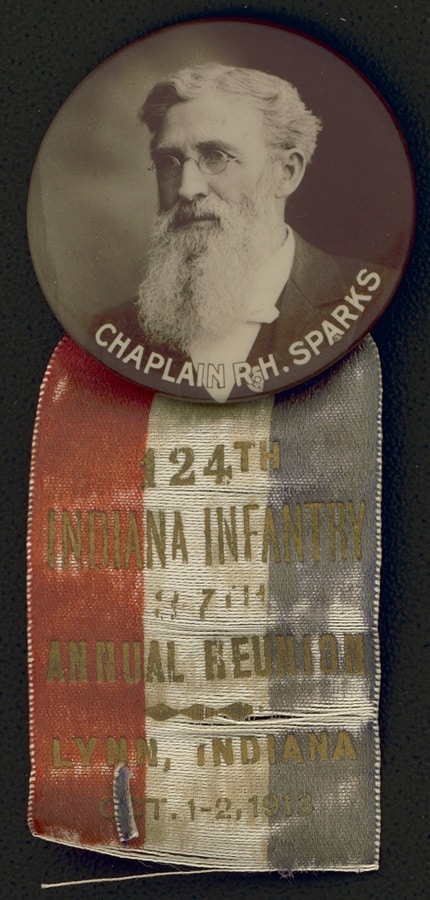
To directly confront the “poor soldier” allegation, the performance of these regiments in combat must be assessed. Whether the men were motivated to volunteer in the first place by patriotism or bounties (or both) or something else is beside the point. The best measure of performance in combat is whether they accomplished their assigned missions.[6] While these six Indiana regiments consistently fought well, three actions stand out.[7]
At the battle of Resaca (May 14-15, 1864), their key mission was to march to the aid of Brig. Gen. Alpheus S. Williams’ Division of the XX Corps then under counterattack “by superior numbers.” They accomplished that mission. Major General John M. Schofield reported that Hovey’s Division “engaged the enemy and assisted in his signal repulse.” Not only was Hovey’s Division under heavy fire for the first time, but they had to advance seven hundred yards “over an open field swept by the enemy’s artillery.” The key elements of their success were maneuvering well under fire, good fire discipline and enthusiasm.[8]
Three weeks later, Hovey’s Division was ordered to move toward Allatoona Church “beyond the extreme left of our army to search for the road leading from Acworth to Dallas” in order to “bring the [Confederate] railroad communications from the north into our lines.” General Hovey recognized the risk. The mission “was regarded as extremely hazardous, as … [t]here was danger of being cut off from the main army.” The first part of the movement was made under heavy rain and the latter part under Confederate artillery fire. Schofield rated the mission as “completely successful. … [C]ompletely turning the enemy’s position and causing him to abandon it at once.”[9]
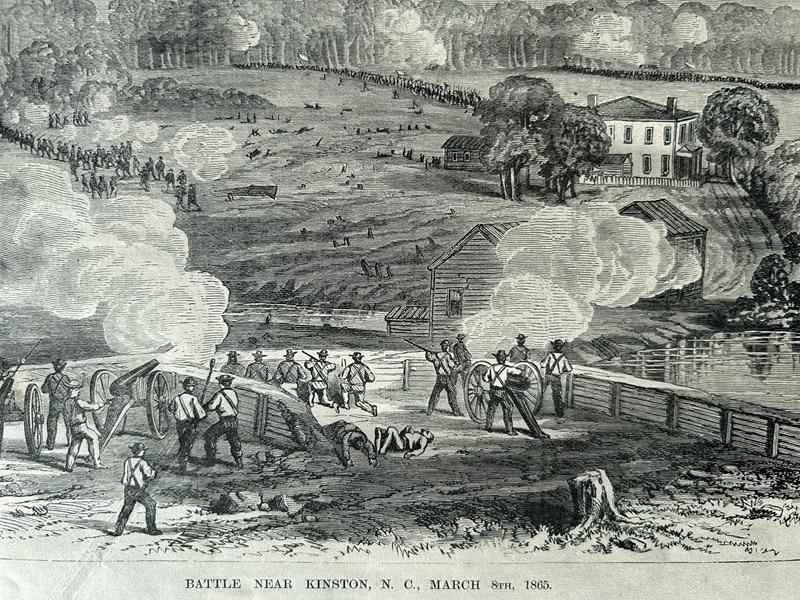
The Indiana regiments distinguished themselves again at the battle of Wyse Fork (near Kinston, North Carolina) in March 1865. Confederate forces were attempting to prevent Cox’s Provisional Corps from linking up with other Union forces for an assault on Goldsborough. The Indiana regiments played a key role in defeating the Confederates. General Cox reputedly remarked that the Indiana men had “nobly sustained the personal reputation gained” during the Atlanta Campaign. Elements of their success were the strong cooperation of regimental and company commanders in the First Brigade, good fire discipline, and light casualties, while inflicting much heavier casualties on the Confederates.[10]
Critics often point to high desertion rates to support the poor soldier accusation.[11] Roughly ten percent of Union soldiers deserted during the war. Desertion in the western states was much lower than in the eastern States on average.[12] I do not have desertion rates for the Indiana volunteers from 1861 and 1862 to serve as a benchmark, but the following desertion rates do not seem excessive: 120th Indiana (5.3%); 123rd Indiana (8.6%); 124th Indiana (5.0%); 128th Indiana (6.6%); 129th Indiana (5.8%); and 130th Indiana (2.9%).[13]
This brief discussion of six Indiana regiments obviously is not conclusive for the later-enlisting volunteers in the West as a group, but their strong, consistent performance suggests that the “poor soldier” criticism may be no more accurate when applied to the later-enlisting volunteers in the West than when applied to the later-enlisting volunteers in the Army of the Potomac. I strongly encourage further research.
Edwin Rutan authored High-Bounty Men in the Army of the Potomac: Reclaiming Their Honor and “If I Have Got to Go and Fight, I Am Willing.” A Union Regiment Forged in the Petersburg Campaign. The 179th New York Volunteer Infantry, 1864-1865. His current research project is “Managing Change: Building and Maintaining Military Effectiveness in the Union Army.”
Endnotes:
[1] Edwin Rutan, High-Bounty Men in the Army of the Potomac: Reclaiming Their Honor (Kent, OH: Kent State University Press, 2024) 1, 4-6, 13-32.
[2] Rutan, High-Bounty Men; Caillot, Late to the Fight: Union Soldier Combat Performance from the Wilderness to the Fall of Petersburg.
[3] Frederick H. Dyer, A Compendium of the War of the Rebellion, (Des Moines, IA: Dyer Publishing Company, 1908), Part III, 1155-56; James Barnett, “The Bounty Jumpers of Indiana,” Civil War History, Vol. 4, no.4 (December 1958), 429-31; Aurora Journal (IN), December 10, 1863, 2; Dearborn County Register (Lawrenceburg, IN), December 18, 1863; Evansville Daily Journal (IN), December 8, 1863; Indiana State Sentinel (Indianapolis), December 28, 1863, January 11, 1864; Journal and Courier (Lafayette, IN) December 18, 1863; Richmond Jeffersonian (IN), November 19, 1863, December 24, 1863; Weekly Republican (Plymouth, IN), December 31, 1863. See also The War of the Rebellion: The Official Records of the Union and Confederate Armies, Series 3, Vol. 5, 746-47.
[4] Roughly a fifth of the volunteers were men who had previously served in other units. Either their term of enlistment had expired, or they were honorably discharged for sickness and had recovered, or other reasons. (Estimate based on Companies A and K for all six regiments. US, Civil War Pension Index, 1861-1900, US National Archives. See generally, Methodology—Prior Service, www.latewarunionsoldiers.org. Draftees and substitutes generally were not assigned to new regiments.
[5] Dyer, Compendium, III, 1155-56.
[6] Rutan, High-Bounty Men, 9, 10-11, 99; Caillot, Late to the Fight, 21,28-30.
[7] See, for example, the reports of the Second Brigade for May 9 to 17, June 9 to 24 and June 23 to August 12, 1864. OR, Series 1, Vol. 38, Part 2, 545-51. The 124th Indiana does have a black mark on its record. The regiment was assigned to guard the Army of the Ohio train on May 14, 1864. An unstated number of the men were found guilty of “straggling from their regiment, committing acts of violence [against civilians] … and thus neglecting to perform the important duty assigned to them…” OR, Series 1, Vol. 38, Part 4, 273; OR, Series 1, Vol. 38, Part 2, 544.
[8] OR, Series 1, Vol. 38, Part 2, 511, 541, 544, 546, 552, 557-58. The 15th Kentucky did criticize the 129th Indiana for ceasing fire while the 15th Kentucky was moving into position to relieve it, giving “the enemy time to turn one of his guns on us,” killing one and wounding two. OR, Series 1, Vol. 38, Part 1, 545.
[9] OR, Series 1, Vol. 38, Part 2, 512, 542.
[10] OR, Series 1, Vol. 47, Part 1, 156, 941, 943-46, 949-51, 977-79.
[11] E.g., Eugene C. Murdock, One Million Men: The Civil War Draft in the North (Madison, WI: State Historical Society of Wisconsin), 1971), 7-8.
[12] Gary Gallagher, The Enduring Civil War: Reflections on the Great American Crisis (Baton Rouge, LA: LSU Press, 2020), 40; Judith LeeHallock, “The Role of the Community in Civil War Desertion,” Civil War History, Vol. 29, no. 2 (June 1983), 128; Ella Lonn, Desertion During the Civil War (Lincoln, NE: University of Nebraska Press, 1998), 226 (“one in seven”/12.8%); Costa and Kahn, “Deserters, Social Norms, and Migration,” Journal of Law & Economics, Vol. 50, No. 2, May 2007, 323 (9%); OR, Series 3, Vol. 5, 668-69.
[13] Calculated from Report of the Adjutant General of the State of Indiana (Indianapolis, IN: Samuel M. Douglass, 1867), Vol. VII, 131-47, 167-97, 254-302. There are two components to calculating desertion rates for Union regiments: (1) men who deserted after signing up and receiving their bounty and never actually reported to their assigned regiment and (2) men who deserted after reporting to their assigned regiment and being enrolled in the regimental records. Rutan, High-Bounty Men, 79-80. Regimental records such as the “Register of Deserters” often do not include the first category. It is not clear whether the Adjutant General Records for the 124th, 128th and 130th Indiana include the first category. The records for the other three regiments apparently do—at least in part. For the 123rd Indiana, the first category accounted for 4.9% of the 8.6% total; for the 120th Indiana, it accounted for .6% of the 5.3% total; and for the 129th Indiana, it accounted for .001% of the 5.8% total. See generally Methodology-Desertion-“Not Taken Up Factor” and No Further Record, www.latewarunionsoldiers.org.


Thanks for this contribution, taking the study of high-bounty men into the West! You demonstrate well that commanders over these six regiments, Hovey and Schofield, thought highly of their combat performance in the early reports on the actions you cover in the Atlanta Campaign and beyond. I’m wondering a bit about memoirs. Did any commanders who led or witnessed these units reflect more on their combat performance after the war’s end? Or did any of the regiments’ veterans write memoirs explaining why they enlisted later in the war years, either due to youth, family obligations, or other causes that delayed their early-war enlistment?
All good questions. Because my intention was only to take a preliminary look, I did not probe more deeply than the OR, the Indiana AG and some secondary works. Deeper research along the lines you suggest certainly would yield more informative and interesting results.
This post highlights the significant potential for more research on later arrivals to the Union Army. I agree with Stanley that it would be worth exploring the postwar memory of these regiments, especially since prominent participants often criticized those donning the uniform after the Enrollment Act’s passage. Given that tendency, I would be curious to learn how later arrivals defended their record and helped to shape popular views of the conflict, such as taking part in veterans’ organizations and giving public addresses. Other intriguing questions come to mind. Ed notes that most of these Indianans were first-time enlistees, which makes me wonder how the greenhorns developed into veterans. Did they largely follow orders and grow more reliable with time or show signs of strain, such as a decreasing eagerness to confront the enemy? Billy Yank’s increasing preference for entrenchments over charges is well documented in histories of the Overland and Petersburg Campaigns. Do we see a similar evolution in the Western Theater among these Hoosiers? As Ed reminds us, these soldiers’ fighting ability is key to developing a more nuanced understanding of the later arrivals and their role in achieving Union victory.