Symposium 2026 Spotlight: Not with a Sword, but with a Pen

Welcome back to our spotlight series, highlighting speakers and topics for our upcoming symposium. Over the coming weeks, we will continue previewing of our speaker’s presentations for the 2026 Emerging Civil War Symposium. This week we feature Joseph Ricci‘s topic:
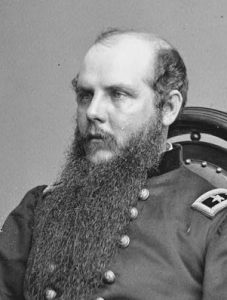 Although John M. Schofield is largely an unknown name outside Civil War circles, George Thomas has enjoyed a resurgence of interest in recent years. While many of Thomas’s defenders allege that Ulysses S. Grant, Phillip Sheridan, and William T. Sherman tarnished the Virginian’s reputation, they tend to overlook Thomas’s wartime rival, Schofield.
The controversy between the two began after Thomas voted to uphold Schofield’s expulsion from the United States Military Academy at West Point. Though he was readmitted, Schofield saw Thom
Though the war ended, their rivalry did not. Schofield and Thomas’s post-war careers saw their relationship only further disintegrate as the U.S. Army downsized and command placements became scarce and driven by partisan politics. Schofield
Did John Schofield kill George Thomas? Not with a sword, but with a pen.


Anyone who does in-depth research into the Civil War comes to realize there were personality conflicts at play: sometimes inexplicable [like the “rivalry” between Generals from Indiana, Hovey and Veatch] and at other times involving lifelong animosity, such as George Thomas and John Schofield. Other instances: Jacob Lauman and EOC Ord; Jefferson Davis and PGT Beauregard; and former friends US Grant and John McClernand. These toxic relationships are noteworthy because of the opportunity for “personal dislike” to influence professional decisions. The U.S. Navy today, in particular Naval Aviation, recognizes the negative impact of crew members who dislike each other flying together. By asserting “personality conflict” a crew member may have himself or herself removed from a crew, thus defusing a potentially toxic situation.
This presentation by Joseph Ricci promises to be an intriguing experience.
There is a new Schofield biography scheduled for publication in September: Robert Wooster, John M. Schofield: Soldier–Statesman of the Civil War and Gilded Age (Campaigns and Commanders Series), University of Oklahoma Press.