“The tramp, tramp, tramp of soldiers on the march”: The Welcome Sound of Reinforcements
In March of 1862, 380 Texan cavalry commanded by Major Charles Pyron rode out of Santa Fe and into the Sangre de Cristo Range of the Rocky Mountains in northern New Mexico. They were entering Glorieta Pass, a strategic bottleneck along the Santa Fe Trail that links Santa Fe in the west with Fort Union in the east.
On the morning of March 26, those 380 Texas cavalry were surprised to find the 1st Colorado Volunteers already in the pass. The Texans were roughly handled over several hours of severe fighting. At one point, a detachment that was cut off and out of ammunition was reduced to trying to fight their way out with bowie knives.[1] By some accounts, they sustained as many as 140 killed, wounded and captured – a casualty rate that would have left any Civil War unit reeling.[2]
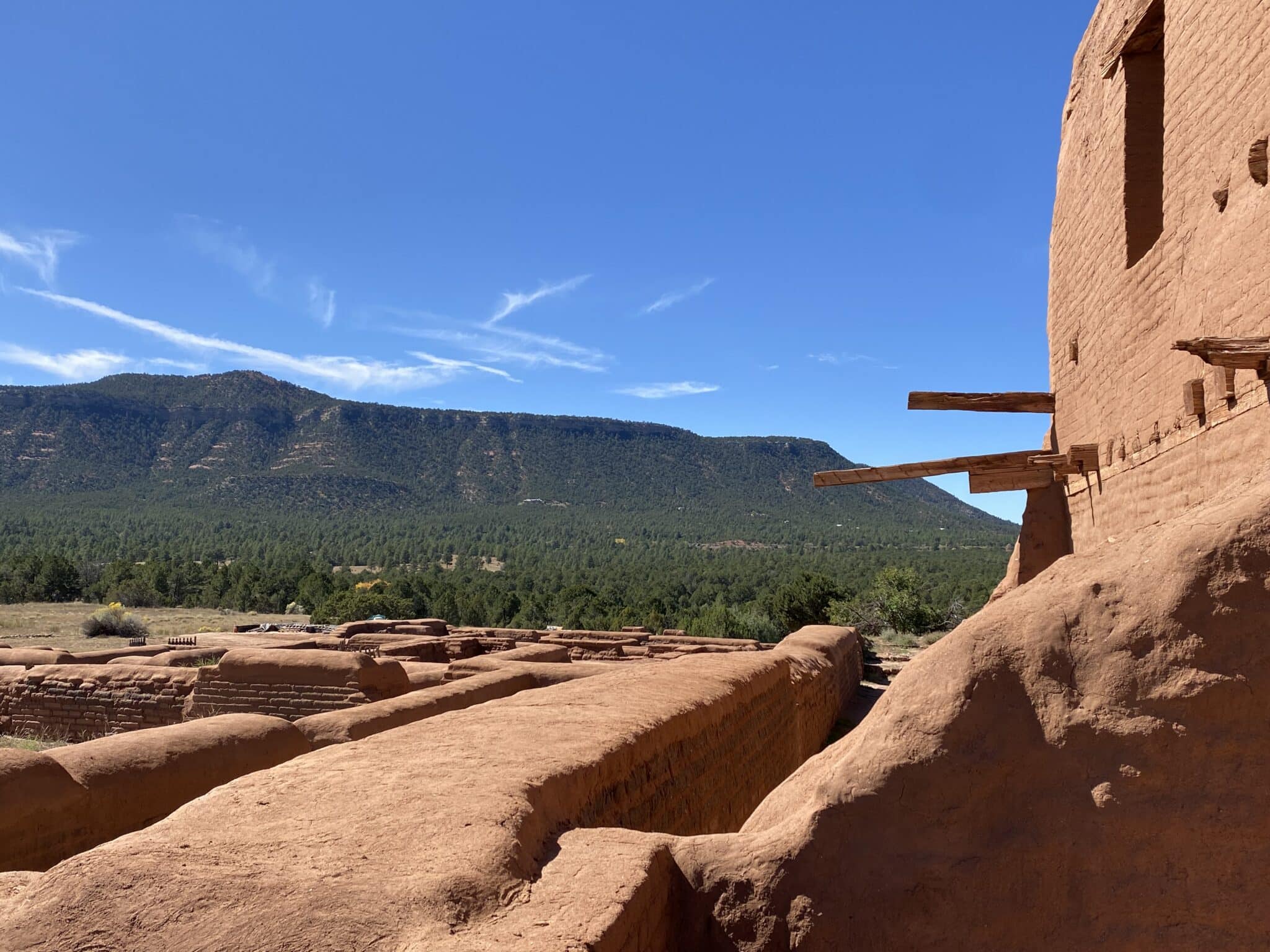
By the end of the 26th, the Confederate survivors were hunkered down, expecting the Union troops to press their advantage. They had already been surprised once; each and every noise in the dark mountain night, in unfamiliar mountains, would have sounded like an enemy attack.
After the war, Sergeant Bill Davidson of the 5th Texas vividly recalled:
“Between 10 and 11 o’clock that night, while wearily lying upon our arms, waiting for an attack, a faint sound reached us and placing our ears to the ground we could hear it. It was the tramp, tramp, tramp of soldiers on the march . . . Not the clear ringing of men well shod striking the cold frozen earth, but the clear ringing sound of sandals or barefeet. I tell you I was glad to see them. I thought they were the finest looking men I ever saw in my life.”[3]
It’s a remarkable testament to the condition of the two armies – not to mention the heightened senses that came with the adrenaline of the moment – that there was such a distinctive and critical difference in something as simple as the sound of their marching.
While Pyron’s 380 troops were being mauled on the 26th, Lieutenant Colonel William Scurry’s 4th Texas Mounted Volunteers had undergone a hard day’s march, on minimal rations. Despite the implication of their unit name, they were marching on foot; the regiment had been dismounted after the Confederate Army of New Mexico lost 1,000 horses at the Battle of Valverde the month prior.[4]
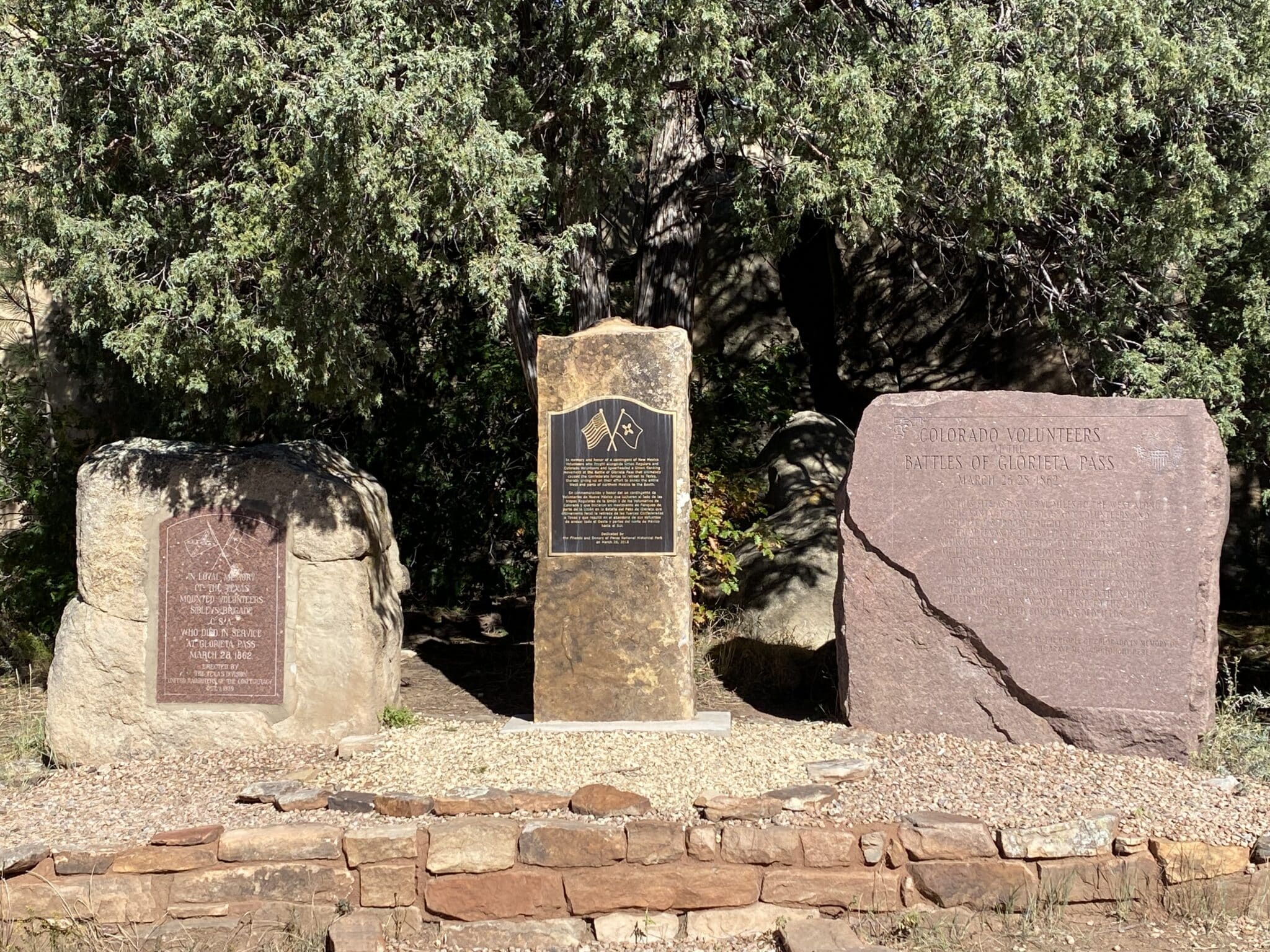
They were finally settling in to rest and enjoy a sheep liberated from a nearby ranch, when a frantic rider galloped into their camp. He had been sent by Pyron to beg Scurry for help, and he sprang into action. Half-starved, eating on the march, those men with “sandals or barefeet” slogged another 16 dark, mountainous miles through the snow to reinforce their brothers-in-arms.
This led to one of my favorite quotes of the New Mexico campaign. When the messenger galloped into their camp, Harvey Holcomb of the 4th Texas said to a friend, “Hell is brewing and not a mile off.”[5]
It would take another 24 hours, and quite a bit more than a mile of marching, but he would be proven right: Some of the hardest fighting of the New Mexico Campaign lay ahead as the Battle of Glorieta Pass raged on through March 28.
————
If you want to read more about the campaign, check out the latest book in the Emerging Civil War Series, Desert Empire: The 1862 New Mexico Campaign, available from Savas Beatie.
[1] Thompson, Jerry. Civil War in the Southwest: Recollections of the Sibley Brigade. Texas A&M University Press, 2001, 82.
[2] The War of the Rebellion: A Compilation of the Official Records of the Union And Confederate Armies, Series I, Volume IX, 531-534.
[3] Thompson, Jerry. Civil War in the Southwest: Recollections of the Sibley Brigade. Texas A&M University Press, 2001, 83-84.
[4] Tate, Michael L. (1987) “A Johnny Reb in Sibley’s New Mexico Campaign: Reminiscences of Pvt. Henry C. Wright, 1861-1862, Part I,” East Texas Historical Journal: Vol. 25: Iss. 2, Article 7. Available at: https://scholarworks.sfasu.edu/ethj/vol25/iss2/7.
[5] New Mexico Historical Review. “Confederate Reminiscences.” New Mexico Historical Review 5, 3 (1930), https://digitalrepository.unm.edu/nmhr/vol5/iss3/1/.


Hi Pat,
Received my signed copy of your book and I am very much enjoying it. Thanks.
Thanks Brian, glad you’re enjoying it!
Having walked* the Glorietta Pass battlefield it’s good to see events of the civil war in the south west get a mention.
*you can actually drive through the battlefield as the pass was is still a key transport corridor.
I bought eddrington and taylors battle of Glorietta pass published by New Mexico press before my visit two years ago when I could find no other book on the battle detail itself. The book covers the forces and actions plus profiles the leaders characters and soldiers origins it also gives a brief overview of the events before and those after the battle.
Perhaps this new book will compliment it?
Edrington and Taylor did a great job with that!
Have you had a chance to visit since NPS redid the Battlefield Trail?
Hi Patrick I went in spring 2024.