Echoes of Reconstruction: A Senator’s Wife Sees Her Husband Arrested for Lincoln’s Murder
Emerging Civil War is pleased to welcome back Patrick Young, author of The Reconstruction Era blog.
Virginia Clay was there when her husband was arrested by the Union forces after the surrender of the Confederate armies in 1865. She was married to Senator Clement Claiborne Clay from Alabama. Her husband was later confined at Fortress Monroe in Virginia for over a year.
Clement Clay made national headlines when he resigned his seat in the Senate on January 21, 1861. In his speech he said that Alabama had entered the Union at a time when the country was divided because of the North’s hostility “to the domestic slavery of the South.” He told his Senate audience that the years following Alabama’s admission were “strongly marked by proofs of the growth and power of that anti-slavery spirit of the Northern people which seeks the overthrow of that domestic institution of the South. …It is to-day the master spirit of the Northern States…” Clay saw the Republican ascendance as a threat to the existence of the whole way of life of the South which was based on slavery. He said, “No sentiment is more insulting or more hostile to our domestic tranquility, to our social order, and to our social existence, than is contained in the declaration that our negroes are entitled to liberty and equality with the white man.”
After he left the Senate, Clement Clay was selected for the Confederate Senate and became a strong supporter of President Jefferson Davis. Clay also involved himself in setting up a network of spies in the North. In May of 1864 he journeyed to Canada to meet with Confederate sympathizers like the Knights of the Golden Circle to facilitate their plans of sabotage. He also secretly met with President Lincoln’s secretary John Hay for futile peace negotiations. At the end of the war his espionage activities led to suspicions that he was involved in the plot to assassinate Abraham Lincoln. President Andrew Johnson gave an order to arrest Clay.
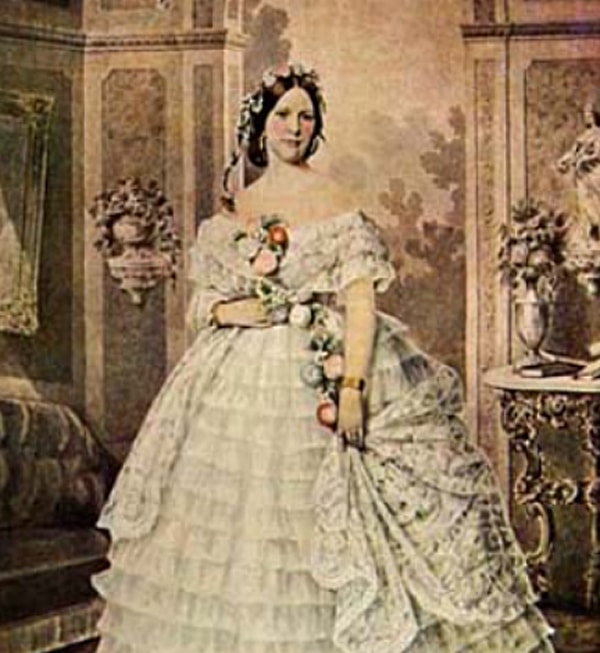
Virginia Clay also had an active life during wartime. For instance, she visited James Henry Hammond at his plantation. Hammond was a former senator and governor of South Carolina. She wrote a long soliloquy on life at Hammond’s massive plantation with more than three hundred enslaved Black people because, she said, “The conditions that obtained [there] were so typically those of the Southern home that I could choose no better example for description…”
Virginia saw the Black enslaved people participate in a Hammond-sanctioned religious service which reinforced the divine duties of the slave to follow his master. Virginia said that “would abolitionists, I thought, could they look upon that scene, fail to admit the blessings American ‘slavery’ had brought to the savage black men, thus, within a few generations at most, become at home in a condition of civilization.”
In her memoir, Virginia explains that Governor Hammond was ““the flower of centuries of civilization.” The wealthy planter-politician was known for molesting the teen-aged sisters of General Wade Hampton. In his diaries, Hammond also wrote of sexually abusing women he enslaved.
Clay turned himself in to Union forces in Macon, Georgia soon after the Lincoln assassination. Virginia Clay was with him when he was arrested, and she thought he might be executed for the presidential murder. When Union soldiers told the couple that Jeff Davis had also been captured, Clement Clay told his wife, “If that is true, my surrender was a mistake. We shall both perish!”
Virginia requested that she be allowed to accompany her husband to where he would be imprisoned. The couple arrived at the railway station for their transport north when Jefferson Davis and his wife came under heavy guard to the station. Virginia remembers that one of the Union men shouted to a Confederate, “‘Hey, Johnny Reb, we’ve got your President!’ ‘And the devil’s got yours!’ was the swift reply.”
The Clays were transported to Virginia on a heavily guarded train sitting beside Jefferson and Varina Davis. Vice-President Alexander Stevens was put on the same train.
As they passed through cities and towns, Virginia Clay saw unplanted farm fields, decaying buildings and Confederate veterans wandering around wounded. What she remembered most of all was the change in the African American population. She wrote that Blacks were now possessed “of negro supremacy. On every side the poor, unknowing creatures sought every opportunity to impress the fact of their independence” on their betters, the captured Confederate leaders. She was particularly outraged that Union soldiers protected Blacks when Confederates tried to discipline their “proteges.”
Following her husband’s 1866 release from prison, Virginia Clay returned to Alabama. After Clement’s death in 1882 she became a leading figure in women’s suffrage and the Confederate memorialization effort in Alabama. In 1902 she was elected Honorary Life President of the United Daughters of the Confederacy.
At the start of the 20th century, Virginia Clay-Clopton wrote a memoir of her life before and during the Civil War, as well as her successful year-long campaign after the war to win her husband’s release from prison. A Belle of the Fifties: Memoirs of Mrs. Clay, of Alabama, Covering Social and Political Life in Washington and the South, 1853-66 was published in 1904 by Doubleday Publishing, one of the largest book publishers in the world.
The book was heavily promoted by the United Daughters of the Confederacy, in part, because of its admiring stance on the Confederacy’s dominant economic institution. Virginia Clay wrote: “From Maryland to Louisiana there had reigned, since colonial times, an undisturbed, peaceful, prosperous democracy, based upon an institution beneficial alike to master and servant.”
Virginia Clay described the relations between whites who enslaved Blacks as having a nearly familial relationship with those they abused. She wrote that “none but a Southerner to the manner born can appreciate or imagine the tie that bound us of that old-time South to our dear black mammy, in whose capacious lap the little ones confided to her care cuddled in innocent slumber.” This mutually advantageous relationship was torn apart when Blacks became citizens, she said. She became a prime advocate of the Lost Cause vision of the Civil War and Reconstruction and the memorialization of the Confederacy.
Sources:
Senator Clay’s Speech Resigning from the Senate
Encyclopedia of Alabama
A Belle of the Fifties: Memoirs of Mrs. Clay, of Alabama, Covering Social and Political Life in Washington and the South, 1853-66 by Virginia Clay (1904) pages 191 to 192, 253 to 256, 282
Dying in the Last Months of the Civil War a Confederate Former Senator Conceals His Grave from Sherman
A Southern Belle Reflects on “the blessings American ‘slavery’ had brought to the…black men”
A Southern Belle Set a Child Molester Up as a Paragon of Christian Virtue for Black People
“The Lost Cause” As Part of Early Confederate Iconography & Counter-Iconography


Very interesting article! I would like to hear more about Virginia’s efforts to get her husband released from prison and their life after the war.