Book Review: Border War: A Yankee Family in Civil War Missouri

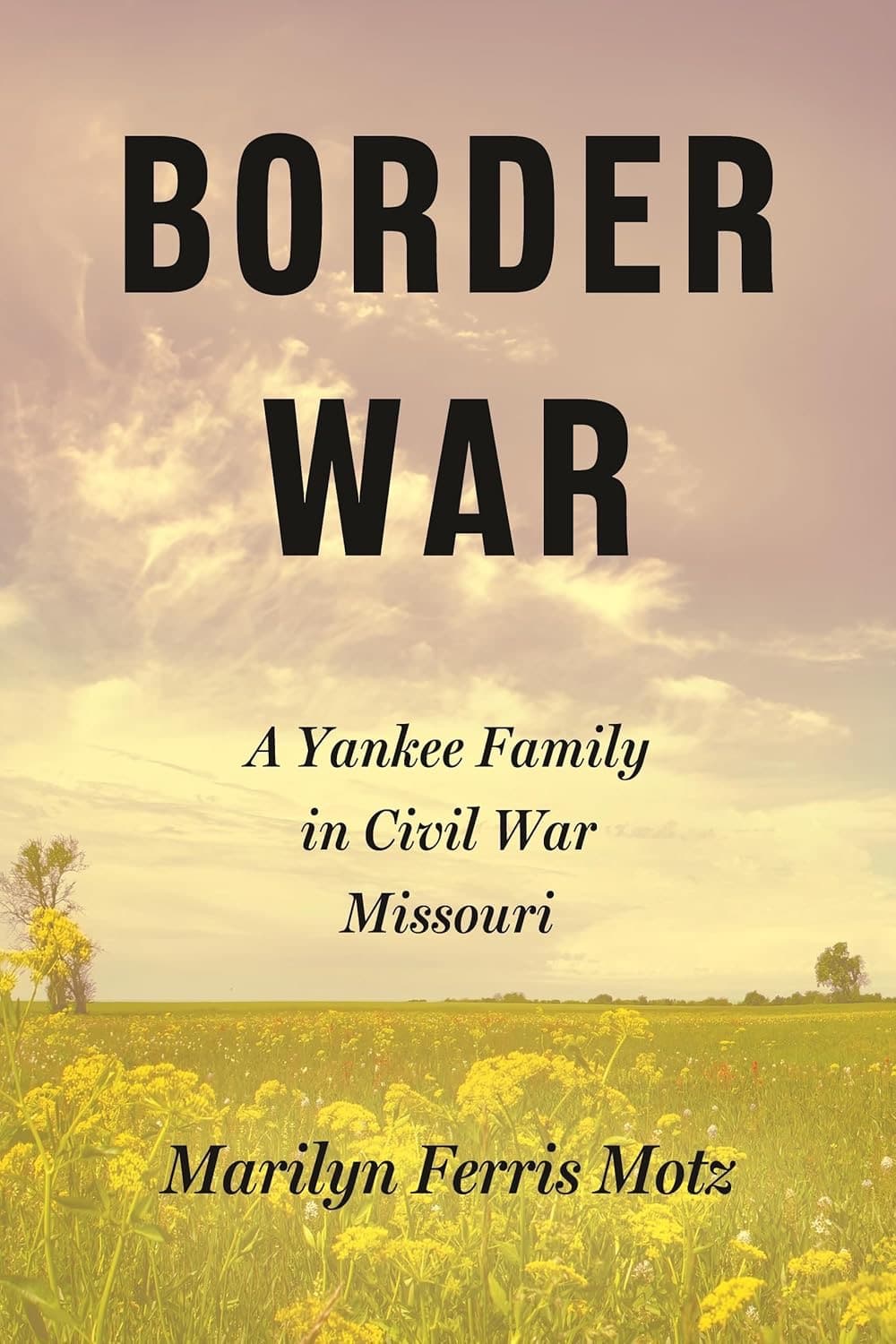
Border War: A Yankee Family in Civil War Missouri. By Marilyn Ferris Motz. Jackson: University Press of Mississippi, 2025. Paperback, 282 pp. $30.00.
Reviewed by Tonya Graham McQuade
Henry and Harriet Smith considered themselves highly literate, cultured Yankees and anti-slavery Republicans when they decided to settle in southwest Missouri in 1858. There, in Montevallo, Vernon County, they hoped to build a better life. Few of their neighbors owned slaves, so they expected to blend into their new community, although hoping more “Yankees” would soon follow. They quickly discovered, however, that living near the Kansas border presented unique difficulties. When the Civil War erupted, Henry and Harriet found their sense of identity challenged as they “played reluctant host to the succession of guerrilla bands, Jayhawkers, Union forces, and Confederate troops who swarmed back and forth along the road that ran past the family’s farm.” (5)
In Border War: A Yankee Family in Civil War Missouri, author Marilyn Ferris Motz draws on Henry and Harriett’s diaries and letters, as well as other historical texts, to offer a window into one family’s shifting and ambiguous relationships, identities, and loyalties during both the Civil War and the years leading up to it. A retired Emerita Associate Professor of Popular Culture at Bowling Green State University, Motz’s expertise shines through, with many insightful references to the popular culture of the day that elucidate the beliefs, values, motivations, and actions of both the Smiths and those around them.
Motz organizes Border War into three parts. Part I (1853) describes the couple’s early lives, courtship, and marriage in Schoolcraft, Michigan. Both Henry and Harriet believed “their racial, ethnic, religious, and regional heritage was morally and culturally superior.” (23) However, Harriet initially hesitated to marry Henry because he did not share her Baptist affiliation or moralistic views on appropriate behavior–views heavily impacted by the books Harriet read. (In that regard, Motz cites many examples of gender and marriage expectations those books espoused.) Indeed, fearing her growing feelings for “a doubter, an unbeliever–a fiddler–a dancer–a cardplayer–a horse-racer!!!” (17), Harriet decided to teach school in Ohio, but after one tumultuous year, returned ready to settle down to married life. Henry, too, returned to Schoolcraft after a disillusioning period as a clerk in Seneca Falls, New York, but soon earned enough to purchase his own farm and wed Harriet.
Part II (1854-1861) details Henry and Harriet’s early married life in Michigan, their move to Missouri, and their difficulties establishing a farm and becoming part of their community. After a series of financial, political, job-related, and marital disappointments, Henry headed west in 1857, hoping to achieve financial success in Missouri. However, his search for affordable land forced him further south than anticipated, placing him near the Kansas border, adjacent to many violent confrontations over the issue of slavery. There, he found himself living among rural Missouri settlers who “rejected Yankee values of cleanliness, self-improvement, and technological progress.” (89) Henry lamented their lack of education and wished they were more “civilized.” However, after his new neighbors helped him build a house, shared tools and supplies, and offered helpful advice, he came to “appreciat[e] [their] generosity [and]… resourcefulness.” (99)
In Spring 1858, Harriet and daughter Isa joined Henry in Montevallo, where Harriet found herself living a very different life than she envisioned. The family struggled to find clean water and food; battled sickness, fire, and drought; worried constantly about thieves and attacks; and had to carefully downplay their anti-slavery sentiments in a community that distrusted Northerners. Then, as the Civil War commenced, Henry and Harriet repeatedly had to reassess their identities, values, and loyalties. While Henry rejoiced over Missouri’s adherence to the Union, he was dismayed by “the rampant theft and terrorism committed by renegade Kansas troops,” and announced himself “ready to defend his neighbors from raids by … by notorious Jayhawkers.” (125)
In Part III (1862), Motz devotes one chapter to “Henry’s Civil War” and another to Harriet’s. Henry learned that “concealing and dissimulating” were essential skills. (135) Harriet also learned to exercise caution and distrust, while questioning how to be a proper wife and mother, and finding her past moral code inapplicable. She “worked out a new moral code in which the climate of violence and those who had created it were evil, while its victims were innocent even if their actions were illegal. In this civilian wartime ethics, deceit and revenge were justifiable in retaliation for aggression, and the obligation to protect family and friends outweighed the duty to obey the law.” (164)
Harriet expressed disagreement “with those on either side of the conflict who believed their opponents to be evil and themselves to be righteous,” and she raised the question, “What would be the outcome when conflicting views of moral truth were irreconcilable and neither side could be converted to the other’s point of view?” (176) In presenting Harriet’s question, Motz shines a light upon the Civil War’s relevance to understanding both today’s societal divisions as well as recognizing how a person’s most fundamental views can change over time.
In Border War, Motz provides vivid evidence that in Missouri, the line between North and South, Union and Confederate, was often very murky. Through the stories of Henry and Harriet, she effectively demonstrates the danger of seeing one side as conclusively evil and the other as thoroughly righteous. People and societies then and now are far more complex than that. For proof, look no further than the lives and personal recollections of Henry and Harriet Smith and the experience of those in Southwestern Missouri during the Civil War. Border War offers not simply history, but lessons.


What a harrowing story that shows how the lines drawn in the ACW were very messy indeed. Must have been terrifying.