Book Review: William Watson and the Rob Roy: The Adventures of a Civil War Blockade Runner

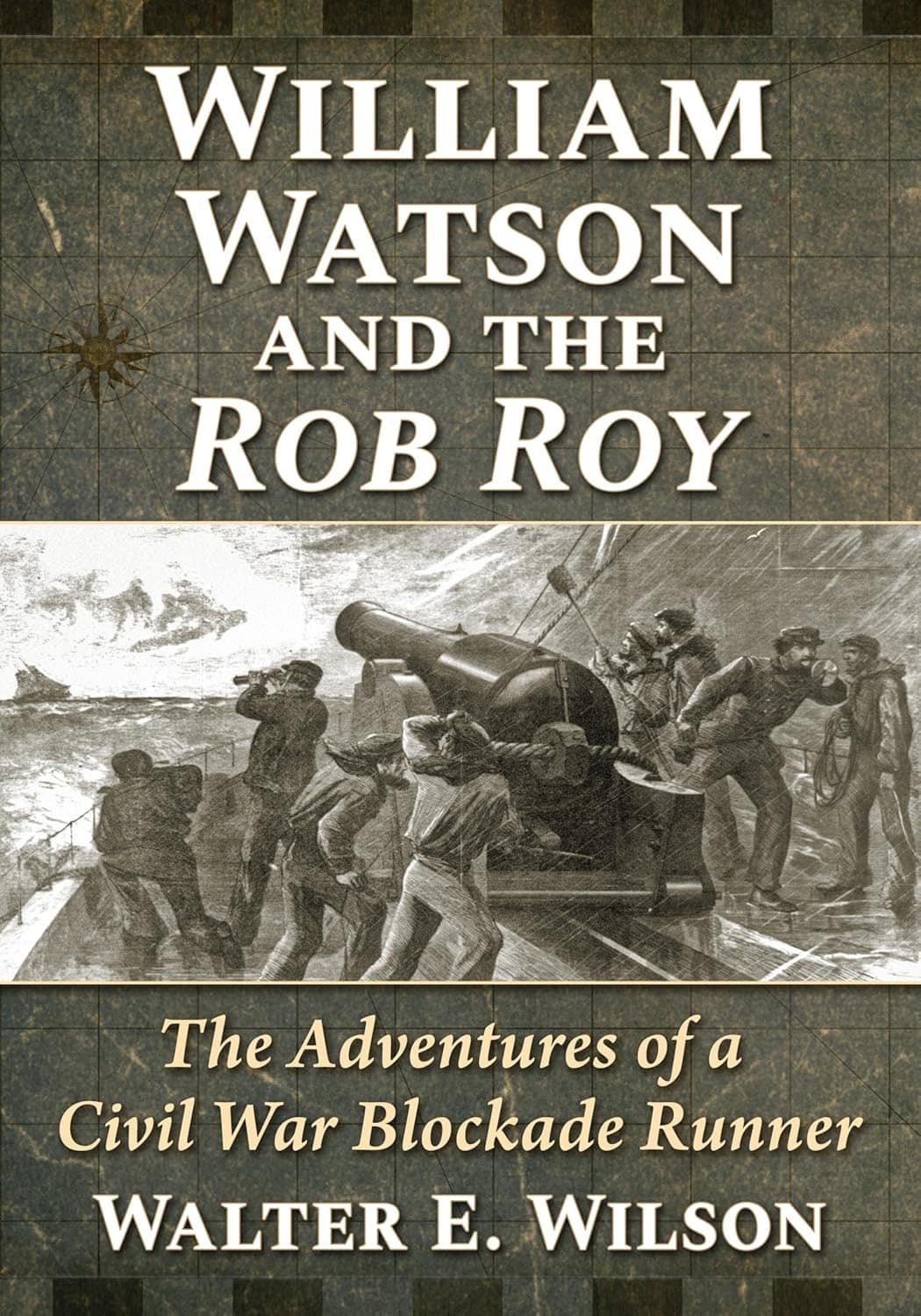
William Watson and the Rob Roy: The Adventures of a Civil War Blockade Runner. By Walter E. Wilson. Jefferson, NC: McFarland and Company, 2026. 250 pp. $39.95.
Reviewed by Neil P. Chatelain
Memoirs and wartime accounts written by British blockade-runners generally focus on the romance, glory hunting, and exotic adventures of rushing past Abraham Lincoln’s blockade in efforts to make a quick profit. William Watson, a British subject who commanded the sailing schooner Rob Roy, is one of the most well-known of these runners. Watson’s memoir was the only one written about blockade-running in the Gulf of Mexico using a sailing vessel, and it quickly became one of the best-known postwar accounts. Walter E. Wilson’s William Watson and the Rob Roy is the first effort to deconstruct Watson’s memoir and dissect fact from fiction.
Tracking a single ship in the Civil War era can be quite tricky, especially blockade-runners. Federal naval officers generally did not know what ships they encountered on the blockade unless they captured one, so their reports are not as useful as might be thought. Newspapers often reported false information simply because it was the best they had at the time. Secrecy of movement was key to dodging blockaders. Ship records were often destroyed if a ship was captured or lost at sea, and there are no great collections of blockade-runner documents in archives. To put it lightly, Wilson had his work cut out for him in conducting the research to corroborate or challenge Watson’s claims.
Wilson’s research skills were up to the task. Many of the primary source collections I would expect to be used in such efforts were present in notes and bibliography. Many others that were surprising, but quite useful, were present as well. Wilson did his homework, resulting in a book that sets much of the record straight regarding William Watson’s blockade-running efforts, as well as the largely unknown history of the schooner Rob Roy.
In general, chapters begin with an explanation of events that Watson recounted in his memoir. That is then followed by a detailed examination of what was both correct and what was fabricated in Watson’s story. Where Watson left out names, often deliberately to protect people’s privacy, Wilson makes great efforts to identify who Watson might be referring to and why.
Wilson does a good job of explaining how a British subject like Watson, who previously served in the Confederate Army and even wrote a separate memoir about those experiences, would want to undertake blockade-running. The explanations and descriptions of just how runners got clearance to sail, rules and regulations for cargo requirements, who owned these runners, and how they worked to avoid blockaders is all clearly presented.
While well-researched and detailed, Wilson often goes on side tangents that generally have nothing to do with Watson or Rob Roy. For example, Watson’s original memoir frequently mentions someone he calls ‘Captain Dave’ and his ship Matagorda. Wilson spends two of the book’s 16 chapters looking at and deconstructing what Watson wrote about Matagorda’s blockade-running career. Impressive research is again completed in this, but I found these chapters distracting as I wondered when we were going to get back to the core story about Rob Roy – though I will admit that other readers may instead find these side stories interesting and complementary to the overall story. Besides this, a modern and specially commissioned map showing Rob Roy’s overall journey during the war would have been appreciated.
The book is some 250 pages, but it should be noted that only about 150 of those pages are the primary manuscript. There are a host of seven appendices that explore everything from Rob Roy’s history before being acquired by Watson to the ship’s travel history. Appendices also include lists and brief biographies of key people and ships mentioned in the book.
Walter Wilson’s William Watson and the Rob Roy demonstrates that deep scholarship and excellent research can be conducted on Civil War vessels, even those whose records are generally considered lost. To get a full appreciation of Wilson’s work enthusiasts should read Watson’s The Civil War Adventures of a Blockade Runner before reading Wilson’s new book. Researchers will also find Wilson’s book useful for its bibliography, for closing gaps in the historical record, and for detailing the minutiae of just how Gulf coast blockade runners operated.


