High School Essay Winner: “The Killer Angels” and How Passion Keeps History Moving, by Emmett Spear
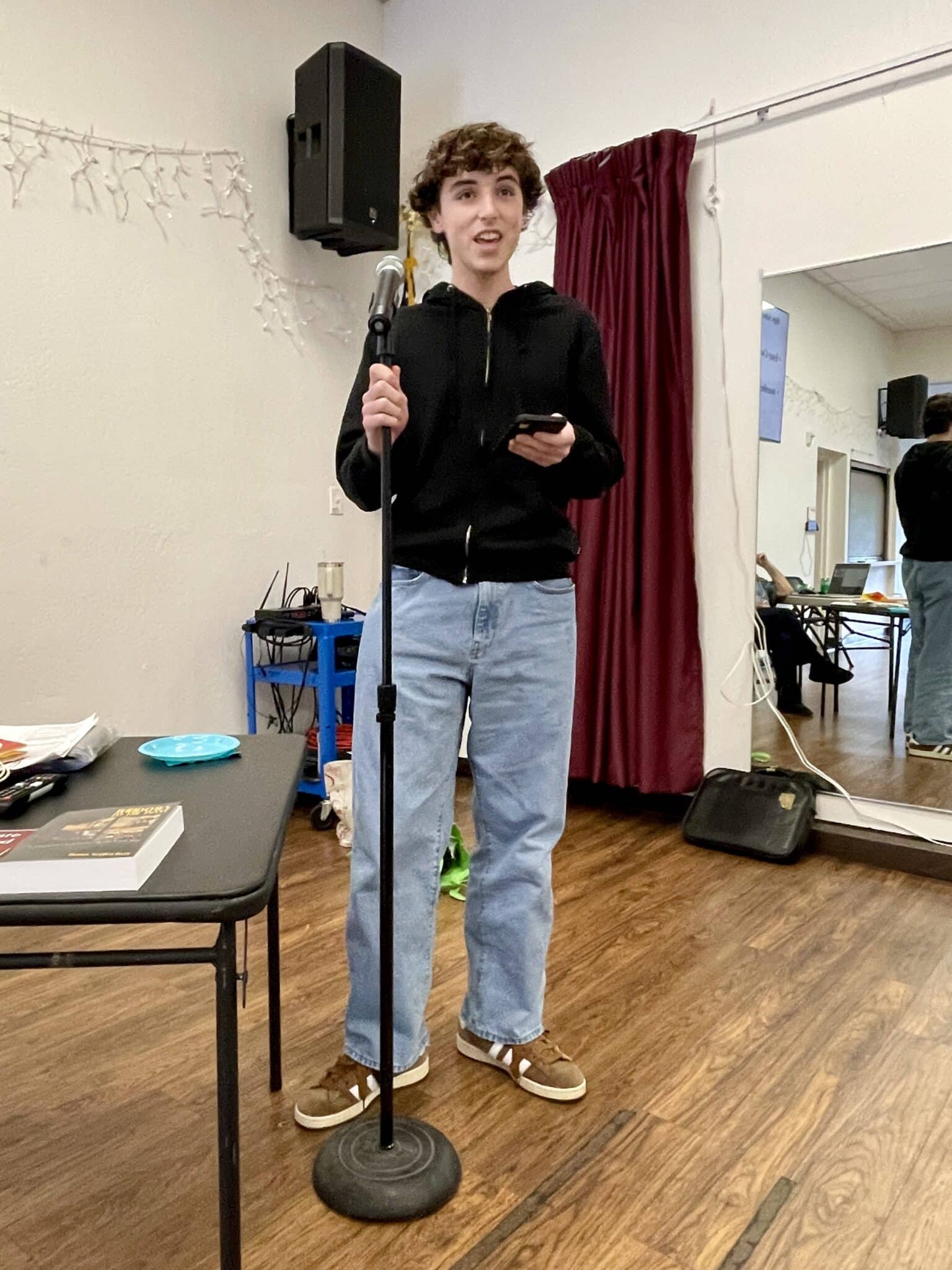
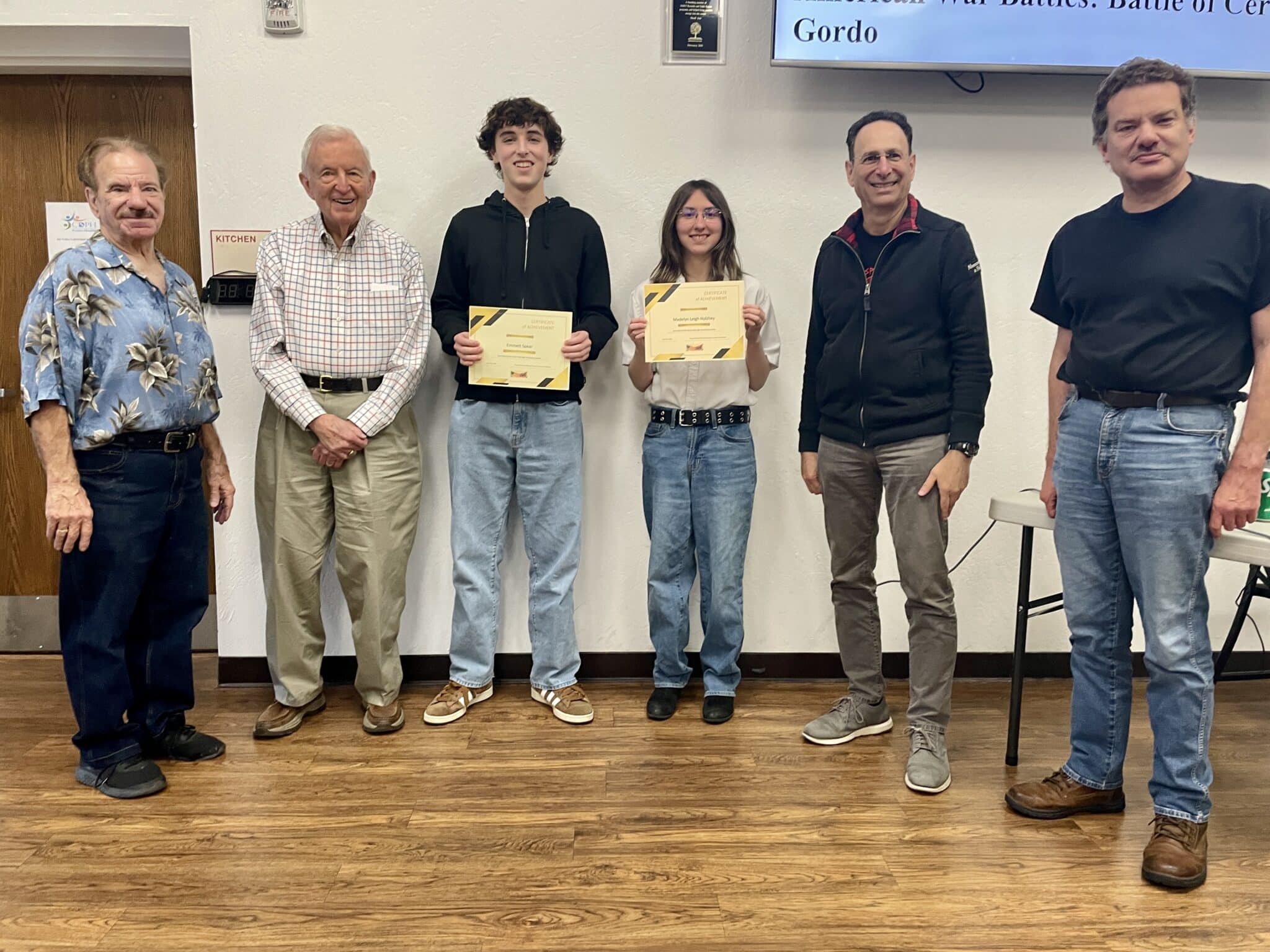
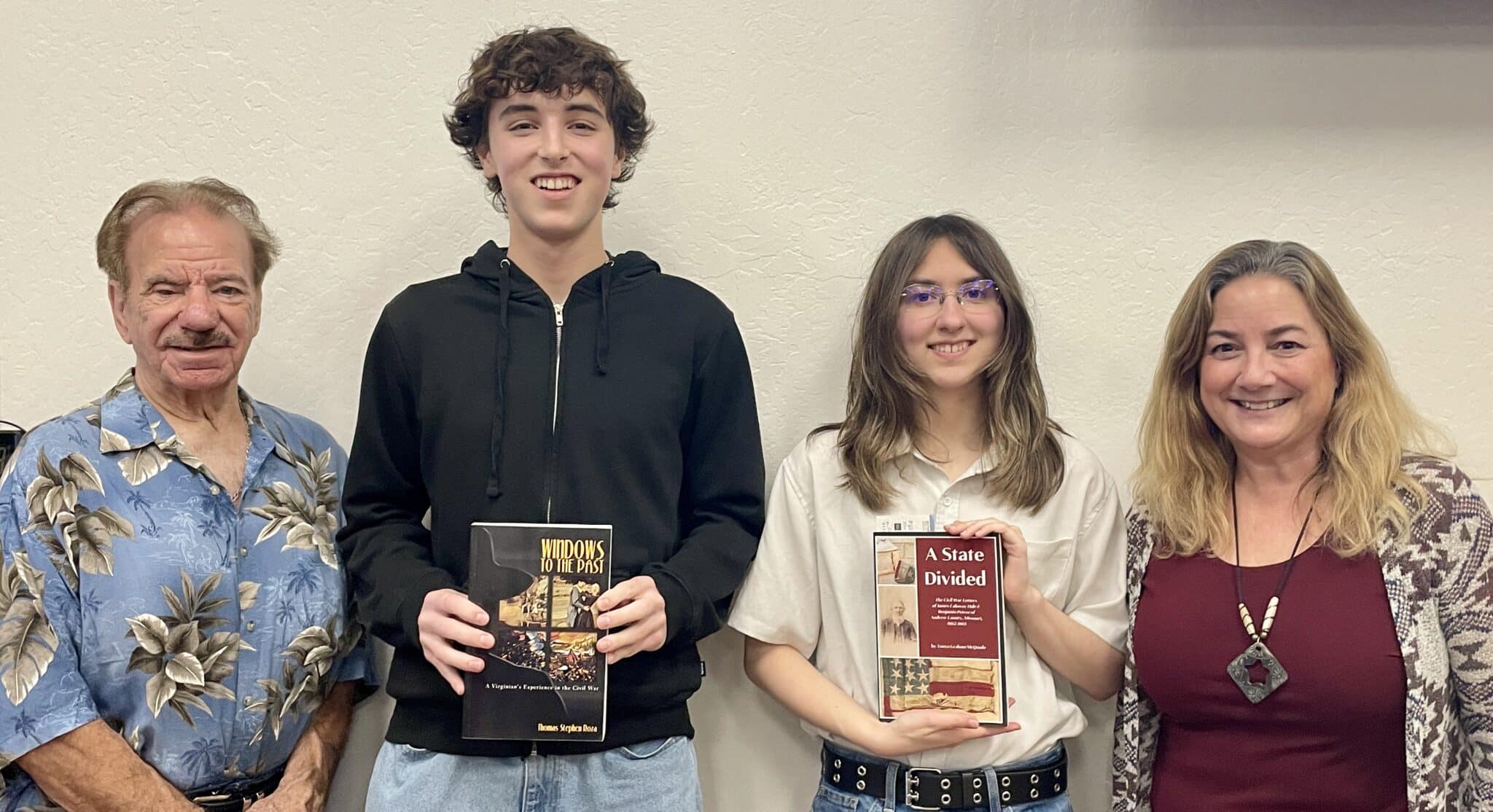
Recently, the South Bay Civil War Round Table in Northern California (of which I am a member) hosted its first high school essay contest as a means of promoting greater interest in and awareness of the Civil War. High school juniors and seniors in Santa Clara County were invited to submit essays, which were judged by members of the club. The top two winners presented their essays at the group’s meeting on April 28, where they also received certificates, cash prizes, and two Civil War books written by SBCWRT members.
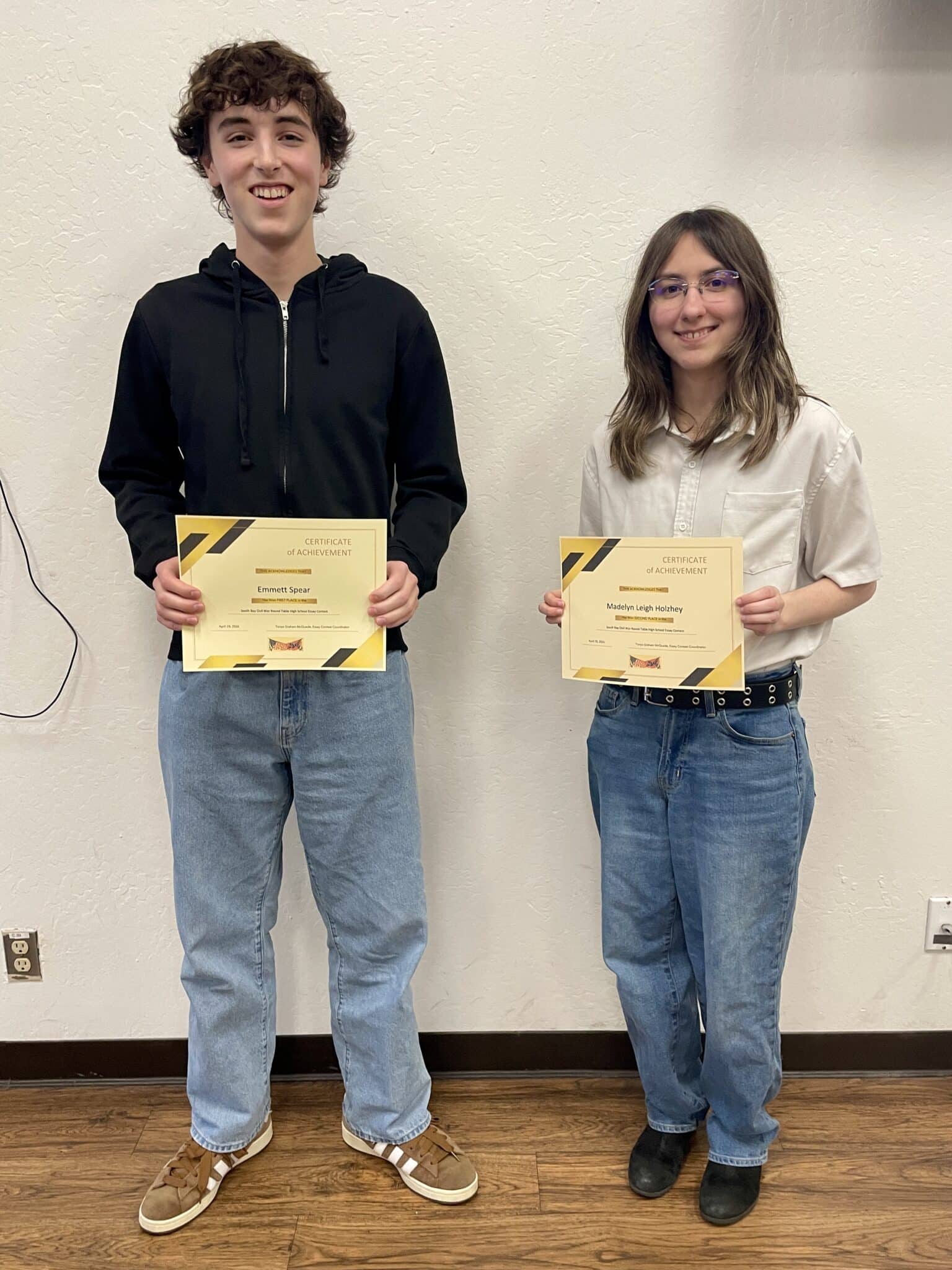
Family members and other guests were invited to the awards reception, with food and beverages provided by SBCWRT members. All present were impressed by the students’ responses to the following writing prompt: In a reflective essay, tell how one of the following has impacted your understanding of the U.S. Civil War – its causes, effects, battles, and/or key figures – and why you think it is important for young people to develop an understanding of the Civil War on a more personal level (rather than just names, dates, and key events).
- A battlefield, historical site, or museum you have visited
- A workshop or conference you have attended
- A book you have read (fiction or nonfiction)
- A movie, TV series, or documentary you have watched
Group members wanted to be sure to choose a topic that would not appear on a typical high school or Advanced Placement history test. They wanted one that would require students to make a more personal connection to the Civil War, and the students did not disappoint. We are happy to be able to share the winning essay, written by Branham High School Junior Emmett Spear of San Jose, CA, with you here today.
First Place Essay: The Killer Angels and How Passion Keeps History Moving, by Emmett Spear
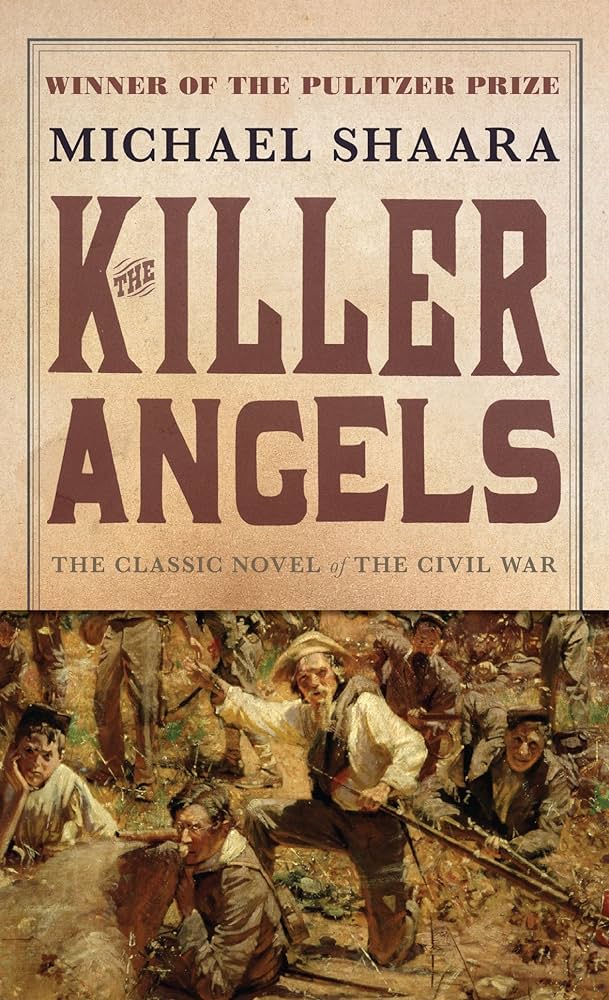
It’s not every day that something you find at first to be a bore takes you down a path to greater wisdom. When my eighth grade English teacher, whom I’ll admit I had quite a distaste for, recommended that I read the novel The Killer Angels for our literature circle project, it would be wrong of me to say that I was very excited in any regard. At this point in my life I had uncovered some of my love for history, but my focus had mostly pertained to poorly made documentaries on Youtube.
Michael Shaara’s The Killer Angels novel, an intensely detailed overview of the days leading up to and the days during the Battle of Gettysburg, did at least sound promising in that it would be able to educate me on a subject that I knew little about. I was largely unfamiliar with the author’s style of writing which approached the subject from both a well-researched lens, but also from a viewpoint that left great room for creative expression. Many of the lines and excerpts from famous figures in the battle, such as Lee or Longstreet, are based in history but are largely fictitious.
Events like the Battle of Gettysburg are indeed important benchmarks of knowledge for any citizen of America. Lincoln, one of the most celebrated figures of American history, left what might be considered as one of the most celebrated speeches in American history just months after that battle — delivered upon the then infantile National Cemetery at Gettysburg. Arguably, it is not wrong to expect those that live in our nation to remember such pivotal events as the Civil War, in which hundreds of thousands died and the path was set for the future of our nation — Reconstruction, Jim Crow and Civil Rights, and even the modern era.
Yet, how can we expect people to understand these momentous occasions if we neglect to tell it in a way that appeals to them?
When I had finished reading Shaara’s book, and the project with my group had been finished, it was much to my dismay when I discovered that no one else in my group had actually even opened the book. I had at that point dedicated the last month of my life to finishing the novel, which I must admit was very lengthy, and it was quite hurtful to find out that everyone else had taken the easy route and skimmed the SparkNotes off of Google. But what hurt even more was that they had refused to read the book not out of express laziness, but out of what they stated was the daunting nature of the novel’s 368 pages — admittedly the text on the page was quite small!
This disappointment on my end came less-so from their refusal to read the book, but what I felt they had missed out upon. Throughout my reading of the novel, I found the degree of connectable and personable characters to be innumerable. The heroic first day defense of Buford’s 1st division, the offensive put on by the 20th Maine at Little Round Top, and the defense against Pickett’s Charge were all moments that were seared into my memory for their grandeur and pure coolness. I even found redeemable qualities within characters whom I very much disagree with politically. Notably, I found deep resonation with General James Longstreet of the Confederacy, and his internal battle between his loyalty to Lee and his apprehension to Lee’s battle plans.
My initial expectations that I held of the book — that being a sound education on the Battle of Gettysburg — did indeed come true after my reading. But, most astoundingly, I found a certain level of appreciation for not just Civil War history, but for historical literature in general. It was not long after I read The Killer Angels that I went — for the first time on my own — to visit the local library and check out a book. This book, The Last Days of Old Beijing by Michael Meyer, while not at all Civil War-related, helped ignite the much more powerful love of history that I have today. In fact, I would argue much of the love for history I hold can trace back to Shaara’s book, and that is evident in the way I live my life.
Sitting behind me as I write this essay is both a copy of One Day in the Life of Ivan Denisovich by Alexander Solzhenitsyn and of How the States Got Their Shapes by Mark Stein. Along with a framed drawing of the Union destruction of an arsenal at Beaufort hanging on my wall — a piece I received after visiting Fort Sumter in South Carolina — I think these items represent a pathway of historical knowledge, a rabbit hole if you will, that books like The Killer Angels have led me down.
Therein lies the deeper reason for my disappointment in my group not reading the book. Not only did they refuse to learn about such a significant event in our nation’s history, they refused the possible enlightenment that may have come from actually immersing themselves in the history of Gettysburg. Might it have been possible, had they read the book, that they too would have uncovered a deep love for history?
The often told cliché is that we must learn history so as to not repeat it ourselves, but I would argue that what Shaara’s book has taught me is that understanding the actions of those that came before us provides us with a tool to not only realize why we live how we live, but to come at it with a curious point of view. Connecting ourselves with events like the Civil War provides us an opportunity to not just be educated historically, but to discover and explore our passion for history and learning. Indeed, those with true passion and wisdom may be the ones that can help preserve the stories of our past and the history of our future.


An amazing young man. While “Killer Angels” may not pass muster as history, it contains to engage people and awaken a love for history that we all must appreciate. Anything, even historical fiction, to get people interested in the Civil War.
Bravo. Would love to see more of this type of engagement with young people. Lincoln groups around the country could do this as well.
Very impressive to see young people interested in this ancient but relevant topic! Bravo and congratulations!
Congratulations, Emmett and Leigh! Emmett, thanks for sharing your work with us.
This student gives me, an old woman, hope that we are leaving the country to some fine, intelligent, educated, discerning young people