Ashes in the Breadbasket: Hard War in the Shenandoah Valley
ECW welcomes guest author Aaron Siever.
In the autumn of 1864, as the American Civil War dragged on for another brutal year, the fertile corridor between the Blue Ridge and Allegheny Mountains became the stage for yet another campaign. This one, however, was one of the most controversial campaigns of the conflict. The Shenandoah Valley, long known as the “Breadbasket of the Confederacy,”[1] was systematically stripped, burned, and rendered incapable of sustaining an army. What unfolded there under the command of Union Gen. Philip Sheridan was not simply a military operation. It was a turning point in how wars would be fought.
The Shenandoah Valley was more than picturesque farmland; it was a lifeline for the South. Its rich soil produced grain, livestock, and supplies that fed Confederate armies, particularly those under Gen. Robert E. Lee, then defending Richmond and Petersburg, Virginia. Just as critically, the Valley functioned as a natural corridor for troop movements and constant Federal embarrassment, allowing Confederate forces to threaten Washington, D.C., and launch raids into the North.
By 1864, Union leaders had grown weary of these recurring threats. Earlier Confederate successes in the Valley, including those led by Gen. Thomas J. “Stonewall” Jackson in 1862, underscored the region’s importance. The solution, increasingly, was not just to defeat Confederate armies, but to destroy the Valley’s usefulness as a resource and avenue for invasion.
The first major incursion in the Valley in 1864 was led by Union Gen. Franz Sigel. He was born in Germany and served there until 1852, when he immigrated to the United States. He was extremely popular with the growing German population, and his popularity led to his being commissioned as a general. Sigel fought in several campaigns throughout the war. His appointment to command in the Valley was a boost to Lincoln’s re-election bid in 1864.
Facing Sigel in the Shenandoah Valley was former vice president of the United States and now Confederate Gen. John C. Breckinridge. He brought together a ragtag army of 4,100 troops, including the Corps of Cadets from the Virginia Military Institute (VMI). On May 15, 1864, they met Sigel’s forces at New Market. After a hard fight, Sigel was driven from the field, and yet another embarrassing Union defeat occurred in the Shenandoah.
Sigel was quickly removed from command, and Gen. David Hunter was inserted as the next commander to try the Valley.
Grant’s orders to Hunter through General-in-Chief Henry Halleck were: “In pushing up the Valley… it is desirable that nothing should be left to invite the enemy to return.”[2]
Hunter was more successful than his predecessors and marched up the Shenandoah Valley toward Staunton. At Piedmont (New Hope), Virginia, Hunter encountered a force under the command of Confederate Gen. William “Grumble” Jones. Outgunned and outnumbered, Jones held as long as he could, losing his life in the process.
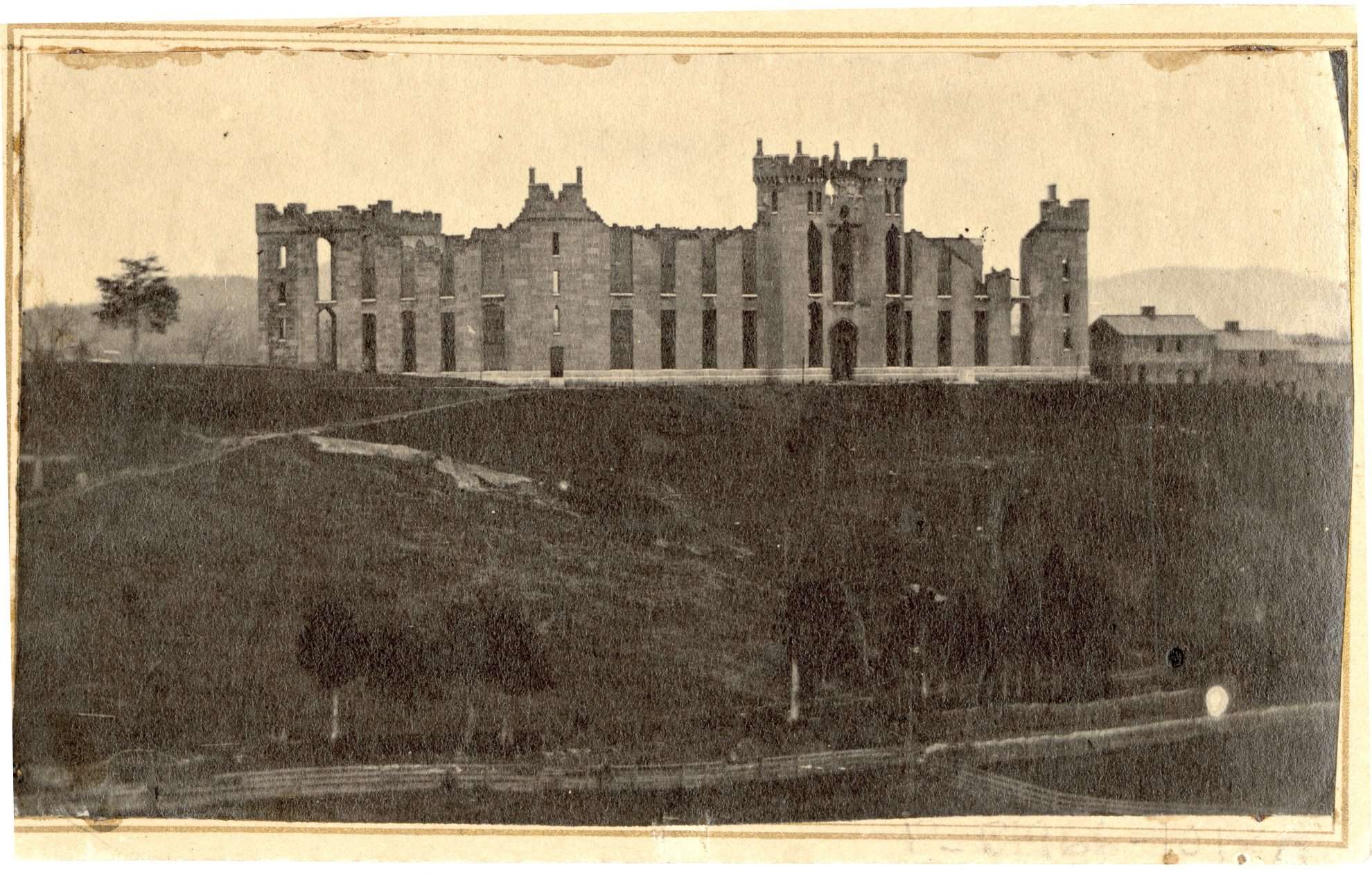
The battle of Piedmont was an overwhelming Union victory and a turning point in the Shenandoah. Building on his victory, Hunter marched through Staunton, destroying stores and railroads, and continued to Lexington, where he burned the barracks of the VMI cadets in retaliation for their involvement at New Market. Hunter also had the home of former Virginia Governor John Letcher burned for his involvement in Virginia’s secession.
Hunter’s success was short-lived as he advanced on Lynchburg, where he was confronted by Confederate Gen. Jubal Early and defenders of the city. Hunter’s cautiousness and a ruse by Early and the townspeople delayed Hunter long enough for Early to score a victory. What ensued was another embarrassing defeat and a rebel army at the gates of Washington.
To neutralize the Shenandoah Valley as a resource of provision and invasion, something needed to be done. The solution came in the form of a harder war, which one historian called “total war.”[3] Under the broader strategic vision of Lt. Gen. Ulysses S. Grant, Union forces would target not only enemy soldiers, but also the economic infrastructure that sustained them.
Major General Philip Sheridan was given command and clear orders: neutralize Lt. Gen. Jubal Early’s Confederate army and deny the Shenandoah Valley as a resource to the Confederacy. Grant told Sheridan, “If the war is to last another year, we want the Shenandoah Valley to remain a barren waste,” advising him to “eat out, Virginia, clear and clean as far as [the Rebels] go, so that crows flying over it for the balance of this season will have to carry their provender with them.”[4]
Other similar campaigns followed, including Union Gen. William Tecumseh Sherman’s operations in Georgia. While in Georgia, Sherman’s troops burned as they went, destroying supplies and railroad infrastructure, making “Georgia howl”[5] in the process.
Both campaigns were devastating to the southern economy and morale. While Sherman’s March to the Sea was a massive movement and covered more territory than Sheridan’s campaign, the policy of “total war” was applied with relentless precision and devastating results in the Shenandoah Valley. The destruction of the Valley not only hindered the economy, but also removed a major source of food for the south’s primary army. In thirteen days, the once bountiful Valley was turned into a charred wasteland.
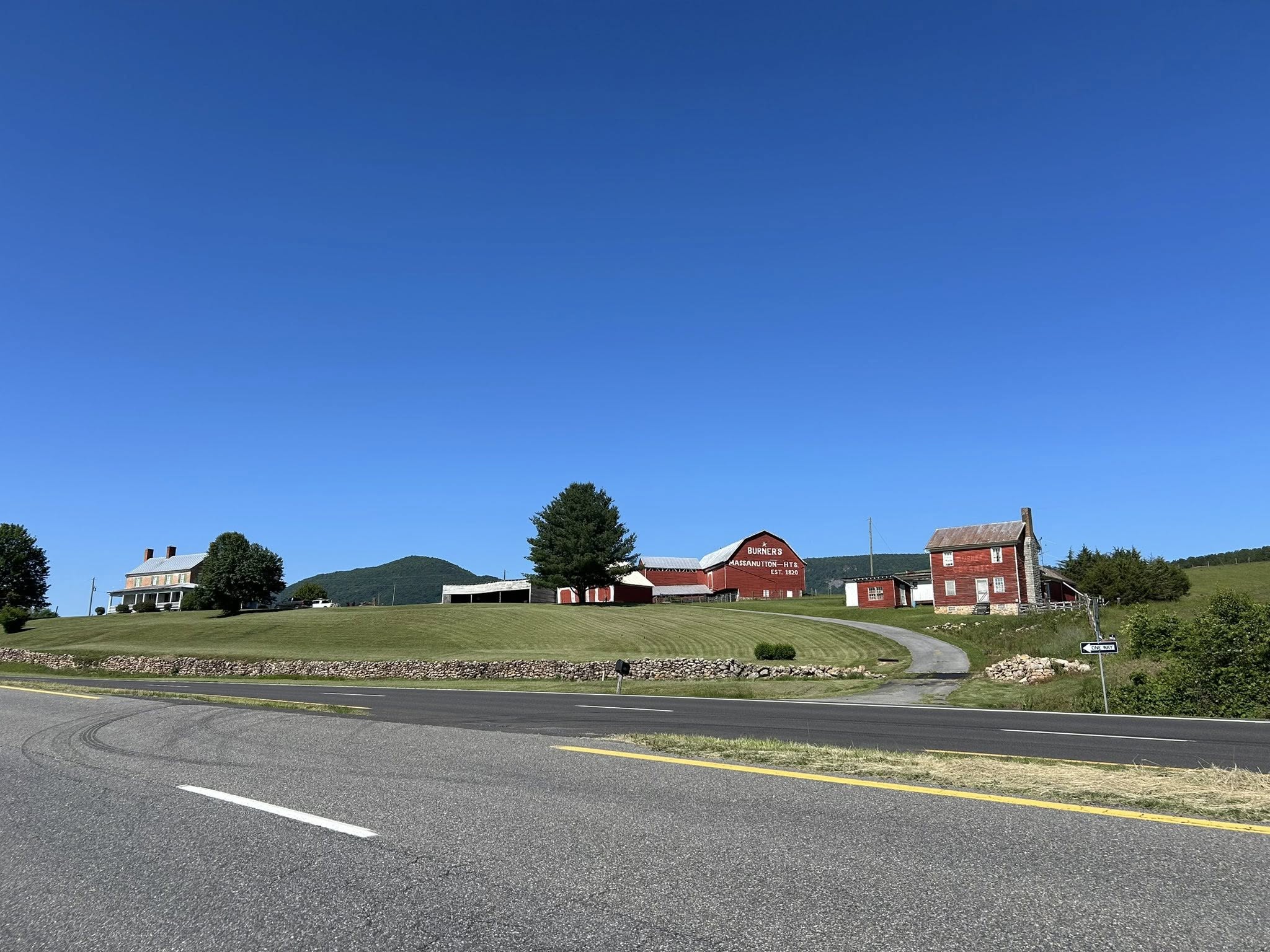
From September through October 1864, Union troops conducted systematic destruction across the Middle and Lower Shenandoah Valley. Barns were torched. Mills were dismantled or burned. Crops ready for harvest were set ablaze, leaving the fields blackened. Livestock was slaughtered or driven away to deny their use to the Confederates and to feed hungry Union soldiers.
The scale was staggering. Thousands of barns filled with wheat, hay, and equipment were reduced to ash. Sheridan later reported that the Valley had been made “a barren waste.”[6] His men referred to the campaign simply as “The Burning.”[7]
The destruction was not random. Orders were specific: target resources that could support Confederate forces. Homes were generally spared, though on occasion they were put to the torch, and civilians suffered deeply as their livelihoods vanished in flames.
“The people should be informed that so long as an army can subsist among them, recurrences of these raids must be expected, and we are determined to stop them at all hazards.”[8]
For the residents of the Valley, the campaign was devastating. Families who had relied on generations of farming found themselves facing winter with little to no food. Smoke hung over the countryside for weeks, a constant reminder of what had been lost.
A Mennonite Valley resident observed, “The Union army came up the Valley, sweeping everything before them like a hurricane.”[9]
Shenandoah Valley resident and soldier Newton Burkholder described what he saw: “For miles glowing spots of burning, visible tongues of flames still licking about heavy beams and sills, flames sometimes of many colors from burning grain and forage.”[10]
Even some Union soldiers expressed unease, as the line between military necessity and moral cost was not always clear.
An Ohio infantryman wrote his wife, “I cannot witness the burning of barns and mills without thinking of the great suffering that will be brought upon the poor people of this country, who had no part or voice in bringing on this most cruel war.”[11]
From a strict military perspective, the campaign achieved its objective. The Shenandoah Valley could no longer sustain Confederate operations. Jubal Early’s forces were weakened, and the threat to the North diminished significantly.
Sheridan’s victories at battles such as Third Winchester, Fisher’s Hill, Tom’s Brook, and Cedar Creek cemented Union control of the region. The Valley, once a Confederate stronghold, was effectively neutralized.
But the legacy of “The Burning” remains complex. Was it a necessary step toward ending the war? The answer is just as complicated, but I believe it was necessary. The devastation in the Valley accelerated the end of the war and, along with the capture of Atlanta, helped secure a decisive vote of confidence in President Abraham Lincoln’s bid for reelection.
The campaign stands as a stark reminder that war is not confined to battlefields. It reaches homes, livelihoods, and futures. In 1864, the Shenandoah Valley became a proving ground for a new kind of warfare, one where victory could be measured not just in battles won, but in the ability to break an enemy’s will and capacity to fight. The destruction of the Shenandoah Valley had lasting effects on the war itself, but it also affected the Valley families long after the guns went silent. One hundred sixty-two years later, things are peaceful once more, but the Valley still shows scars from one of the first “hard war” campaigns.
In the ashes of the Valley’s barns and fields, the modern age of war began to take shape.
Aaron Siever grew up in the Shenandoah Valley of Virginia. Since he was a child, he has been interested in the American Civil War. After a career in law enforcement, Aaron dove into his passion for history and started Aaron’s Civil War Travels LLC. A tour and lecture company. Aaron also maintains a YouTube channel under the same name.
[1] Ulysses S. Grant, Personal Memoirs of U.S. Grant, vol. 2 (New York: Charles L. Webster & Co., 1885), 293–94.
[2] The War of the Rebellion: A Compilation of the Official Records of the Union and Confederate Armies, Series I, vol. 37, pt. 1, 36.
[3] Mark Grimsley, The Hard Hand of War: Union Military Policy toward Southern Civilians, 1861–1865 (New York: Cambridge University Press, 1995), 5–7.
[4] OR, Series I, vol. 43, pt. 1, 30-31.
[5] OR, Series I, vol. 39, pt. 3, 147.
[6] OR, Series I, vol. 43, pt. 1, 30.
[7] Philip Sheridan, Personal Memoirs of P. H. Sheridan, vol. 2 (New York: Charles L. Webster & Co., 1888), 221–25.
[8] OR, Series I, vol. 43, pt. 1, 30–31.
[9] John L. Heatwole, The Burning: Sheridan’s Devastation of the Shenandoah Valley (Charlottesville, VA: Rockbridge Publishing, 1998), 142.
[10] Heatwole, The Burning, 145.
[11] Heatwole, The Burning, 147.


Beautiful photos. My great-great-grandfather was a Sergeant in Company F, 67th Pennsylvania Infantry, and spent a lot of time in the Valley. He was captured by Ewell’s men at Second Winchester, exchanged about two months later, and was back a year later with Sheridan during The Burning. His best friend was killed beside him at Cedar Creek. He lived to 1919, and my grandfather, his namesake, grew up with him living in the family home. I have his artifacts, photos, pension application, etc. My grandfather told me that his grandfather told him that The Burning “was the only thing I did in the war that made me ashamed.”
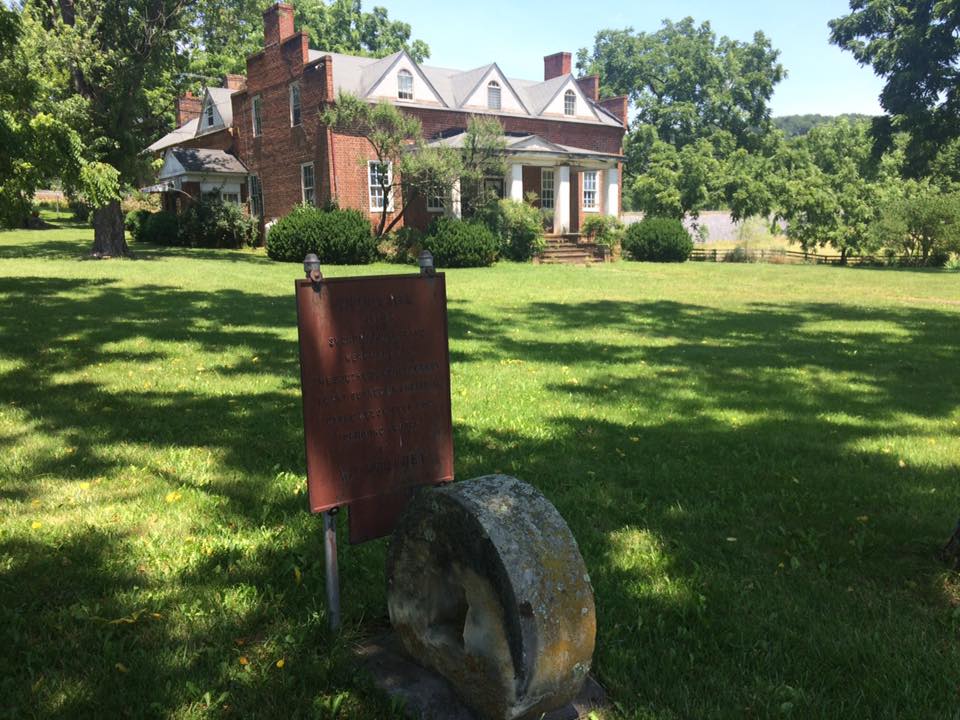
thanks Aaron — great piece and nice pics, especially Bonnybrook … i assume it took the Valley a generation, maybe even two to fully recover from the war … and you definitely got it right about war being a test of wills.
Bonnybrook was an accidental find. I actually responded there when I was a Deputy Sheriff years ago. I thought it had been destroyed.
Thank you all.
“Total war” is just rationalization for war crimes. Russia is waging “total war” today against Ukraine. That is also a “hard war.” Fr. James Sheeran, chaplain to the 14th La. Regt. talked about that “total war.” One widower Riordan in the Valley with nine children on a small farm. In the late summer of 1863, they had just put up their oats in the barn for the winter.The hay was stacked in thee field. There was a skirmish near the Riordan farm. The family cared for Union and confederate wounded alike. As the Union forces were retreating, they were burning all the farms along the way. Widower Riordan – along with the Union doctor – pleaded to avoid the burning. But, an unnamed Union general insisted.
The Federals burned the hay and the barn. They took the family’s only horse. Fr. Sheeran said this was a common occurrence throughout the Valley. He had stayed with the Riordans on a prior visit. I researched the Riordan family, but they simply vanished from the state after the war. They had lost the feed for their few cows and lost their horse. Survival in the coming winter would have been quite precarious. “Total war” is just another phrase for war crimes.
This devastation “was a turning point in how wars would be fought.” No, not true. There are very few examples of any war in which war was waged on civilian means of survival. Even in the Viet Nam war, the US soldiers did not seek to destroy rice fields. They did destroy stored foods, if evidence of insurgency was found. But, the rice fields themselves were untouched.
Tom
Targeting infrastructure and foodstuffs is not what “total war” means. Historians have taken to terming Union raids in 1864-65 as “hard war” to make that distinction clear. The raids of 1864 targeted civilian morale and property that could support the Confederate war effort, but never the Confederate population itself.
By 1864, Union planners recognized that civilian support for the Confederate government would have to be eroded before the Confederate government would collapse. The Union raids through the Shenandoah Valley, and later in Georgia and South Carolina had two goals – first, to destroy Confederate infrastructure and agriculture which were key to sustaining the war effort. And second, to prove, once and for all, to the Confederate populace that their government could not fulfill the basic task of any state – which is the protection of its citizens from invasion. Now, I would ask you to note that as destructive as these raids were, they were always directed at Confederate infrastructure, supplies, and civilian morale, but never at the Confederate population itself. This was in close accordance with the applicable regulations at the time, General Order 100, or the Leiber Code. Contrast this with the large scale bombing raids of urban centers by Allied Bomber command during WWII for example, where civilians themselves became the targets. This crucial limitation is why historians are reluctant to even call these actions “total war,” which implies a crossing of that line between targeting property and civilians. It was certainly unpleasant to be a Confederate civilian in the route of the Burning, but losses were restricted to their property and to their faith in the Confederate government.
I don’t really understand the distinction. Civil War armies were not capable of conducting bombing campaigns on the scale of WW2. They were able to burn crops, kill livestock, and destroy civilian infrastructure, which is what happened here. What else would they need to do to go from “hard war” to “total war”? Seems like a distinction without a difference, just a way for historians to soften what was inflicted on the Southern populace. If a farmer’s livelihood was destroyed as a way to prevent them from supplying the Confederate army, but that farmer also was financially ruined and their family left starving – that’s not an attack on the Confederate population?
” they were always directed at Confederate infrastructure, supplies, and civilian morale, but never at the Confederate population itself. ” That is just more rationalization. The Rules of War have been recognized largely in their current form since 1600. Do not make war on civilians – without some clear military objective. The greater the harm to civilians, the more direct the military objective must be.
Your description is in fact war on civilians dressed up in fancy words. As my Widower Riordan example shows, they burned winter feed, barns and took the horses – everything needed to survive the winter. If they cannot feed the cows, they will lose their cows. Without milk, young kids will die. What you describe as “infrastructure” was sustenance for a family of ten.
Heck, the DOD Law of War Manual (July, 2023) states specifically that it is prohibited to “attack, destroy, … objects indispensable to the survival of the enemy civilian population, such as foodstuffs, agricultural areas for the production of foodstuffs, crops, livestock, drinking water . . . for the specific purpose of denying them for the sustenance value to the civilian population or the adverse party, … whether in order to starve out civilians, cause them to move away, or for any other motive.” That is 2023 guidance. But, the rules were the same in 1863. Trained officers like Hunter, Sheridan all knew this. I received the same training during my 28 year career in the Army. We were all trained on the Rules of War. In my career, this would be considered very basic sort of knowledge.
Tom
The Law of Land Warfare is not relevant here, since it did not exist. Union “hard war” policies were carefully conduced in accordance with General Order no.100, or the Leiber Code, and the Second Confiscation Act, which defined the legal limits of destruction. I’ll quote a few relevant parts from these documents, if I may:
From the Leiber Code:
VII: Martial Law extends to property …
XV: Military necessity… allows of all destruction of property, and obstruction of the ways and channels of traffic, travel, or communication, and of all withholding of sustenance or means of life from the enemy.
XVII: War is not carried on by arms alone. It is lawful to starve the hostile belligerent, armed or unarmed, so that it leads to the speedier subjection of the enemy
XXI: The citizen or native of a hostile country is thus an enemy, as one of the constituents of the hostile state or nation, and as such is subjected to the hardships of the war.
Also relevant is the Second Confiscation Act, which was passed by Congress in July, 1862. The significant part of which declares that “all the estate and property, moneys, stocks, and credits” of any person “aiding or abetting” the rebellion whether a combatant or not, was liable to confiscation.
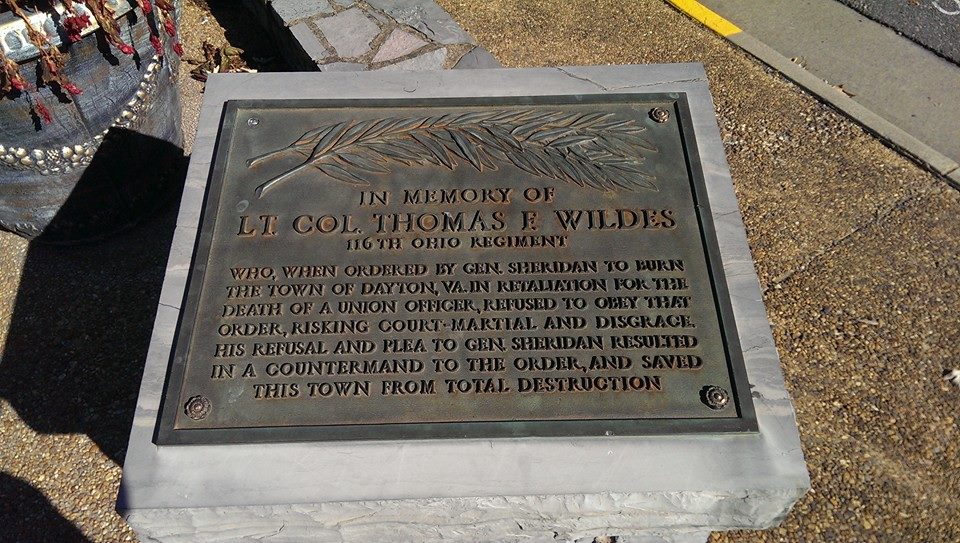
No doubt, many civilians went hungry during the winter of 1864-65, but there were few cases of outright starvation. Most civilians became refugees, and took shelter with family members or drifted to urban areas. Many took oaths of allegiance with allowed them to draw rations from Federal authorities. Again, compare this to the experiences of the native peoples at the same time – the Sand Creek massacre, for example, took place in 1864. No comparable event was ever directed at southern civilians. Certainly it was unpleasant to be a white civilian in the path of union hard war policies, but, actual destruction was largely limited to crops, livestock, and farm buildings. The real trauma encountered by southerners was enduring the liberation of tens of thousands of slaves and the wrecking of their social order with their menfolk and government unable to do anything about it.