Ten Days in the Enemy’s Camps: Sergeant Milton Cline Inside Lee’s Army
ECW welcomes back guest author Cory M. Pfarr.
In late winter 1863, as the Army of the Potomac struggled to recover from the defeat at Fredericksburg, a quiet, consequential transformation was underway. Major General Joseph Hooker, newly in command, reorganized his army with unusual energy and purpose. Among his most important reforms was a renewed emphasis on intelligence.
At the center of that effort stood Col. George H. Sharpe and the Bureau of Military Information. Under Sharpe—and with assistance from John C. Babcock—the army began to treat intelligence as a coordinated system rather than a collection of disconnected reports. Cavalry reconnaissance, signal stations, prisoner interrogations, and scout operations were increasingly brought together into a single analytical framework. In this moment of transition, Sgt. Milton W. Cline of the 3rd Indiana Cavalry undertook one of the most remarkable intelligence missions of the war. For ten days in late February and early March 1863, Cline moved not around Lee’s army—but through it.
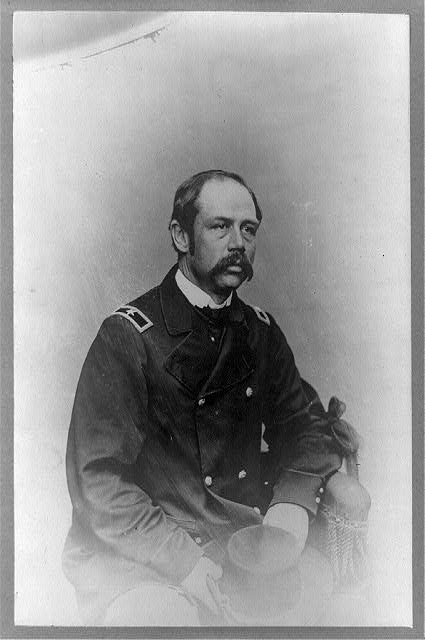
Cline was not an obvious choice for such a mission. Nearly thirty-eight years old and formerly a sailor, he lacked the conventional background of a cavalry scout. But he possessed what Sharpe required: steadiness, adaptability, and the ability to operate alone in uncertain conditions. After moving through the loosely controlled Northern Neck, the peninsula between the Potomac and Rappahannock Rivers which neither army fully occupied, Cline crossed the Rappahannock River on the night of February 27 below Port Royal. From there, he entered the Confederate army itself. What followed was not simply reconnaissance, but prolonged infiltration.
Rather than avoiding contact, Cline entered Confederate camps, moved among cavalry elements, mingling freely with soldiers and officers. His survival depended on the credibility of his assumed identity. Though his cover story is not recorded, it is likely that he posed as a Confederate scout or partisan. Whatever the case, it worked. He was not treated as a stranger, but as one of them.
Cline’s movements soon brought him into the company of Capt. John W. Hungerford of the 9th Virginia Cavalry. With Hungerford and his men, Cline traveled westward into the interior of Lee’s army, passing camps, artillery positions, and infantry brigades. At times, his written observations came rapidly and almost without punctuation, reflecting both urgency and the volume of what he was seeing. In one passage, Cline described moving along the road through a series of defensive positions, where he observed what he believed to be an Alabama brigade moving across low ground between successive hills.
From higher ground, he was able to see multiple lines of earthworks, noting that the forward line appeared lightly manned and that some positions lacked mounted guns. As he continued, he passed into a creek bottom near an old mill, where he identified a wagon park and nearby artillery. Returning to the road, he encountered soldiers encamped nearby, whom he understood to be serving as a provost guard.
Though in rough form, the report reveals what made Cline valuable: not polished analysis, but dense, firsthand observation. He noted camps near Bowling Green, likely belonging to elements of Jackson’s command. Near Spotsylvania Court House he saw additional camps and artillery. At Orange Court House, he found infantry, artillery batteries, and signs of sustained occupation.
Perhaps most significant were his observations along the Plank Road through the Wilderness and around Chancellorsville, where he found a mixture of abandoned camps, scattered positions, and more concentrated defensive works. Near the Chancellor house itself, he encountered rifle pits, artillery, wagon concentrations, and signs of a stronger defensive posture.
By the time he returned, Cline had effectively assembled a rough intelligence map of Lee’s army. His report identified dozens of camps, artillery positions, fortifications, and logistical centers—more than sixty installations in all.
Yet it was not without flaws. Cline misidentified some units and misunderstood aspects of Confederate organization. Most notably, he concluded that all of Longstreet’s corps and part of Ewell’s command had departed, an error that could not be immediately corrected due to gaps in available corroborating intelligence.
But Sharpe did not treat Cline’s report as definitive. Instead, it became one piece of a larger analytical process. Cross-referenced with prisoner interrogations, deserter testimony, and signal reports, it contributed to an increasingly reliable picture of Confederate dispositions.
Equally important were Cline’s observations of conditions within Lee’s army. In one of the more revealing passages, he reported that Confederate soldiers were living on a simple ration of flour and bacon, though even this meager provision was often in short supply. This was more than anecdote; it pointed to underlying strain in the army’s supply system during this phase of the campaign.
Cline’s return to Union lines was as daring as his infiltration. After ten days among the Confederates, he slipped away during a gathering at a cavalry camp. Seizing the opportunity, he secured a horse, rode toward the Rappahannock, found a small boat, and crossed the river under cover of darkness. At one point he was fired upon—whether by Union or Confederate troops, he could not say.
By daylight, he reached Union pickets. Initially detained, he was soon recognized and sent to headquarters. On March 5, 1863, he reported to Sharpe, having traveled roughly 250 miles in ten days. Sharpe subjected him to careful questioning. Despite its imperfections, Cline’s account was corroborated at many points and became one of the most detailed intelligence reports produced during the war.
Cline’s usefulness did not end with his return. Later in March, Sharpe sent him again into the Northern Neck, this time on a more limited but still revealing mission. There, Cline gathered information on smuggling, supply networks, and the region’s role as a granary for the Confederacy. He identified large grain stores and active transport across the Rappahannock, underscoring the continuing flow of provisions into Lee’s army. The findings reinforced a key point: while Confederate soldiers at the front often suffered from limited rations, the broader supply system—particularly through regions like the Northern Neck—remained active and difficult to disrupt.
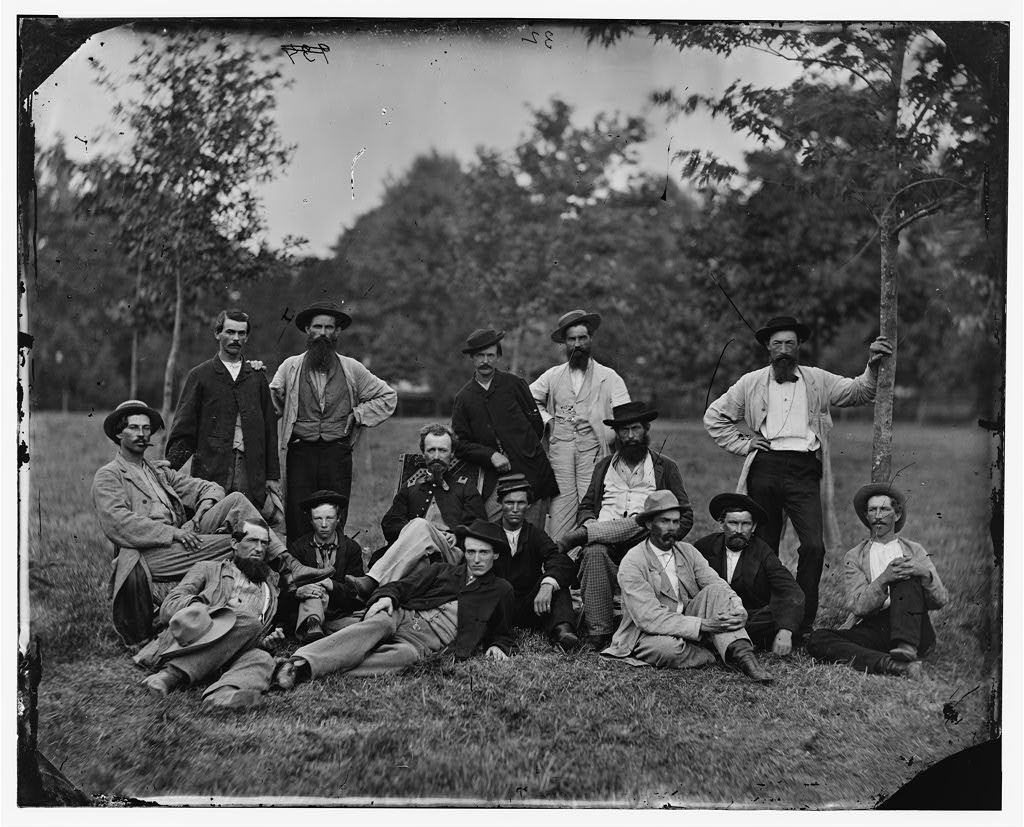
Cline’s missions came at a moment when the balance of intelligence between the two armies was shifting. Within the Army of the Potomac, Hooker’s reforms—and Sharpe’s system—were beginning to produce results. Information was no longer simply gathered; it was analyzed, compared, and integrated.
In Lee’s army, the situation was markedly different. During the weeks leading up to the Chancellorsville Campaign, Confederate intelligence suffered from inconsistency and uncertainty. Reports were fragmentary, often contradictory, and sometimes wildly inaccurate. At one point, a Confederate scout reported that five Union divisions were moving west, an exaggeration so large that, as events unfolded, it may have served Union interests by masking the truth.
Lee was forced to work out his estimates of Hooker’s intentions amid this confusion. His thinking shifted repeatedly, at times believing Hooker would advance, at others suspecting that reports of movement concealed a withdrawal or redeployment elsewhere. For the first time in the war in Virginia, the Union army may have held a measurable intelligence advantage. Cline’s mission did not create that advantage—but it exemplified it.
Measured purely by accuracy, Cline’s report was imperfect. But measured by scope, daring, and contribution, it was extraordinary. Few soldiers during the Civil War penetrated enemy lines so deeply, remained so long, or returned with such breadth of observation. His mission represented a more sustained form of intelligence operation—one that combined human intelligence, reconnaissance, and direct observation over time. More importantly, it demonstrated what the Army of the Potomac was becoming. Under Sharpe, intelligence was no longer incidental; it was becoming systematic.
By the time of the Gettysburg Campaign later that year, this transformation was even more apparent. But its foundations were laid in the winter and early spring of 1863 through the work of scouts like Milton Cline. His ten days in the Confederate camps did not decide a battle, but marked a turning point in how one army learned to see the other clearly.
Cory M. Pfarr works for the U.S. Government and is the author of Longstreet at Gettysburg: A Critical Reassessment (2019) and Righting the Longstreet Record at Gettysburg (2023), both published by McFarland. His essays have appeared in Gettysburg Magazine, North & South, Studies in Intelligence, and The Massachusetts Historical Review, and he has presented his research at the U.S. Army War College. His forthcoming book, The Federal Signal Service at Antietam, is scheduled for release in 2026.
Bibliography
- Fishel, Edwin C., The Secret War for the Union: The Untold Story of Military Intelligence in the Civil War, (Boston: Houghton Mifflin, 1996).
- Ryan, Thomas J., Spies, Scouts, and Secrets in the Gettysburg Campaign: How the Critical Role of Intelligence Impacted the Outcome of the Civil War’s Most Famous Battle, (El Dorado Hills, CA: Savas Beatie, 2015).
- The War of the Rebellion: A Compilation of the Official Records of the Union and Confederate Armies, 128 vols., (Washington DC: Government Printing Office, 1880-1901), ser. 1, vol. 25, pt. 1.
- Tsouras, Peter G., Colonel George H. Sharpe and the Creation of American Military Intelligence in the Civil War, (Havertown, PA: Casemate, 2018).


Great article! Cline certainly had guts and fortitude. This could make for a great movie!
Interesting information on abundant grain supplies failing to reach Confederate soldiers. Perhaps not an immediate connection, but the Confederate Commissary General Lucius B. Northrup was an ongoing pain for Lee. It was a delicate situation since Northrop was a personal friend of Davis, and there were difficulties in the supply chain, especially financial, but when Lee took over the Armies in early 1865, Seddon resigned and was replaced by Breckenridge and Northrop was replaced with Isaac St. John. The latter was younger and brought useful experience to bear, and had great immediate success in getting supplies released from private individual stores by cheerfully asking them to supply one Confederate soldier for six months. He endorsed Northrop’s overall practical assessment of the situation and then found an immediate workaround that – worked. Source: “Confederate Commissary General, Lucius Bellinger Northrop and the Subsistence Bureau of the Southern Army”, Jerrold Northrop Moore (Chapter 20, pp. 279-290). Well researched and fascinating. Northrop’s immediate post-War fate is stunning, also next chapter “Ticket Of Leave Man”.