War Is Hell, But Even Hell Has Rules: Introduction to the Lieber Code
Years after the Civil War, Maj. Gen. William T. Sherman famously declared that “War is hell.” Similarly, during the war, on the eve of his burning Atlanta, Sherman declared “War is cruelty, and you cannot refine it…[1]

But was Sherman wrong? Must war always be unmitigated “hell,” or could it in fact be “refined,” with standards governing and perhaps civilizing its conduct? The Lincoln Administration thought the latter true. On April 24, 1863, Abraham Lincoln issued General Orders No. 100, entitled “Instructions for the Government of Armies of the United States in the Field.” That Order announced a set of rules that the United States Army promised to follow in waging the Civil War.
Known as “the Lieber Code” for its primary drafter, the Order represented a groundbreaking document. The Lieber Code is considered the model for modern international conventions regulating acceptable methods of warfare. Indeed, the Code’s “important guidance” still is praised in the U.S. Department of Defense Law of War Manual.[2]
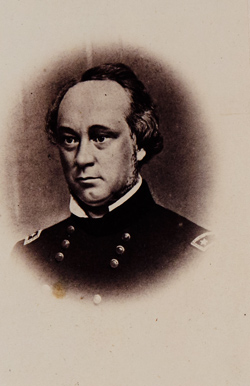
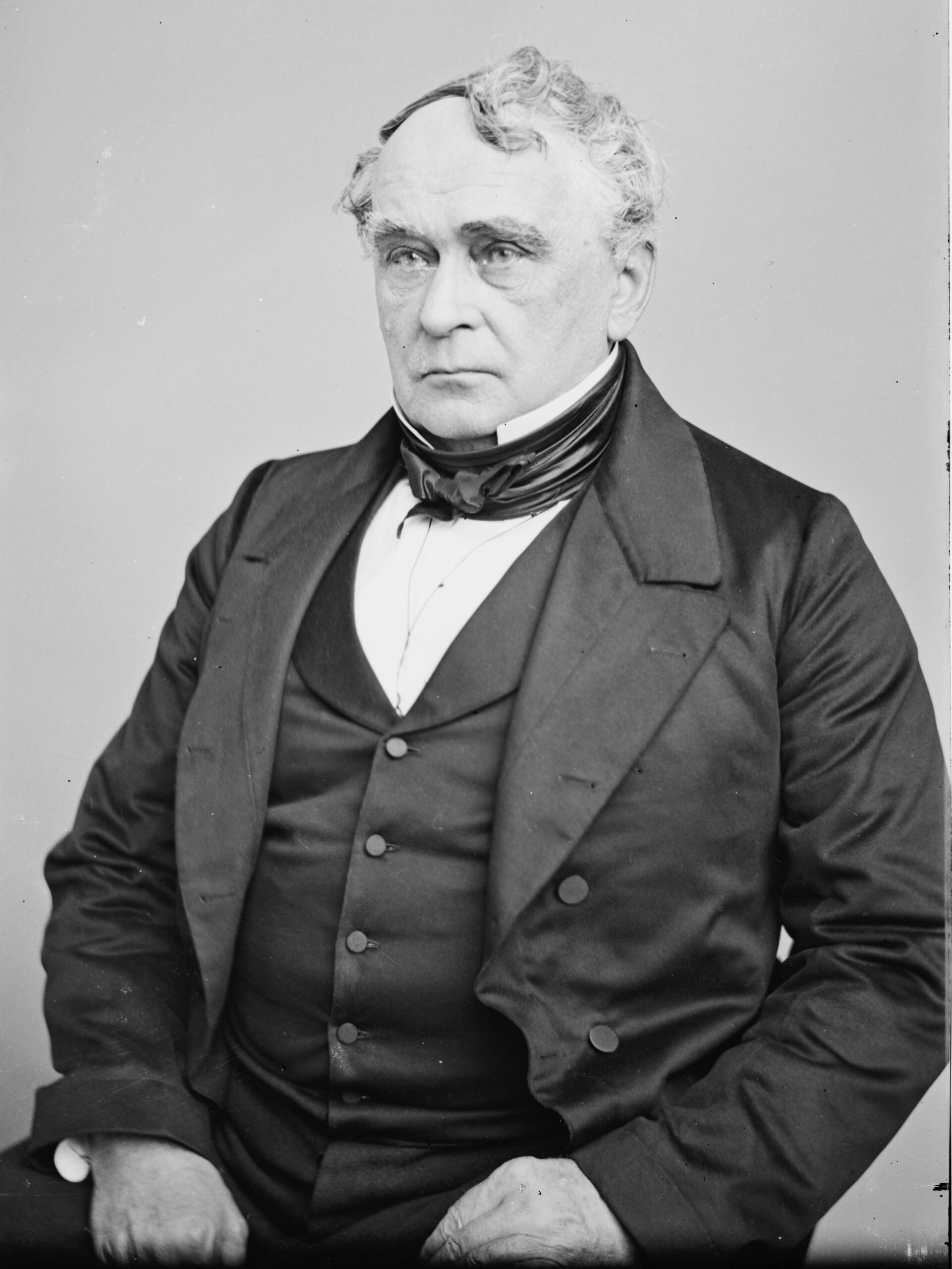
The Code was the brainchild of U.S. General-in-Chief, Henry “Old Brains” Halleck. Halleck himself was well-versed in the laws of war, having authored a comprehensive treatise on the subject.[3] It was Halleck who decided that it would be useful to establish an overall set of rules to govern the army. The rules were to be consistent with international customs, in addition to the standard Articles of War. Halleck convened a five-member board “to propose amendments or changes in the Rules and Articles of War, and a code of regulations for the government of armies in the field, as authorized by the laws and usages of war.” The only non-military member of the board was Francis Lieber, a Prussian-born Napoleonic war veteran, Columbia law professor, and acknowledged expert on the international laws of war. Lieber, who served as Halleck’s unofficial advisor on legal issues arising from the conflict, was the primary drafter of the board’s resulting work product.[4]
Lieber was an interesting choice to spearhead Halleck’s initiative to set forth the rules for subduing the South. Lieber had spent over twenty years teaching at South Carolina College. He also was an ex-slaveholder, having purchased multiple enslaved persons throughout his tenure with the College. Moreover, Lieber’s oldest son had stayed in South Carolina when Lieber relocated to New York in 1856. Oscar Lieber joined the Wade Hampton Legion at the outbreak of war and died during the June 1862 Battle of Williamsburg.[5] Now the father would craft the legal foundation for the Union war effort.
Organized into ten sections consisting of 157 short – often just one or two sentences – “Articles,” Lieber’s Code offered concise answers to many of the issues confronting Union forces in the field.[6] In doing so, the Code harmonized federal military policy, relieving Union commanders in the field from making ad hoc decisions while announcing what conduct was permitted and what deemed unlawful. And the Code had teeth; it provided that soldiers in the act of violating certain of its provisions could “be lawfully killed on the spot.”[7]
Legal guidance certainly had become necessary, or at least highly desirable. The first two years of war had been witness to numerous situations in which army officers needed clear direction on what would be considered right and proper.
How should Southern civilians in occupied towns be governed, and when could they be punished for disloyal conduct, violent or otherwise? Should irregular Confederate forces (guerillas) be summarily executed if captured, or afforded POW status? What was the status of fugitive enslaved persons reaching Union lines (especially those fugitives from “loyal” citizens)?[8] When could civilian property within the Confederacy be taken for the army’s use? How were POWs to be treated, and should they be taken into physical captivity at all, or simply paroled? And with the Confederate government threatening the summary execution of certain Union officers—including Maj. Gen. John Pope and Benjamin “Beast” Butler—whose policies were deemed contrary to the “laws and usages of war” (e.g., threatening civilians, arming blacks), what was to be the U.S. legal response? Specifically, was lethal retaliation ever justified upon otherwise innocent enemy in the hands of the U.S.?[9]
Lieber’s Code addressed all of these issues, and many more. As will be seen in coming posts in this series on the Code, sometimes the Code was quite specific and definite in its mandates, while in other instances its guidance not only was vague but sometimes outright contradictory. A question is not only how the Code addressed the myriad legal issues raised by the Civil War, but whether the specific answer or general guidance provided made sense. Did the Lieber Code furnish a rational set of rules for the U.S. Army’s conduct of the war? Moreover, what was the goal of those rules? Did the rules seek—in Sherman’s language—to “refine,” or civilize, the making of war, or did they instead actually justify those who preferred “total” war?
In the coming weeks we will together explore various aspects of the Lieber Code, quoting its provisions, posing questions for debate, and considering the many issues raised by this inaugural effort to impose standards upon the hell that is war.
[1] “William Tecumseh Sherman,” Wikipedia, https://en.wikipedia.org/wiki/William_Tecumseh_Sherman; Sherman, September 12, 1864 letter to James M. Calhoun, et al., Civil War Era NC, https://cwnc.omeka.chass.ncsu.edu/items/show/23.
[2] Jenny Gesley, ‘The “Lieber Code” – the First Modern Codification of the Laws of War,’ Library of Congress Blog, April 24, 2018, https://blogs.loc.gov/law/2018/04/the-lieber-code-the-first-modern-codification-of-the-laws-of-war/; Law of War Manual, June 2015 (updated December 2016), at iii, https://tjaglcspublic.army.mil/dod-low-manual.
[3] Henry W. Halleck, International law; Or, Rules Regulating the Intercourse of States in Peace and War (D. Van Nostrand, New York, 1861), https://archive.org/details/internationalla01hallgoog/page/n4/mode/2up.
[4] The War of the Rebellion: A Compilation of The Official Records of The Union and Confederate Armies, Series III, Vol. 2 (U.S. Government Printing Office, Washington, D.C., 1880 – 1901), p. 951 (hereafter “OR”); John Fabian Witt, Lincoln’s Code: The Laws of War in American History (Free Press, New York, NY, 2012), pp. 2, 193, 230-231; Matthew J. Mancini, ‘Francis Lieber, Slavery, and the “Genesis” of the Laws of War,’ The Journal of Southern History, Vol. 77, No. 2 (May 2011), p. 325, https://www.jstor.org/stable/41306198?read-now=1&refreqid=excelsior%3Af984dfd9aafa0042ea3d37e73c25109a#page_scan_tab_contents; Sir Adam Roberts, “Foundational Myths In The Laws Of War: The 1863 Lieber Code, And The 1864 Geneva Convention,” Melbourne Journal of International Law (Vol. 20, 2019), pp. 13 – 14, https://law.unimelb.edu.au/__data/assets/pdf_file/0020/3144314/Roberts.pdf.
[5] Witt, pp. 176, 179, 180, 193, 226 – 227.
[6] OR, Series III, Vol. 3, pp. 148 – 164. General Orders No. 100 (Lieber Code; “Code”) is published here in the OR.
[7] Code, Article 44 (emphasis supplied).
[8] Lincoln’s Emancipation Proclamation did not definitively resolve this issue. That executive order only purported to free enslaved persons in geographic areas then still in rebellion and unoccupied by U.S. forces. “Emancipation Proclamation (1863),” National Archives Milestone Documents, https://www.archives.gov/milestone-documents/emancipation-proclamation. Moreover, the 1850 Fugitive Slave Act, mandating that all citizens cooperate in returning fugitives, remained in force until June 28, 1864. Sarah Kay Bierle, ‘June 28, 1864: “Hereby, Repealed,”’ Emerging Civil War (June 28, 2019), https://emergingcivilwar.com/2019/06/28/june-28-1864-hearby-repealed/. Even the Second Confiscation Act of 1862, which forbade the military from unilaterally returning escaped enslaved persons to their owners, allowed the return of enslaved persons whose owners established that they were “loyal” citizens. “The Second Confiscation Act,” Freedmen and Southern Society Project, Section 10, https://freedmen.umd.edu/conact2.htm.
[9] OR, Series I, Vol. 14, Chap. 26, p. 599, Vol. 15, Chap. 27, pp. 905 – 908, Series II, Vol. 4, pp. 328 – 330, 830 – 831, 835 – 837, 906 – 908; Christopher G. Pena, General Butler, Beast or Patriot, New Orleans Occupation, May-December 1862(1st Books, Bloomington, IN, 2003), pp. 86 – 87.


Thanks, great piece — looking forward to more.
Lieber’s Prussian DNA — where the State and the Army were supreme — is shining through in Code 44’s provision for soldiers “be lawfully killed on the spot” by their officers … I don’t believe the 1806 Articles of War had any such provision … and i am surprised Lieber’s fellow panel members, all American officers, allowed that to make the final cut into the General Order.
I think Article 44 is more nuanced than that. It conditions that on a soldier continuing to engage in the prohibited rape, murder, etc against civilians after being first ordered to stop. It’s not a “Prussian”-style authorization to kill solely because of disobedience. It’s aimed at preventing, for example, murder.
Thanks for the comment, John … in my experience, however, General Orders are not the place for nuance …. they are deliberately blunt instruments of unmistakable clarity … this is how soldiers would interpret this order : ‘If you murder, rape, or pillage after being ordered to stop, you will be shot on the spot” … the underlying rules of war already carried the death penalty for those felonies, typically after a court martial … so, it’s not the crime that gets you executed immediately, it’s the deliberate disobedience … and this is classic 18th & 19th century European military discipline.
Mark: We’ll agree to disagree. The purpose of the Article is to stop a crime in the course of its commission. It requires an order first. The authority to kill is not based solely on disobeying an order – it’s based on continuing to commit the crime after being given fair warning. We recognize the concept in law today regarding the use of deadly force.
Thank you, Mark. And wait until you read what the CSA had to say about the Code, and Lieber himself.
Excellent article.
Thank you, Carolyn. Several more to come on the same theme.
While I cannot speak for Sherman and what exactly he meant, I have never understood him to be saying there can be no rules in warfare. Just that rules cannot change the fact that war is an ugly and violent business by definition.
The Lieber Code was nothing ore than codified version of the Rules of War that had existed since 1600 or before. Those rules later became codified again in the pre-WW II Geneva conventions They are the same rules I and every other soldier was trained on by the US Army
Sherman certainly knew he was violating those Rules. When Atlanta fell, Sherman planned to evict the population from the city as winter was approaching. He wrote a letter to Hood informing him of the plan and suggesting a 2 day truce to evict them. . Hood essentially replied that Sherman’s move violated the Rules of War they had both been trained on. Evicting civilians with no apparent military purpose violated the Rules then, as it would today. Hood added that the consistent shelling of civilian houses during the siege also violated the Rules of War. “War is Hell” is just another way of rationalizing violations of those Rules.
Tom
This is a very interesting subject. In all my years studying the ACW, I don’t ever remember reading about the Lieber Code. Just started hearing about it on ECW, which goes to show how much is out there about the ACW and what a great service ECW is highlighting these topics. This seems like an extremely complicated subject for the U.S. military. Lincoln’s official stance was that the states had not seceded and that it was just a collection of individuals in rebellion against the Federal government. Under that interpretation, is there a difference between a uniformed member of the Confederate army and a partisan dressed in civilian attire? Not really. Yet, on the ground, they were expected to be treated differently. What was the legal basis for the U.S. military destroying civilian property in the South? Was it justified as long as it was done in the name of suppressing said rebellion? These were, legally (according to Lincoln), still U.S. citizens after all. Looking forward to hearing more about this.