Shrouded Veterans: Founding Father James Madison’s Rebel Nephew
In the midst of our nation’s 250th anniversary, we’re regularly reminded of the deeds of our Founding Fathers. Many of the men and women who helped build this country had descendants who served on both sides during the Civil War.
Alexander Hamilton had three grandsons who donned federal blue. So did Paul Revere. George Washington’s great-grandnephew, John Augustine Washington III, died wearing gray. At least two of James Madison’s great-nephews, James Edwin Slaughter and Dr. Thomas Cooper Madison, fought to bring down the nation he helped create. Doctor Madison survived exposure in hospitals and capture at Petersburg, only to drop dead seven months after Lee’s surrender.
Before resigning his commission to join the rebellion, Madison spent two decades as a surgeon in the U.S. Army. He rotated through various frontier posts in Florida, Missouri, Kansas, and Iowa leading up to the Mexican War. Like many other regular army officers, even surgeons, the war in Mexico offered Madison an opportunity for distinction and advancement.
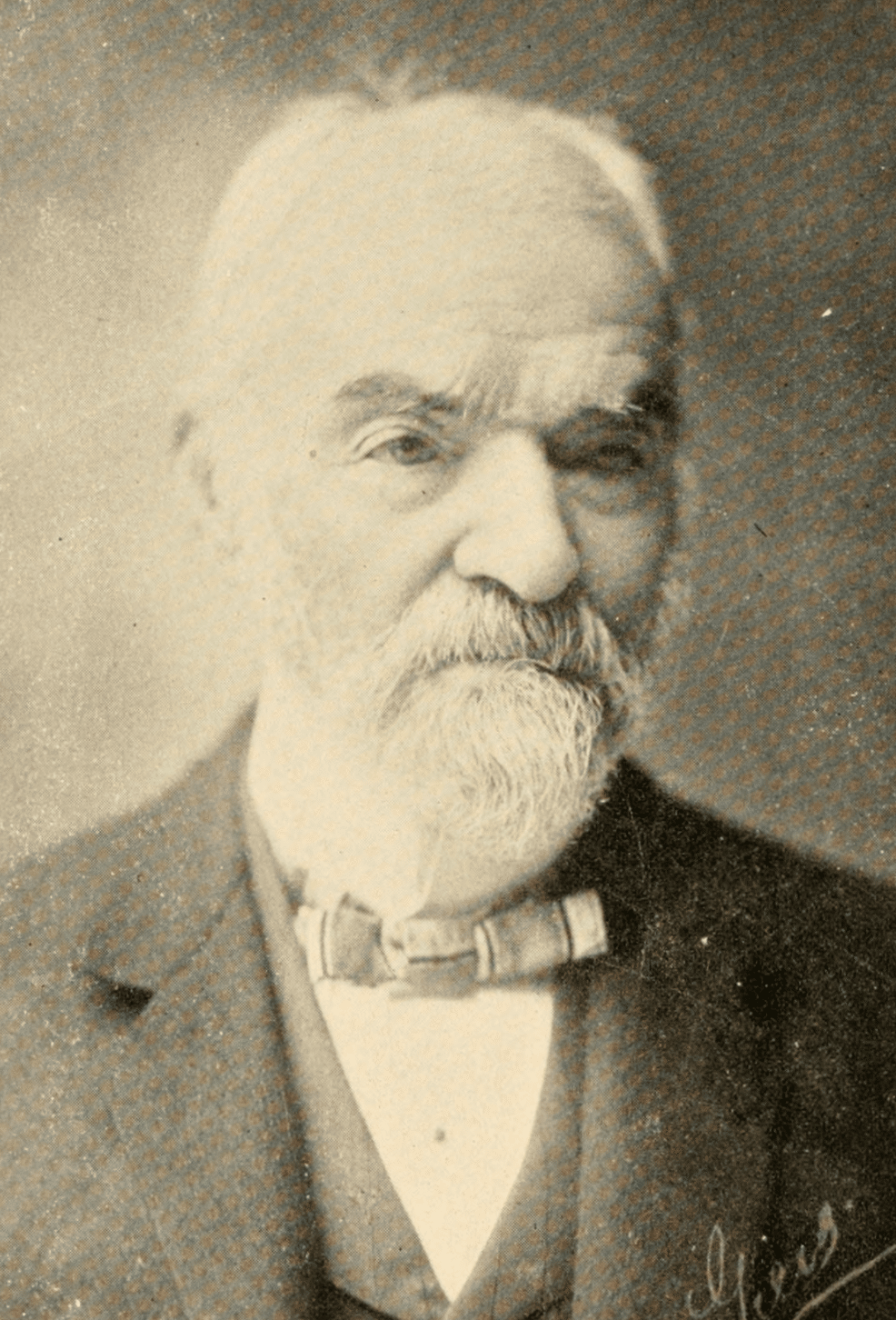
On February 23, 1847, during the fighting at Buena Vista, a Mexican bullet struck 2nd Lt. Samuel G. French in the upper part of his right thigh. In his memoirs, French noted that army surgeons on hand hesitated to dig into his thigh to remove the ball because they couldn’t determine its location by probing and feared a fatal outcome if they operated. For 40 days, French lay immobile and emaciated on a cot. He feared he would die unless the ball was extracted.
The next day, Madison and fellow Assistant Surgeon Grayson M. Prevost visited French and promised to return the next morning to perform the surgery. French described Madison as a “most estimable gentleman and skilled surgeon.”
Madison arrived alone and performed the operation that saved French’s life. French placed his finger over the spot where he was convinced the ball was located and said he would take responsibility if the operation was unsuccessful.
“[H]e cut a gash, or hole, large enough to insert his finger and a large steel hook to get the ball out,” French recalled. “I was watching his face intently, and the moment he touched the ball I saw an expression of delight come over his countenance.”
Within three days, French managed to sit up on the side of his cot. Days later, he could stand with the assistance of crutches and hobble to his room’s doorway to peer into Saltillo’s street. He afterward discovered that the cramping and contracting in his leg that had left him immobile was caused by tetanus. French fully recovered, survived the war, and later became a Confederate major general.
Madison was stationed at Fort Wise on the upper Arkansas River in Colorado Territory when war broke out between the states. As soon as he heard reports of secession, Madison attempted to get away from the post, either by being reassigned to a post farther east and closer to the theater of action or by obtaining a leave of absence. He had hoped to get a firsthand idea of the state of affairs in the South and then resign his commission. At the time, he was the only medical officer stationed at Fort Wise, and he felt it was his duty to remain there until a substitute could replace him. After much effort by Madison, a replacement was ordered to the fort, but the surgeon resigned before he reached it.
On August 10, 1861, Capt. James Deshler wrote Confederate Secretary of War LeRoy P. Walker that he knew Madison well from his time at Fort Wise (renamed Fort Lyon), noting that “his sympathies are all with us, and that he is anxious to quit the federal service” to offer his service to the Confederate States. Madison couldn’t bring himself to wait any longer, and he finally resigned from the U.S. Army after 21 years’ service later that month. On September 23, he was officially relieved of duty, and a replacement arrived four days later. By then, he had already departed for the East.
That November, Madison was appointed a surgeon in the Confederate Army. The following month, he reported to Maj. Gen. John B. Magruder to serve as his medical director. From January to April 1862, he served as the medical director for the Department of the Peninsula and later for the Army of the Peninsula under Magruder’s command.
In June 1862, Madison was assigned to duty as medical inspector of various general hospitals in Tennessee and Virginia. When Petersburg fell in April 1865, U.S. Maj. Gen. George L. Hartsuff ordered him to attend to the wounded at the Washington Street hospital. On April 28, 1865, Madison wrote the assistant adjutant general of the U.S. forces in Petersburg, requesting “to be paroled and permitted to go to my home as early as convenient.”
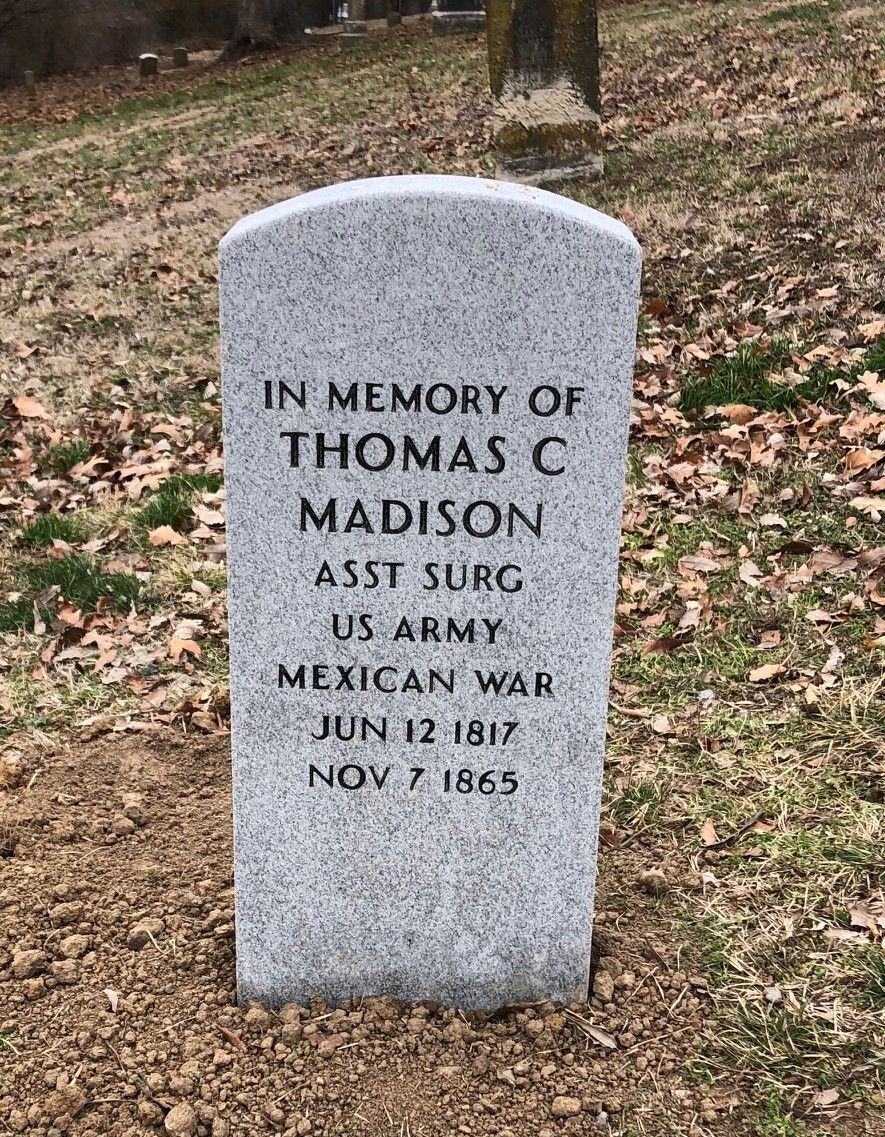
On November 7, 1865, Madison suddenly collapsed aboard a Pacific Railroad passenger train en route to Lexington from St. Louis. His remains were removed from the car at Jefferson City. He was identified by valuable papers, such as deeds and “other writings of importance,” found on his body.
Madison was likely interred at Old Jefferson City Cemetery, also known as the Woodland-Old City Cemetery, the only public burial ground in the city when he died. A government-issued veteran headstone was placed at the cemetery in his honor. The James Madison Museum of Orange County Heritage voted unanimously to fund the installation of the veteran marker at the cemetery.
Shrouded Veterans is a 501(c)(3) nonprofit organization dedicated to rescuing the neglected graves of 19th-century veterans, primarily Mexican War (1846-48) and Civil War (1861-65) soldiers, by identifying, marking, and restoring them. You can view more completed grave projects at facebook/shroudedvetgraves.com.
We’re now on Substack! We’ll gradually be adding past and recently completed headstone projects.


It is no wonder that so many of the descendants of Founding Fathers and others who were highly placed in the United States of America prior to 1861 served in the Confederacy during the Civil War. These included the most recent Vice President of the United States, who had also been a candidate for President in the most recent election; and the great-great-grandsons of George Washington. As well, the most brilliant engineer in the Army, and a renowned explorer, Joseph Christmas Ives, left the Army and his home in New York City to join the Confederacy; so did George McClellan’s cousin, who left Philadelphia to serve the South. It is yet another wonderful conundrum for those who insist the war was about slavery, to have them twist themselves into knots trying to explain how these men could be supporting “Hatred, racism, slavery and White Supremacy.” Well, the very easy answer – the one they refuse to accept – is…they weren’t. They were fighting for the ideals of the Founding Fathers and the Constitution.
You are misinformed. Madison (along with nearly every signer of the Constitution) believed that it created a strong, permanent nation.
In 1788, Madison responded by letter when he heard that members of the New York ratification convention were specifically asking for recognition of the unilateral right of secession as a condition for ratification. Madison demurred, stating that, “The Constitution requires an adoption in toto, and for ever. It has been so adopted by the other States… This idea of reserving right to withdraw was started at Richmd. & considered as a conditional ratification which was itself considered as worse than a rejection.”
Madison was even more explicit about this in letters he wrote during the midst of the Nullification Crisis in 1830 when threats of unilateral secession arose in South Carolina. Here is an example of his thoughts in a letter to Nicholas Trist, that were repeated in numerous letters over the next two years, “It is the nature & essence of a compact that it is equally obligatory on the parties to it, and of course that no one of them can be liberated therefrom without the consent of the others…Applying this view of the subject to a single community, it results that the compact being between the Individuals composing it, no individual or set of individuals can at pleasure, break off and set up for themselves…Applying a like view of the subject to the case of the U.S. it results, that the compact being among individuals as embodied into States, no State can at pleasure release itself therefrom, and set up for itself. The Compact can only be dissolved by the consent of the other parties.” In other words, un-making the union was understood as unconstitutional without the consent of all parties to the Constitution.
By joining the rebellion, Madison’s descendent was turning his back on what his ancestor had sacrificed so much to create.