War Is Hell, But Even Hell Has Rules: Protecting the Vulnerable Per the Lieber Code
A previous post[1] highlighted the Lieber Code’s[2] admonition that “military necessity” could not be used to justify conduct not “lawful according to the modern law and usages of war.” Moreover, soldiers were instructed that they must always remember that even while engaged in war they “do not cease on this account to be moral beings, responsible to one another and to God.”[3] Moving into the Code in detail, we see that these benevolent general rules were buttressed by specific injunctions addressing a variety of situations that soldiers could face in the field.
Article 11.
The law of war does not only disclaim all cruelty… It disclaims all extortions and other transactions for individual gain; all acts of private revenge, or connivance at such acts. Offenses to the contrary shall be severely punished, and especially so if committed by officers.
Article 22.
[T]he unarmed citizen is to be spared in person, property, and honor as much as the exigencies of war will admit.
Article 23.
[T]he inoffensive individual is as little disturbed in his private relations as the commander of the hostile troops can afford to grant in the overruling demands of a vigorous war.
Article 35.
Classical works of art, libraries, scientific collections, or precious instruments, such as astronomical telescopes, as well as hospitals, must be secured against all avoidable injury, even when they are contained in fortified places whilst besieged or bombarded.

Article 37.
The United States acknowledge and protect, in hostile countries occupied by them, religion and morality; strictly private property; the persons of the inhabitants, especially those of women: and the sacredness of domestic relations. Offenses to the contrary shall be rigorously punished…
Article 38.
Private property, unless forfeited by crimes or by offenses of the owner, can be seized only by way of military necessity, for the support or other benefit of the army or of the United States.
If the owner has not fled, the commanding officer will cause receipts to be given, which may serve the spoliated owner to obtain indemnity.
Article 44.
All wanton violence committed against persons in the invaded country, all destruction of property not commanded by the authorized officer, all robbery, all pillage or sacking, even after taking a place by main force, all rape, wounding, maiming, or killing of such inhabitants, are prohibited under the penalty of death, or such other severe punishment as may seem adequate for the gravity of the offense.
A soldier, officer or private, in the act of committing such violence, and disobeying a superior ordering him to abstain from it, may be lawfully killed on the spot by such superior (emphasis supplied).
Article 70.
The use of poison in any manner, be it to poison wells, or food, or arms, is wholly excluded from modern warfare. He that uses it puts himself out of the pale of the law and usages of war.
Article 71.
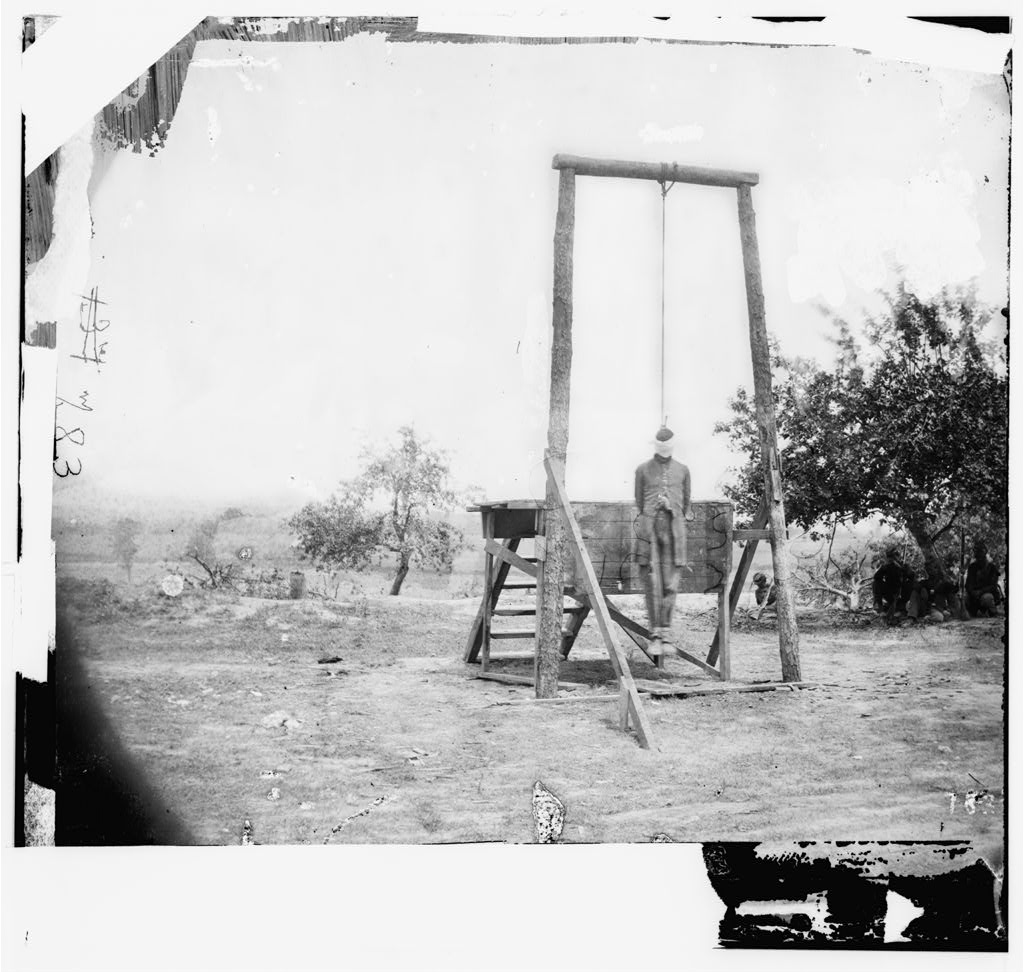
Whoever intentionally inflicts additional wounds on an enemy already wholly disabled, or kills such an enemy, or who orders or encourages soldiers to do so, shall suffer death, if duly convicted, whether he belongs to the Army of the United States, or is an enemy captured after having committed his misdeed.
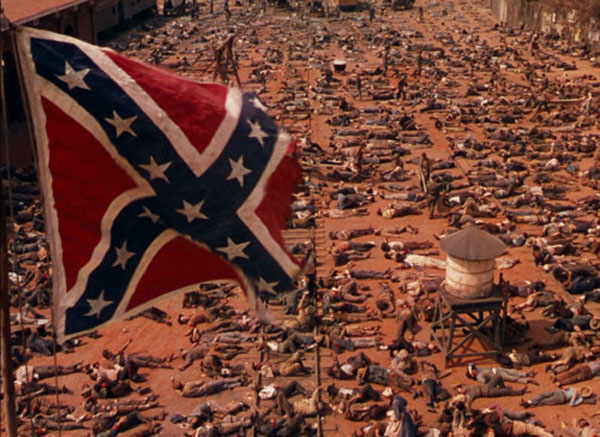
Summary: As seen before, the Lieber Code seems to bend towards making war as civilized as possible, including on the subjects of protecting civilians and their property. How, then, could conduct such as William T. Sherman’s destructive march through Georgia, Phil Sheridan’s 1864 “Burning” in the Shenandoah Valley, or U.S. Col. James Montgomery’s June 11, 1863 wholesale burning of Darien (portrayed in the movie Glory)—the last including the destruction of churches and schools[4] — possibly be consistent with the strictures of the Lieber Code?
Perhaps this question will be answered in forthcoming posts on Lieber’s Code.
This post is part of a series.
[1] War Is Hell, But Even Hell Has Rules: Military Necessity & Its Moral Limits Per the Lieber Code.
[2] The War of the Rebellion: A Compilation of The Official Records of The Union and Confederate Armies, Series III, Vol. 3 (U.S. Government Printing Office, Washington, D.C., 1880 – 1901), pp. 148 – 164.
[3] Code, Articles 14, 15.
[4] Orlando Montoya, “Remembering The Burning Of Darien,” Georgia Public Broadcasting (June 11, 2013 12:43 PM; Updated: July 17, 2020 12:35 AM), https://www.gpb.org/news/2013/06/11/remembering-the-burning-of-darien.
In the movie Glory, Col. Robert Gould Shaw (Matthew Broderick) initially refuses to comply with Col. Montgomery’s order to burn the town, asserting “It is an immoral order, and by Articles of War I am not bound to obey it.” Apparently, Shaw had not yet received a copy of the Lieber Code; otherwise, he might have referred Montgomery to it.


Thanks for this series! Regarding the questions in your last paragraph – I have answers to the Sherman and Sheridan example, but I’ll offer an answer for the last one since I’ve written on the burning of Darien and I think it is a unique example. According to a June 9, 1863 letter written by Colonel R.G. Shaw, he actually objected to the burning of Darien as being in violation of the law of war (it’s unclear whether he means the Leiber Code, specifically – I doubt it). However, the expedition commander, James Montgomery told Shaw that since Black soldiers were NOT recognized as soldiers by the Confederate government and instead treated as outlaws and rebellious slaves, black soldiers were not bound by the rules of war. Shaw was not convinced but when Montgomery warned him that he would circumvent the chain of command if necessary, Shaw reluctantly gave the orders to loot and burn the town.
Mark, interesting. When can I find your paper on Montgomery’s theory ?
Hi Kevin, it was part of a short piece I wrote for the New York Times’s “Disunion” series back during the sesquicentennial. His reasoning has stuck with me though. As I say in the piece, I think this had a lot to do with Shaw’s later decision to try to get his soldiers into a “real fight” and prove that his men were more than simply vandals. I expand on this idea a bit more in a book chapter I wrote in a book titled, “Paths of Innovation in Warfare.” That chapter looks at how Ben Butler actually helped the cause of Black soldiers by trying to navigate a middle path in their strategic use between the Montgomery version of using Black troops as barbarians to punish the South for it’s sins, and the conservative West Point approach of William T. Sherman (for example) of keeping Black soldiers entirely at arms length. Here is the link to the Darien article: https://archive.nytimes.com/opinionator.blogs.nytimes.com/2013/06/11/the-sacking-of-darien/
Mark E,
Thank you. I have printed out your piece and will read with interest.
thanks for this latest installment, another nice effort … i assume this general order (General Order 100) was somehow conveyed to the troops by their officers … was there some a special effort to ensure this was done … and reading your previous posts it appears to me that Sheridian’s efforts against civilian property in the Shenendoah and Sherman’s in Georgia are clearly allowed by the code.
Mark, the publication within the Army of the Liber Code will be addressed in a subsequent post (and unfortunately will not be very illuminating, frankly). But yes, as will be seen by coming posts, the actions of Sheridan and Sherman find cover in aspects of the Code to come. Indeed, a theme of this series is that the general benevolence of certain parts of the Code is undercut by other provisions. There is no doubt, however, that the Code led to beneficial results in the development of international law.