ECW Weekender: The US Civil War Site in Melbourne, Australia
My wife Brittany and I recently took a two-week trip to Australia and New Zealand. We flew from the United States to Sydney, where we remained for several days. We then took a trip to Melbourne where we again remained for several days. Finally, we flew to Auckland for another several days stay before returning to Texas. In that time, I found a few ties to the U.S. Civil War, a couple tangentially and one directly.
New Zealand:
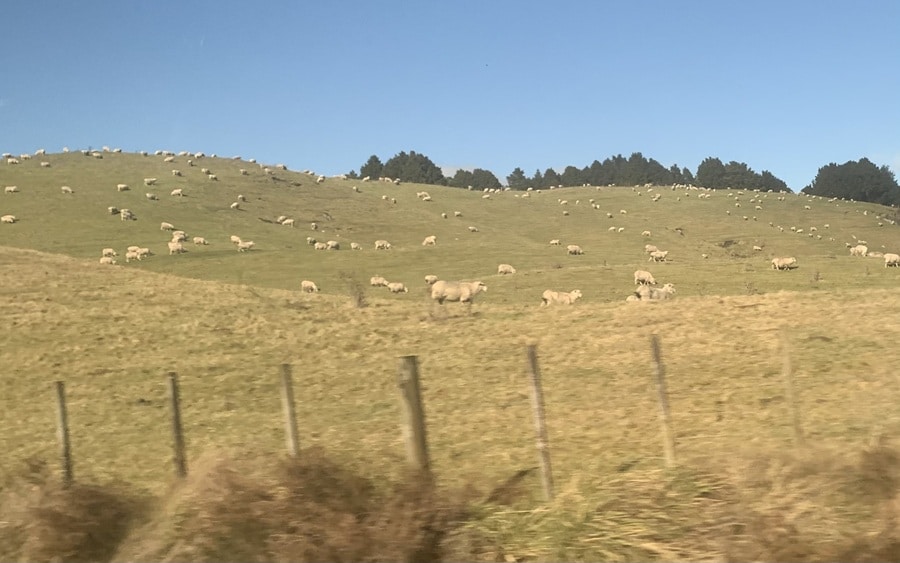
While in New Zealand, we took a tour out into the countryside to explore some Māori cultural centers, geological sites, and really get a chance to see New Zealand beyond Auckland. In our trip we saw scores of sheep ranches, which interestingly have some tangential links to the US Civil War. When U.S. cotton exports drastically fell because of the Federal blockade and what many consider a self-imposed embargo, the British Empire suffered. English textile mills were choked. Many in New Zealand were impacted as well. Britons in New Zealand offered aid packages to textile mill workers back in England, while simultaneously hoping that those mills would shift to using their wool. For those who knew of these 1860s thoughts by New Zealand colonists, there are direct links to the country’s sheep and the U.S. Civil War.[1] My wife and I snapped several pictures of these sheep ranches as we drove by, all as she shook her head repeatedly as I told her about these connections.
Sydney:
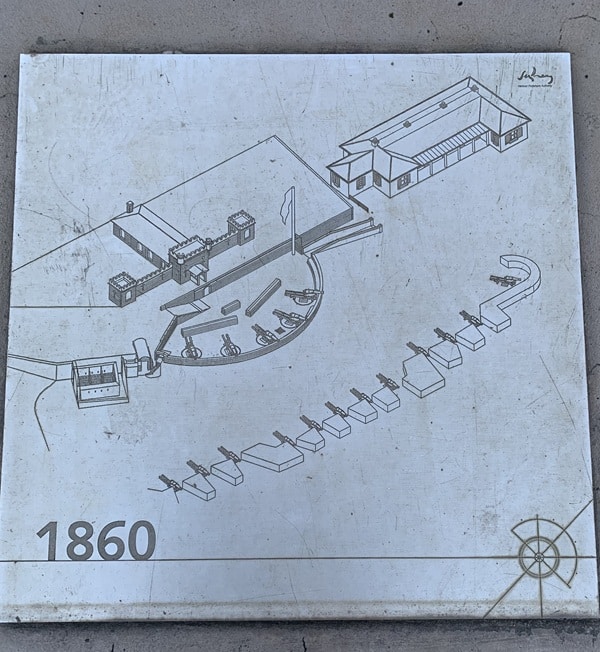
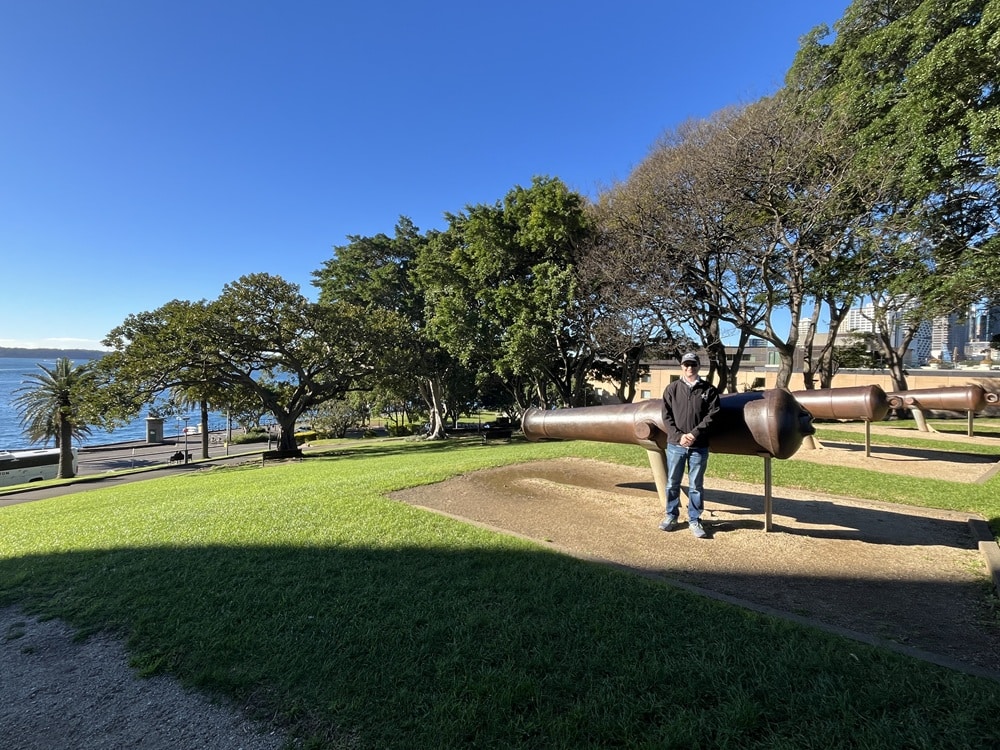
Neither the famed opera house or Harbour Bridge existed in the 1860s, and during the U.S. Civil War Sydney instead was ringed by more traditional fortifications. Remnants of a couple can still be toured, one under the Harbour Bridge itself and one a short ferry ride away at Watson’s Bay. Of course, we made a trip to both. Brittany is always game to take a picture of me near an old cannon. The Dawes Point Battery, the archaeological remnants of which literally sit underneath the Harbour Bridge, formed the center of Sydney’s 1860s defenses. The battery mounted about 17 heavy pieces of artillery, including five 42-pounders cast in Britain in 1842 and 1843. The site, with the five 42-pounders still standing a silent vigil over the harbor, reminded me of the U.S. Civil War’s shifting from brick fortifications to earthen ones, and how harbor defense became a critical element of the Confederacy’s defenses as the Civil War continued. Not a Civil War site, but definitely one from the same time using the same types of ordnance and fortifications.
Melbourne:
Melbourne has the most direct ties to the U.S. Civil War thanks to the visit of CSS Shenandoah to the city in early 1865. The ship was docked in Melbourne’s small suburb of Williamstown from January 25-February 18, 1865. The visit caused quite a stir. Confederate naval officers were celebrated in dinners, and people across the colony of Victoria flocked in attempts to see the raider, which was ultimately on its way to Russian waters to target the U.S. whaling fleet in Alaska. About 19 of the ship’s crew deserted while there, with several eventually making their way to the U.S. consul there to report what they knew (testimony later used in the famed Alabama claims by the U.S. against Britain). But abut 40 colonists stowed away and joined Shenandoah on its continued cruise that lasted until November 1865.
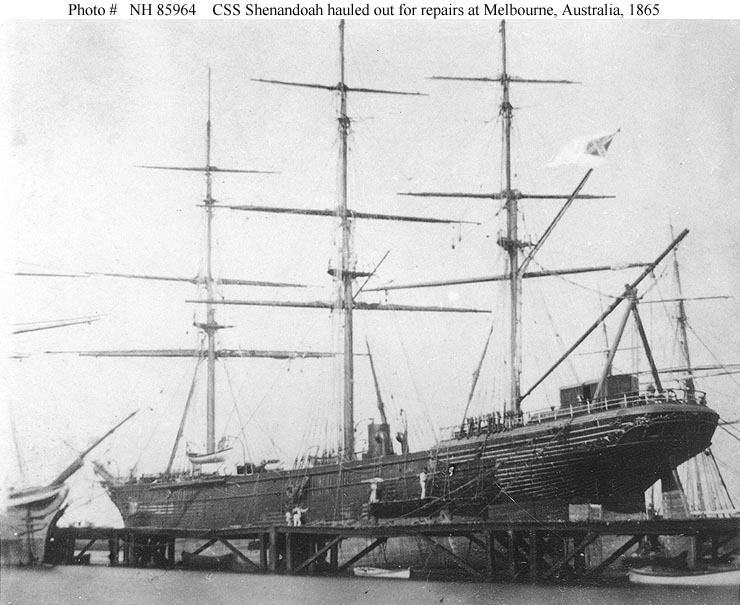
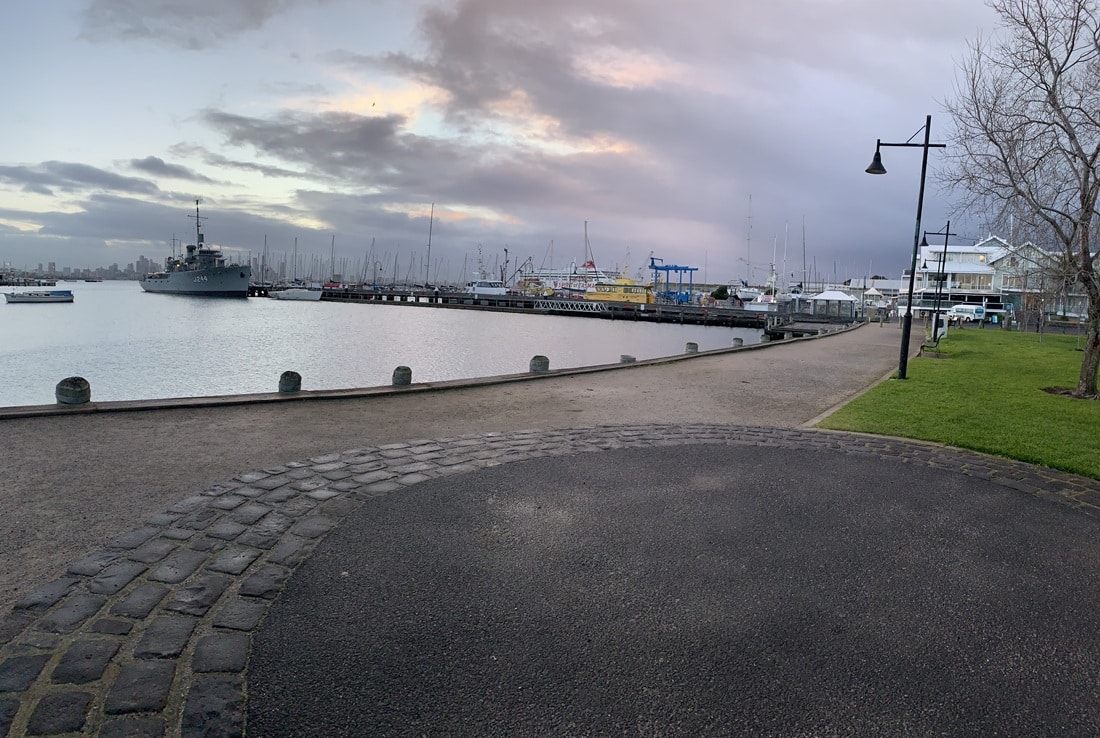
Williamstown remains a quiet area, but there are a couple of sites worth seeing tied to Shenandoah if you are ever in Melbourne. Williamstown Newport Foreshore is a small park along Hobson’s Bay and sits astride where the mid-nineteenth century docks were located. The park is essentially where Shenandoah was docked in January 1865. Astride those docks today is HMAS Castlemaine, a museum ship which served from 1942-1945 as a Royal Australian Navy corvette. Near the park is Seaworks, a small maritime museum that included Shenandoah’s visit as part of its displays.
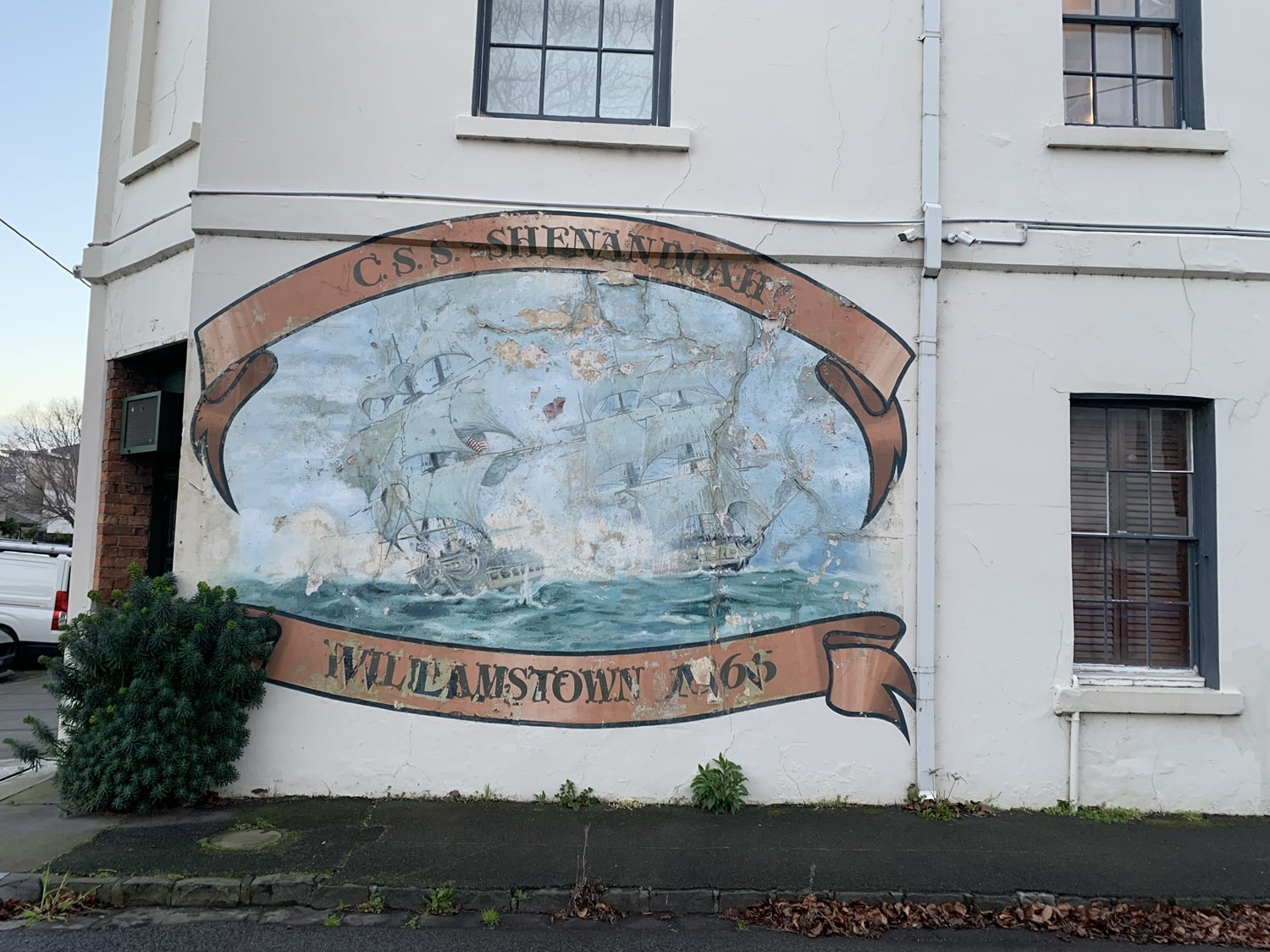
A couple of blocks from the park, on the corner of Aitken and Ann Streets, is a home that was the former Telegraph Hotel. On the building’s side is an old mural, chipped and fading, showing CSS Shenandoah battling a U.S. warship. The mural is not historically accurate, as Shenandoah never engaged a Federal warship, but it remains as the most accessible marker of the commerce raider’s trip to Melbourne. Above the structure’s main entrance is a plaque bearing Shenandoah’s name and a small window with the ship etched into it.
In Australia and New Zealand, there are not many sites to see regarding the U.S. Civil War. But if you are in Melbourne and need to scratch the Civil War itch, a brief visit to Williamstown will allow you to stand where CSS Shenandoah’s crew once did and see a mural that is rarely seen by anyone not seeking it out directly.
Endnotes:
[1] Daniel B. Thorp, “New Zealand and the American Civil War,” Pacific Historical Review, Vol. 80, No. 1, February 2011, 115, 121.
Emerging Civil War has previously written numerous articles both with ties to CSS Shenandoah and to Australia (and even one brief one with ties to New Zealand).


What a cool find! I would totally do the same thing. I think your wife and mine would suffer together if we ever went on a trip,
Excellent report!