War Is Hell, But Even Hell Has Rules: Prisoners of War Per the Lieber Code
This post is part of a series.
One of the many subjects addressed by the Lieber Code[1] was the proper treatment of prisoners of war. This was among the most contentious issues arising during the Civil War. One author claims that “no controversy ever evoked such emotions as the mutual recriminations between Northern and Southern partisans over the treatment of prisoners of war…Throughout the war the complaints, charges and counter-charges, and the assertions of criminal intent fed the raging fires of propaganda.”[2]
Indeed, the only Confederate executed after the war was Henry Wirz, the commandant at the infamous Andersonville POW camp, who was accused of war crimes over the treatment of Union POWs.[3] Robert E. Lee was summoned before a Congressional committee that sought to uncover Lee’s knowledge of (and possible responsibility for) the suffering of U.S. POWs.[4] Meanwhile, horrendous conditions at U.S. POW camps, including Elmira, New York (referred to as “Hellmira”) and Point Lookout, Maryland raise the question of what safeguards, if any, the Lieber Code afforded helpless non-combatants.[5]
This post looks at what the Code had to say about this controversial POW issue.

Article 53.
The enemy’s chaplains, officers of the medical staff, apothecaries, hospital nurses and servants, if they fall into the hands of the American Army, are not prisoners of war, unless the commander has reasons to retain them…
Comment: The principle that medical personnel should be immediately freed to continue their life-saving work was first established in May 1862 by Maj. Gen. Thomas J. “Stonewall” Jackson’s medical director, Dr. Hunter McGuire. McGuire freed seven Union doctors who had stayed behind to treat the wounded after U.S. forces evacuated Winchester.[6]
By contrast, Article 50 provided that civilians who traveled with an army—such as sutlers and newspaper reporters—were to be detained as POWs.
Article 56.
A prisoner of war is subject to no punishment for being a public enemy, nor is any revenge wreaked upon him by the intentional infliction of any suffering, or disgrace, by cruel imprisonment, want of food, by mutilation, death, or any other barbarity.
Comment: It seems as if the Code mandates humane treatment of those held as prisoners.
Article 57.
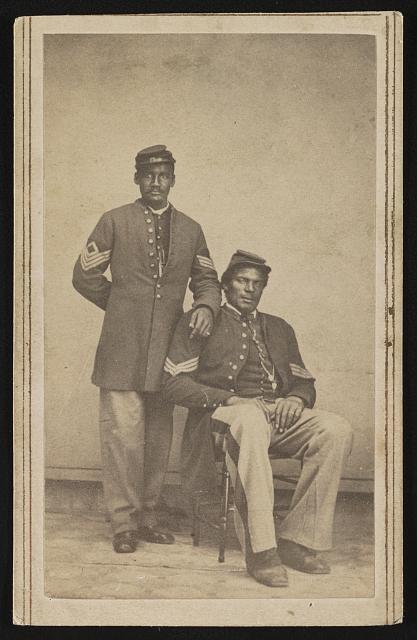
… No belligerent has a right to declare that enemies of a certain class, color, or condition, when properly organized as soldiers, will not be treated by him as public enemies (emphasis supplied).
Article 58.
The law of nations knows of no distinction of color, and if an enemy of the United States should enslave and sell any captured persons of their army, it would be a case for the severest retaliation, if not redressed upon complaint.
The United States cannot retaliate by enslavement; therefore death must be the retaliation for this crime against the law of nations (emphasis supplied).
Comment: Articles 57 and 58 protect U.S. African American soldiers and their white officers.
Article 59.
… All prisoners of war are liable to the infliction of retaliatory measures.
Comment: While Article 56 (and other Articles) assures POWs humane treatment, they can be utilized as objects of retaliation if their own country engages in misconduct.
For example, Lincoln relied upon Lieber’s language when in 1863 he issued a proclamation threatening retaliation against Confederate POWs for mistreatment of U.S. African American troops held as POWs.[7] Moreover, the U.S. was accused of implementing a policy of retaliation by reducing food rations afforded Confederate POWs in response to reports that U.S. POWs were being deliberately starved.[8] Also, in October 1864, some 600 Confederate POWs were placed in the direct line of cannon fire outside of Charleston in response to reports that Confederates in town were using Union POWs as human shields.[9]
Each of these examples of retaliation bore a direct nexus to a similar action taken (or allegedly taken) by the Confederates. No such nexus, however, can be found in situations in which U.S. commanders forced Confederate POWs to undertake the dangerous task of uncovering and disarming landmines confronting U.S. forces.[10]
Article 72.
Money and other valuables on the person of a prisoner, such as watches or jewelry, as well as extra clothing, are regarded by the American Army as the private property of the prisoner, and the appropriation of such valuables or money is considered dishonorable, and is prohibited…
Comment: This Article was not uniformly followed, as shown by POWs’ experience at Point Lookout, Maryland.[11]
Article 75.
Prisoners of war are subject to confinement or imprisonment such as may be deemed necessary on account of safety, but they are to be subjected to no other intentional suffering or indignity… (emphasis supplied).
Comment: POWs (of both sides) would certainly claim that this Article was only honored in the breach. For example, in addition to inadequate food and outbreaks of disease, some Confederate POWs suffered from being held in unfamiliarly harsh Northern climes while being denied adequate clothing, even when available from outside sources.
Henry Kyd Douglas, notable as the youngest member of Stonewall Jackson’s staff, wrote of his time at Johnson’s Island (located in Sandusky Bay, Ohio): “[T]he 42° of Latitude, North, is hardly the place Southerners would select as a winter resort. Johnson’s Island, however, was just the place to convert visitors to the theological belief of the Norwegian that Hell has torments of cold instead of heat.”[12]
Article 76.
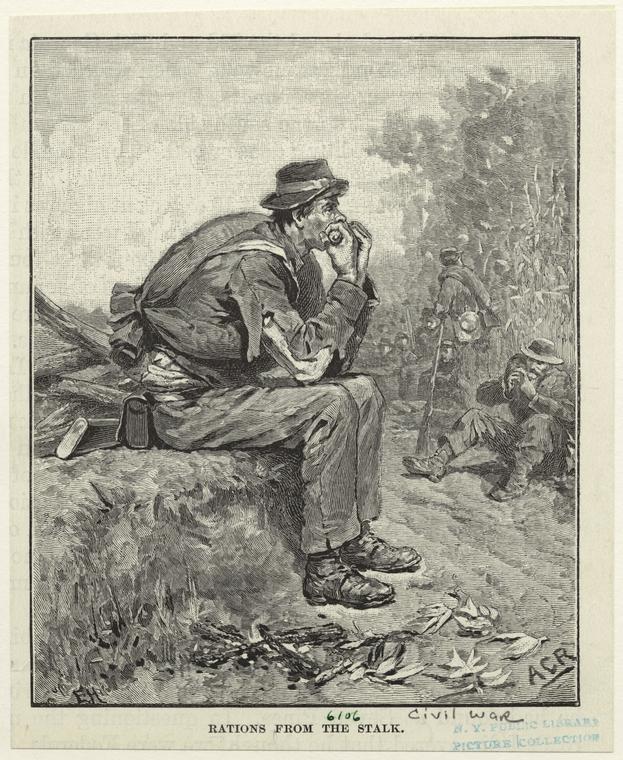
Prisoners of war shall be fed upon plain and wholesome food, whenever practicable, and treated with humanity.
They may be required to work for the benefit of the captor’s government, according to their rank and condition.
Comment: Here, the Code provides that POWs may be put to manual labor. Thus, African American Union POWs could in fact be compelled to labor, but the point is that the CSA could not discriminate in what class of POW it used for labor, nor consider African American POWs as mere enslaved persons.
Article 77.
A prisoner of war who escapes may be shot or otherwise killed in his flight; but neither death nor any other punishment shall be inflicted upon him simply for his attempt to escape, which the law of war does not consider a crime…
If, however, a conspiracy is discovered, the purpose of which is a united or general escape, the conspirators may be rigorously punished, even with death…
Comment: It is interesting that the Code forbids punishing individual POWs who attempt to escape, but if POWs work together (“conspiracy”), they may be put to death. Also, what does it mean that a POW may be shot or otherwise killed “in his flight”? Is that right limited to the actual moment of attempted escape (i.e., “hot pursuit”), and not permitted when the POW is taken in the act of fleeing back to his own lines? Or is this latter also part of the POW’s “flight”?
Article 78.
If prisoners of war, having given no pledge nor made any promise on their honor, forcibly or otherwise escape, and are captured again in battle after having rejoined their own army, they shall not be punished for their escape…
Article 79.
Every captured wounded enemy shall be medically treated, according to the ability of the medical staff.
Article 80.
Honorable men, when captured, will abstain from giving to the enemy information concerning their own army, and the modern law of war permits no longer the use of any violence against prisoners in order to extort the desired information or to punish them for having given false information.
Article 119.
Prisoners of war may be released from captivity by exchange, and, under certain circumstances, also by parole.
Comment: The subject of paroles, another controversial wartime issue, will be the subject of a future post.
Summary: The Lieber Code, on its face, mandated humane treatment of POWs. In actual experience, POWs on both sides of the conflict endured horrendous conditions. But at least the Code established precedent for future efforts to codify by international agreement the proper treatment of POWs of future wars.
[1] The War of the Rebellion: A Compilation of The Official Records of The Union and Confederate Armies, Series III, Vol. 3 (U.S. Government Printing Office, Washington, D.C., 1880 – 1901), pp. 148-164.
[2] William B. Hesseltine, Ed., Civil War Prisons (Kent, OH, The Kent State University Press, 1962), p. 5.
[3] Arthur T. Downey, Civil War Lawyers: Constitutional Questions, Courtroom Dramas, and the Men Behind Them(ABA Publishing, Chicago, 2010), pp. 279-281.
[4] Report of the Joint Committee on Reconstruction, 39th Congress, 1st Session, part II, 129, 134-135 (Washington, D.C.: Government Printing Office 1866). Lee appeared before Congress on February 17, 1866.
[5] Andersonville’s rate of mortality was 29%. By contrast, the death rate at Elmira was 24.3%. James M. McPherson, Battle Cry of Freedom: The Civil War Era, p. 802 (Oxford University Press, New York, NY 1988); Michael Horigan, Elmira: Death Camp of the North, p. 193 (Stackpole Books, Mechanicsburg, PA 2002). Over the course of the war: “More than 49,000 prisoners died in captivity, at least 26,440 Confederate and 22,580 Union, an overall mortality rate of 14 percent. Twelve percent of Confederate prisoners and 18 percent of Union captives never returned from incarceration.”Confederate Cemetery, Island History – Civil War Era, Confederate Cemetery, http://johnsonsisland.org/history-pows/civil-war-era/confederate-cemetery/; Michael E. Haskew, Prisons of the Civil War: An Enduring Controversy, Civil War Quarterly (Summer 2013), https://warfarehistorynetwork.com/article/prisons-of-the-civil-war-an-enduring-controversy/.
[6] Sarah Kay Bierle, ‘“Unconditional Release”: Dr. Hunter McGuire’s Precedent in American Military Medicine,’ National Museum of Civil War Medicine (May 24, 2018), https://www.civilwarmed.org/winchester-accord/.
[7] John Fabian Witt, Lincoln’s Code: The Laws of War in American History (Free Press, New York, NY, 2012), p. 248. See also Lincoln’s General Orders No. 252, July 31, 1863, https://archive.org/details/civilwargovernme00unit/page/n77/mode/2up (threatening retaliation for abuse of black U.S. soldiers).
[8] Michael Horigan, Elmira: Death Camp of the North (Stackpole Books, Mechanicsburg, PA, 2002), pp. 94-99;Hesseltine, p. 103; Bradley M. Gottfried and Linda I. Gottfried, Hell Comes to Southern Maryland: The Story of Point Lookout Prison and Hammond General Hospital (Turning Point Publishing, Fairfield, PA, 2018), p. 36; Dereck D. Maxfield, Hellmira: The Union’s Most Infamous Civil War Prison Camp-Elmira, NY (Savas Beatie, El Dorado Hills, CA, 2020), p. 67.
[9] “The Immortal Six Hundred,” Fort Pulaski National Monument, NPS, https://www.nps.gov/fopu/learn/historyculture/the-immortal-six-hundred.htm.
[10] John Grady, “Mine Warfare In The Civil War,” The Amry Historical Foundation, https://armyhistory.org/mine-warfare-in-the-civil-war/.
[11] Robert E. Crickenberger Jr., Point Lookout, Maryland: The Largest Civil War Prison (El Dorado Hills, CA, Savas Beatie, 2026), pp. 47-49.
[12] Henry Kyd Douglas, I Rode With Stonewall: The War Experiences of the Youngest Member of Jackson’s Staff, p. 260 (The University of North Carolina Press, Chapel Hill, NC, 1968); Conditions At Johnson’s Island Prison During the Civil War, Unpublished Master’s Thesis (Bowling Green University, January 1960), pp. 59-66, https://etd.ohiolink.edu/acprod/odb_etd/ws/send_file/send?accession=bgsu1670398956769758&disposition=inline. This passage discusses a variety of issues regarding the subject of clothing.


The treatment of POWs on both sides was unimaginably horrific. Did surrenders became less common as the war went on and stories of the camps were widely known? Makes you wonder how bad serving in the Confederate army around Petersburg was if being in a POW camp was the preferable option. Article 77 sounds like it means that if a prisoner is killed in an escape attempt, that’s fine, but if he’s captured alive, he can’t be killed just for trying to escape. I.e., better kill him while he’s running.
I do not know if soldiers consciously considered POW camp conditions when deciding whether or not to surrender. I doubt it.
But early in the war the U.S. in particular was concerned that its soldiers were too eager to surrender and accept parole (promise not to fight again until formally exchanged) because the soldiers anticipated that surrender would lead to a furlough while exchanges were worked out. The difficulty with paroles is the subject of the next Lieber Code post.
I certainly would. A hot meal and favorable conditions would be a much greater incentive to surrender than some fetid camp where you’ll be slowly starved to death or die of malaria. I’d take my chances in the trenches.
I am appreciating this series but I’m not yet seeing my question answered. Were Secretary of War Stanton’s policies on Confederate POW’s in keeping with the Lieber Code? I get the impression that the South could barely feed its own people, it’s soldiers and then feed the Yankee’s that surrendered or were captured. Andersonville is notorious but it was selected as a site due to the nearness of farms. Feeding competing groups of people was a logistical problem in the South. While the North’s Elmira prison camp was in the middle of a very fertile part of New York State, where vegetables and meat were plentiful and within the prison’s budget, Confederates rations were reduced and further reduced, as leadership of the prison camp changed (from a battle wounded officer to what appears to me as a Stanton acolyte) and the Elmira winter, a predictable and foreseeable season, was not prepared for in a timely manner – it came with most POW’s having tents, if that, for protection from the icy cold snowy cold winds of a middle-of-New-York winter weather where formerly healthy Confederate soldiers, acclimated to the weather of South Carolina and other southern climes, had their frozen dead bodies hauled out if not daily, near daily during the season. I saw many SC’s on the identified POW gravestones there. Oh yeah, and Elmira’s poisonous stagnant fetid water supply for the prisoners, Foster’s Pond, known to provide death in one drink, was very late to be fed by the very near Chemung River to provide rotation of the water. So it appears to me that in the Leiber Code both sides have some guidelines to play by, but Stanton’s idea of fairness, in the treatment of Southern captured soldiers, was outside the margins, which is my question.
I will take a crack at answering your question: Stanton’s policies WERE NOT in keeping with the mandates of the Lieber Code … Articles 56, 75, and 76 explicitly mandate “plain and wholesome food,” prohibit the “intentional infliction of suffering,” and outlawed “revenge” or “cruel imprisonment” … at Elmira and other Union POW camps, there was abundant food, lumber, rail transport, and a massive Prison Fund … and the deliberate reduction of rations, clean water, withholding of winter clothing, and other neglect violated those standards.
However, SECWAR Stanton and Colonel Hoffman (the Union POW czar) claimed legal cover using Lieber’s Retaliation Clauses (Articles 27, 28, and 59) … they argued that lowering Confederate living standards at Union POW camps was lawful reciprocity for conditions at Andersonville and other Confederate POW camps … yet even under the Code, Article 28 forbade retaliation based on “mere grounds of vengeance” … since the collapsing Confederacy lacked the physical logistics to significantly improve conditions for Union POWs, Stanton’s punitive actions did nothing to save the lives of Union POWs … this turned what Lieber intended as a protective legal deterrent into an instrument of bureaucratic revenge.
Thanks for the good info with a solid foundation. I appreciate the direct answer, also appreciate not seeing anyone respond with a cop out “Lincoln signed off on it…” answer
This is a great series, Kevin. Thank you.
Thank you for all the comments, and here are my belated thoughts on the questions & observations.
First, did the Lieber Code provide legal justification for retaliation measures against those held as POWs by the U.S.? For example, did the Code by its terms justify reducing rations furnished Confederate POWs in response to starvation conditions allegedly experienced by U.S. POWs? The answer to this question clearly is yes. The Code explicitly states that retaliation is permitted.
The more complicated issues are whether any such retaliatory measures actually took place, and whether such measures were objectively justified by actions allegedly taken by CSA authorities against U.S. POWs.
Certainly there were public calls in the North for retaliation against CSA POWs following reports that the CSA had adopted a policy of deliberately starving U.S. soldiers, allegations buttressed by horrific photographs of released POWs who were clearly near death by malnutrition.
From what I have read, there are arguments on whether overall CSA POW rations were reduced (as opposed to the content being changed), and whether any reduction was considered appropriate based on feeding inactive men at too high a level in the first place. There also is a counter argument based on other evidence that clearly the intent was retaliatory. There also is a serious argument as to why warm clothing was denied CSA POWs held in cold environments. Not seen as necessary, or not wanting to “coddle,” or a malign intent?
My point is that a good lawyer (present company excepted) could make arguments on either side. In fact, this would make a good blog post.
Other issues are whether the CSA was providing a proper level of rations to U.S. POWs, and if it had a duty to do more for U.S. soldiers held as POWs. The CSA always took the position that its POWs had sufficient food, in that they received the same level of rations as provided CSA soldiers. Clearly a questionable position. But if the CSA could not supply its own troops with food was it relieved of any duty to feed POWs who reportedly were starving? Interesting moral issue.
It is not well known but there was a U.S. program established to send rations from the North to U.S. POWs that theoretically should have easily solved the reported starvation problem, at least for those held in the Richmond area. A very interesting aspect of the POW issue that was fraught with mistrust and other obstacles.
This does not even touch upon many other POW treatment issues (by both sides). As noted in the blog post, POW treatment was a controversial issue.
A friendly reminder that the political leaders of the Confederacy could have alleviated much of the POW suffering on both sides simply by agreeing to treat Black soldiers as legal combatants and POWs. That could have kept the Dix-Hill Cartel intact and prisoner exchanges going.