Book Review: The U.S. Navy Medical Department in the Civil War

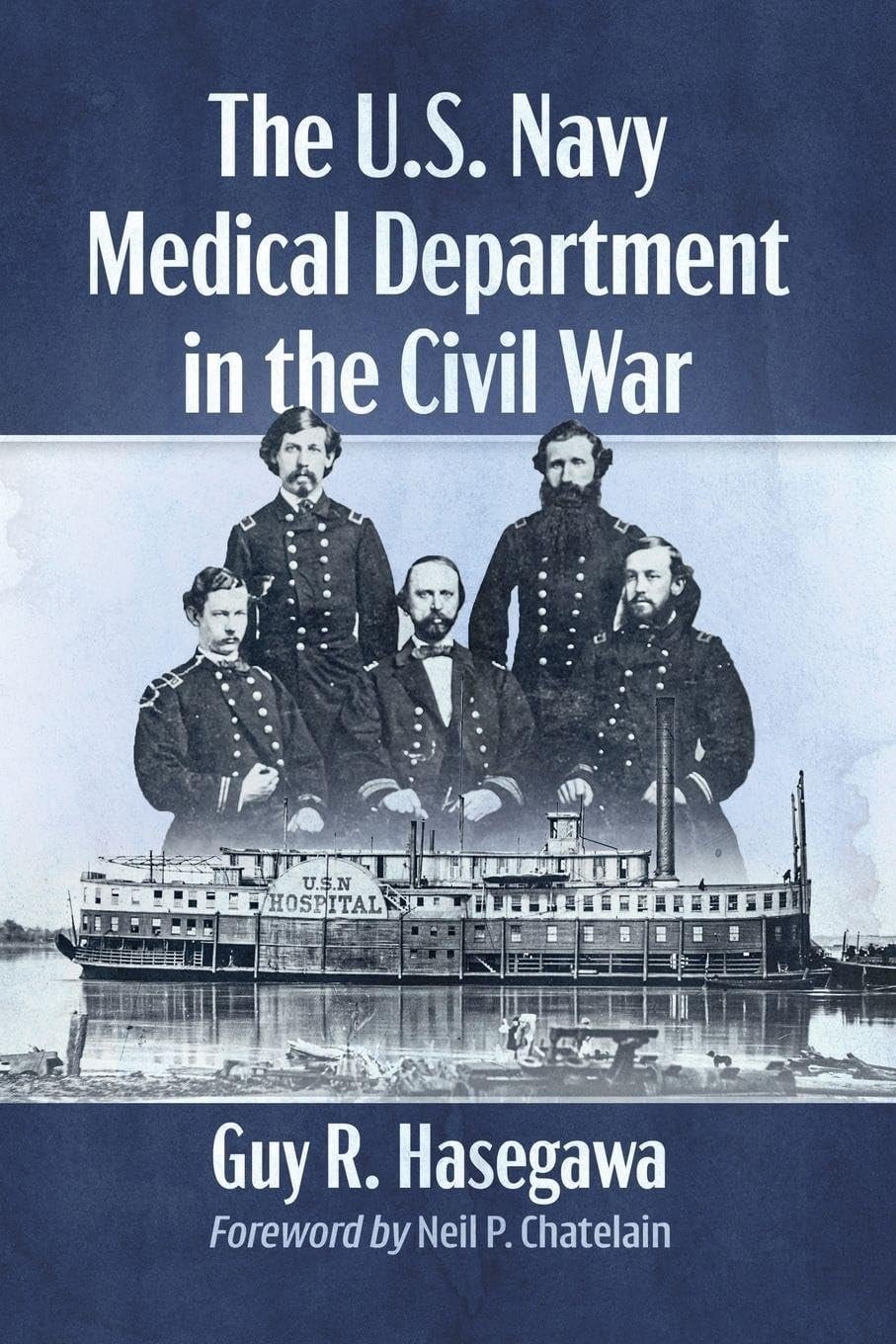
The U.S. Navy Medical Department in the Civil War. By Guy R. Hasegawa. Jefferson, NC: McFarland & Company, Inc., 2026. Paperback, 248 pp. $39.95.
Reviewed by Caroline Davis
Author Guy R. Hasegawa’s 2026 publication, The U.S. Navy Medical Department In the Civil War, is an essential companion piece to his previous works on wartime medicine, including Matchless Organization: The Confederate Army Medical Department and The Confederate Navy Medical Corps: Organization, Personnel and Actions. By pivoting to the Union Navy, Hasegawa rounds out a comprehensive view of how both sides handled the medical crises of the 1860s.
Following a similar pattern as his other works, Hasegawa walks readers through the many facets of the U.S. Navy Medical Department throughout the Civil War. He begins by diving into the Bureau of Medicine and Surgery (BUMED). BUMED had been placed at the helm of all things relating to the medical care of navy personnel both on land and at sea. With the Civil War raging, BUMED faced significant challenges in the effort to keep up with the sick and wounded sailors. The book examines the internal hierarchy and organizational shifts forced by a rapidly growing fleet. Furthermore, Hasegawa details the strict examination boards, ranks, and the roles of surgeons, stewards, and nurses.
Hasegawa meticulously explains the challenges faced by the USN Medical Department and processes used to combat them, providing readers with a thought-provoking narrative. He writes: “I have tried to provide a behind-the-scenes look at medical care in the Union Navy– how and why things were done as they were, who determined the course of action, and so forth.” (5) And this is exactly what is offered within this book.
The author tracks the evolution of medical purveying and resource distribution across vast distances. With the outbreak of the war, the U.S. Navy had been tasked with blockading roughly 3,500 miles of the Atlantic and Gulf of Mexico coastlines, as well as the lower Mississippi River. This clearly was not a simple task. Not only did the department have to provide for all the sailors out at sea working the blockade and warships, it also had many in its ranks still on land in temporary shoreline quarters and long-term care facilities needing supplies.
Hasegawa’s work is masterfully researched, drawing on letters sent and received between medical personnel, as well as official BUMED reports and the Official Records of the United States Navy. He provides a vital institutional history that fills a significant void in Civil War naval literature, pivoting away from the standard battlefield surgery narratives and highlighting the monumental administrative, logistical and environmental challenges faced by Union naval surgeons. He expertly draws the reader in by unpacking the day-to-day duties of those at sea, including routine physicals, but coupled with the unrelenting threat of disease. The book works to reframe the understanding of maritime war casualties, showing that disease was far deadlier than enemy fire.
For historians, medical professionals, and Civil War enthusiasts alike, this book is an indispensable resource. It successfully shines a light on the adaptable, unsung medical officers who kept the Union fleet fit to fight. Hasegawa concludes his work by saying “the watchwords of the medical department were efficiency and devotion.” (184) Perhaps these watchwords could also be used to describe Hasegawa, as his devotion to his work as a pharmacist and field of study is made apparent once again in this newest release.


Can we talk about how expensive ACW books have become? $39.95 for a 250 page paperback? They are definitely targeting a very niche audience.