The USS Underwriter, and “Furry Friends at Fort Fisher”: Some Exciting New Exhibits in North Carolina
This month I wanted to highlight some exciting exhibits in my adoptive home state of North Carolina, brought to you by colleagues in the North Carolina Department of Natural & Cultural Resources. I’m excited to share information about them both since they each highlight aspects of the war that don’t usually get much attention, and I’m especially drawn to those dynamics!
The first comes courtesy of Rachel Davis, who is the Civil War Records Editor in the Historical Research & Publications Office, North Carolina Office of Archives and History. Rachel recently informed me that MosaicNC, a venture of the North Carolina Office of Archives and History, launched its first Civil War digital exhibit “The USS Underwriter Raid”, which can be accessed here: https://mosaicnc.org/underwriter. The exhibit centers around Major General George E. Pickett’s attempt to retake the city of New Bern in early 1864. The Underwriter, a US navy gunboat was anchored north of New Bern, unsuspecting of any attack. In the dark of night, at 2:30 a.m., on February 2, 1864, approximately 250 Confederate sailors and marines led by Cdr. John Taylor Wood launched a surprise attack on the Underwriter from Kinston. The assault resulted in gunfire and hand-to-hand combat, claiming the lives of five Confederate and nine Union sailors, including the Underwriter’s commander.[1] Once fighting ceased, circumstances necessitated that Confederates burn the captured vessel.
The Underwriter digital exhibit is permanent and, according to Rachel, explores the raid within the larger context of the Confederacy’s campaign against Union-held New Bern, in addition to highlighting the expedition’s lasting impact on both sides. Significantly, it features 64 transcribed primary source documents, including official military reports, firsthand accounts, and personal correspondence from multiple different institutions and collections that visitors can examine for themselves. It also features a rare, compiled list of all currently known Union and Confederate sailors involved in the raid. Be sure to check this out!
The second exhibit comes from my friends just down the road at Fort Fisher State Historic site, specifically Arianna Hilbert, who is a second-year History M.A. student at the University of North Carolina Wilmington and served as the Mary Holloway Summer Intern at Fort Fisher. For her summer project, Arianna researched and developed an exhibit called “Furry Friends at Fort Fisher,” which will be displayed at Fort Fisher State Historic Site as a pop-up exhibit on Saturday September 5, 2026. More information can be found here: https://events.dncr.nc.gov/event/furry-friends-at-fort-fisher.
Since this is a one-day event, I thought it would be fun to talk with Arianna and Fort Fisher’s Education and Outreach Coordinator, Cameron Kinard, about the exhibit since pets are so popular and are something we may not think too much about when we think about the Civil War. Arianna’s love of pets – and seeing them with visitors on Fort Fisher’s grounds – inspired her research. She also admits that one of her favorite letters from Fort Fisher is a letter from Capt. Tripp complaining to his wife that Capt. Braddy’s fowls kept eating all of the collards out of the garrison’s garden, pointing to a long (and continuing) tradition of fowls getting into and eating things they’re not supposed to. Given this anecdote, Arianna aimed to draw connections between soldiers’ love for and ‘timeless experiences’ with their animals to more contemporary love and experiences. With the help of the Fort Fisher team, she decided to explore peoples’ devotion to their animals in the past and present. Canine visitors no doubt would love to see their ancestors reflected in history!
Arianna quickly delved into historians’ writing on pets. If you’re interested in reading more on the topic, Charles G. Worman’s Civil War Animal Heroes: Mascots, Pets, and War Horses, Katherine Grier’s Pets in America: A History can satisfy your curiosity. She also mined the Library of Congress’s photo collection, which yielded numerous pictures of soldiers with their beloved dogs, and discovered Capt. Eben Fiske’s (13th Massachusetts Infantry) sketches of his cat, Virginia, and the regimental pig, Billy, gleaned from the Massachusetts Historical Society.
Throughout the course of her research, Arianna was surprised to learn that some dogs were taken as prisoners of war – just like their soldier-masters – during the Civil War. And, like their human counterparts, sometimes escaped or were exchanged for other prisoners. The story of a dog named Dick particularly stuck with Arianna. Dick lived and worked in a U.S. hospital and, according to Charles Worman, had a knack for seeking out sick or wounded soldiers most in need of comfort, just like therapy dogs of the modern day.
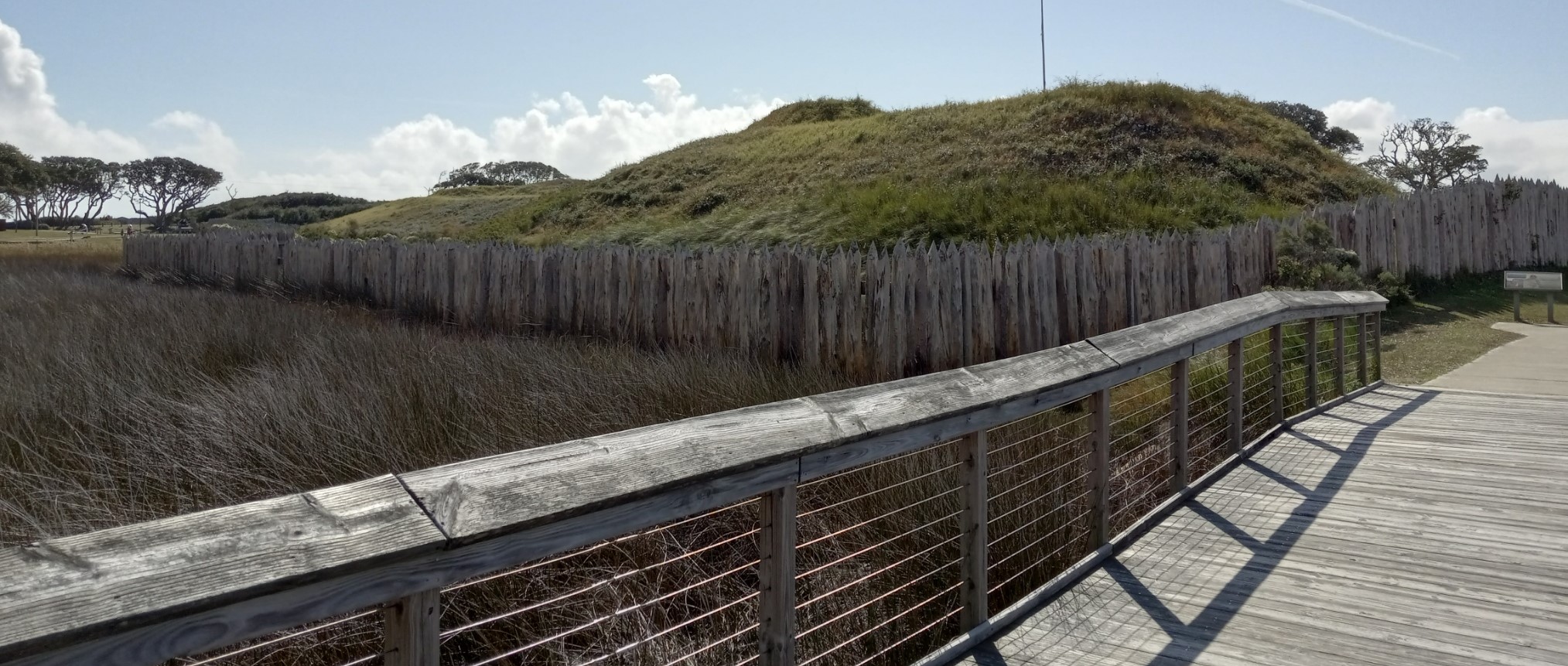
While the exhibit primarily focuses on the Civil War, it also briefly touches on animals at Fort Fisher during WWII. If you’re interested in learning more, follow Fort Fisher State Historic Site on Facebook – they’ll be making weekly informational posts about Arianna’s research. The role of pets in the Civil War is fascinating. According to Cameron Kinard, it’s just the kind of exhibit Fort Fisher’s interpreters are looking to do more of as they seek to establish the site as a place of both community engagement and history that highlights the less mainstream stories of Civil War history that garner broad interest, in addition to detailing the assaults on the fort in December 1864 and January 1865 in its beautiful new visitor center. If you haven’t been to Wilmington and Fort Fisher in a while, come visit – a little bird told me that there’s much to see!
[1] For a brief summary of the engagement, see Paul Branch, Jr., “Underwriter, USS,” https://www.ncpedia.org/underwriter-uss.


