War Is Hell, But Even Hell Has Rules: Irregular Warfare Per the Lieber Code
This post is part of a series.
One of the more controversial aspects of the Civil War was the Confederate employment of so-called irregular—or “guerrilla”—troops. Operating apart from the main armies, often in areas occupied by U.S. forces, guerrillas destroyed bridges, fell upon supply trains, waylaid couriers and attacked isolated federal units. But some also became notorious for targeting civilians. In addition, reports of atrocities followed in the wake of the most infamous groups. Complicating efforts to eliminate such irregulars was the fact that many were only “part time” soldiers, who melted back into civilian life after a raid. Moreover, some carried out their missions out of uniform, and without any formal authority from their government. Operating without close control from regular army authority, guerrillas were often deemed by the U.S. as undisciplined criminal marauders rather than legitimate soldiers.[1]
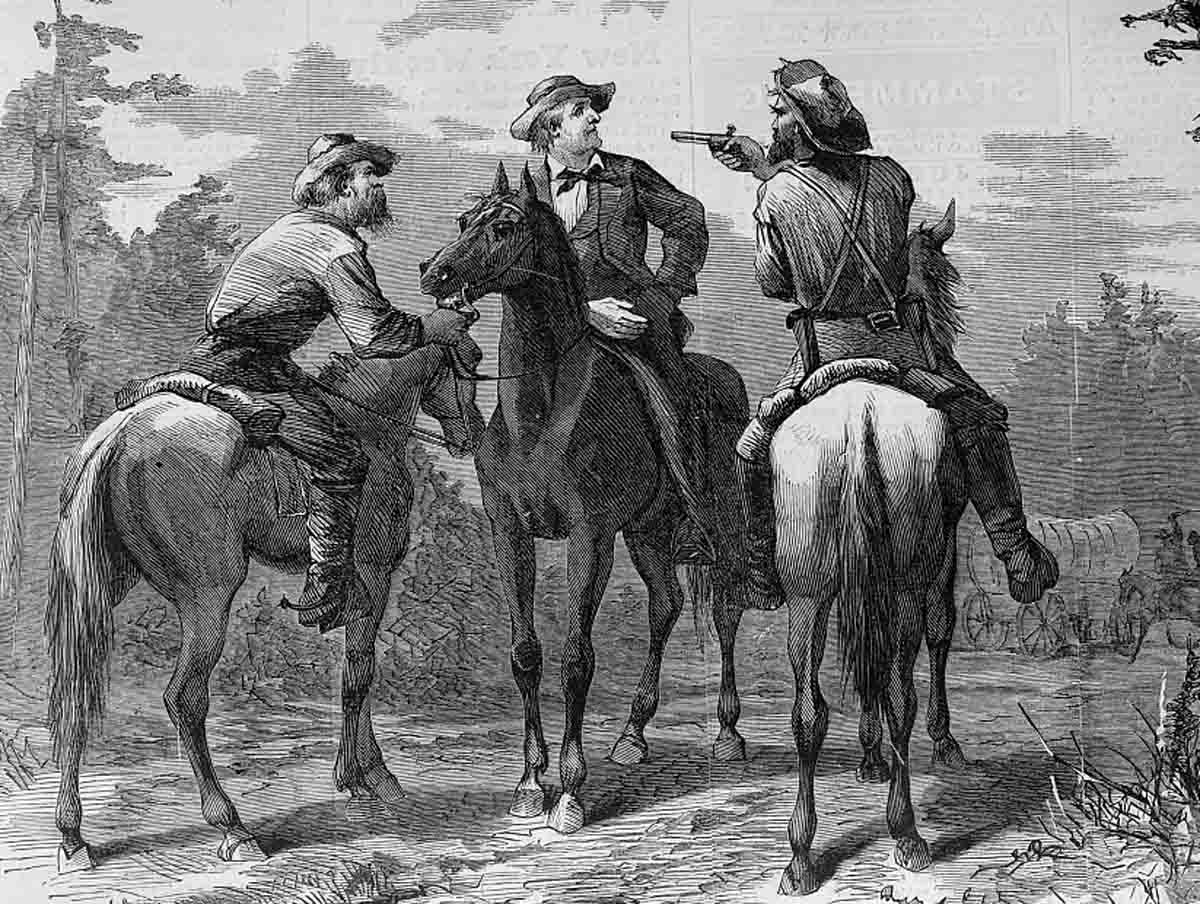
By contrast, Confederate authorities endorsed the use of irregulars as a means of conducting what would today be called “asymmetrical warfare.” The Confederate Partisan Ranger Act of April 1862 formally authorized the formation of “partisan” units, seeking to confer the legitimacy of soldiers upon such groups, thus providing them with protection from being treated as common criminals or assassins if captured.[2]
The U.S. Army’s pre-Civil War judgment of the propriety of guerilla warfare was inconsistent. The Revolutionary War exploits of guerilla leaders such as Francis “the Swamp Fox” Marion and Thomas “the Carolina Gamecock” Sumter were honored. However, during the war with Mexico General Winfield Scott used the cursory judicial procedures of ad hoc military commissions to effect martial law executions of guerrillas, even those serving in units operating under the express authority of the Mexican government.[3]

With the commencement of the Civil War, future U.S. General in Chief Henry W. Halleck was particularly troubled by guerrilla warfare. First exposed to the practice while in the western theater, where men such as the notorious William Quantrill and William “Bloody Bill” Anderson held sway, Halleck determined to crack down on the problem. In December 1861, Halleck issued from his St. Louis headquarters a General Order directing the execution of guerrillas, along with any civilians found to be in communication with the enemy (deemed spies). Halleck added: “It should be remembered that in this respect the laws of war make no distinction of sex; all are liable to the same penalty.”[4]
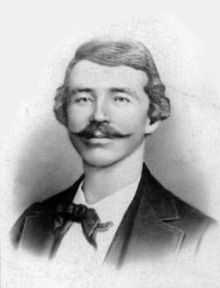
Yet Halleck, a pre-war lawyer, wished to ensure that he was safely operating within the boundaries of accepted “usages and customs of war,” especially after the Confederate government warned that it would execute federal prisoners of war in retaliation for any guerrilla put to death by the U.S. In August 1862 Halleck turned to Columbia College Professor Frances Lieber, asking him to prepare a legal essay on the subject.[5]
Lieber promptly produced Lieber on Guerrilla Parties Considered with References to the Law and Usages of War, a 6,000+ word tome. Therein, Lieber examined various types of irregulars, explaining what factors should be considered in determining if a guerrilla were entitled to the protection of the laws of war, or could be summarily executed. Halleck was so delighted by the analysis that he had 5,000 copies of Lieber’s essay printed for distribution throughout the army.[6]
Not surprisingly, the subject of guerrilla warfare featured in Leiber’s subsequent Code.[7] Lieber distilled his larger essay into just five Articles, as follows.
SECTION IV
Partisans – Armed enemies not belonging to the hostile army – Scouts – Armed prowlers – War-rebels.
Article 81.
Partisans are soldiers armed and wearing the uniform of their army, but belonging to a corps which acts detached from the main body for the purpose of making inroads into the territory occupied by the enemy. If captured, they are entitled to all the privileges of the prisoner of war.
Comment: Both here and in his essay, Lieber concedes that guerrilla warfare itself is a permissible means of combat when carried out by uniformed soldiers who are assigned by proper military authority to operate behind enemy lines.
Article 82.
Men, or squads of men, who commit hostilities, whether by fighting, or inroads for destruction or plunder, or by raids of any kind, without commission, without being part and portion of the organized hostile army, and without sharing continuously in the war, but who do so with intermitting returns to their homes and avocations, or with the occasional assumption of the semblance of peaceful pursuits, divesting themselves of the character or appearance of soldiers – such men, or squads of men, are not public enemies, and, therefore, if captured, are not entitled to the privileges of prisoners of war, but shall be treated summarily as highway robbers or pirates.
Comment: Here Lieber defines those excluded from the definition of a “public enemy” (i.e., a legitimate soldier protected by the rules of war) and therefore liable to execution. A key feature marking Lieber’s definition is that “part time” soldiers lose the protection of POW status.
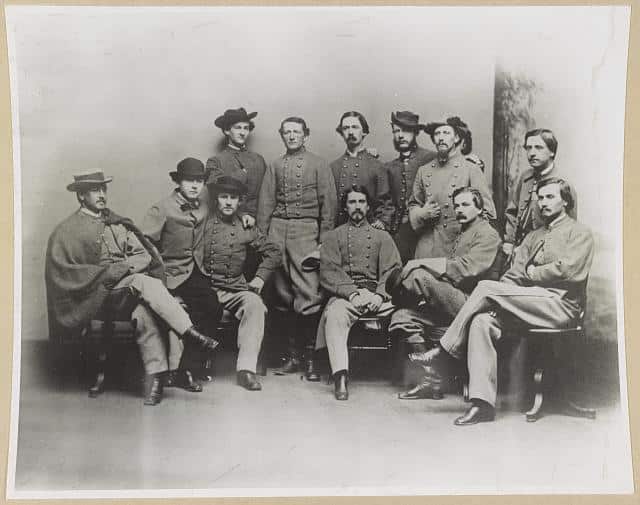
This result is because such transient fighters sought to enjoy the right to peaceful pursuit of their everyday business under the protection of the occupation army, yet betrayed that benefit by periodically rising up to attack their erstwhile protectors. To Lieber, that simply was not fair.[8] Lieber’s approach placed at risk the members of what was arguably the most famous Civil War partisan force, Mosby’s Rangers.
In addition, Article 82 ironically appeared to announce, as a matter of U.S. policy, that summary execution by the Confederate government was the appropriate remedy for any enslaved persons within the Confederacy who rose up in violent resistance against their enslavers.[9]
Article 83.
Scouts, or single soldiers, if disguised in the dress of the country or in the uniform of the army hostile to their own, employed in obtaining information, if found within or lurking about the lines of the captor, are treated as spies, and suffer death.
Article 84.
Armed prowlers, by whatever names they may be called, or persons of the enemy’s territory, who steal within the lines of the hostile army for the purpose of robbing, killing, or of destroying bridges, roads or canals, or of robbing or destroying the mail, or of cutting the telegraph wires, are not entitled to the privileges of the prisoner of war.
Comment: Article 84 is unclear. Did “armed prowlers” include regular, uniformed soldiers stealthily operating behind enemy lines? It is hard to see how such persons would lose the protection of legitimate soldier status. Review of Lieber’s essay, however, reveals that he actually was referring to civilian “bushwhackers.”[10]
Article 85.
War-rebels are persons within an occupied territory who rise in arms against the occupying or conquering army, or against the authorities established by the same. If captured, they may suffer death, whether they rise singly, in small or large bands, and whether called upon to do so by their own, but expelled, government or not. They are not prisoners of war; nor are they if discovered and secured before their conspiracy has matured to an actual rising or armed violence.
Comment: This Article has been discussed in a prior post. Again, Lieber asserted that what we would now call resistance fighters are unlawful and should suffer death.
Lieber’s conclusion did not, however, rest upon the theory that civilians never were permitted to rise up against an invading foe. To the contrary, in Article 51, Lieber stated that a mass mobilization of civilians (an “authorized levy en masse”) was a legitimate response to invasion. However, Article 52 warned that once an army successfully occupied a region, the people could be summarily punished for any uprising.
Summary: Lieber’s Code sought to draw a fine distinction between guerrilla tactics and who could engage in such tactics. The former were permissible. The latter category was strictly constrained. This analysis, of course, did not excuse actual crimes committed by guerrillas (e.g., murder of POWs). But Lieber’s Code sought to bring some logic to the fight against irregular warriors.
[1] John Fabian Witt, Lincoln’s Code: The Laws of War in American History (Free Press, New York, NY, 2012), pp. 188-193.
[2] DeBow’s Review, Vol. XXXIII (O.S.), Enlarged Series, Vol. VIII, No. 1, N.S. (May-August 1862), 47-48, https://babel.hathitrust.org/cgi/pt?id=wu.89063006209&seq=353 (encouraging the use of guerrilla warfare); Statutes at Large of the Confederate States of America Commencing with the First Session of the First Congress, April 21, 1862, Chapter LXIII (An Act to organize bands of Partisan Rangers), https://docsouth.unc.edu/imls/statutes/statutes.html.
[3] Witt, pp. 120, 124-126.
[4] Henry W. Halleck, General Orders No. 13, December 4, 1861, found in The War of the Rebellion: A Compilation of The Official Records of The Union and Confederate Armies, Series I, Vol. 8 (U.S. Government Printing Office, Washington, D.C., 1880 – 1901), pp. 405-407, https://babel.hathitrust.org/cgi/pt?id=uc1.31210002630232&seq=417(hereafter “OR”).
Then-Brig. Gen. Ulysses S. Grant shortly joined in the imposition of harsh measures. After learning (on January 11, 1862) that “four of our pickets were shot this morning,” under circumstances suggesting that local guerrillas (“assassins”) were to blame, Grant ordered “the whole country should be cleared out for six miles around and word given that all citizens making their appearance within those limits are liable to be shot.” Grant added that “This applies to all classes and conditions, age and sex.” OR, Series II, Vol. 1, p. 255.
[5] H. W. Halleck to Dr. Frances Lieber, August 6, 1862, reproduced in Frances Lieber, Lieber on Guerrilla Parties Considered with References to the Law and Usages of War (Baker & Goodwin, New York, 1862), p. 3, https://babel.hathitrust.org/cgi/pt?id=hvd.32044080075807&seq=5.
Leiber had encouraged Halleck to assign him the project. Matthew J. Mancini, ‘Francis Lieber, Slavery, and the “Genesis” of the Laws of War,’ The Journal of Southern History, Vol. 77, No. 2, (May 2011), p. 239, https://www.jstor.org/stable/41306198?read-now=1&refreqid=excelsior%3Af984dfd9aafa0042ea3d37e73c25109a#page_scan_tab_contents.
[6] Mancini, p. 239; John F. Marszalek, Commander of All Lincoln’s Armies: A Life of General Henry W. Halleck (The Belknap Press of Harvard University Press, Cambridge, MA, 2004), 167.
[7] OR, Series III, Vol. 3, pp. 148-164.
[8] Lieber, Lieber on Guerrilla Parties, pp. 12-14.
[9] Witt, pp. 242-243, 249.
[10] Lieber, Lieber on Guerrilla Parties, p. 17.


Very interesting. Of course there were plenty of criminals who used the guise of guerrilla warfare simply to mask their criminal acts. When I was researching home front dissent in Illinois, there were several gangs who took advantage of the breakdown in law and order in places like Missouri to loot and plunder across the border.
thanks Kevin … these are pretty clear rules of engagement … how have JAGs reconciled Sheridan’s execution of Mosby’s men in 1864 … an execution ordered by Grant … Mosby’s guys were clearly combatants under articles 81 and 82.
I am not certain. Mosby’s men may have been seen as outside the protection of the rules because they were part-time soldiers who did not wear standard uniforms (although as I recall from my reading, they typically wore gray as a form of uniform). Or, that incident may have been sparked by reports that Mosby’s men had killed U.S. prisoners. Indeed, based on such reports, at one point Custer and Mosby got into an unfortunate back and forth of POW executions, started by Custer, until both sides called off the retaliation cycle.
But yes, Grant certainly had a problem with Mosby and his men. Even after the surrender at Appomattox, when Grant was trying to extend paroles to as many CSA forces as possible to bring the war to a close, he initially expressly exempted Mosby’s command from the offer of parole.