CWRT Congress: Surveying in the Civil War
 Emerging Civil War welcomes back Carol VanOrnum
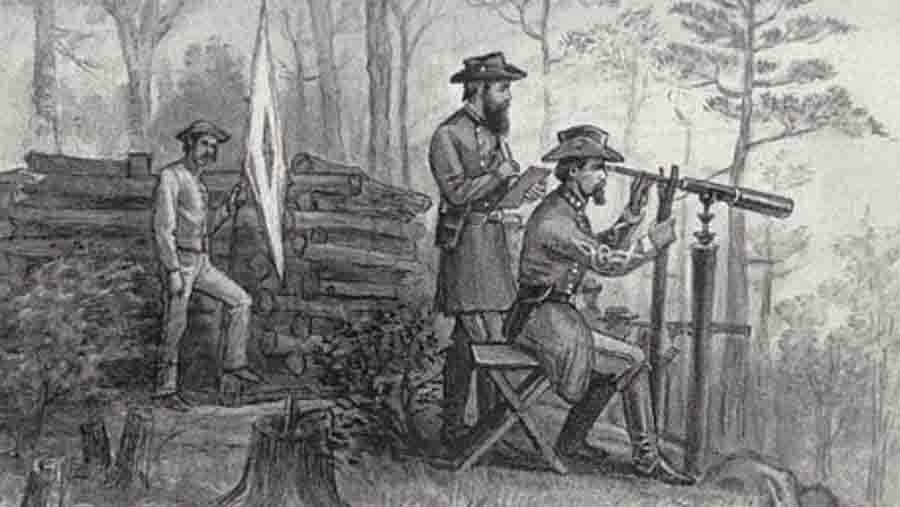
The image above depicts Jedediah Hotchkiss and Confederate General John Gordon on Signal Knob of Massanutten Mountain surveying the layout of Union encampments north of Cedar Creek just prior to launching the attack that resulted on the Battle of Cedar Creek. During the Civil War, surveying and surveys of topographical features primarily consisted of activities associated with mapmaking, and the talents of Jedediah Hotchkiss were essential to Confederate successes. In March 1862, “Stonewall” Jackson directed Hotchkiss to “make me a map of the Valley, from Harper’s Ferry to Lexington, showing all points of offense and defense in those places.” By the end of the war, Hotchkiss had produced a large map of the Shenandoah Valley that measured 7 feet by 3 feet in size. In addition, he produced campaign maps and battle maps to accompany Confederate after action reports.
It is no small feat to segway from surveying and surveys to develop Civil War topographical maps into outlining how informational surveys are beneficial to the health and well-being of Civil War Round Tables. Unlike some Round Table leaders who feel that they know what is best for their organizations, surveys, as a tool, can often enlighten leaders in surprising ways.
Determining which survey format will be the most effective really depends on your purpose. Member Satisfaction Surveys equate to a higher retention rate. By asking your members multiple choice questions, such as identifying how they receive their information for upcoming meetings – emails, newsletter, website, word of mouth – you can determine which method works best, and which method is least effective.
In a recent survey that my Twin Cities Civil War Round Table conducted, we discovered that more members read and receive more information from our newsletter than our website, even though the same information exists on both. Consequently, we focused on methods to improve our newsletter by increasing the font size to improve readability and by adding more features.
Surveys with Open-Ended Questions can bring insight into the health, financial wellbeing, and willingness to serve the organization. The TCCWRT is, by majority member choice, a dinner/presentation organization. Yet we annually receive inquiries from members, requesting the option to attend the program only – without having to make a reservation to purchase a meal. Whether it’s a time constraint, dietary, or financial issue, it has compelled us to ask how other CWRTs handle that issue. We learned that the Knoxville CWRT has a table set aside for non-diners for a minimal fee. We are considering that option in the future. And typically there are, of course, the “meal is too expensive,” and “I’m willing to pay more to have dessert every time,” or “start earlier because I don’t like driving at night.” We strive to improve the member experience when we are able.
Locating another kindred spirit CWRT to share ideas with is always helpful. Knoxville stays ahead of their game. They have also sent open-ended surveys to their members primarily to determine the types of presentations members would like to attend, gauging member interest for field trips, volunteering, and suggestions on improving their Round Table. Their most recent survey revealed that members are “battled out” and want to hear more life stories from presenters.
One of the simple survey tools Knoxville utilizes is placing five-by-seven-inch cards on each dinner table with these same questions. Occasionally, a member will fill it out. But more importantly, each member has the opportunity to be heard.
If you don’t have another Round Table from which to draw information, check out the list of survey results collected by the CWRT Congress. This tool is located under Proven Practices on the Congress website – www.cwrtcongress.org. Topics include Hybrid Meetings, Fundraising, Insurance, Honoraria and Dues, Newsletters, Tours, Program Development, and just about anything related to speakers.
Google Surveys is an easy-to-use and instant survey program. Once you’ve developed your questions, email the link, and the respondents can remain anonymous.
Occasionally, a Round Table needs to make a change that’s going to affect everyone, such as dues or a meal price increase. Gauge how much an increase is to be tolerated by offering multiple choices – (a) $5 (b) $10 (c) More.
Crucial Information Surveys can make effective use of the Google Surveys program. Most recently, my Twin Cities Round Table lost our long-time meeting venue and needed to find a new home. We had enjoyed a good situation for many years – great food, reduced rent, and terrific staff. But the pandemic, the immigration conflict, and the challenging economy took its toll. Our new venue is ala carte: room rental, outside caterer, and outside beverage caterer. To keep costs down, we elected to poll the members by requesting the importance of serving beer, wine, and soft drinks versus just water and coffee. We wanted to replicate the member experience we previously had, but we now faced a $500 minimum beverage purchase by members and a $150 bartender fee, which for one hundred members would tack $1.50 onto their meal cost. While $1.50 doesn’t seem like much, we knew it had to be the members’ decision. The Google Survey was sent to 164 recipients.
And then something remarkable happened. A majority of members filled it out! Normally, a survey’s average rate of return is between 20 percent and 30 percent. Ours was 59.8 percent, or 98 respondents! It appeared that not only were they cost-conscious, but they did not want to subsidize another person’s alcohol or soda consumption. More importantly, they took the time to answer the survey and proved beyond a doubt their sense of ownership of the organization and their commitment to sustaining the existence of the TCCWRT. That is the ultimate goal.
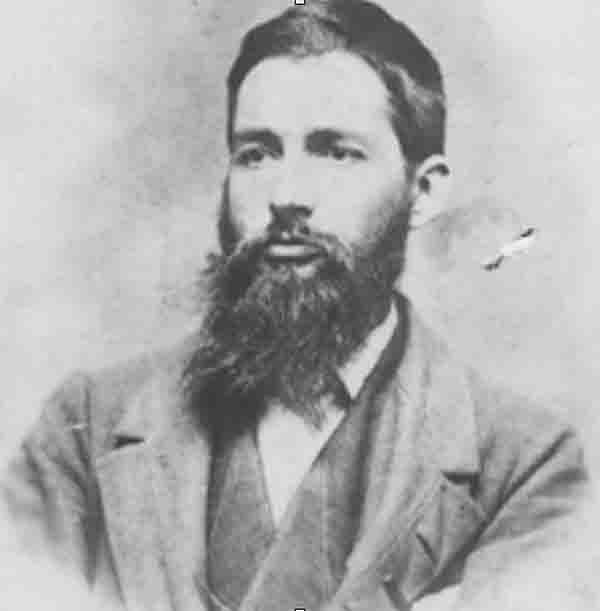
Jedediah Hotchkiss surveyed the topography of the land and other physical features to establish accurate maps for the Army of Northern Virginia. Civil War Round Tables have their mission, their technology, and their people. Utilize your Surveying tools to improve and grow your Round Table.
Carol VanOrnum is a vice president for the CWRT Congress and director of membership for the Twin Cities Civil War Round Table – Minneapolis/St. Paul, MN


Carol, very valuable information and ideas. Thank you.
Very interesting information and some findings that are important for roundtables to consider. As with all organizations, demographics of membership affect preferences. I have begun to wonder how webcasts will impact the traditional roundtable gathering.
Carol, thanks for sharing the updates – there is always something new to learn!