Shrouded Veterans: Shiloh, Vicksburg Veteran Murdered in Montana
“[Colonel Smith] was as good a man as ever broke bread,” Milo Courtright recalled after Smith was murdered in an ambush in Montana Territory. Before meeting his death on the Great Plains, Smith had distinguished himself as a brave and efficient Union officer and had suffered a wound in battle, but a later drunken episode led to his being dishonorably drummed out of the army.
On January 30, 1862, Absalom Shade Smith, a lumberman from Omro, Wisconsin (northwest of Fond du Lac), was appointed a second lieutenant in Co. C, nicknamed the “Omro Union Rifles,” of the 14th Wisconsin Infantry. On March 17, he was promoted to captain after the company’s commander, William W. Wilcox, resigned his commission.
On April 7, Smith was wounded as the regiment entered the fray on the afternoon of the second day of the Battle of Shiloh. The regiment advanced, drove back the enemy, retreated, reformed, and counterattacked at least four times. It managed to capture an enemy 6-pounder during the vicious back-and-forth clash.
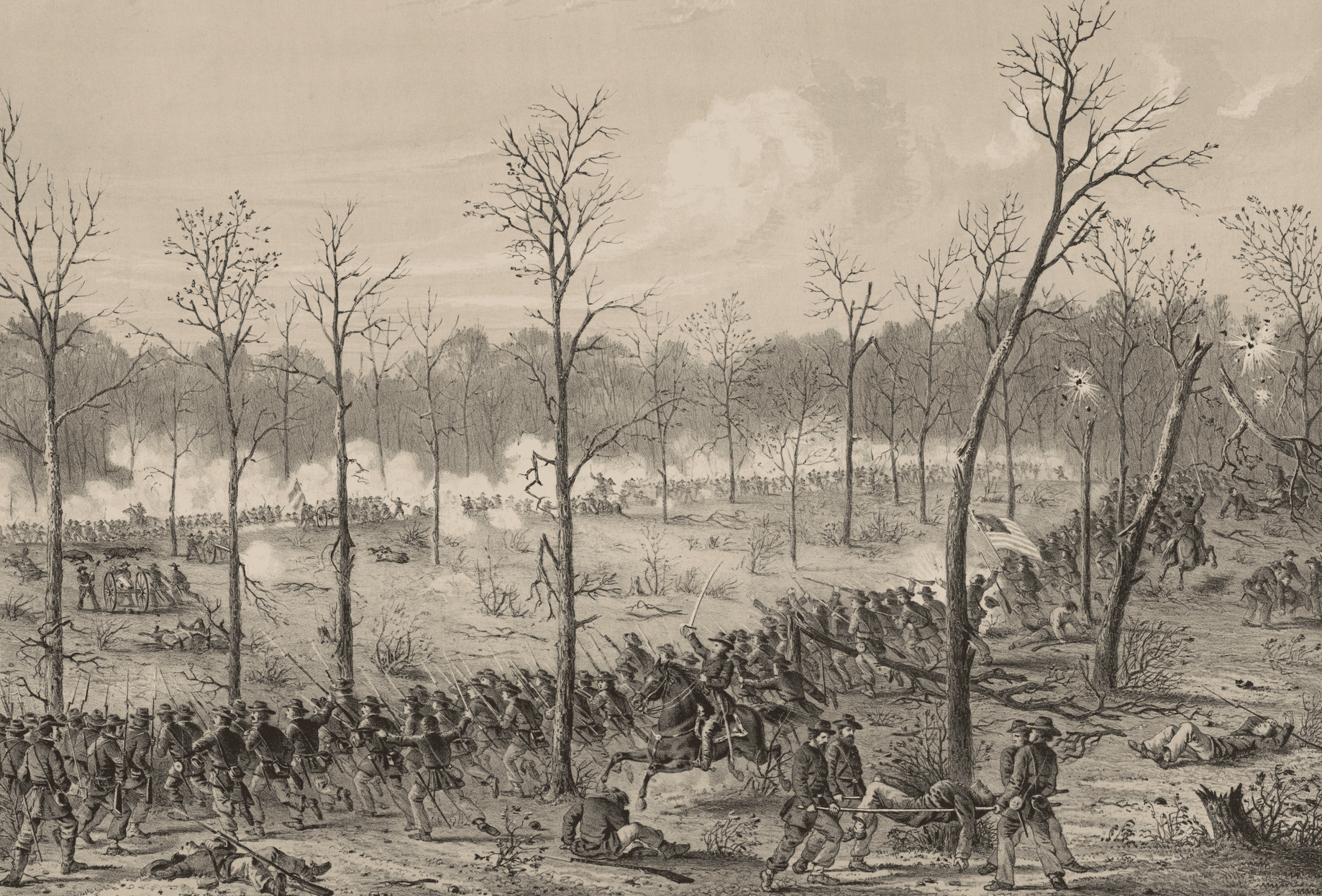
“I was struck by a piece of shell, knocked down, and had to be helped off the field. The missile struck me in the left side, tearing my clothing and paralyzing my side,” Smith wrote in a letter to his brother, a minister in St. Louis. The letter was later republished in the Milwaukee Morning Sentinel on May 24, 1862. “Before I received this [wound], I made several narrow escapes; one ball passed through my coat sleeve, and when I mounted a captured cannon to rally my men, another ball took off my cap cover.”
As Smith retired from the field, Assistant Surgeon Dugald Dudley Cameron was riding at full speed toward the front line but halted to examine Smith’s injury.
“I proposed to return to the field, but he forbid me, requiring me to lie down,” Smith recalled.
He recovered from his wound and continued to serve with the regiment through the siege of Vicksburg.
On August 31, 1863, Smith was appointed colonel of the 6th Mississippi Infantry (African Descent), later redesignated the 58th U.S. Colored Infantry, which was garrisoned at Natchez, Mississippi. In early January 1864, he was placed under arrest by Colonel Leonard D. H. Currie of the 133rd New York Infantry, who reportedly discovered Smith at the St. Charles Hotel in New Orleans, Louisiana, “beastly drunk and disgracing the uniform of the U.S. by boisterous conduct [and] drinking with negroes.”
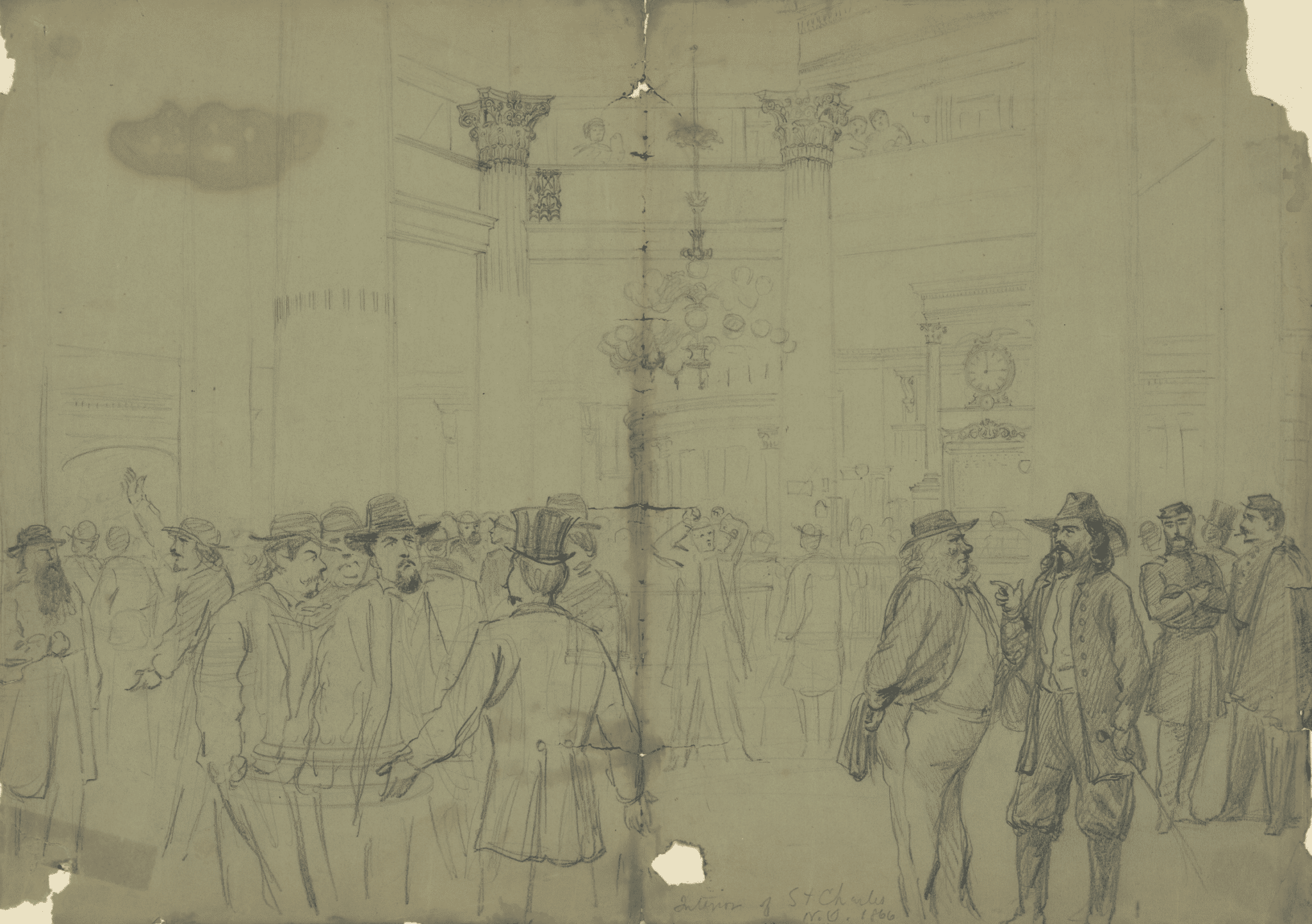
On January 14, Smith wrote to Major General Nathaniel P. Banks, commander of the Department of the Gulf, requesting permission to return to his regiment.
“I have been in the service two years and nine months, and this is the first leave and have had. Have not lost even one day by sickness or otherwise,” he noted. “And if this can in any manner help to mitigate my offence, I would ask to be released from the arrest that I might return to my Regiment at Natchez. Or if not objectionable, send me under orders to General [Walter Q.] Gresham.”
On January 17, nine officers from various regiments strongly recommended that Banks permit Smith to return to his command:
“Having learned that Col. A.S. Smith (6th Miss. Vol. D.) was under arrest for improper conduct, from our personal knowledge of him, we cordially endorse these facts — He has faithfully served the U.S. since the commencement of the war, with credit to himself. In no other instance has his conduct been brought in question — He has always been regarded as a gentleman, and the official report of General [Thomas E.G.] Ransom shows his conduct as an officer — With our knowledge of him personally, and under the belief that we are serving our cause by so doing, we most respectfully ask his restoration to his command.”
Additional endorsements came from Generals Thomas E. G. Ransom, James B. McPherson, and Walter Q. Gresham.
Despite these letters praising Smith’s character, he was dismissed on January 18, 1864, for “disgracing the uniform of the United States by boisterous conduct.”
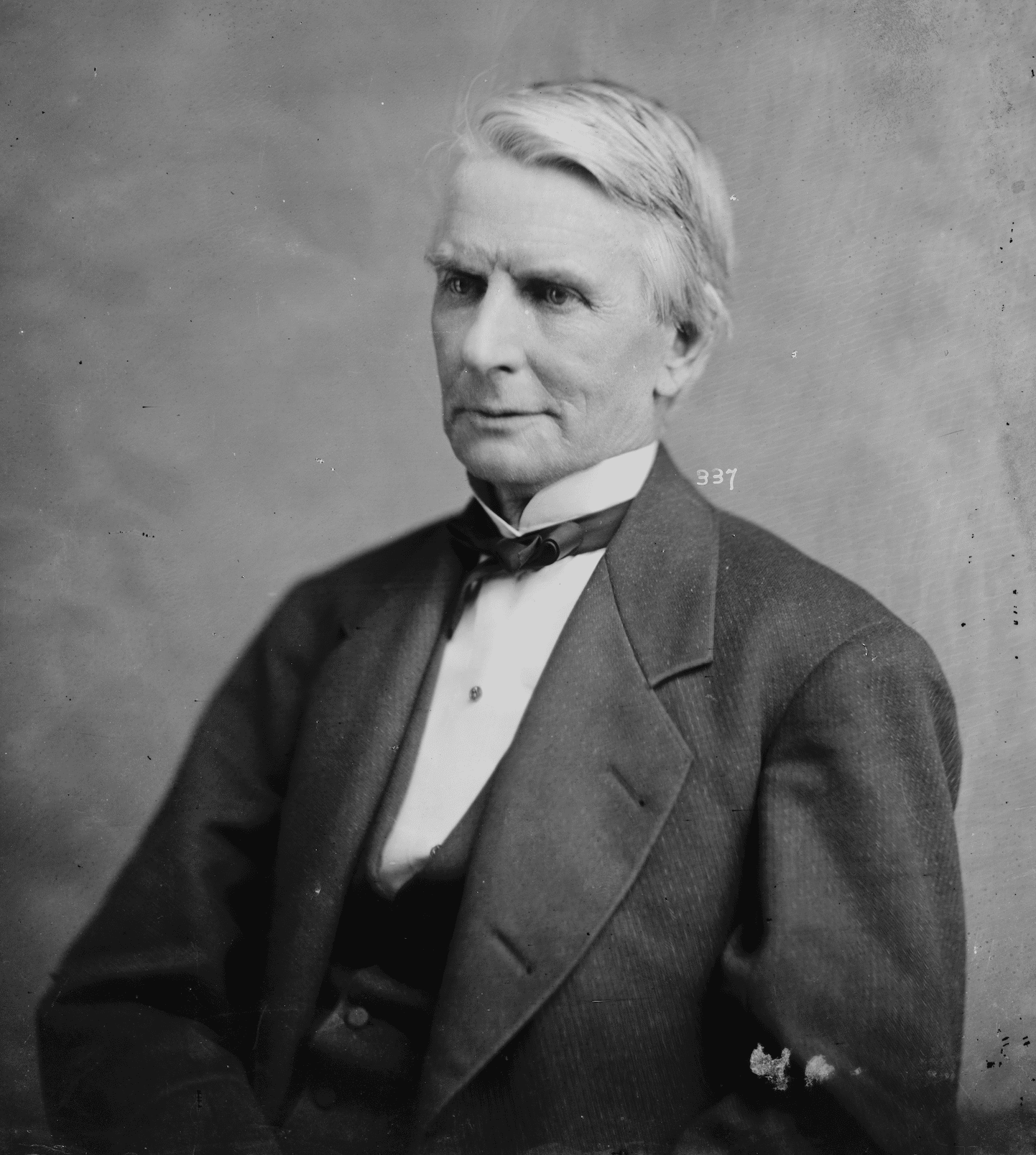
On April 29, Judge Robert Flint of Fond du Lac, Wisconsin, who was well acquainted with Smith, wrote to President Abraham Lincoln after Wisconsin Senator Timothy O. Howe asked him to give “testimony to [Smith’s] general good character, as a citizen, and such knowledge as I have of his bravery, efficiency and energy as an officer.”
In civilian life, Flint said Smith was “regarded a man of great energy of character and perfectly trustworthy, with habits generally good.” He added that he was told Smith “occasionally did indulge in drink but never to disqualify himself.”
Flint reported that expressions of Smith’s conduct from the field to his friends at home had been highly commendatory and that he had always been highly popular with his officers and men. Every officer in the service acquainted with him was willing to testify to his bravery and noble daring.
“[Smith] has no disposition to find fault with the Court Martial that he undoubtedly committed an Error, but alleges as some excuse, that he was away from his Military Department, where he had been worn down by the extent and amount of his labors,” Flint told Lincoln. “[He] informs me he is willing to leave the service, but feels he has periled his life too often, and fought too many a hard battle, to leave it in disgrace, for that reason he asks to be restored to rank, if not to duty, that he may leave the service without dishonor.”
Lincoln referred Smith’s case to Judge Advocate General Joseph Holt, who concluded on May 5 that “no recommendation can be made in [Smith’s] favor from this office.”
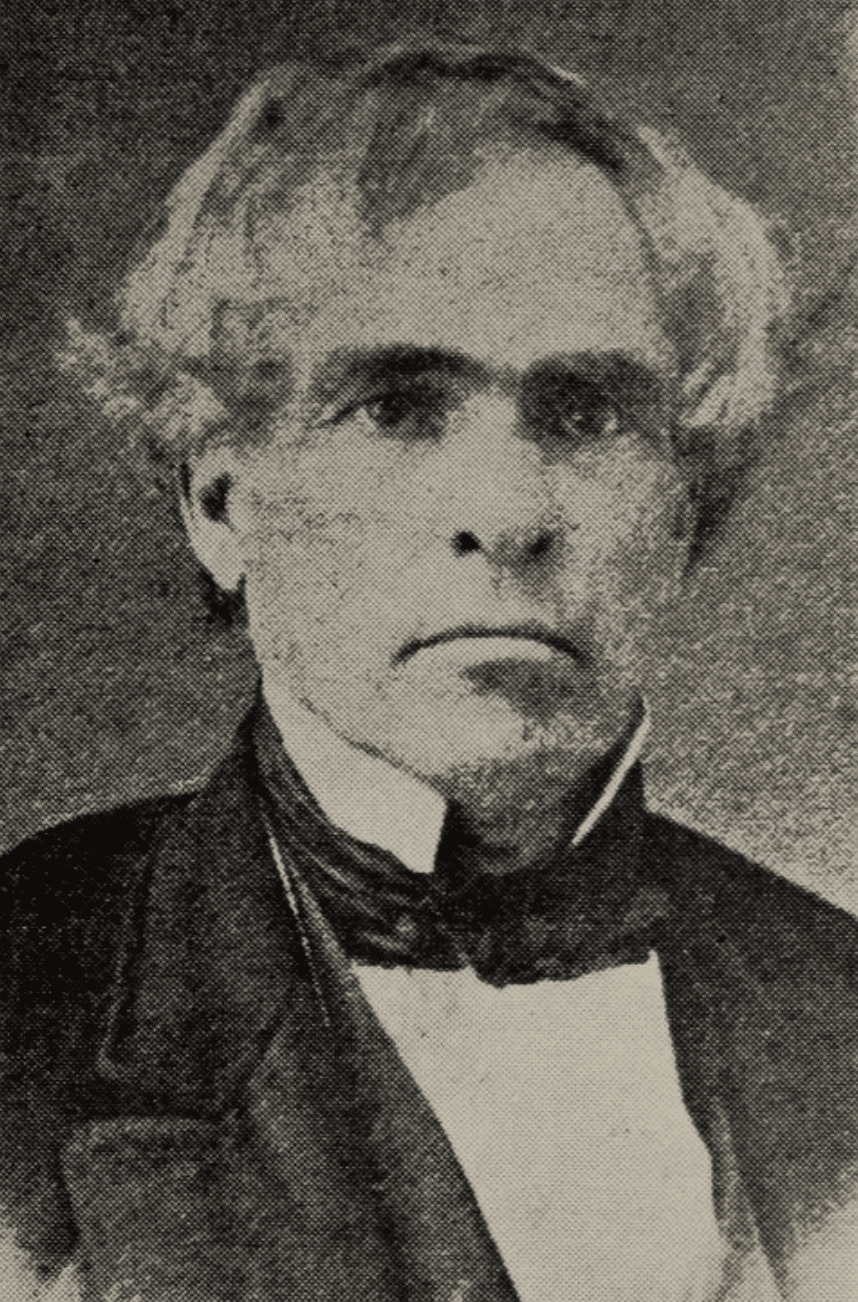
Unemployed and disgraced, Smith headed west to Montana Territory in the summer of 1864, where he joined a party made up of Milo Courtright, an agent of the Missouri River and Rocky Mountain Wagon Road Company; interpreter Mitch Boyer, who was of French and Sioux ancestry; and two other companions. The party transported two ferryboats on the Yellowstone River, leaving one at the crossing of Clark’s Fork and another at the Bozeman crossing at the Bighorn River.
When they arrived at the crossing, they found no emigrant parties. Out of provisions, they returned to the Bridger Trail to see if they could obtain more. On June 9, 1865, they reached the junction of the Bridger and Bozeman Trails, where they encountered a group of apparently friendly Sioux, reportedly numbering 100.
Smith’s nephew, James Smith Hoy, was working as a bullwhacker on the Great Plains at the time. While he was not present during the encounter, Hoy recorded what allegedly transpired next:
“The leader of this band had strapped to him an army officer’s belt and sword. The Colonel asked to examine them, which request the warrior readily granted. In return he asked to examine the Colonel’s revolver, to which the latter willing assented. The Indian at once presented the muzzle of the weapon against his victim’s breast and shot him dead in his tracks.”
Whether it occurred that way or not, Smith was killed when the Sioux opened fire on the party.
On June 24, 1865, The Montana Post reported what happened after the Sioux fired on the party, based on Courtright’s account. Several balls passed through Courtright’s clothes, leaving seven or eight holes in his shirt, while Boyer was struck in the hip.
Courtright returned fire with his pistol, but Boyer shouted, “Run for the bush; it is the only show for your lives,” knowing that if they killed one of the Sioux attackers, the others would relentlessly pursue them until they wiped out the party.
The men fled, leaving Smith’s body behind. They escaped through the brush that fringed the banks of a creek, crossed it, and made their way up a narrow canyon, not stopping for 36 hours.
Wounded and exhausted, Boyer lagged behind. The men left him with a rifle and ammunition and continued on without him. They finally reached the nearest settlement on June 13, and Boyer joined them 28 hours later. He was killed while serving with Colonel George Armstrong Custer at the Battle of the Little Bighorn in 1876.
Smith’s nephew reported that after the men reached the settlement and told others what had occurred, a group returned to the scene of the tragedy and buried Smith.
He was accurate in stating that his uncle’s “grave is like that of Moses: ‘No man knoweth of his sepulchre unto this day.’”
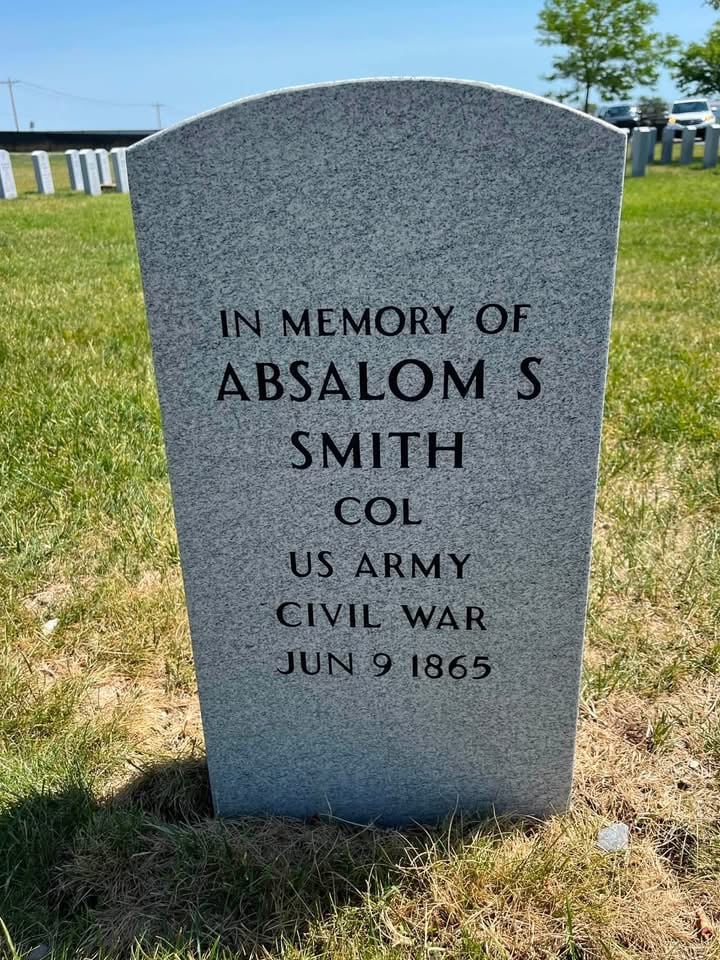
A government-issued veteran memorial headstone was installed at Yellowstone National Cemetery in Laurel, Montana, to honor Colonel Absalom S. Smith for his military service.
Shrouded Veterans is a 501(c)(3) nonprofit organization dedicated to rescuing the neglected graves of 19th-century veterans, primarily Mexican War (1846-48) and Civil War (1861-65) soldiers, by identifying, marking, and restoring them. You can view more completed grave projects at facebook/shroudedvetgraves.com.
We’re now on Substack! We’ll gradually be adding past and recently completed headstone projects.


