The Future of History Writing in the Age of AI
I use AI — specifically ChatGPT, Claude, or Gemini Notebook (formerly NotebookLM) — daily. As an editor and writer, I realized early on after the release of ChatGPT in November 2022 that I had a choice: adapt or become obsolete.
Generative AI is impacting every industry, not just mine. This includes history writing.
The good news is that AI is easy to use once someone starts experimenting with it, and it can be useful for brainstorming, editing, and research. But for all its benefits, there are some serious issues, notably when it comes to accuracy.
As we navigate the “jagged frontier of AI,” history writers will need to adapt their writing styles.
But first, we need to recognize the merits and pitfalls of AI.
The Good, the Bad, and the Ugly
For my own historical research and writing, I’ve discovered great benefits from using AI. I’ve used it to help identify missing or indecipherable words in primary source documents; create tables and graphs to display data; quickly transcribe printed text, such as lengthy quotes, rather than manually type it out; serve as an editorial assistant to conduct basic grammar, spelling, and punctuation checks; help with brainstorming; uncover questions readers might still have after reading my piece, as well as its strengths and weaknesses; provide links to online primary and secondary sources; and more.
In one instance, I used AI to transcribe a Civil War veteran’s novel, “Intrigue,” published across several issues of an Australian newspaper in the 1880s. Even though I still need to check every word to make sure it matches the original, AI saved me hours of manually typing out all 35,000 words.
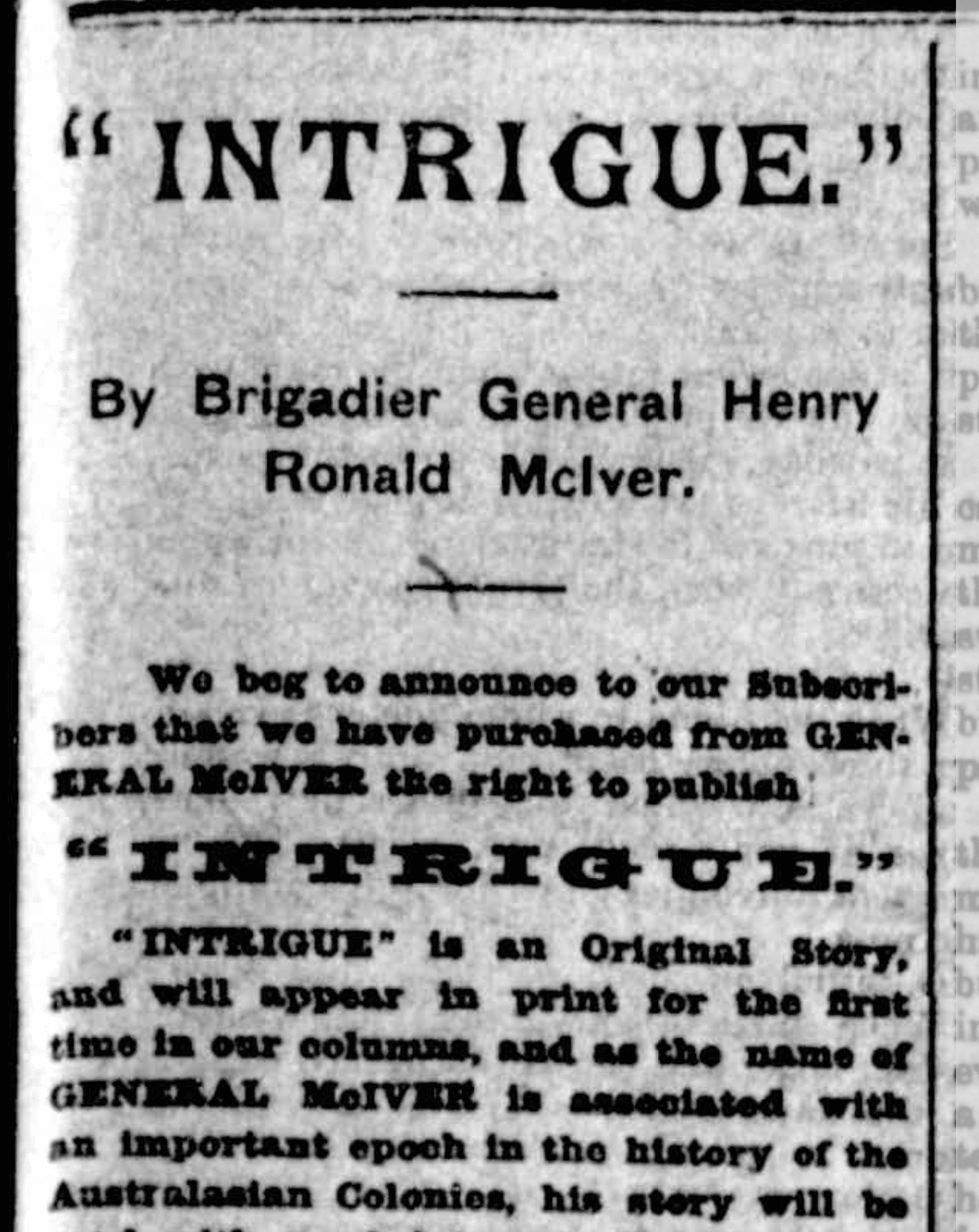
Then I used Gemini Notebook to create an eight-page companion guide that provides a detailed character list, family trees, and narrative timelines for the story. I also used it to create a podcast-style analysis of each chapter. It blew me away.
I continually explore ways AI can help me save time and solve problems.
Now for the bad.
AI is scraping content from the internet and reusing it, in many instances without attribution. The obvious benefit of AI sharing history writers’ content — when it’s properly credited — is getting as many eyes on it as possible. However, some of the online historical content being fed to readers has bias and inaccuracies built into it and is being presented as fact, leading to widespread miseducation.
And that brings us to the ugly: AI overviews and image generation.
Unfortunately, many people stop at Google’s AI Overview, trusting it when, in fact, it’s riddled with inaccuracies. I can’t stress enough how many times I’ve checked the linked source, only to discover that the fact or figure didn’t appear there, even though the AI Overview said it did.
Never trust Google’s AI Overview for historical information. Fact-check every piece of information that comes from AI. Ask AI for the exact quote, the page number, or section where it appeared, and a link to the source. Then go check it.
There’s an explosion of historical content creators using AI to create images from scratch that are riddled with errors. Fake headgear. Fantasy uniforms. Weapons that never existed.
Or they’re using AI to “enhance” images from the past, distorting them in subtle or very obvious ways.
It gives me the ick.
My problem is that these images appear in blog and Facebook posts, on YouTube channels, and on magazine and book covers. When I see these images, they immediately make me question the accuracy of the historical content, which is unfortunate because I know I shouldn’t judge a book by its cover.
But I do, and I’m surely not alone.
History writers should make as few changes to the original as possible and avoid creating fantasy art. If it looks off, it probably is.
Whatever platform they choose to share their writing on, it’s their responsibility to make sure they’re not distorting history, whether visually or in writing.
Ron Coddington, editor and publisher of Military Images, shared the magazine’s stance on manipulating images. You can read it here, but in a word, it’s about authenticity.
While Coddington was specifically talking about modern colorization of period photographs in this particular column, the magazine’s stance is perfectly applicable to the use of AI.
Authenticity is vital at all levels of historical writing, whether that’s sourcing images or crafting a story.
Pairing Experience With History
With AI able to pull information from thousands of sources on the internet in seconds and write blog posts and articles based on it, I believe a shift in historical writing is on the horizon.
History writers will need to pair their experiences with rigorous historical research to survive in this age of AI.
AI can simulate (fake) experience, but it can’t actually experience things like humans do: how we feel when we visit a battlefield, grave, or historical site; the unique people we encounter along the way; and the highs and lows of our research journey.
Usually, only a sliver of attention is dedicated to the author’s experiences in a book’s introduction or foreword, or those experiences are relegated to a footnote, if we’re lucky. These experiences generally never make it onto the page. But they can be just as fascinating as the subject the author is writing about. And they can help enhance the story the author is trying to tell.
Some history writers are already meshing experience and history in their work — even some writers here on ECW.
During an interview for the Emerging Civil War Podcast with Chris Mackowski about the edited volume They Are Dead and Yet They Live: Civil War Memories in a Polarized America (2026), John M. Kinder, a professor of history and American studies at Oklahoma State University, noted that he “learned a new technique” while writing his chapter “Dylann Roof’s Civil Wars.” He called it a “quasi-reporting, quasi-experiential type of doing history work.”
I believe that to adapt to the rapidly evolving landscape of AI, a “quasi-reporting, quasi-experiential type of doing history work” will become critical to the survival of history writers.
That’s not to say traditional history writing is going to disappear entirely. AI can’t physically go to museums, libraries, and archives to page through boxes and folders of unpublished material. But if that material is available online and isn’t behind a paywall, AI can access it in seconds.
That’s why history writers need to adapt their approach to historical writing — or at least be more open to incorporating their experiences — not only because AI can’t replicate lived experience but also because more and more people want to read about real experiences from real people.
During an interview about outdoor writers and AI, the founder and CEO of Kahn Media said people are starving for real storytelling and authentic content.
He’s right. AI fatigue is a real thing. People are growing tired of online event flyers, advertisements, and feature images on Facebook and YouTube that all have the same look and style, as well as emails and social media posts that sound like they’re written by the same bot.
As AI-generated content becomes more prevalent in every space, people are going to crave more authenticity and originality.
Lived experience, coupled with rigorous historical research, can satisfy that desire.
AI isn’t going away. It’s here to stay, just like the automobile and the internet.
History writers can strengthen their work by pairing lived experience with rigorous historical research and good writing, making their work truly unique and irreplaceable. AI can’t piece together the historical story someone wants to tell and supplement it with that person’s experience because, well, it’s not them. Only that person can tell the story they want to tell. And only they can supplement it with what they see, feel, hear, taste, and smell. AI can simulate these human experiences, but it can’t ever experience them.
These views are my own and aren’t those of my employer or ECW.


Terrific post, Frank. I also use AI as a virtual research assistant to comb through tons of sources and data in seconds and perform various other tasks that do not involve critical analysis or word smithing, which certainly cross ethical lines and is already the most common form of plagiarism. My current publishing contract is the first to lay out specific criteria on acceptable use of AI in submitted manuscripts.
That said, I do feel that many writers have a fear, as I do, of inadvertently using AI in a way that could compromise their integrity and damage their reputation, leading them to forgo getting the most benefits from this technology.
I look forward to posts from other ECW contributors to better understand how I can continue to leverage AI to help me become a more efficient researcher and a better writer.
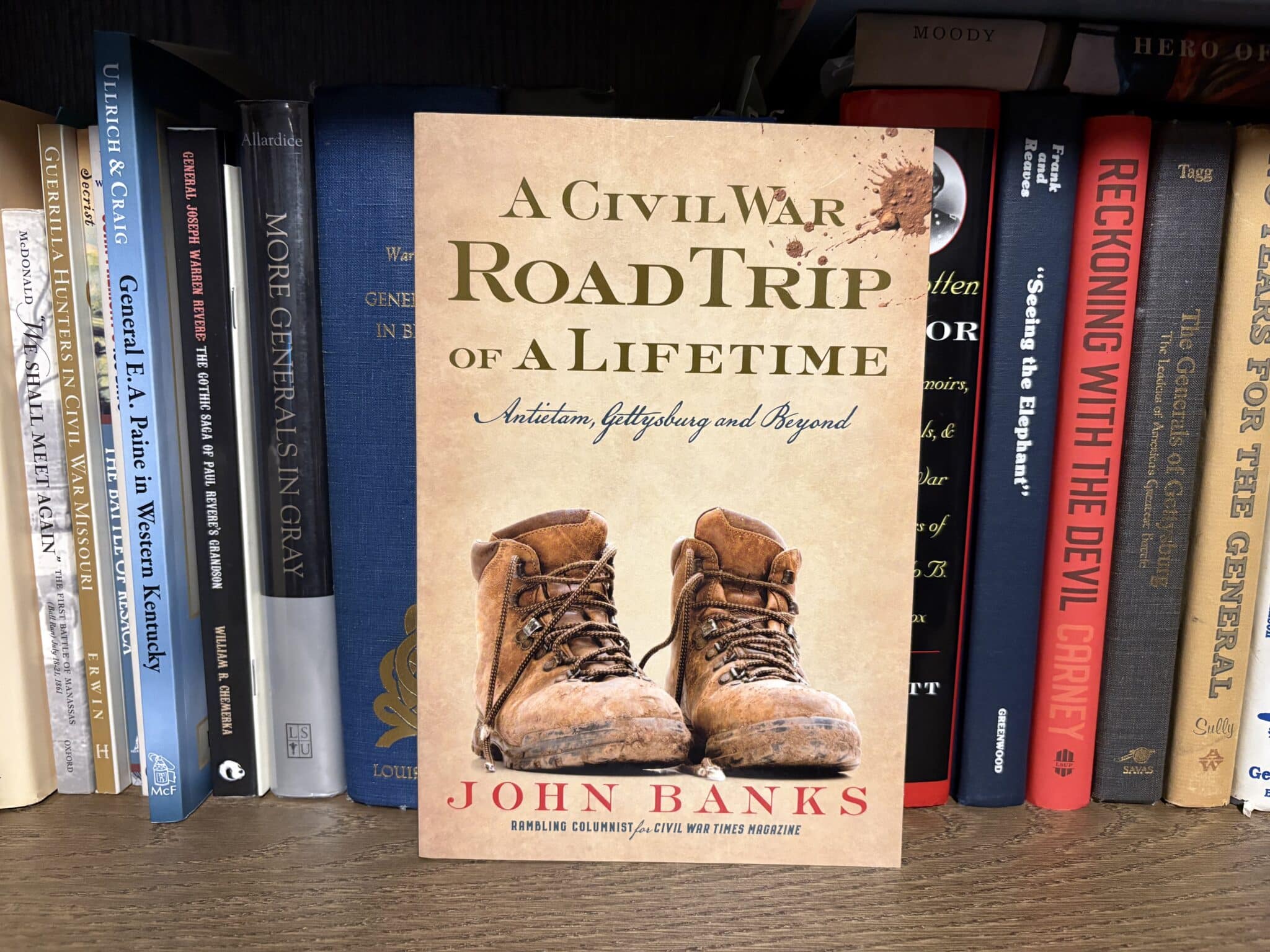
On a side note, check out the two most recent books from NY Times best selling author Tim Parks on our mutual friend Garibaldi for a superb example of fusing rigorous primary source research with personal experience and captivating insights and prose. As you infer with your reference to John Banks’s book, there is no better way to learn about a historical event or subject than by literally walking in the footsteps of the people who were there.
As mentioned by David, AI can be incredibly helpful when it comes to transcription from things like books and newspapers, but you have to be very specific in your instructions to avoid it changing what was written. I’ve gotten some wild results that probably took me longer to correct than if I’d just transcribed it myself.
Thoughtful and timely comments, Frank. AI can be incredibly helpful for research. For example, I use it to go through newspapers for references to specific people or subjects. This can save hours of time. It can also be useful proofing your own text for things such as passive voice, typos, etc. The biggest problem I’ve seen concerning AI generating content is that it can perpetuate false narratives based on incomplete, biased, or poor histories done in the past. Be careful what you believe!
There is a possible distinction to be made between using AI as an organizing tool and a content generating tool. What Frank describes here appears to be the former. In other words, using AI as a sort of assistant to organize original ideas, research, and, to a certain extent, as an editorial assistant for original writing. The latter distinction–using AI to generate ideas, research, and writing that is not original to the user–is extremely worrisome, and I’ll have some more thoughts on that soon. Frank is a considerate user of AI who understands its limitations and biases and works to verify everything it generates. I’m concerned that most people don’t go through these steps, and that is one reason why I’m much more skeptical about this technology.