Captain Edward B. Hunt and the Defense of Fort Taylor, Key West, Florida
When we think about the Civil War’s outbreak, thoughts turn to Fort Sumter since the conflict began there with the Confederate bombardment on April 12, 1861. But before that moment, U.S. garrison troops and army engineers at other federal fortifications in Southern territory braced themselves for potential armed conflict and resolved to defend the forts that they spent years constructing.
One such example is Captain of Engineers Edward B. Hunt who oversaw the construction of Fort Taylor off the southwest tip of the island of Key West, Florida. His actions during the secession winter of 1860-1861 provide a window into why U.S. army engineers decided to defend the Union and explain why a federal fortification in such a far-flung location mattered to the United States. Civil War historians have said much about why volunteers joined the ranks and remained on the front lines, but the motivations of men like Hunt are largely overshadowed, just like the fort whose construction he supervised. We now know that no armed conflict occurred at Fort Taylor, but Hunt and his enrolled laborers lived through uncertainty, anticipating that local Secessionists or Confederate forces might try to capture the fort, especially given Florida’s secession.
Hunt, like engineers elsewhere, spent years preparing the U.S. for the next war, and his work was part of a comprehensive plan of national defense.[1] Engineers did not foresee having to defend their forts against domestic enemies, but Hunt readily met the challenge. A sense of duty, honor, and patriotism motivated him to save Fort Taylor for the U.S. just as it motivated volunteers who were mustered to put down the rebellion following President Abraham Lincoln’s April 15, 1861 call for 75,000 troops. Hunt felt morally obligation to defend federal property and believed that his public reputation depended on his ability to do so.[2]
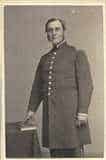
Hunt’s stress in early 1861 may have surpassed that of the volunteers since Fort Taylor was a rumored Confederate target. Hunt refused to relinquish the fort given the oath that he took upon entering the U.S. Army. That oath bound him to “bear true allegiance to the United States of America” and serve “honestly and faithfully against all their enemies whatsoever.”[3] Sensing that Florida’s secession was imminent, Hunt, on December 29, 1860, informed Lt Col. R.E. De Russy, who commanded the Corps of Engineers, about Fort Taylor’s defensive condition. Hunt vowed to hold Fort Taylor in the event of Florida’s secession, but stressed that he needed support. Professing concern for the fort and for his public reputation, Hunt warned De Russy that if there was “remissness in sending the proper garrison and naval aid, resulting in damage to the national interests” that the fault would not be his, but would fall back on the Engineer Department.[4]
Rumored seizures of other U.S. forts in Southern territory steeled Hunt’s resolve not to relinquish Fort Taylor to secessionists. In light of his inability to maintain a secure guard for the fort, Hunt urged Capt. John Brannan of the 1st U.S. artillery, whose men were stationed at Key West’s U.S. Army barracks, to take military custody of Fort Taylor and to adopt proper measures for its security. Hunt’s request,and Brannan’s eager response reflected the regular army’s nationalist character.[5] Brannan, however, had only a small caretaker garrison of approximately 44 men given the strategy outlined in the Third System of Defense, which assumed that, during wartime, the garrison would increase.[6] Knowing this, and understanding the importance of completing and outfitting forts in the South with full armament, Hunt subordinated himself to Brannan, a significant dynamic since engineers occupied a privileged status in the military which did little to endear them to the other branches.[7]
In addition to cooperating with Brannan, Hunt took liberties with an engineer’s duties, as outlined in the General Regulations of the U.S. Army, to preclude threats to Fort Taylor. Regulations stipulated that engineers should not “assume . . . any duty, beyond the line of their immediate profession, except by special order of the President of the United States.” But Hunt refused to jeopardize Fort Taylor and retained his enrolled laborers despite the near exhaustion of annual appropriations, deeming these men “a perfectly reliable garrison for the Fort” who would complement Brannan’s artillerists. Hunt remained dedicated to completing the yet unfinished fort while essentially assuming the duty of an enrolling officer. He informed Lt. Col. De Russy that his laborers wished nothing else “than to stand by the Fort to the last.” This desire aligned with Hunt’s own commitment. He proclaimed that, having received Fort Taylor “in trust for the United States,” he would hold it until U.S. authorities relieved him from that charge. Hunt’s words, and his laborers’ actions, demonstrated their belief that Key West was an active location where their service was critical.[8]
Hunt feared that war could break out at Key West in early 1861 and realized that the island, though connected by steamship to the mainland, was isolated and potentially vulnerable. Hunt and Brannan also knew that secessionists, who dominated the island, wanted to take Fort Taylor.[9] This fueled Hunt’s commitment to his duty. Hunt indeed maintained his workforce even after exhausting Fort Taylor’s appropriation, refusing to endanger the fort by dismissing them. He directed the Engineer Department to cover expenses with the Contingent Fund and vowed to put Fort Taylor in “perfect defensive order.” By the end of January 1861, Hunt reported that laborers, contingents, and officers amounted to over 100 men who were domiciled in Fort Taylor. Brannan deemed this force essential for defense, and Hunt concluded that, “should [he] be charged with over zeal much must be pardoned on isolation and lack of reliable information and instructions,” indicating his devotion to the Union by taking ownership of the fort’s defense.[10]
The Confederate assault on Fort Sumter in April 1861 heightened Hunt’s vigilance and conviction about Key West’s importance. On April 25, 1861, Hunt wrote to Chief Engineer Joseph Totten about his suspicion that Fort Taylor was “one of the objects of contemplated attack by the C.S.A.” and contended that “its safety should be ensured against any efforts of the C.S.A.” since Key West was “an important link in the base of operations for the Gulf.” To accomplish this, Hunt emphasized cooperation with the navy since sailors could “wipe out any expeditionary forces which may attempt to land.” He also recommended erecting batteries on the South beach, which materialized in 1862 as engineers constructed two Martello towers.[11]
Given the work required to complete Fort Taylor and the manpower necessary to defend Key West, the importance of Hunt’s laborers increased as 1861 progressed, and he encouraged them to serve faithfully. On September 24, 1861, Hunt addressed the “Engineer Enrolled Men of Fort Taylor” regarding President Lincoln’s proclamation of a national fast day to be observed two days later. Hunt declared that the laborers’ work was integral to the Union cause, exhorted his men to “cherish and defend the nation as one would our own Mothers”, and urged them to increase their “patriotism and devotion to national duties.” Just as immigrants filled the volunteer ranks, Hunt acknowledged the diversity of his labor force, reminding them of “how great . . . it is to be an American by birth or adoption” and encouraging them to “faithfully do [their] duty in [their] assigned position” since it constituted their “allotted part” in restoring “peace and national unity.”[12] Hunt’s address paralleled those that officers gave to rally men before battle, but his laborers’ willingness to defend the Union dated back to the secession winter of 1860-1861.[13]
After Florida’s secession, Hunt’s overseer, Mr. C.H. Gallagher – who became a Union volunteer – organized the laborers into a volunteer company which, in early 1861, outnumbered the troops in the island barracks and constituted “a most essential part” of Fort Taylor’s defense. Sergeant C. H. Webber of the 1st U.S. Artillery mustered the men into U.S. government service on June 26, 1861. The laborers, even before the muster, devoted extra time to learning military duties, which inspired Hunt’s confidence in “their readiness practically to stand by the flag,” just as the regular artillerists stood ready. Since the laborers volunteered as soldiers, Hunt requested that Quartermaster General Montgomery Meigs supply them with army uniforms. He believed the request justified since they received no compensation aside from their engineer pay and since the company, dubbed the “Fort Taylor Guards,” constituted a “real part of the local force.” Major B.H. Hill of the 2nd U.S. artillery, then in command at Key West, endorsed Hunt’s request, asserting that the laborers deserved “great credit for their patriotism in preparing to render military service by drilling after work labors.” Uniforms would be the least the government could do to express its appreciation since this “body of loyal citizens disciplined and equipped could be relied upon for the defense of the island.”[14]
Captain Hunt considered his enrolled laborers to be volunteer soldiers, and these men considered Hunt to be both an engineer and a commanding officer who prepared them to perform competently under fire. When Hunt was transferred from overseeing construction of Fort Taylor in early March 1862, his enrolled laborers bid him farewell with a resolution that praised his leadership and revealed that they, like soldiers in battle, expected courage from Hunt as an officer. This expectation was fulfilled. Laborers considered Hunt to be an officer of high caliber who led by example. Though Hunt was their superior, his men did not consider that relationship to be rigid.[15] Loyalty to Hunt, respect for him as an officer, and a sense of loss given his transfer were evident as the men assured Hunt “that if he needs our services at any time, in any capacity, we will hold ourselves ready to answer the call, be it in the paths of civil life or “on the field of Glory.””[16] These words hailed Hunt’s capabilities and signaled that war’s outbreak impacted men at Key West in the same way that it did men on the mainland since war called them out of civilian life into military service.
[1] Mark A. Smith, History of the U.S. Army Corps of Engineers – Shield for the Republic: The U.S. Army Corps of Engineers and the Defense of the Coast, 1776-1950 (Office of History, Headquarters, U.S. Army Corps of Engineers, Alexandria, VA, DATE??), x, 33, 35. https://www.govinfo.gov/content/pkg/GOVPUB-D103-PURL-gpo248325/pdf/GOVPUB-D103-PURL-gpo248325.pdf.
[2] James M. McPherson, For Cause and Comrades: Why Men Fought in the Civil War (Oxford University Press, 1997), 21. Bell I. Wiley, The Life of Billy Yank: The Common Soldier of the Union (Louisiana State University Press, 1952), 17.
[3] Adjutant and Inspector General’s Office, Articles of War, Military Laws, and Rules and Regulations for the Army of the United States (Washington: E. De Krafft, 1818), 10. https://archive.org/details/articlesofwarmil00adam/page/n3/mode/2up.
[4] E.B. Hunt to R.E. De Russy, Dec. 29, 1860, Record Group 77 Office of the Chief of Engineers District Office Jacksonville, FL, Key West Engineering Office Letters Sent Relating to Fortifications, 1858-1864, entry 1196, vol. 6, box 335. National Archives and Records Administration, Atlanta, GA [hereafter NARA ATL]
[5] Wayne Wei-siang Hsieh, West Pointers and the Civil War: The Old Army in War and Peace (University of North Carolina Press, 2009), 93. On p. 91, Hsieh notes that of the 487 West Point graduates with some affiliation, through birth or residence at the time of appointment, with a slave state, 173 remained loyal to the U.S. while 251 supported the Confederacy. Clayton Newell and Charles Shrader note that 313 Regular officers, over one quarter of the total number of officers on active duty as of Jan. 1, 1861, resigned or were dismissed and joined the Confederate cause. Of the 286 officers who left after Nov. 1, 1860, 187 were West Point grads – 26 were appointed from the North, including 16 West Pointers. Twenty-six officers who resigned or were dismissed took no further part in the war. Most Southern-born officers remained loyal to the Union than resigned and went South. Clayton R. Newell and Charles R. Shrader, Of Duty Well and Faithfully Done: A History of the Regular Army in the Civil War. Foreword by Edward M. Coffman (University of Nebraska Press, 2011), 49. Brannan was born in Washington, D.C. and Hunt was born in New York state. John L. Nau Cener for Civil War History, “Letters Home: John Milton Brannan,” https://community.village.virginia.edu/lettershome/node/2599. Cullum’s Register, “Edward B. Hunt,” https://penelope.uchicago.edu/Thayer/E/Gazetteer/Places/America/United_States/Army/USMA/Cullums_Register/1232*.html.
[6] Hunt to Brannan, Jan. 12, 1861, RG 77, entry 1196, vol. 6, box 335 NARA ATL. John R. Weaver II, A Legacy in Brick and Stone: American Coastal Defense Forts of the Third System, 1816-1867 (Missoula, Montana: Pictorial Histories Publishing Company, 2001), 7. Wayne Hsiesh notes that, before the Civil War, the army was scattered in company-sized outposts. Hsieh, West Pointers, 91. Brevet Major William L. Haskin, The History of the First Regiment of Artillery from Its Organization in 1821, to January 1st, 1876 (Portland, ME.: Thurston and Company, 1879), 135. https://babel.hathitrust.org/cgi/pt?id=chi.16542922&view=1up&seq=5.
[7] Mark A. Smith, Engineering Security: The Corps of Engineers and Third System Defense Policy, 1815-1861 (University of Alabama Press, 2009), 1.
[8] Weaver II, American Coastal Defense, 13-14. United States War Department, General Regulations for the Army of the United States, 1841 (Washington: J. & G.S. Gideon, 1841), 155; United States War Department, General Regulations for the Army of the United States, 1857 (New York: Harper & Brothers, 1857), 313. E.B. Hunt to Lieut. Q.A. Gillmore, Jan. 14, 1861; E.B. Hunt to R.E. De Russy, Jan. 14, 1861, RG 77, entry 1196, vol. 6, box 335 NARA ATL. Lang asserts that the common occupier viewed garrisons as static locations that sapped purpose from their service. Lang, Wake of War, 10 and 75.
[9] Brevet Major William L. Haskin, The History of the First Regiment of Artillery From Its Organization in 1821 to January 1st, 1876 (Portland, ME: Thurston and Company, 1879), 135.
[10] E.B. Hunt to R.E. De Russy, Jan. 14, 1861; E.B. Hunt to Gen. J.G. Totten, Jan. 20, 1861; E.B. Hunt to J.G. Totten, Jan. 22, 1861; E.B. Hunt to J.G. Totten, Jan. 31, 1861, RG 77, entry 1196, vol. 6, box 335 NARA ATL.
[11] Hunt to Totten, April 25, 1861, RG 77, entry 1196, vol. 6, box 335 NARA ATL.
[12] E.B. Hunt to the Enrolled Men of Fort Taylor, Sept. 24, 1861, RG 77, entry 1196, vol. 6, box 335 NARA ATL.
[13] Wiley, Billy Yank, 67-68.
[14] Hunt to Meigs, Nov. 21, 1861; B.H. Hill endorsement, Nov. 21, 1861, RG 77, entry 1196, vol. 6, box 335 NARA ATL.
[15] Reid Mitchell, The Vacant Chair: The Northern Soldier Leaves Home (Oxford University Press, 1993), 28, 46, and 48. McPherson, Cause and Comrades, 34. Andrew Lang, In the Wake of War: Military Occupation, Emancipation, and Civil War America (Louisiana State University Press, 2017), 135. Ninety-four men were in the company, but Gallagher noted that their number could be increased to 120.
[16] Meeting of the Enrolled Men of Fort Taylor, March 10, 1862, RG 77, entry 1196, vol. 6, box 335 NARA ATL. McPherson, Cause and Comrades, 55 (sense of loss).


Great post! I have visited Frot Zach many times. And got married there in 1997.
Thank you! It’s a fantastic site with a very interesting history. When we were there in April there was a wedding going on. What a beautiful location for it!
We usually stay in Truman Annex so it makes for a wonderful morning walkabout.
Thank you, Angela Zombek, for turning the spotlight upon Fort Taylor, one of a handful of important masonry fortifications south of the Mason-Dixon Line that remained in Union hands for the duration of the war. From my understanding, Fort Taylor protected the Headquarters of the Gulf Blockading Squadron, which acted as the relay point for messages from Washington to U.S. Navy assets in the Gulf of Mexico. With Forts Taylor, Jefferson and Pickens in Union hands, the re-capture of Fort Massachusetts – on Ship Island, just off the coast of Mississippi – became possible. And with its deep harbor on the north side of the island, Union-occupied Ship Island became the staging ground for ships that would attempt the operation in 1862 to seize the Mississippi River by entering from the gulf, while Foote forced his fleet of gunboats south from Cairo Illinois. In effect, it was the effort of Army Officer Edward Hunt early in the Secession Crisis that guaranteed Fort Taylor remained in Union hands; facilitated safe operations of the Navy headquarters placed there; and became “one link in the chain” that took back control of the Mississippi River… and split the Confederacy.
Thank you! And you’re right, Key West also became the headquarters of the East Gulf Blockading Squadron & was critical to operations in the Gulf. The island’s wartime & Reconstruction history is fascinating. I have a book on it that will be out in the fall of 2027 with the University Press of Florida.