Saving General Thomas?
Over the course of America’s four years of civil war, there was no shortage of soldier heroics. A quick overview of Medal of Honor citations suffices to prove that point, let alone any deeper dive. It was these stories that were recounted at reunions and retold in memoirs. With all the glory and glamour that those soldiers earned, however, it is unsurprising that others would seek similar acclaim. Consequently, whether from exaggeration or outright fabrication, other stories would emerge. But how can the true feats be separated from the fictitious?
In many cases, it ranges from difficult to impossible to definitively verify or falsify a soldier’s story. In such cases, best judgment and circumstantial evidence must be applied. In some cases, however, the historian is more fortunate. The right pieces fall into place to conclusively evaluate a tale from the battlefield. Such is the case in Sergeant Eastham Tarrant’s claim that his regiment, the 1st Kentucky Cavalry (Union), saved Major General George H. Thomas at the battle of Perryville.
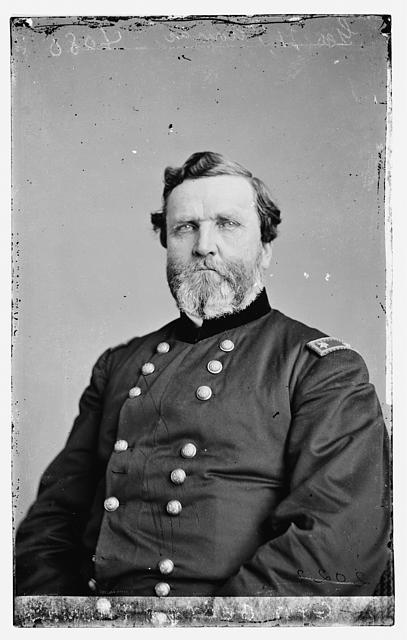
The story is recounted in Tarrant’s 1894 regimental history, The Wild Riders of the First Kentucky Cavalry. Drawn from his conversations with fellow regimental veterans as well as many of their papers, the sergeant’s goal was to “tell about the First Kentucky Cavalry — what they did, and how.”[1] He follows the regiment’s trials and triumphs over the course of the war, with a particularly noteworthy incident being recorded for the Battle of Perryville. Attached to Major General Thomas Crittenden’s II Corps, the regiment did not take part in the main battle on October 8. Rather, they were to the south of the engagement, caught in the notorious mix of acoustic shadows and miscommunications that plagued Union forces on that day.
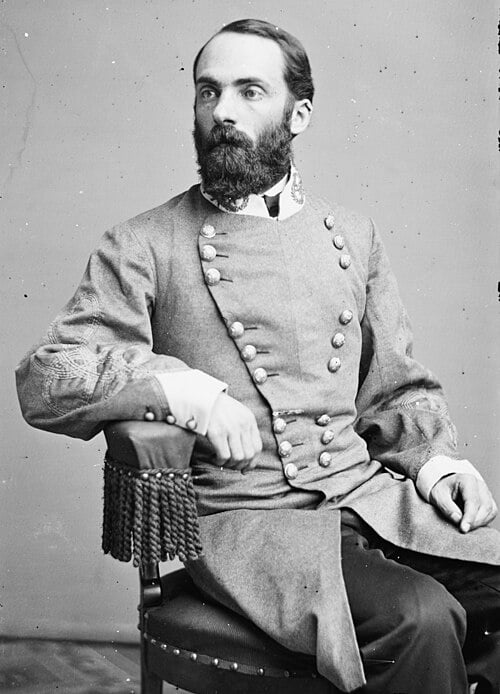
Also present with the II Corps was Thomas, then serving as the Army of the Ohio’s second-in-command. Isolated from the raging battle to the north, Tarrant describes the II Corps’s only combat as minor clashes between their cavalry and those of the Confederates under Colonel Joseph Wheeler. It was in the midst of these skirmishes that the momentous occasion occurred.[2]
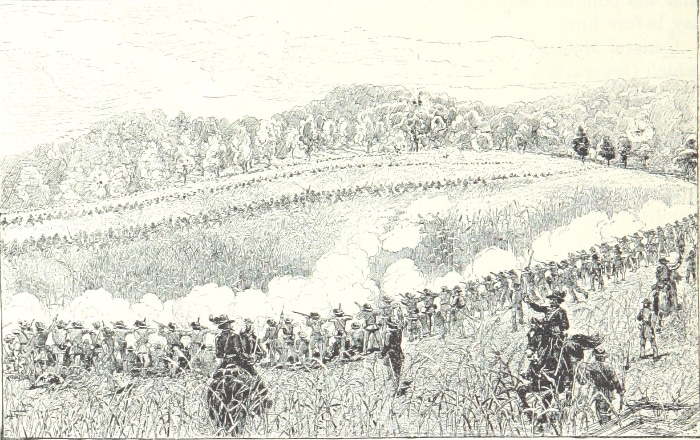
After describing how the 1st Kentucky had pushed back Wheeler’s cavalrymen, Tarrant describes General Thomas riding to the advance line to survey the situation. Moments later, a company of Confederate cavalry charged out from the woods to kill or capture the general. Seeing the danger, members of the 1st Kentucky promptly counter-charged. Per Tarrant’s story, the Confederates “wheeled and put spurs to their horses, we opened a scathing fire on their advance, which caused them to retire.”[3]
Saving one of the Union’s most prominent and skilled commanders undoubtedly would be among a regiment’s proudest moments. But the question remains: is it true?
To start, the general circumstances must be verified. In other words, did 1st Kentucky clash with Confederate cavalry on October 8? This is an easy and definitive yes.[4] The analysis then turns to the specific contention: did the 1st Kentucky really rescue Thomas? On this count, the evidence is much more dubious.
Starting first with the enemy accounts, it is surprising that Wheeler’s report for the battle of Perryville includes no mention of supposed near miss. This could be explained away by a variety of causes. Perhaps he decided not to include the incident in the report, or forgot to do so. It is even possible that the story never reached him. After all, it was a failure rather than a success. Nevertheless, it does seem strange for the ever proud Wheeler, who spills considerable ink praising the exploits of his regiments, not to include such a nearly great accomplishment.[5]
Turning to the 1st Kentucky’s accounts, meanwhile, Tarrant’s Wild Riders seems to be the only source for the story. Looking at the other surviving documents left by the regiment, no other recalls the incident.[6] Furthermore, being published in 1894, Wild Riders is susceptible to the common critique of Civil War recollections, especially those written decades after the fact. Namely, that they are often written with hazy memories, rose-tinted glasses, and anxious eyes cast towards the public.
As mentioned before, Tarrant says he sourced his material from his own experiences as well as those recounted by his comrades and their papers. It is possible, indeed likely, that if Tarrant sourced the story from a document, it has since been lost in the shadows of the past. That is certainly the case if the source was veteran conversations. In spite of all these qualifications and caveats, the story could still be plausible. What truly places it into the realm of the implausible, however, is the evidence coming from Thomas himself.
After the battle in December 1862, Thomas was summoned to testify at the court-martial of the Army of the Ohio’s commanding officer, Major General Don Carlos Buell. Extensively questioned by the prosecution, the defense, and the members of the commission, Thomas’s testimony sheds considerable light onto Tarrant’s account. Asked where his headquarters were during the battle, Thomas answered, “half a mile in rear of the center of the right wing [the II Corps].”[7] This would place him far from where the Union cavalry clashed. Later, Thomas confirms that he spent the duration of the battle at his headquarters.[8]
Given the facts of Thomas’s testimony, the rescue could not have occurred. Additionally, he made no mention of a near-disastrous reconnoiter in his answers. The general’s testimony is further supported by Donn Piatt in his 1893 book, General George H. Thomas: A Critical Biography. The same worries about publication that apply to Wild Riders can be leveled at Critical Biography. Both were crafted by veterans decades after the fact based on the experiences of themselves and their compatriots. The difference between them, however, is the backing Piatt receives from other at-the-time primary sources, which Tarrant’s book seemingly lacks.
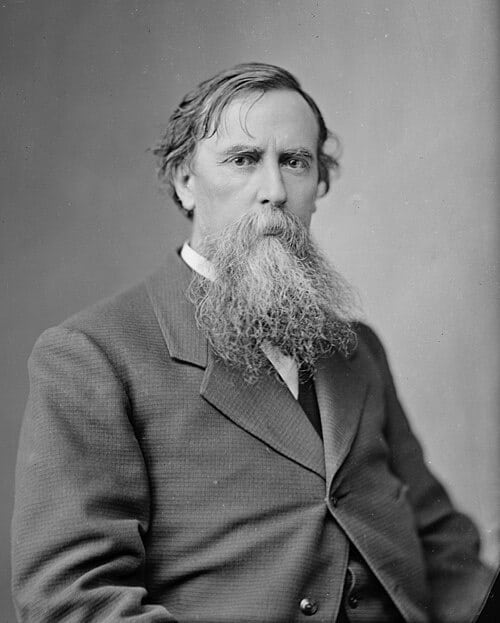
As can be expected, Critical Biography describes Thomas as at his headquarters during the time when Tarrant’s incident supposedly occurs. In addition, Piatt makes no reference to the rescue.[9] Thomas’s other major contemporary biographers, Thomas B. Van Horne and Richard W. Johnson, follow both of these as well.[10]
In light of all of this evidence, it is essentially certain that the 1st Kentucky was not Thomas’s savior at the battle of Perryville. Reading through the preface of Wild Riders, that might come as less of a surprise. In it, Tarrant frankly confesses, “I do not claim that my work is free from errors. They are found more or less in all histories.”[11] In the case of saving General Thomas, it seems to be one of the fictions amidst the facts.
Endnotes:
[1] Eastham Tarrant, The Wild Riders of the First Kentucky Cavalry: A History of the Regiment, in the Great War of the Rebellion, 1861-1865: Pathetic Scenes, Amusing Incidents, and Thrilling Episodes, a Regimental Roster, Prison Life, Adventures, and Escapes, (Louisville: R. H. Carothers Press, 1894), v.
[2] Ibid, 117-119.
[3] Ibid, 119.
[4] Kenneth W. Noe, Perryville: This Grand Havoc of Battle, (Lexington: The University of Kentucky Press, 2001), 167.
[5] U.S. War Department, The War of the Rebellion: A Compilation of the Official Records of the Union and Confederate Armies, Series 1, 53 vols. (Washington D.C.: Government Printing Office, 1886), Series 1, vol. 16, part 1, 897-898.
[6] For instance, one can note the absence of any corroborating accounts in the Kentucky Historical Society’s collection of documents relating to the 1st Kentucky Cavalry.
[7] U.S. War Department, The War of the Rebellion, 186.
[8] Ibid, 186-187.
[9] Donn Piatt, General George H. Thomas: A Critical Biography, (Cincinnati: Robert Clarke & Co, 1893), 175-176.
[10] Thomas B. Van Horne, The Life of Major-General George H. Thomas, (New York: Charles Scribner’s Sons, 1883), 81-83.; Richard W. Johnson, Memoir of Maj.-Gen. George H. Thomas, (Philadelphia: J.B. Lippincott & Co., 1881.), 71-72.
[11] Eastham Tarrant, The Wild Riders, v.


