If Wishes Were Horses: Texas Cavalry and the Dismountings of 1862
ECW welcomes guest author Isaiah Tadlock.
In the late spring and summer of 1862, a vicious war of attrition was waged in Arkansas between Union Gen. Samuel R. Curtis and Confederate Gen. Thomas C. Hindman. Curtis, fresh from victory at Pea Ridge, intended to push further into the state and take its seat of power at Little Rock. Hindman, then commanding the Confederate Trans-Mississippi Department, was determined to stop him.
Each man laid waste to the Arkansas countryside to deny the other supplies and forage. Additionally, Hindman constantly raided Curtis’ supply lines with available cavalry, which were mostly units from neighboring Texas. Hindman’s campaign, successful in depleting his enemy’s supplies and keeping him from his objective, also came with a cost. Hindman was forced to dismount his Texas strike force, as there was no forage left to feed their horses. That decision caused no little backlash from the men. Traditionally, the view of this reaction is that the horsemen felt affronted. As Texans, they were born to the saddle, and the loss of their mounts was a disgrace. Fresh examination of one of the affected units – the 16th Texas Cavalry – indicates that this was not the case. Instead, the protests came from affected livelihoods, disillusionment, and blisters.[1]
Raised in three northeast Texas counties, the 16th Texas Cavalry ultimately comprised some 1,025 men over the course of its existence. Of these, a mere 25, or just over two percent of the regiment, were actually Texans. Among the newcomers was Sgt. Charles W. Batsell of Company G, a Kentuckian by birth.
Batsell had more reason than most to hate the dismounting order. He was among the men selected to return the regiment’s horses to Texas. That task completed, he returned to his regiment. Any bitter feeling over the issue had dissipated by 1914, when he filed for a pension from the State of Texas. When asked if he was honorably discharged, the elderly sergeant scornfully wrote, “I am still a Confederate soldier insofar as formal discharge, [sic] parol or surrender are concerned. My command quit after Lee’s surrender.”[2]
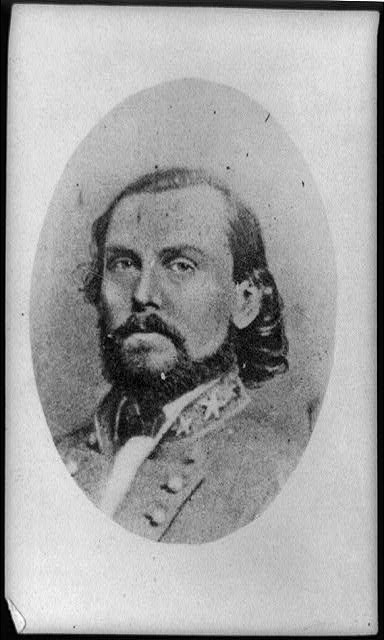
Some men welcomed the loss of their horses. John W. Connelly of Co. G, later expressed relief at his horse being returned to Texas. Said Connelly, “It was painful to me to hear my noble John call for food which I was unable to give.” Similarly, Sgt. John S. Bryan of Co. B wrote his wife in Collin County, Texas [sic], “we have been riding our horses almost day and night and had nothing to feed them on until thay were almost apast going.” Far from being concerned about wasting their natural abilities as “Texas” horsemen, the men in fact cared deeply about their horses. To them, it seemed cruel to use the animals so harshly and still be unable to feed them.[3]
The regiment fought only one battle while mounted, at Cotton Plant, Arkansas. One week later, Hindman passed down the order to dismount them. With their horses gone, John Bryan wrote, “We will have to foot it from this on.” “Foot it” they did, and men accustomed to the saddle became incensed at dealing with blisters on their feet.
Connelly wrote that the loss of their horses “caused great dissatisfaction among the men,” and caused a large number to either desert or prepare to do so. Those so inclined saw the situation as the government having broken a promise to them, thereby negating their obligation to serve. Firing squads quickly proved the strength of those obligations and cooled the desire to return home.[4]
Yet, as shown, such a “promise” did not mean that they were bound to serve as cavalry by virtue of being from Texas. There was a further, more pressing issue at hand. The regiment’s commanding officer, Col. William Fitzhugh, retained a letter after the war signed by the majority of his officers. Seemingly written by his major, William Diamond, the letter reveals the largest problem. Diamond wrote that the men of the regiment had “outfitted themselves for cavalry at heavy expense.” That cost came from the men buying their equipment and horses on credit. Regimental records indicate that privates had purchased mounts for between $40 and $200 and guns for anywhere between $10 and $50. Colonel William Fitzhugh’s horse was valued at $300. Captain Hezekiah Warden’s horse was even finer at $375, though it is not clear if his gear was purchased on credit. Nonetheless, horse and weapons cost him an even $400. Major Diamond claimed that the loss of their horses cost the men half their pay.[5]
A second letter, this one dated March 7, 1864, and penned by Confederate Senator Louis T. Wigfall, confirms Diamond’s statement. The wages of a Confederate private, whether cavalry or infantry, were $11 per month. Wigfall’s letter, written on behalf of the 16th Texas Cavalry, stated that when mounted, the men earned a stipend of forty cents per day “for the care and risk of their horses.”
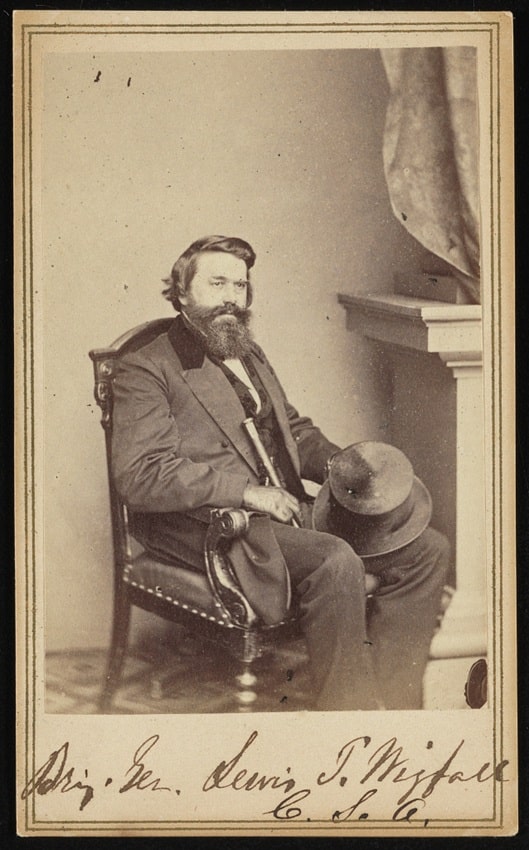
Here lay the crux of the matter. Even in a short month like February, such a daily allowance would slightly more than double the men’s wages. Wigfall stated that the men desired to be remounted, which would naturally reinstate the cavalry wages. If this was not possible, then they should be granted the stipend, seemingly as a form of relief. Men expecting an average wage of $23 per month to pay off debts ranging from $50-$200 were now reduced to $11. Families, creditors, and men were all counting on that higher pay. Reduced to its base rate, it made beggars of them all.[6]
Disputes over pay continued from 1862 until at least 1864, yet the men themselves remained. Some of their comrades deserted and reaped the reward of a firing squad for their trouble; others fell in battle. Men who held on to bitterness about the change were unlikely to celebrate their service. Charles Batsell, forced to return his own horse and those of others, did so nearly a half century after the war’s end. While that pride was dubious by nature, the fact of its existence belies the traditional view of the 1862 protests.
Understanding that the men were forced to take a 50% pay cut only strengthens that new perspective. Men scarcely rich when their service began now found that service another struggle for survival. That struggle affected not only them, but their families. Over a year after losing his horse, Lt. Addison Clark wrote home asking his brother to have made and sent to him “a good pair of boots.” Acclimatization to infantry service had not put an end to footsoreness. State and equestrian pride took a back seat to these issues.
The men never regained their horses while in the service of the Confederacy. By the time the war ended, they had walked from Louisiana into southern Texas, near Houston. When word of Lee’s surrender reached them at their camp near Hempstead, Texas, they no longer protested their loss. Nor did they demand the return of their horses. They simply left, turned north, and from halfway across the State of Texas, walked home.[7]
Isaiah Tadlock received his M.A. in history from Sam Houston State University in 2018. His work as a microhistorian includes Union and Confederate regiments involved in the Vicksburg Campaign. His area of focus is the battle of Milliken’s Bend.
Endnotes:
[1] William L. Shea, “The Confederate Defeat at Cache River,” The Arkansas Historical Quarterly, 52 No. 2 (1993), 129-31; Thomas Hindman to Albert Rust, July 8, 1862, Copybook of Telegraphic Dispatches from Thomas Hindman’s Command, 2 June – 9 October, 1862, Peter Wellington Alexander Papers; Joseph H. Crute Jr., Units of the Confederate States Army (Midlothian: Derwent Books, 1987), 332-34; Brett J. Derbes, “Sixteenth Texas Cavalry,” Handbook of Texas Online, accessed September 1, 2026, https://www.tshaonline.org/handbook/entries/sixteenth-texas-cavalry.
[2] Texas State Library and Archives Commission, Confederate Pension Applications, 1899-1975, Collection CPA16526, Roll 924; Compiled Service Records of Confederate Soldiers Who Served in Organizations from the State of Texas, War Department Collection of Confederate Records, Record Group 109, National Archives, Washington, D.C. (Microfilm M323) – hereafter cited as Compiled Service Records of the 16th Texas Cavalry unless otherwise stated; Eighth Census of the United States, 1860, Records of the Bureau of the Census, Record Group 29, National Archives, (Microfilm M653) [Ancestry.com], hereafter cited as 1860 Federal Census unless otherwise stated. See pension No. 29469 for C.W. Batsell.
[3] Memoirs of John W. Connelly (Unpublished), Courtesy Fannin County Historical Commission, 168; John S. Bryan to Nancy Bryan, July 13, 1862. Connelly’s memoirs appear to have been clipped from the newspaper The Honey Grove Signal, full copies of which no longer exist.
[4] Memoirs of John W. Connelly (Unpublished), Courtesy Fannin County Historical Commission, 168; John S. Bryan to Nancy Bryan, July 13, 1862; Stewart Sifakis, Compendium of the Confederate Armies: Texas (New York: Facts On File, 1995), 73-74.
[5] Compiled Service Records of the 16th Texas Cavalry; Undated Statement of the Officers of the 16th Texas Cavalry, William F. Fitzhugh Papers; H.C. Clarke, Confederate States Almanac and Repository of Useful Knowledge for 1862 (Vicksburg: H.C. Clarke, 1862), 61.
[6] Clarke, 61; Louis T. Wigfall to The Quartermaster General, March 7, 1864.
[7] Addison Clark to Randolph Clark, July 17, 1863; Compiled Service Records of the 16th Texas Cavalry; Richard Lowe, Walker’s Texas Division, C.S.A.: Greyhounds of the Trans-Mississippi (Baton Rouge: Louisiana State University Press, 2004), 250-54.


