A General’s Death at Baton Rouge and a Baptismal Font
United States Army Brig. Gen. Thomas Williams is not remembered as a brilliant tactician, inspiring leader, or politically savvy general. In fact, his reputation in the annals of Louisiana Civil War history is very much reflective of how his peers and subordinates viewed him more than 160 years ago. There is something dehumanizing about the way history remembers Williams, however, a more personal approach to this obscure army officer sheds light on a professional soldier with a tendency for draconian discipline and coarse behavior. For his all his shortcomings in personal traits, when his life reached its tragic conclusion in August 1862 along the banks of the Mississippi River, a ripple of sadness could be felt throughout the ranks of his soldiers and in his family back home.
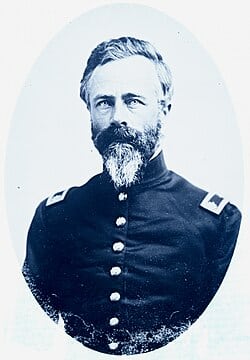
Thomas Williams was born in Albany, New York on January 16, 1815. A graduate of the West Point class of 1837, Williams commissioned into the U.S. Army and saw action in the Seminole War and the Mexican War. In the latter affair, he served as Gen. Winfield Scott’s Aide-de-Camp. Throughout the 1850s, the army sent Williams to Michigan where he was posted at Fort Mackinac with the 4th U.S. Artillery before orders sent, he, and his wife Mary Bailey Williams, to Florida and finally, by the end of the decade, to Fort Monroe in Virginia.[1]
By October 1861, Williams served as the inspector general of the Department of Virginia and participated in the North Carolina Expedition led by Maj. Gen. Ambrose Burnside. In 1862, Williams accepted a promotion to brigadier general and assignment to the command of a brigade of infantry in Maj. Gen. Benjamin Butler’s Department of the Gulf. After the surrender of New Orleans to Federal forces in April 1862, Williams and his soldiers were ordered to Baton Rouge, the Louisiana state capital and eventually on to Vicksburg. Along with a fleet of gunboats from the U.S. Navy, Williams marched on Vicksburg to demand the city’s surrender. When the Confederate defenders refused, Williams, heavily outnumbered and without proper supplies, accompanied the naval squadron back to Baton Rouge.[2]
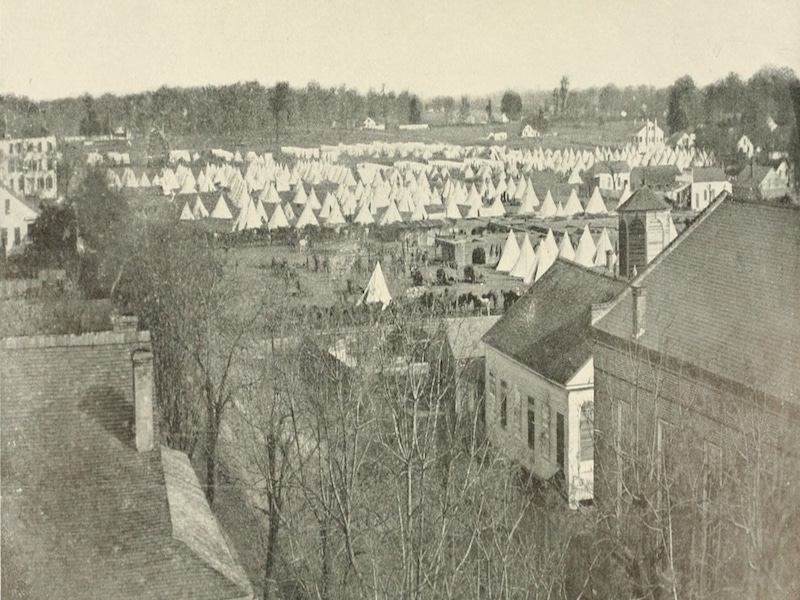
Situated along the Mississippi River between New Orleans and Vicksburg, Baton Rouge not only served as the state’s capital, but also a home to an abundance of planter-class men and women, a vast enslaved population, and was a vital commercial hub. The loss of the city coupled with the surrender of New Orleans frustrated the Confederate high command.
In the meantime, Confederate guerillas also attempted to force the Federals to abandon the city when they attacked the sailors of the USS Hartford. To drive off the insurgents, the Hartford and the Kennebec opened fire and shelled the riverfront.
The very next day, May 29, Williams and his men returned to the city, drew rations, and marched ashore to restore order. Passes were required to move about the city, and no one was allowed to leave without proper documentation. With his guns and men posted around the squares and at the U.S. Arsenal, Williams and, for that matter, the citizens of Baton Rouge could sleep easily with the knowledge that the raiders would have a difficult time should they attempt to attack the city once more.
Within days, Williams and his men returned to Vicksburg in another bid to capture the Confederate Gibraltar. Again, this effort, like the previous attempt, failed.
In garrison at Camp Moore in Tangipahoa Parish, a contingent of Confederate troops prepared to seize Baton Rouge. The camp, a large Confederate training depot in Louisiana, hosted a council of war during which former U.S. Vice President John C. Breckinridge outlined his plan to recapture the city.
On August 2, 1862, Williams, having returned to Baton Rouge, telegraphed Butler in New Orleans the news from a confidential agent (read spy) John Mahan:
He says he saw Breckinridge’s force of six regiments and fourteen guns at Camp Moore and Ponchatoula Monday, July 28, and that their purpose is to attack [Baton Rouge]; says they may be expected on the rear of Baton Rouge at this time, or at any time in the next day or two.
In another message to Butler, Williams also detailed the poor condition of his force:
I hope the rebels have as many sick as I have. Perhaps (let us hope at least) that a battle may to our sick exert all the effects of the best tonic of the pharmacopoeia.
Three days later, Williams and Breckinridge squared off in the streets of Baton Rouge.[3]
Breckinridge departed Camp Moore with a little more than 2,000 Confederates under brigadier generals Daniel Ruggles and Charles Clark. Their column of march followed Greenwell Springs Road and bounded toward Williams’ prepared positions and skirmish lines east of Baton Rouge. Men from Kentucky, Mississippi, Tennessee, Alabama, and those native to Louisiana surged across the Comite River and made the final push toward town.
At first light on August 5, Breckinridge unleashed his two divisions, and the fight broke out in and around the Magnolia Cemetery. Between headstones and granite or marble tombs, Williams’s men of the 14th Maine and the 21st Indiana attempted to hold back a determined Confederate onslaught. The battle in the cemetery ground down into a desperate hand-to-hand struggle until the U.S. Army lines broke to the rear and began a frenzied retreat to Williams’s main lines.[4]
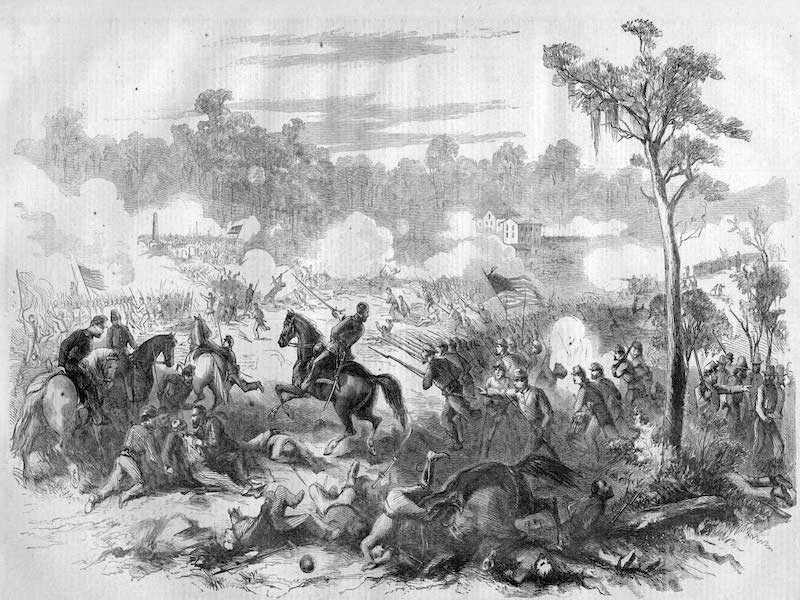
As the Federal line broke across the entire front, Williams rode forward and strained every effort to reinforce and rally his men. He called his reserves forward to each point of crisis. As his right flank collapsed, Williams rushed to the scene. A hail of bullets zipped through the air all around him as Williams arrived and began to call out orders to his troops. Everything seemed to be going against the Federal force throughout the morning, but the Confederates soon suffered their own setbacks.
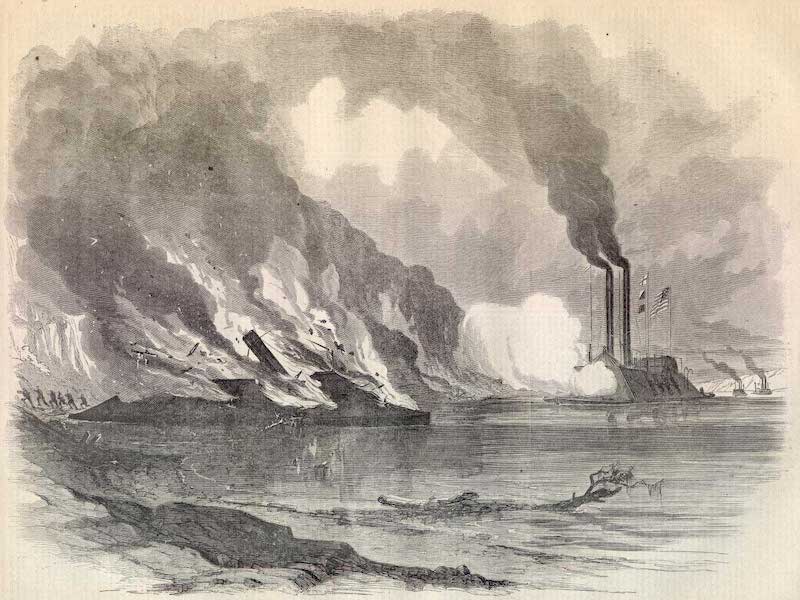
The naval guns and the artillery batteries positioned at the U.S. Arsenal and across Williams’s defensive lines made any further Confederate progress impossible. As casualties mounted, Breckinridge held out hope that the CSS Arkansas might arrive on the river and put an end to the U.S. Navy’s bombardment. Federal vessels, however, spotted the Arkansas and sent her to the bottom to meet her fiery end. Without naval support, Breckinridge withdrew to the Comite River, and the battle of Baton Rouge ended.[5]
Combined total casualties for the battle are estimated to be between 450-500 men. Among them was Williams.
As he attempted to hold his troops together, he made a conspicuous target for the advancing Confederates. Projectiles sang through the air, and the familiar whip and whistle of those .58 caliber balls drowned out all else. His voice raised to a fever pitch, Williams cried out to his troops to stand their ground and then he fell silent. A single bullet struck him in the chest, and he died instantly.
Those who witnessed Willams’s death or heard about it second-hand felt the instant sting of the loss and the army simply lost the will to fight.

On August 7, Butler issued the following announcement:
The victorious achievement – the repulse of the division of Major General Breckenridge by the troops led by General Williams and the destruction of the mail-clad Arkansas by Captain Porter of the Navy – is made more sorrowful by the fall of our brave and gallant and successful fellow soldier.
…His life was that of a soldier, devoted to his country’s service. His country mourns in sympathy with his wife and children, now that country’s care and precious charge.
We, his companions and arms, who had learned to love him, weep the true friend, the gallant gentleman, the brave soldier, the accomplished officer, the pure patriot and victorious hero, and the devoted Christian. All and more went out when Williams died. By a singular felicity the manner of his death illustrated each one of these generous qualities.[6]
Three weeks later, his body arrived for burial in Elmwood Cemetery in Detroit, Michigan.[7]
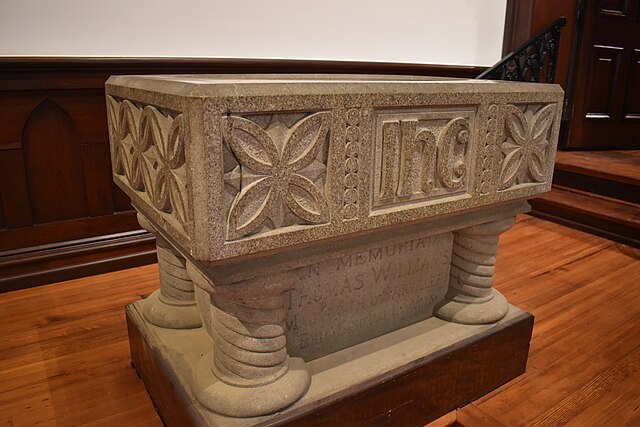
Today, in addition to the few signs and markers that identify notable features of the battle, there is one unique artifact tied to Williams.
In 1887, Williams’s son, Gershom Mott Williams, donated an engraved baptismal font to St. James Episcopal Church where soldiers brought his father’s body before his burial in Michigan. The inscription reads, simply:
In Memoriam
Thomas Williams
Major 5th U.S. Artillery
Brig. General U.S. Vols
Baton Rouge
August 5
1862
The font is still in use today and exists as a tangible link between the American Civil War and modern, metropolitan Baton Rouge.
[1] Ezra Warner, Generals in Blue: Lives of Union Commanders, (Louisiana State University Press: Baton Rouge, LA, 1964), 564.
[2] John D. Winters, The Civil War in Louisiana, (Louisiana State University Press: Baton Rouge, LA, 1963), 104-105; William A. Spedale, Battle of Baton Rouge, 1862, (Land and Land Publishing Company: Baton Rouge, LA, 1985), 5-6.
[3] The U.S. War Department, War of the Rebellion: A Compilation of the Official Records of the Union and Confederate Armies, (Washington D.C.: Government Printing Office, 1886), 34.
[4] Spedale, Battle of Baton Rouge, 37-38.
[5] Winters, Civil War in Louisiana, 120-123.
[6] War Department, Official Records, 41.
[7] Warner, Generals in Blue, 564.


Interesting. Was his son named for Gershom Mott, Civil War general?
It looks like Williams and Gen. Mott were distant cousins descended from a marriage between his father and Mary Mott, another cousin. So, simply, it seems like it is a family name.
Good post!
One thing I have read is that Williams was a harsh disciplinarian and unpopular with his men. He was also certainly brave.
That he was. I also believe that most of the accounts of him being a “harsh disciplinarian” or his “unpopularity” stem from green, raw troops and not the “veteran” units under his command. It is hard to classify a “veteran” unit in 1862, but, for instance, the 7th Vermont was relatively inexperienced and seemed to draw much of his attention. The 21st Indiana or the 30th Mass., seemed to deal well with Williams. I’m sure there is also a matter of taste involved too.
Well written article. Thanks!
Thanks for reading!
Interesting article about a little known aspect of the Civil War in Louisiana. Thanks.