The March 13, 1864, Great Drowning at McHenry Bayou
ECW welcomes guest author William J. Bozic Jr.
Between 1862 and 1863, Union forces made three previous unsuccessful attempts to invade Texas via Galveston, Sabine Pass, and the Texas Overland campaigns, but Abraham Lincoln was still undeterred in his desire to restore Texas.[1] The Republican Party performed poorly in the 1862 midterm elections, and Lincoln believed the electoral votes of a loyal government in Texas would benefit his 1864 reelection campaign. The Lincoln Administration also sought to suppress the flow of cotton to other nations which enabled supplies for the rebellion from Mexico via Texas. In addition, Mexico was a concern due to French influence, so President Lincoln issued perfunctory directives to conquer Texas.[2]
In the late fall of 1863 elements of the XIX Corps and XIII Corps boarded ships in southern Louisiana and set sail for the South Texas coast. These troops landed at Port Isabel and were divided into two wings. One thrust was made up the Rio Grande, while the other made its way up the Texas Gulf Coast towards Houston and Galveston. In both directions the invasion sputtered without enough troops to handle so much territory, and due to determined fighting by the Texans against both wings.[3]
Union Army Department of the Gulf commander Nathaniel P. Banks reconsidered and identified another route of attack up the Red River in Louisiana to capture the Confederate Trans-Mississippi capital at Shreveport, then enter Texas from the northeast. The first brigade of the first division of the XIII Corps was stationed at Indianola, Texas, and was desperately needed to fill the ranks for the upcoming invasion. The men were ordered to expediently evacuate their positions and make their way to Fort Esperanza on the Texas Gulf Coast.[4]

On the heels of the federal army’s evacuation trailed Col. James M. Duff’s 33rd Texas Cavalry Regiment and Col. James B. Likens’ 35th Texas Cavalry Regiment.[5] There was a pontoon bridge constructed near Saluria Bayou which carried men across to safety. Company K of the 2nd Regiment Engineers Corps d’ Afrique, under the command of Lt. Amos C. Stanton, operated the McHenry Bayou ferry. However, the ranking on scene officer was the 69th Indiana’s Maj. George Henry Bonebrake.
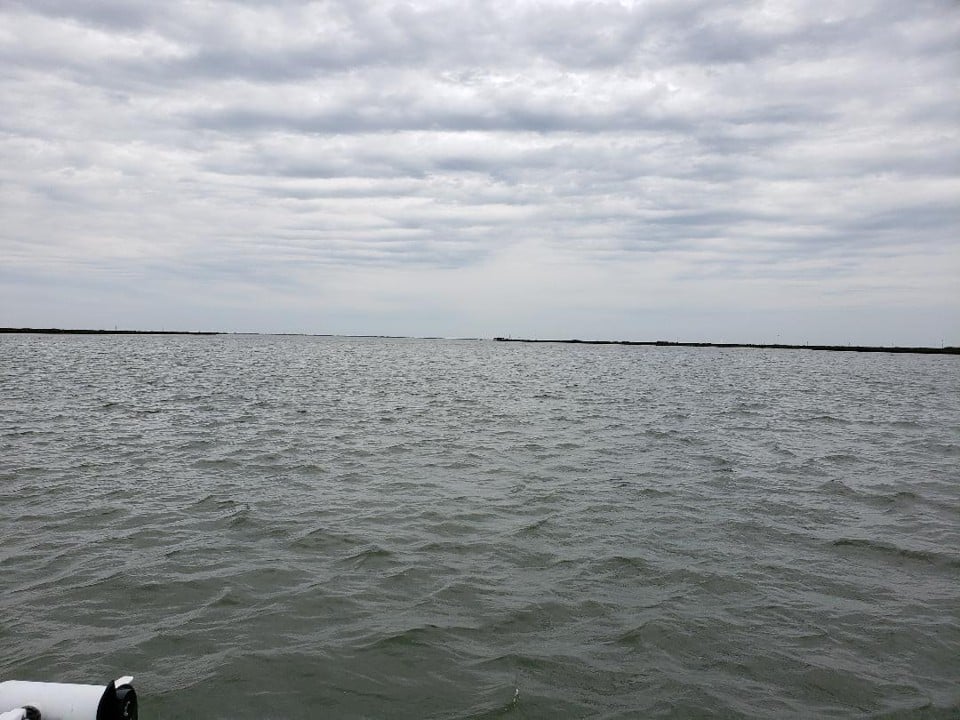
Ultimately, with the final group waiting to cross the ferry at McHenry Bayou comprised of companies K, G, and B of the 69th Indiana Volunteer Infantry and other units, Maj. Bonebrake made the fateful decision. The Saluria pontoon crossing was successfully made, but McHenry Bayou ferry still needed to be crossed to reach the Union positions at Fort Esperanza at Matagorda Island. McHenry Bayou has a strong current and suddenly a norther (strong winter storm) threatened. Given the risk of death at the hands of Duff’s 33rd and Likens’ 35th Texas cavalry regiments, or the risk of crossing McHenry Bayou, the decision was made to save the remaining troops and make a desperate dash across McHenry Bayou before the storm unleashed its full fury.
Unfortunately, the storm hit before the men were safely ashore, and the overcrowded boats capsized. Thirty men and two horses were lost in the disaster, including troops from the 69th Indiana, 8th Indiana, 7th Michigan Light Artillery, and 2nd Regiment of Engineers Corps d’Afrique. The current was strong, and the men and boats were overloaded with equipment which dragged them down like an anchor, and very few were able to swim. It was also reported the African American soldiers dragged many men to the bottom in their fruitless attempts to stay above water.[6]
Major General John A. McClernand, who commander the US XIII Corps, ordered court-martial charges drawn for Lt. Amos C. Stanton for alleged “neglect of duty,” and for a time McClernand thought about also charging Maj. Bonebrake. Ultimately, Stanton was reposted to Louisiana, where he was later found guilty of “neglect of duty” related to his neglect of paperwork at his new post. Given the impending danger from Confederate forces and the rapid movement of the storm, nearly everyone understood the situation, but this did not stop Lt. Col. Smith and others from placing blame squarely on Stanton, as well as the ferry and pontoon bridge builders of the 2nd Regiment of Engineers, Corps d’ Afrique, in newspapers.[7]
For the Lincoln administration, this event underscored the difficulties in adding Texas to the Union. Pressing demands for more troops in other theaters superseded the unrealistic task by such a small body of men to conquer an unwilling Texas. The next federal invasion attempt on Texas was made by these troops, and others, via Louisiana during Nathaniel Banks’ unsuccessful 1864 Red River Campaign.[8]
Over the history of Calhoun County and the Gulf Coast region of Texas, the citizens had suffered physically and commercially. The economy was devastated by the raids and depredations inflicted by these Federal troops. One example of federal raids in the area was the February 6, 1864 elimination of the Foster Settlement. Federal troops dismantled the buildings of the settlement which left the citizens homeless; the once prosperous settlement vanished. In addition, for the families of the deceased on both sides of the conflict, the loss of loved ones also brought perpetual hardship.[9]
“The Great Drowning” took place in a remote area at McHenry Bayou, and while it paled in comparison to the bloodshed of larger theaters, it remains a haunting reminder of the human cost of war. Though long overshadowed, its memory is finally being honored, with efforts underway to secure a Texas Historical Marker so that this tragedy will not be forgotten.
A graduate of the University of Florida with a B.A. in History (1986) and an M.Ed. (1987). William’s area of expertise is the military actions in the Trans-Mississippi South during the Civil War, focusing on Texas and Louisiana where he has worked for the National Park Service during the majority of his NPS career with an assortment of duties as both a historical researcher and frontline interpreter to diverse groups of visitors at various parks. William and his wife Julissa are the parents for four children and have been blessed with two grandchildren.
Endnotes:
[1] Stephen A. Dupree, Planting the Flag in Texas: The Campaigns of Major General Nathaniel P. Banks in the West (College Station, Texas: Texas A&M University Press, 2008), 69-85.
[2] Donald S. Frazier, Tempest Over Texas: The Fall and Winter Campaigns of 1863 – 1864 (Kerrville, Texas: Statehouse Press, 2020), 293 – 443; Stephen A. Townsend, The Yankee Invasion of Texas (College Station, Texas: Texas A & M University Press, 2006), 5-15.
[3] Dupree, Planting the Flag in Texas, 69-85; Frazier, Tempest Over Texas 293 – 443; Townsend, The Yankee Invasion of Texas, 5-15.
[4] Frazier, Tempest Over Texas, 293 – 443.
[5] Mamie Yeary, ed. Reminiscences of The Boys In Gray 1861–1865 (Nacogdoches, Texas: Ericson Books, 2003 reprint), 606 & 735.
[6] Bridge, Carolyn, S.” These Men Where Heroes Once: The Sixty-Nineth Indiana Volunteer Infantry. West Lafayette, IN: Twin Publications, 2005,149.154; The Richmond Palladium, Richmond, Indiana, April 9 and 13, 1864; The War of the Rebellion: The Official Records of the Union and Confederate Armies. Series 1, Vol XXXIV, Part II, 599-602, and Series 1, Vol XXVI, Part II, 460, 509, 513; US, Compiled Military Service Records of Volunteer Union Soldiers Who Served the United States Colored Troops: 56th-138th USCT Infantry, 1864-1866 (96th US Colored Troops/2nd Regiment Engineers Corps d’ Afrique, National Archives and Records Administration.
[7] Bridge, Carolyn, S. 149.154; The Richmond Palladium, Richmond, Indiana, April 9 and 13, 1864; OR, Series 1, Vol XXXIV, Part II, 599-602, and Series 1, Vol XXVI, Part II, 460, 509, 513.
[8] Gary D. Joiner, One Damn Blunder from Beginning to End: The Red River Campaign of 1864 (Lanham, Maryland & London: Rowman & Littlefield, 2002), 37.
[9] Brownson Malsch, Indianola: The Mother of Western Texas (Abilene, Texas: State House Press, 1988) 173-83; James M. Miller, Fletcher White, et al. History of the Sixteenth Battery of Ohio Volunteer Light Artillery, U.S.A., from Enlistment, August 20, 1861, to Muster Out, August 2, 1865, Compiled from the Diaries of Comrades, the Best Recollections of Survivors, and Official Records. 1906. (Ohio: self-published) 96-97; Linda Wolff, Indianola and Matagorda Island 1837-1887: A Local History and Visitor’s Guide for a Lost Seaport and a Barrier Island on the Texas Gulf Coast (Fort Worth, Texas: Eakin Press, 1999), 41-54. OR’s XXXIV Part 2, 252. “Reports of Acting Commander 1st Division XIII Army Corps Brig. Gen. W.P. Benton at Indianola Feb 6, 1864”


Interesting story… but one problem: Major General McClernand was replaced as Commander, 13th Army Corps in June 1863 by Major General E.O.C. Ord.
My apologies… Major General McClernand was indeed restored to command of the 13th Army Corps sometime after the Vicksburg Campaign.
I’ve been in some Texas rains, and I’d say you can drown just from being outside during a good Texas rain, it rains so hard and so fast. Requesting advise on the relative strengths of the units at the time if known, Col. James M. Duff’s 33rd Texas Cavalry Regiment and Col. James B. Likens’ 35th Texas Cavalry Regiment, 30 drowned out of how many of the companies K, G, and B of the 69th Indiana Volunteer Infantry and 8th Indiana, 7th Michigan Light Artillery, and 2nd Regiment of Engineers Corps d’Afrique. Great article, thanks, glad those men are being remembered.
Troop strength is a difficult task for the Confederates. Best estimate based on a number of sources from both sides : Duff’s 33rd Texas Cavalry 350-ish, Likens 35th Texas Cavalry 650ish. (1000 +/-)
Union men who paid the price when the storm capsized the ferry boats
Surname Given Name Rank Company Regiment
Adams Alezar Pvt K 2nd Regiment Engineers Corps d’ Afrique
Albert Joseph Pvt K 2nd Regiment Engineers Corps d’ Afrique
Alvoy Charles Pvt G 69th Regiment Indiana Volunteer Infantry
Backhouse George Pvt K 69th Regiment Indiana Volunteer Infantry
Barker Isreal Pvt K 69th Regiment Indiana Volunteer Infantry
Brown Thomas Pvt G 69th Regiment Indiana Volunteer Infantry
Clifton James Pvt K 69th Regiment Indiana Volunteer Infantry
Conaway Henry Pvt K 69th Regiment Indiana Volunteer Infantry
Coombs Joel Pvt G 69th Regiment Indiana Volunteer Infantry
Craner Albert Sgt B 69th Regiment Indiana Volunteer Infantry
Cully Thomas Pvt K 69th Regiment Indiana Volunteer Infantry
Forner John F. Sgt K 69th Regiment Indiana Volunteer Infantry
Halstead William H. Pvt K 69th Regiment Indiana Volunteer Infantry
Holman Gilbert R. Sgt K 69th Regiment Indiana Volunteer Infantry
Jennings John A. Pvt G 69th Regiment Indiana Volunteer Infantry
Johns Martin Pvt G 69th Regiment Indiana Volunteer Infantry
Larimore Paris H. Pvt K 69th Regiment Indiana Volunteer Infantry
Massey William H. Pvt B 69th Regiment Indiana Volunteer Infantry
Miller Francis Cpl G 69th Regiment Indiana Volunteer Infantry
Nottingham Joseph W. Sgt B 69th Regiment Indiana Volunteer Infantry
Segar Matthias Pvt K 69th Regiment Indiana Volunteer Infantry
Senior Joseph 2LT K 69th Regiment Indiana Volunteer Infantry
Shaw Isaac Cpl B 69th Regiment Indiana Volunteer Infantry
Tolbert John Pvt K 2nd Regiment Engineers Corps d’ Afrique
Whitt William B. Sug F&S 69th Regiment Indiana Volunteer Infantry
Williams Henry Sgt G 69th Regiment Indiana Volunteer Infantry
Wright Golden Pvt K 2nd Regiment Engineers Corps d’ Afrique
I did not include those who died during rescue efforts, so some regiments mentioned in the narrative are not included on this list
Federal strength about 100. Confederate strength 1000ish. Pure speculation: Commanding officer Maj. George Henry Bonebrake likely believed he was out-numbered by at least about 10 to 1, but I have seen Federal estimates of CSA troop strength as high as 1500, so Major Bonebrake might have considered he was outnumbered 15 to 1 hence the decision to take risk of the ferry.
Interesting story! Thanks for sharing it.
Thanks for telling this story … I did not know negro soldiers were engineers … from their name — Engineer Corps d’Afrique — I assume they were a Louisiana unit?
Yes, the 2nd Regiment Engineers Corps’ d’ Afrique were raised August 15, 1863 at Camp Parapet in Carrollton (now a section of New Orleans, Louisiana). On April 4, 1864, the regiment was formally redesignated as the 96th United States Colored Troops, part of the broader reorganization of Corps d’Afrique units into numbered U.S.C.T. regiments.
If you get the chance, there is a monument and portion which still exists of Camp Parapet in the Carrollton section of New Orleans and a small cemetery.