The End of the Great War
World War I ended in a Burger King parking lot in New Jersey. Really! Trust me. And how does this relate to the Civil War? It’s a bit convoluted so stick with me. Whenever I travel I try to visit historic sites. I have done a lot of research on the surrender meetings that ended the Civil War. Some of those are pretty obscure, but fascinating. So speaking of obscure, I came across this while in New Jersey exploring historic sites. The scene of another surrender, from a more recent conflict.
World War I raged from 1914-1918, with the United States entering in 1917. The Allied nations consisted of the U.S., U.K., France, Italy, Russia, Serbia, and Japan. The Central Powers included Germany, Austria-Hungary, Bulgaria, and the Ottoman Empire. By the fall of 1918 the other Central Powers had dropped out, leaving only Germany still fighting.
On November 11, 1918, Germany agreed to an armistice with the Allies, halting the fighting. Negotiations began on a final peace treaty, resulting in the Treaty of Versailles, signed in 1919. But the U.S. did not sign it. Wilson, a Democrat, faced Republican opposition in Congress. Large portions of the American population also opposed the settlement. There was also opposition to Wilson’s proposed League of Nations, an organization similar to today’s United Nations.
So while the rest of the Allies settled with Germany in 1919, for two more years the U.S. and Germany were still at war, with the Armistice in place. President Wilson’s successor, Warren G. Harding, also opposed the Treaty of Versailles, so suggested that Congress make a separate peace treaty that did not include American membership in the League of Nations. Senator Philander Knox introduced such a resolution and it passed the Senate in April, 1921.
Representative Stephen G. Porter proposed a similar measure in the House. Both houses of Congress modified the two proposals, creating the Knox–Porter joint resolution and passing it on July 1. At the time President Harding was visiting New Jersey Senator Joseph S. Frelinghuysen and were playing golf at the Raritan Valley Country Club.
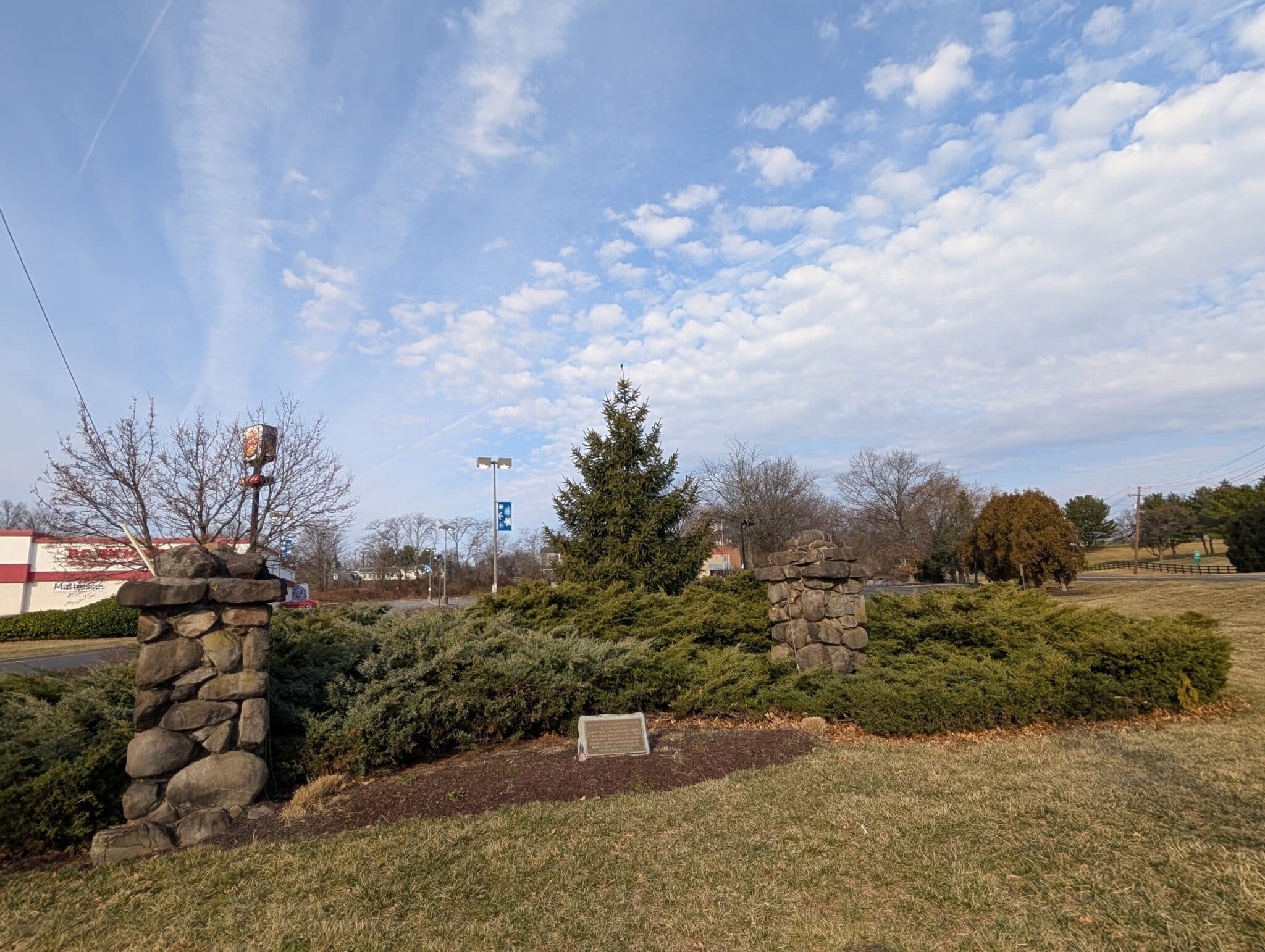
The golf course was across the street was the Frelinghuysen estate. Word arrived that a courier was on his way from the Raritan train station, having traveled from Washington with the signing copy of the resolution. Harding walked back to the estate, signed the document, and then returned to complete his round of golf. The Frelinghuysen estate was destroyed by fire in the 1950s, and the site is now occupied by a shopping center and parking lot, with a small plaque marking the place where the home once stood.
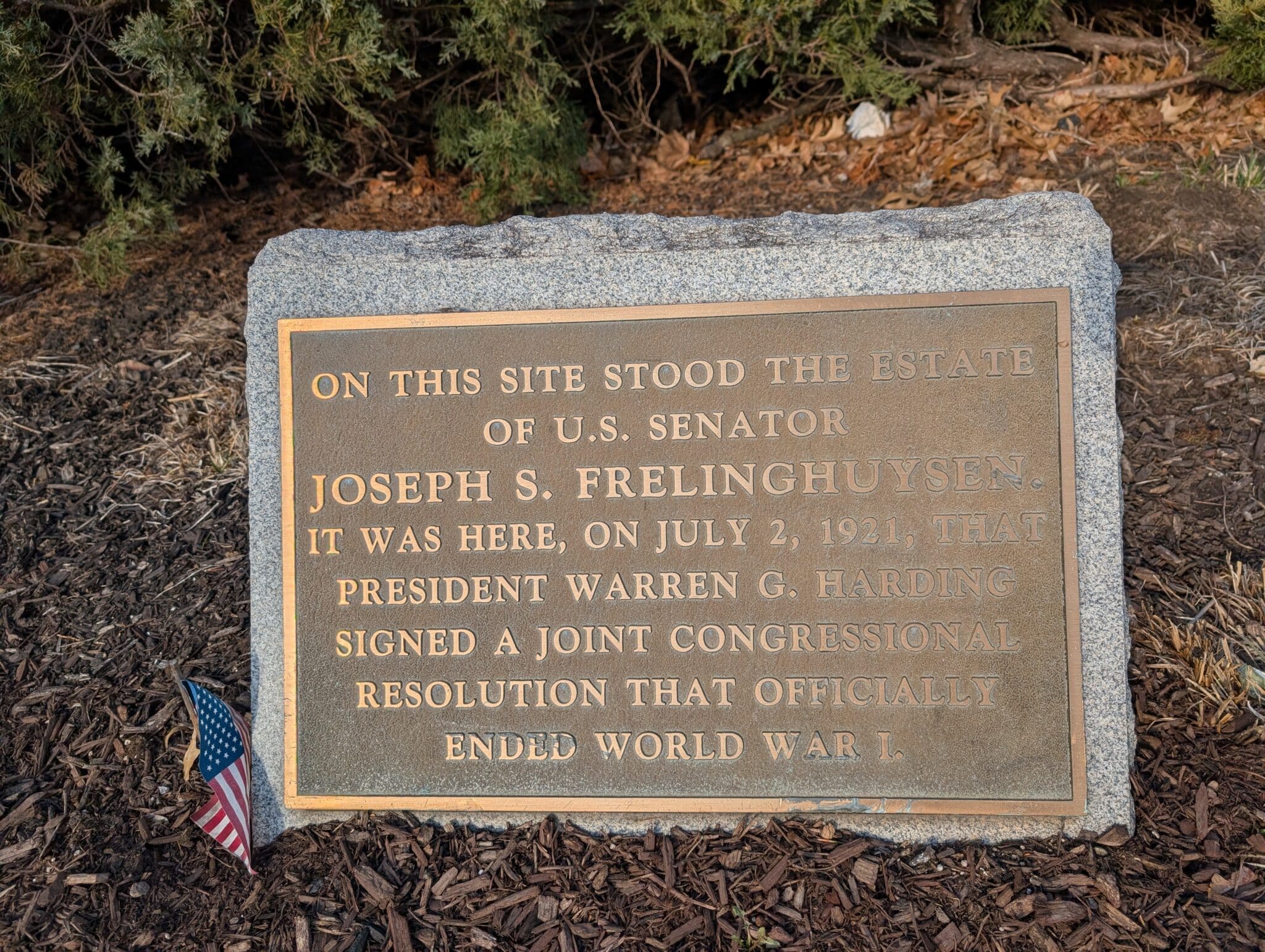
So while we think of World War I as ending on November 11, 1918, the actual peace treaty with Germany didn’t occur until three years later. Article 1 of the treaty required Germany to grant to the U.S. government all rights and privileges that were enjoyed by the other Allies that had ratified the Versailles treaty two years earlier. And today there’s a Burger King on the site in Somerville, New Jersey.


Fascinating, thank you for sharing this unknown story!
Thank you for sharing this odd story. I drove by that site twice daily for many years while commuting in New Jersey until finally stopping just to say I visited. As Bert suggests, it is a quite (un)impressive way to remember the end of the Great War.
Thanks Kevin!
Thanks, Bert. WW1 was(IMO) the most important war in world history. The changes wrought were astonishing; demise of the Romanov, Hohenzollern, Habsburg, Ottoman empires; rise of Soviet communism, Irelan’s Easter Rising, dismemberment of Austria-Hungary, creation of Poland, Yugoslavia, birth of nationalism in Australia, New Zealand, Canada, aforementioned Ireland; voting rights for women, rise of Fascism,etc, etc. I see no other armed conflict in history to rival these upheavals.
Yes, its fascinating in so many ways. WWII tends to overshadow it.
This was a very interesting article. Bert, you are becoming the Surrender King. I was surprised that it took the United States 3 years to figure out this peace treaty and the location of its signing.
Well, you know how politics can be….
Bert,
From documenting lesser known tea parties, and lesser known Civil war surrenders to an obscure burger joint in New Jersey, you are blazing a trail of documenting unique stories. Huzzah!
Thanks Bill, yes a wide range of interests!
This might well be the most random, obscure and awesome post ever on ECW. Thanks, Bert!
Hi Glen, well I don’t know about that… but thanks!
That’s one Whopper of a story, Bert. Who knew ….
What a great story … it’s nice that the developer and the city kept the plaque on site … many thanks.
Of course, some historians write that the “World War” only experienced a twenty-year pause, ending in 1945 – thanks to the Treaty of Versailles paving the way for Hitler.