Dennis Hart Mahan’s Congratulatory Letter to Sherman
In December 1864, Maj. Gen. William T. Sherman completed his march to the sea by reaching, investing, and capturing Savannah, Georgia. Sherman famously sent a telegram to President Abraham Lincoln stating, “I beg to present you as a Christmas-gift the city of Savannah, with one hundred and fifty heavy guns and plenty of ammunition, also about twenty five thousand bales of cotton.”[1] However, that was but one message sent and received by Sherman upon reaching Savannah. Another note was hand delivered to him from his old teacher at West Point, Dennis Hart Mahan.
At the U.S. Military Academy, Dennis Hart Mahan was a legend amongst antebellum officers. In the 1820s, Mahan journeyed to Europe to study Napoleon’s wars and attended the French artillery and engineering school at Metz. He returned to the United States and taught engineering classes at West Point; he remained there until academy leaders recommended his retirement in 1871, and Mahan instead chose to end his own life. Thanks to his decades at the academy, Mahan interacted with all antebellum cadets there, and many senior officers who returned to West Point to command it. By 1861, he had already written six books on military engineering and fortifications and regularly taught that field fortifications would become widespread in future conflicts.
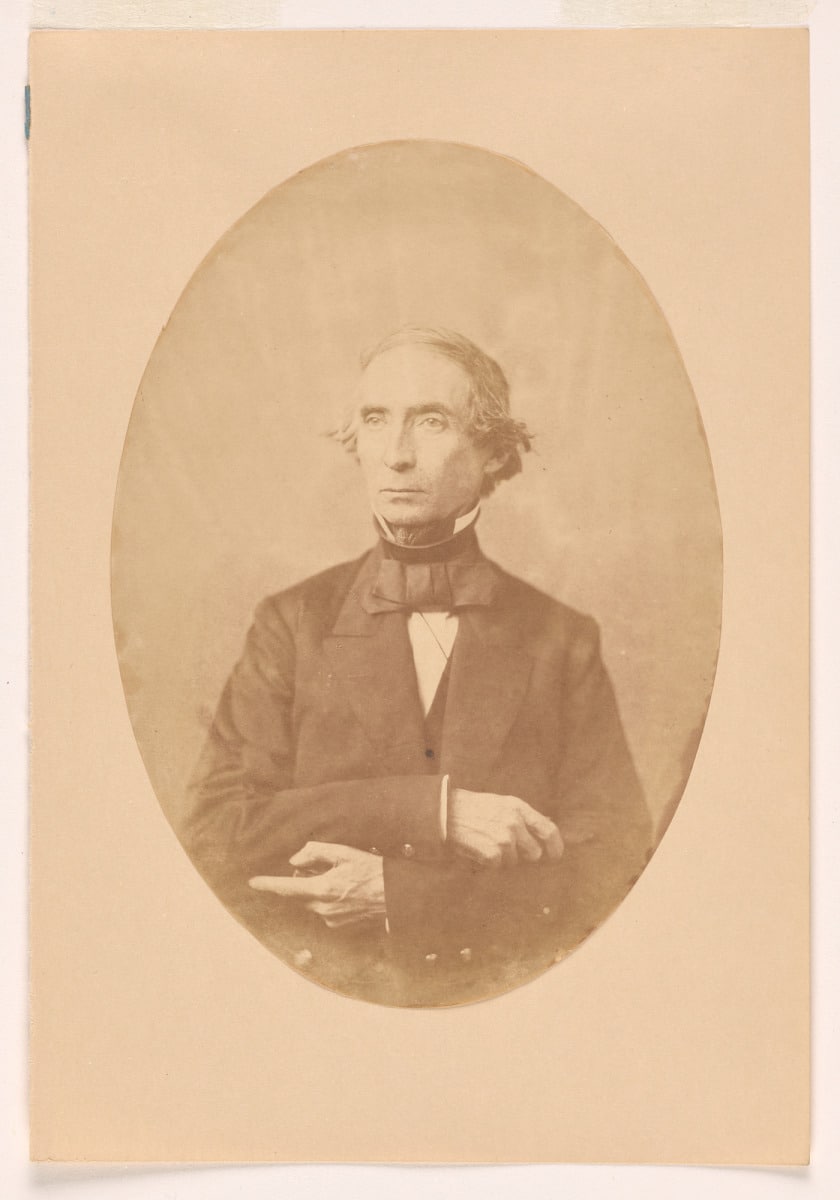
William Tecumseh Sherman was one of those officers who held Mahan in the highest esteem. As the Civil War escalated, the two exchanged letters about the war. For instance, following the surrender of Vicksburg, Sherman wrote Mahan explaining what occurred. The professor’s reply was high praise: “I am glad of this occasion to say to you how proud I feel of you all in the West. Duty has been nobly done,” adding to tell Ulysses Grant that he “won my hearty admiration for his skill and indomitable determination not to fail. European warfare can provide nothing equal to it.”[2] Sherman was so elated for his old professor’s praise that upon receiving Mahan’s reply, he immediately sent it to Grant, calling it “so flattering.”[3]
As Sherman closed Savannah, Dennis Hart Mahan took pen to paper and wrote to Sherman’s brother John, U.S. senator from Ohio. Mahan wrote to the senator of his “feelings of pleasure” as he wrote to “congratulate on the splendid success of your brother” and his “sound judgement of his course” to the sea.[4] Days later, Mahan wrote another letter of congratulations to Gen. Sherman. The professor then sent it to his son, future navalist, head of the Naval War College, and author of The Influence of Sea Power Upon History 1660-1873, Alfred Thayer Mahan. In 1864, the younger Mahan was the ordnance officer for Rear Admiral John A. Dahlgren’s South Atlantic Blockading Squadron, then blockading both Savannah and Charleston.
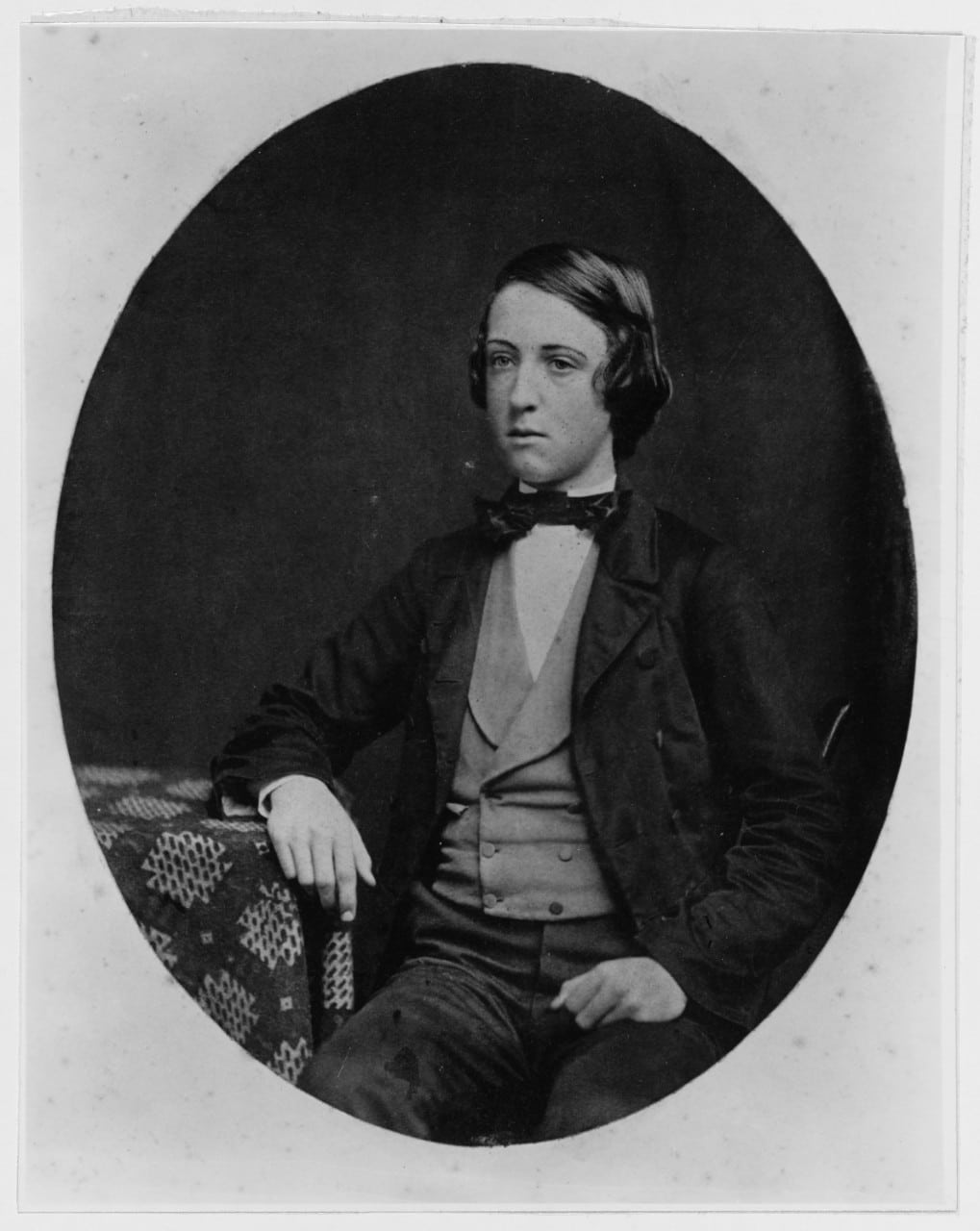
Though the letter from Dennis Hart Mahan to Sherman is not among Sherman’s papers in the Library of Congress (though other letters to Sherman from Mahan are), Alfred’s memoir attests to its general nature, noting that after Sherman read the note, he was “in the exact spirit” of the note containing words to the effect of “a letter of congratulation.”[5] When Sherman learned who was delivering the letter, “he broke into a smile … shook my hand forcibly, and exclaimed, ‘What, the son of old Dennis?’”[6]
There are a few takeaways from this exchange. First is that military and naval activity did not occur in separate vacuums. When it comes to riverine or coastal activity, it is important to check the source material from both military and naval leaders. Otherwise, interesting anecdotes, interactions, or even vital documentation could be missed from examination.
Second, just as during the Civil War era, many teachers and faculty members today follow the budding careers of their students. Whenever I see a former student succeed, I am always sure to reach out however I can to keep encouraging them and to let them know they have support. My students always get excited when they hear from me in such a manner, as I am sure Sherman did whenever he received a note from his former West Point professor Dennis Hart Mahan.
Endnotes:
[1] William T. Sherman, Memoirs of Gen. W.T. Sherman (New York: Charles L. Webster & Co., 1891), Vol. 2, 231.
[2] Mahan to Sherman, August 28, 1862, William T. Sherman Papers, Library of Congress.
[3] William T. Sherman, Memoirs of Gen. W.T. Sherman (New York: Charles L. Webster & Co., 1891), Vol. 1, 370.
[4] Mahan to Senator John Sherman, December 19, 1864, William T. Sherman Papers, Library of Congress.
[5] A.T. Mahan. From Sail to Steam: Recollections of Naval Life (New York: Harper & Brothers, 1907), 191-192.
[6] Ibid, 192.


Except a teacher congratulating a former student on his successful violations of the Rules of War is a little odd.
Tom
Exactly what provisions of General Order no. 100 did Sherman violate?
A very nice anecdote … thanks for sharing it … also glad you made reference to the arguably most famous Mahan — one US Navy’s touchstones, Alfred Thayer Mahan … BEAT ARMY!
Thanks for this, Neil! Your post reminded me that we learned about Alfred Thayer Mahan in a high school summer session U.S. History course taught in 1970 by a recently retired Naval Officer. What a fine teacher he was! He was one of the models I kept in mind when I entered the classroom half a dozen years later. Teaching topics beyond the text and the boilerplate lesson plan was where the fun started.