East Cemetery Hill in a New Light
ECW welcomes back guest author Michael L. Giorgianni.
Visiting battlefields and historic sites multiple times may seem unnecessary or dull for those lacking a deep passion or interest in history. For some of us, our immediate family members or loved ones may fall into this type. Without question, my family does not share my level of passion; however, they have supported me by joining on many visits to Gettysburg over the past few years which, to my delight, has increased their interest in the Civil War.
Each visit takes on a different feeling or vibe as I intentionally focus on a different area of the battlefield which may involve distinct units and individuals. My family’s most recent visit to Gettysburg required a different approach as one guest was essentially a first-time visitor. This required a sampling of as many parts of the battlefield as we could fit into our schedule.
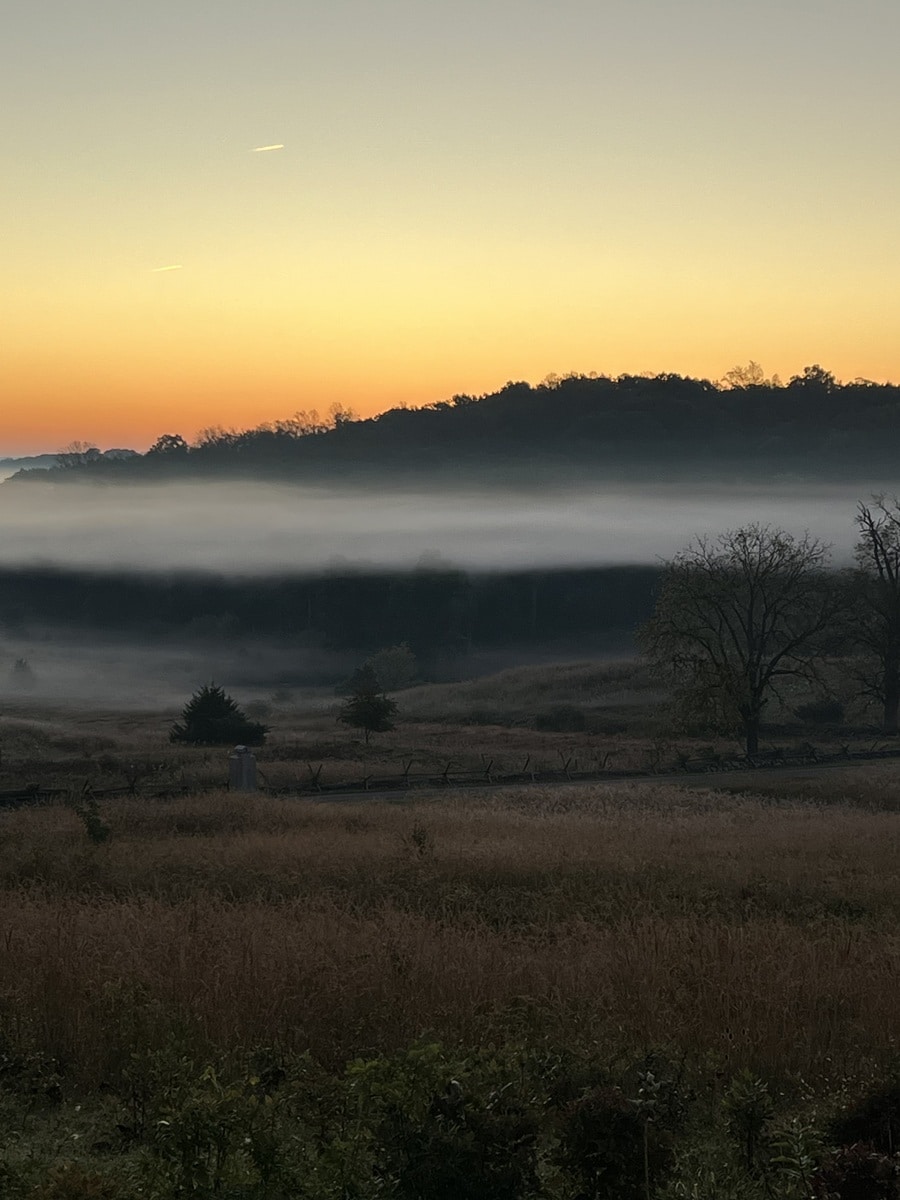
My admiration of the powerful battlefield photographs taken by photographers far more talented than myself inspired me to attempt to photograph an area of the battlefield at sunrise. Many areas of the battlefield seemed appropriate; however, I wanted to try to capture the magic of a different location.
East Cemetery Hill, made famous by the night fighting on July 2, 1863, is an area that has long interested me. Occupying the hinge of the now famous hook-shaped Union defensive position and target of Confederate forces from the first day of the battle, this was the spot for me. The brutal struggle between Harry Hays’ Louisiana brigades and Isaac Avery’s North Carolinians with the Union soldiers from the already diminished XI Corps may seem to be of lesser significance when compared to other more well known areas of the field. The artillerymen defending their batteries with their implements and Union reinforcements rushing past the Evergreen Gatehouse in the dark surely did not see this part of the battle as secondary. This unique part of the battlefield was the site that I would attempt to capture.

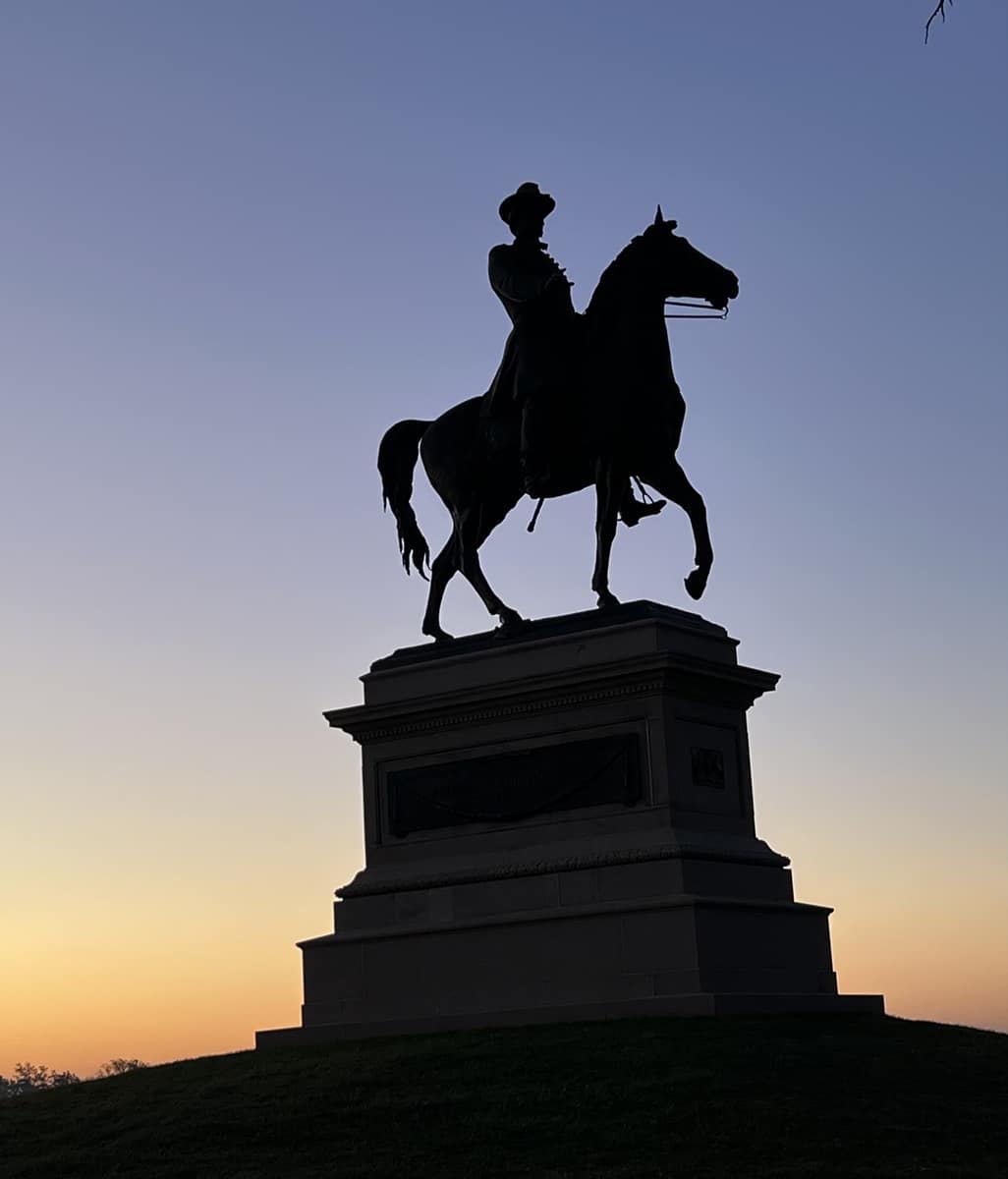
The grass, still wet with dew, and a low fog hanging over the distant valley greeted me as I crossed Baltimore Pike in the nearly silent early fall morning. The stillness was only interrupted by a passing car every few minutes. Following the same path taken by the II Corps reinforcements, directly opposite the Evergreen Gatehouse, I set out towards the Maj. Gen. Winfield Hancock equestrian monument and captured the following images.
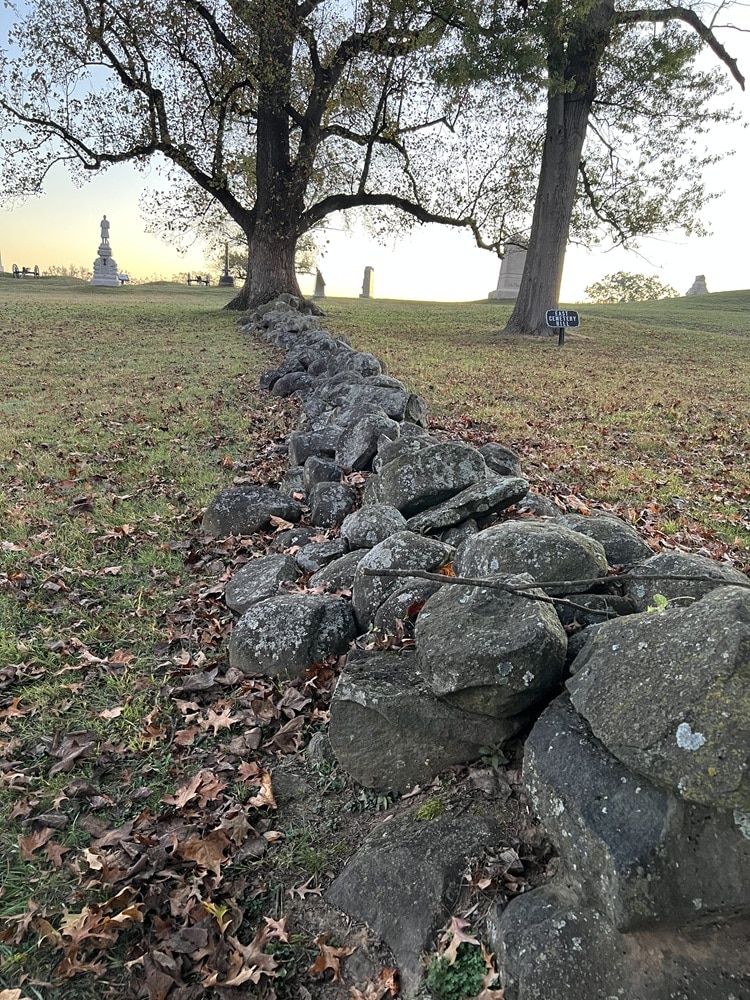
The first two images look directly over the ground of the Confederate advance showing the challenging terrain leading towards the Federal batteries on East Cemetery Hill. The third photo shows the slope of East Cemetery Hill leading from Baltimore Pike towards the Federal position. In the distance, II Corps monuments and markers stand at the location where Confederates briefly reached the peak and wild fighting ensued to drive them back. The final photo shows Maj. Gen. Winfield Hancock’s equestrian monument silhouetted in the morning sky. Hancock’s hand touched each day of the battle. Enthusiasts have debated which of Hancock’s contributions were most vital to the victory; however many point to his first hours upon arriving at this location. The rallying and redeployment of Federal soldiers in the I and II Corps after the first day’s battle was of extreme significance and perhaps changed the entire direction of events.
A battlefield as vast as Gettysburg undoubtedly has its most well known or recognizable sites; however, the areas of the battlefield not viewed as must-see locations also warrant a closer look. There are ample opportunities to take in the magic from Oak Hill or the Brickyard, to the site of the Willard and Barksdale collision on Plum Run. After taking these photos, my thoughts immediately turned to my next visit and future opportunities to capture the power of this hallowed ground.
Michael L. Giorgianni has taught social studies in Greensburg, Pennsylvania, for over 25 years with a lifelong passion for American History. He researches the Gettysburg campaign, western Pennsylvania Civil War units and individuals, as well as the Pittsburgh region during the Civil War. Mike also delivers presentations on various historical topics in the Pittsburgh region.


I especially love your second photo, of the cannon. Great job! I, too, find it valuable to revisit battlefields to get a different perspective or notice something new.
Thank you, I can’t visit Gettysburg enough.
Great photos, Mike. I certainly share your affinity for Cemetery Hill!
Thank you, just one part of Gettysburg that I must visit every time. Have a great weekend.
Thank you, just one area I have to visit every time I visit Gettysburg. My timing worked out to take these pictures.
Thank you, this an area of the battlefield that I have to visit each time. The weather and timing worked out to take these pictures.