On Loyalty: Lee’s Fleming Relatives
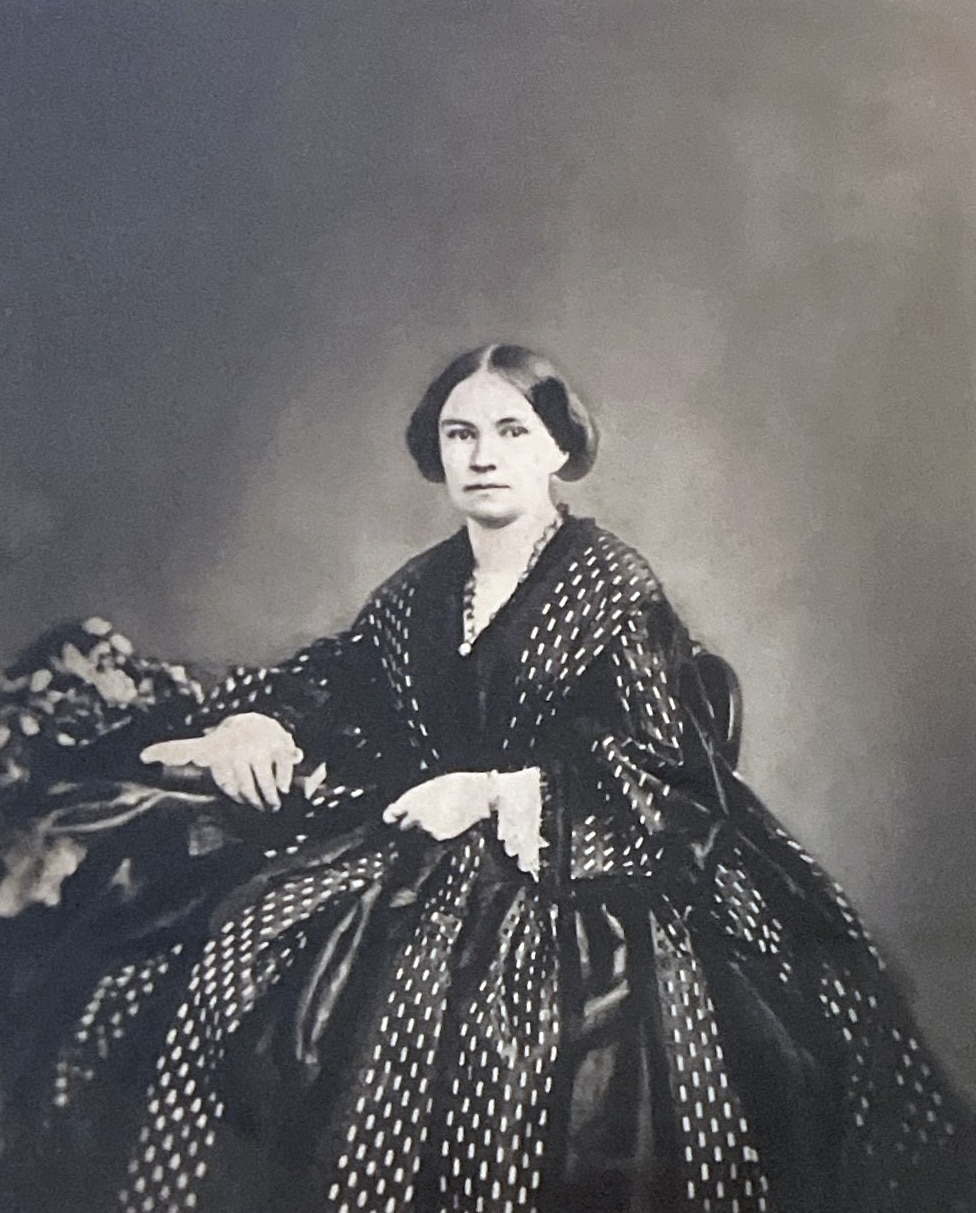
Mary Elizabeth Lee Fleming (1827-1902), second cousin to Robert E. Lee, was with child in Washington, D.C. when the Civil War erupted. Her husband, South Carolinian Robert F. Fleming (1816-1871), remained in Missouri to oversee his lucrative lead mine – one that was rumored to have manufactured bullets for both sides.
Having met and married while her father, Richard Bland Lee II, was stationed at Jefferson Barracks, Mary needed to decide where to wait out the war. Robert and Mary’s wartime whereabouts and connections remained murky, especially as their relatives took up arms against the Union. I had the pleasure of working with their direct descendants to piece together the Fleming-Lee Civil War story, which prompted us to reconsider the concept of family, duty, and loyalty.
The Lee family maintained several prominent estates in Northern Virginia. The Sully Plantation, which now stands as the Sully Historic Site adjacent to Dulles International Airport, was the residence of Robert E. Lee’s uncle, Richard Bland Lee I. His granddaughter, Mary, split her time between her childhood home and accompanying her father to his military outposts. She made a new life for herself as a comparative “frontierswoman” in Missouri, while her husband Robert managed tracts of Mine La Motte with older brother Thomas.
The Fleming family of South Carolina is a storied tree whose branches intertwined with American elite, after settling from Ireland. Robert Fleming Fleming (following the tradition of using a surname as a middle name) graduated from the University of Pennsylvania’s Medical School in 1826, although he did not use his medical degree in practice. Immediately after commencement, Robert and Thomas set out west for Missouri, where the rich lead mines beckoned young entrepreneurs. This was not the family’s original trade, as their immigrant father flourished in Charleston’s shipping industry. While establishing lead tracts, Robert courted and ultimately married Mary Lee in 1847. The Fleming brothers relied on enslaved labor in Missouri, a dependence that will influence their actions during the incoming war.
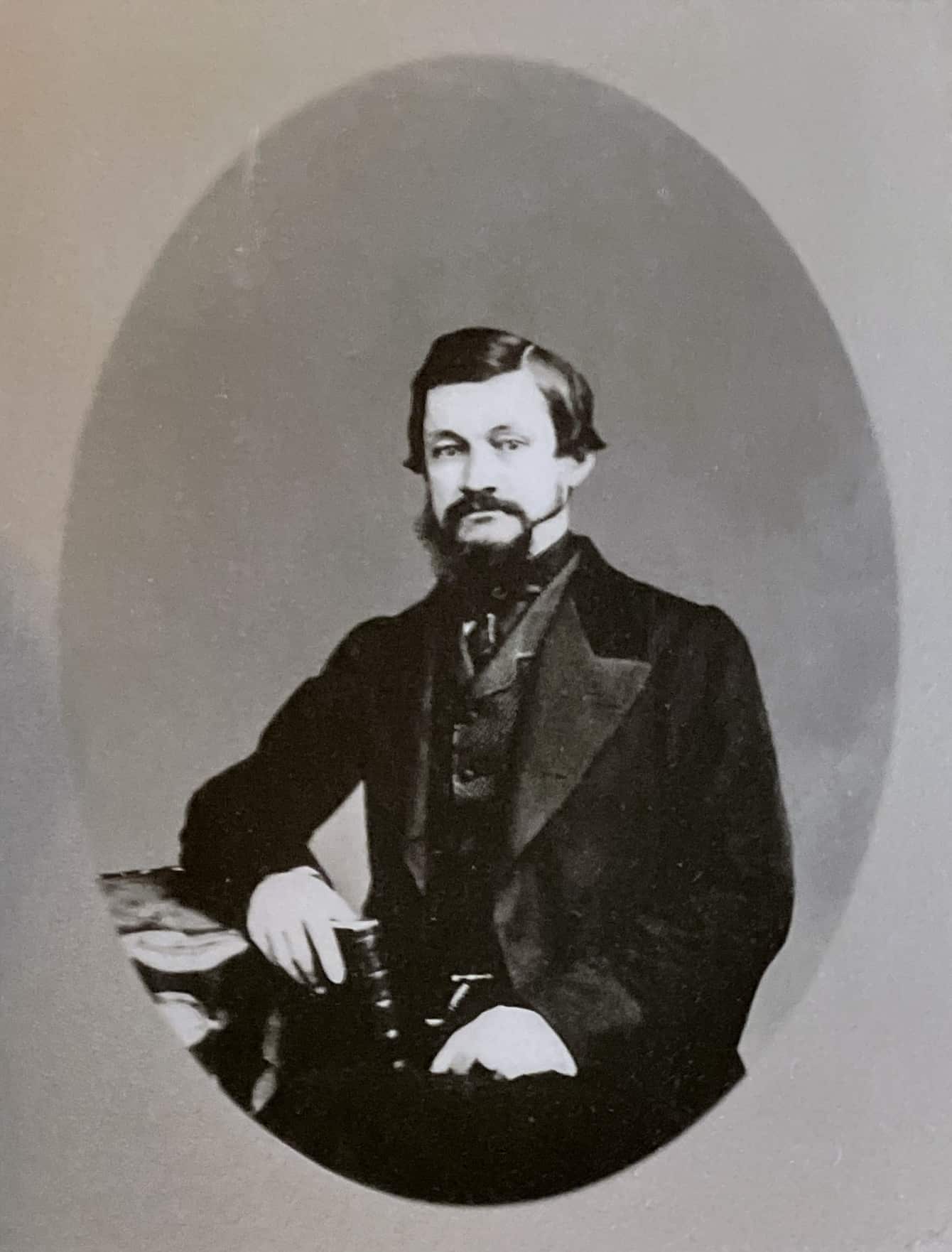
Robert Fleming Fleming (1816-1871) taken in 1847. Courtesy of the Fleming family.
Robert and Mary had six children, all of whom survived to adulthood.[1] Each child, except Alfred, was born in Missouri. In speaking with their great-great-grandchildren, it has always been unclear why Alfred was born in Washington, D.C. in 1861. We speculate that she was visiting family, as most of her direct Lee relatives still lived in Northern Virginia – including her famous cousin Robert. What has troubled us is where exactly their fifth child Julia was born.
There were two prevailing theories: 1) Robert and Mary fled into the Confederacy to wait out the war, and Julia was born amongst family; and 2) if Julia was born in Missouri, then Robert and Mary spent the war away from Dixie. While possible, it would not align with the rest of her immediate relatives’ actions. Robert and his brother Thomas were drafted in Missouri in 1863, yet not formally enlisted, but where was Mary? To find out for certain, we had to go back to the family tree.
I will start by saying that I was wrong. Yes, a historian can be wrong! I fell into the terrible trap of hindsight bias. Knowing that Robert and Mary moved to Alexandria, Virginia in 1868 and lived with her siblings, I first dug into those relationships on the Lee tree. Mary’s sister Myra had married a discharged Confederate officer in 1864, Charles Napoleon Chevalier, way out in North Carolina. At the time, this seemed like a plausible place for them to take refuge. It was also close to Robert’s remaining family in South Carolina.
The only problem was that I could not yet locate Julia’s birth record. She was truly the key to determining where the Flemings lived during the war. It was not until one of their descendants journeyed to Maryland’s Eastern Shore to trade stories with a newfound cousin, Julia’s great-great granddaughter. Through her personal archives and un-digitized letters, it was determined that Julia was born in Missouri, closing the door on her parents’ Confederate whereabouts.[2]
This realization did not resolve matters related to the Flemings’ political leanings. As enslavers and members of the Virginian Lee family, we figured that Robert and Mary defaulted to Southern allegiance. We also discussed prevailing theories that Robert himself enlisted in the Confederate Army as a doctor. That 1863 draft notice from Missouri was quite misleading, since it made it look like the Fleming brothers were eager to fight. As of this writing, neither Robert nor his four brothers enlisted on either side of the conflict.
Later in his life, Robert was rumored to have a private medical practice in Virginia, although no evidence been found. He did treat a cholera outbreak in 1849 in Jefferson Barracks, which earned him praise from his father-in-law Richard Bland Lee II. This was only recorded instance of Robert utilizing his medical skills publicly, scratching-off the notion that he could have been a Civil War surgeon.
In 1868, many Lees matriculated back to Virginia upon the state’s reentering the Union. Robert purchased a Lee family estate in Alexandria in 1870, which still stands as the Lee-Fendall House Museum, and moved in with his large family.[3] As if right on cue, Robert died the following year from tuberculosis. Mary carried on and ignited a torch of Lost Cause sentiment in Alexandria, which was passed onto her daughters and nieces as the new century unfolded. Rumor has it: Mary refused President Grant’s invitation to the White House out of respect for her Southern relatives and fallen dream of the Confederacy.
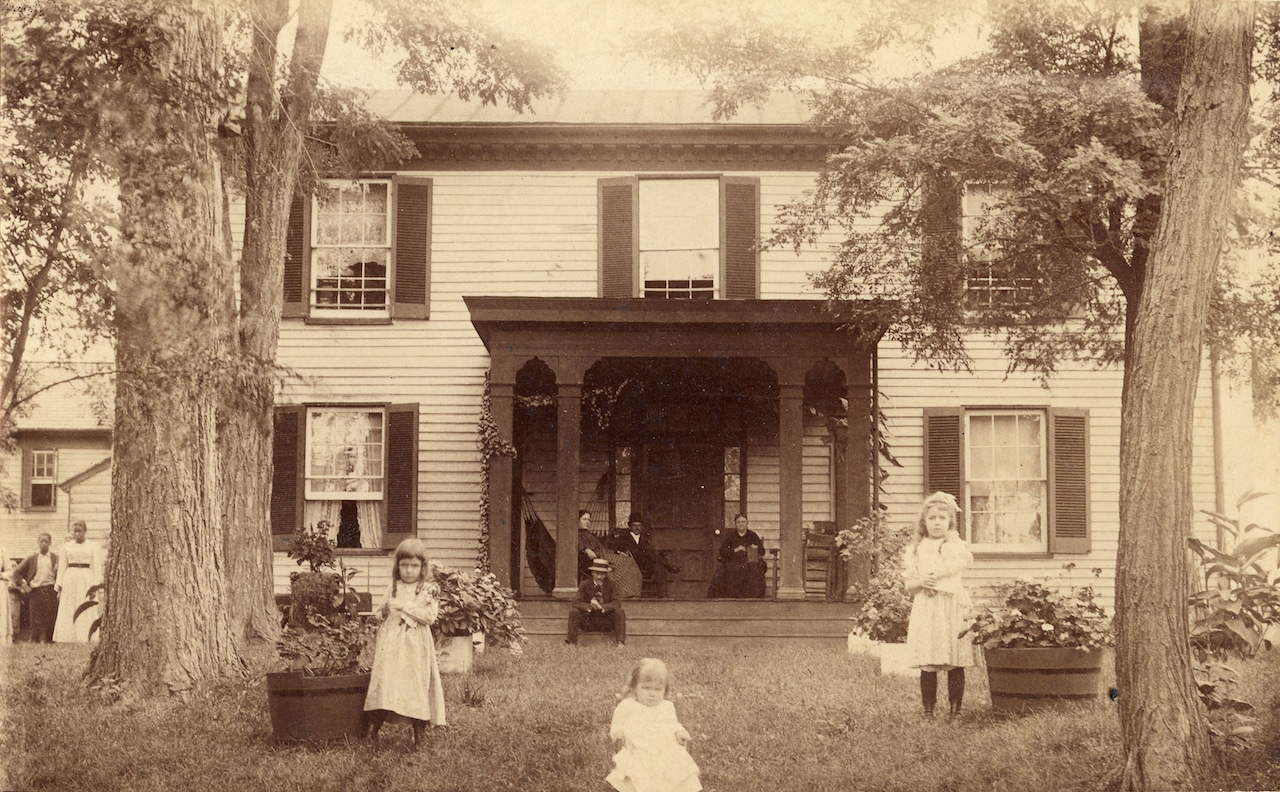
Until recently, an 1861 lithograph of Robert E. Lee hung in the South Bedroom of the Lee-Fendall House. That room depicts Robert and Mary’s time at the estate and how the Lee family transitioned in the postbellum years. Docents discussed the ardent family connections that Alexandrian Lees cherished after the war: their illustriously-famous cousin Robert and the legacy they felt called to carry. Mary’s children sold the house out of Lee family hands upon her death in 1902, extinguishing the flame.
What makes the Fleming’s Civil War story interesting is what they did not do, considering the family’s personal ties to the South and loyalty to their relatives. Does one need to relinquish all one knows for their “country”? We can wonder how the rest of the Lee family viewed their reclusiveness at the lead mine. Did the Flemings appear less supportive and patriotic since they remained in Missouri? Did Mary and her younger relatives push the Lost Cause in response to their sideline experience of the war? Maybe we should consider that loyalty and duty go beyond geographic boundaries. The living Fleming descendants have worked tirelessly to reckon with their ancestors’ role in slavery, secession and memory, hoping our generation can learn from their very history.
Endnotes:
[1] The children of Robert F. Fleming and Mary Lee Fleming in birth order: Richard Bland Lee (b.1848), Thomas (b.1851), Robert Fleming (b.1858), Alfred Walton (b.1861), Julia Prosser (b.1863), and Clarissa (b.1868).
[2] The Fleming descendants have maintained close connections through the genealogical efforts of cousins like Sarah Fleming, Catherine Murphy, and Henry Rust, who I had the privilege of collaborating with for this research.
[3] The Lee-Fendall House Museum & Garden is located at 614 Oronoco Street in Alexandria, Virginia.
Madeline Feierstein is an Alexandria, VA historian specializing in psychiatric institutions, military hospitals, and prisons. A native of Washington, D.C., her work has been showcased across the Capital Region. Madeline is the founder of Rooted in Place, LLC – a project dedicated to telling stories of historic sites and those once bound to them. She continues to lead efforts to document the sick, injured, and imprisoned soldiers that passed through Civil War Alexandria. Additionally, she supports the National Museum of Civil War Medicine. Madeline holds a Bachelor of Science in Criminology from George Mason University and a Master’s in American History from Southern New Hampshire University. Explore her research at www.madelinefeierstein.com.


Madeline, interesting story. Thank you for this. Question about the draft notice from Missouri. Was that issued by the CSA? If so, that itself is interesting. How did the CSA expect to enforce its notice?
It was issued by the CSA! And good point – the fact that neither Robert nor Thomas ended up enlisting speaks volumes to that particular county, at least.
Fascinating history. My family was from Mifflin Co., PA, and I know of no connections to So. Carolina. But the connection to Antrim, Ireland was through two brothers, Robert and James, who came to Virginia in 1607. The family moved to New York, then PA, then Alum Creek, Ohio north of Columbus. On to Iowa and then Nebraska after the CW. Not a Confederate amongst them, but family stories of conflicting sympathies leading up to the war, north and south of the Ohio river. If nothing else, the Lee connection demonstrates the competing factors in families throughout the country in formative times.