Son of a Gun? The Civil War Myth of “Pregnancy by Bullet”
ECW welcomes back guest author M.A. Kleen.
The American Civil War gave rise to a host of incredible stories, some heroic, some horrific, and some utterly bizarre. Among the most peculiar and enduring is the myth of the “bullet baby,” the tale of a woman who became pregnant by a Minié ball that passed through a soldier’s testicles. This extraordinary claim, which has been repeated and debated for over a century, is not a genuine medical anomaly but an elaborate hoax, born from a doctor’s desire to satirize the tall tales of his contemporaries.
The story originated in an 1874 issue of a trade journal called The American Medical Weekly. In an article titled “Attention Gynaecologists!—Notes from the Diary of a Field and Hospital Surgeon, CSA,” a physician named Dr. LeGrand G. Capers recounted a seemingly miraculous event he claimed to have witnessed during the battle of Raymond in Mississippi on May 12, 1863.
Born in South Carolina, Dr. Capers graduated from Jefferson Medical College in Philadelphia in 1858 and later served as a surgeon in the 21st Georgia Infantry and W.E. Cutshaw’s Battalion of Artillery. Both units served in the Eastern Theater. After the war, Capers settled in Vicksburg and became a respected physician.[1]

According to Capers’ story, he was treating a young soldier whose leg had been shattered by a Minié ball. The bullet, Capers wrote, “ricochetted off the bone and passed through his scrotum, carrying away his left testicle.” At the same moment, a young woman watching the battle from her nearby home let out a “piercing scream” and collapsed, having been struck in the abdomen by a stray bullet. Capers, believing her wound to be mortal, could only offer something to soothe her pain before his regiment was forced to retreat.
Six months later, Capers returned to the house and was astonished to find the young woman not only recovered, but also in the advanced stages of pregnancy, despite her insistence that she was a virgin. He later delivered a healthy baby boy. The story takes an even more fantastical turn when, three weeks after the birth, Capers was called to examine the infant and discovered a hard object in the child’s scrotum. He surgically removed it and found “a minnie ball, mashed and battered as if it had met in its flight some hard, unyielding substance.”
Capers, in his telling, had an epiphany: “The bullet had plunged through the testicle, carrying particles of semen and spermatozoa into the abdomen of the young lady, through her left ovary, and into her uterus, and in this manner impregnated her. There can be no other solution of the phenomenon.” To complete the storybook ending, the young woman and the soldier were introduced, fell in love, married, and went on to have two more children through conventional means.[2]
However, this incredible tale was not what it seemed. Dr. Capers had submitted the article anonymously, intending it as a satirical commentary on the exaggerated and often unbelievable war stories and claims of “wonderful operations before unheard of in the annals of surgery” that were commonplace among his fellow surgeons in the post-war years.
Unfortunately for Capers, the journal’s editor, Dr. E.S. Gaillard, recognized his handwriting and published the piece with Capers’ name attached, adding a winking editor’s note in a subsequent issue that revealed the story as a joke. The editor noted that Capers “disclaims responsibility for the truth of that remarkable case of impregnation by a minnie ball,” and that “he tells the story as it was told to him.”[3]
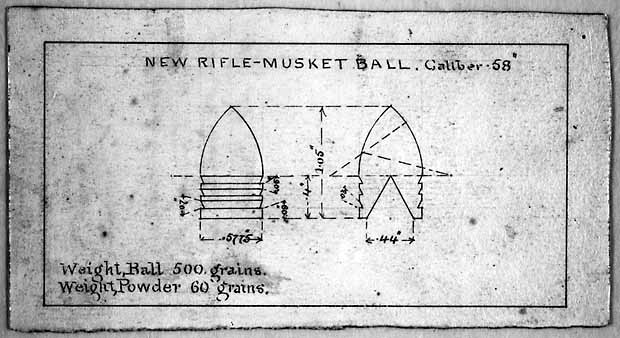
Despite this public debunking, the “Minié Ball Pregnancy” took on a life of its own. In an era where medical knowledge was still developing and the horrors of the Civil War were fresh in the public consciousness, the story was sensational enough to be repeated as fact. The prestigious British medical journal The Lancet reported the story as a “veracious chronicle” in 1875, and it was included in the 1896 book Anomalies and Curiosities of Medicine. The tale continued to circulate for more than a century, appearing in publications such as American Heritage, The Old Farmer’s Almanac, and The Atlantic, and was even the subject of a “Dear Abby” column.[4]
The advent of television brought the myth to a new generation. The popular science show MythBusters dedicated an episode to testing the plausibility of a “bullet-mediated pregnancy,” concluding that it was scientifically impossible. Their experiments demonstrated that sperm could not survive the extreme heat and friction generated by a fired bullet.[5]
In a strange case of life imitating art, a similar, and equally false, story surfaced in 1999, this time set during the Bosnian conflict. This more recent hoax, involving an American nurse, demonstrated the enduring appeal of such “miracle birth” narratives, which have appeared in various forms throughout history and across different cultures.[6]

The independent film Son of a Gun (2019) invents an explanation for why Dr. Capers would circulate such a story. He was, according to writer/director Travis Mills, protecting a young woman from scandal who became pregnant out of wedlock. The film unravels three separate versions of events, with different actors and actresses playing the various roles. Each version leads the audience further away from fantasy and toward the scandalous truth. Unfortunately, its technical flaws overwhelmed what otherwise would have been an interesting exploration of the “bullet baby” myth.
The Civil War produced a vast number of casualties with horrific wounds from new types of ammunition like the Minié ball. This led to a wealth of stories about soldiers surviving seemingly impossible injuries. Tales of bullets being removed from improbable places or soldiers making miraculous recoveries were common. For example, there were documented cases of soldiers who were shot in the mouth, swallowed the bullet, and later passed it, or stories of rats supposedly performing surgery by gnawing off protruding bone fragments from a soldier’s skull.[7]
In this environment of suffering and extraordinary events, it is not surprising that such a fantastical story could take root and flourish. Dr. Capers’ “caper,” intended as a clever piece of satire, inadvertently created a piece of folklore that has outlived its creator, and it remains a curious footnote in the history of the Civil War.
M.A. Kleen is a program analyst and editor of spirit61.info, a digital encyclopedia of early Civil War Virginia. His article “‘A Kind of Dreamland’: Upshur County, WV at the Dawn of Civil War” was recently published in the Spring 2025 issue of Ohio Valley History.
Endnotes:
[1] Lillian Henderson, Roster of the Confederate Soldiers of Georgia, 1861-1865, Vol. II (Hapeville: Longino & Porter, Inc., 1960), 839; The Vicksburg Daily Herald, December 2, 1877.
[2] L.G. Capers, “Notes from the Diary of a Field and Hospital Surgeon, C.S.A..” The American Medical Weekly 1, no. 19 (1874): 233-4.
[3] E.S. Gaillard, “Editor’s Note,” The American Medical Weekly 1, no. 21 (1874): 263-4.
[4] Jan Harold Brunvand, The Choking Doberman and Other “New” Urban Legends (New York: W.W. Norton & Company, 1984), 134-8.
[5] “Son of a Gun,” MythBusters, Season 3, episode 7. Discovery Channel. Aired March 30, 2005.
[6] Harry Herr, “Bullet Babies: The Repeating Nature of the Medical Hoax,” The International Journal of Urologic History 1, no. 2 (2022): 74.
[7] Tracey McIntire, “Surgeon Rat and Other Strange Tales from Civil War Medicine,” National Museum of Civil War Medicine, July 8, 2024. https://www.civilwarmed.org/surgeon-rat/


Wam bam thank you mam.
Well, now we know why guys say, “I’d give my right nut…”
Was it a shotgun wedding?