Incremental Decisions on Uneven Ground: Terrain and the III Corps Advance at Gettysburg
ECW welcomes guest author Corey Brehm.
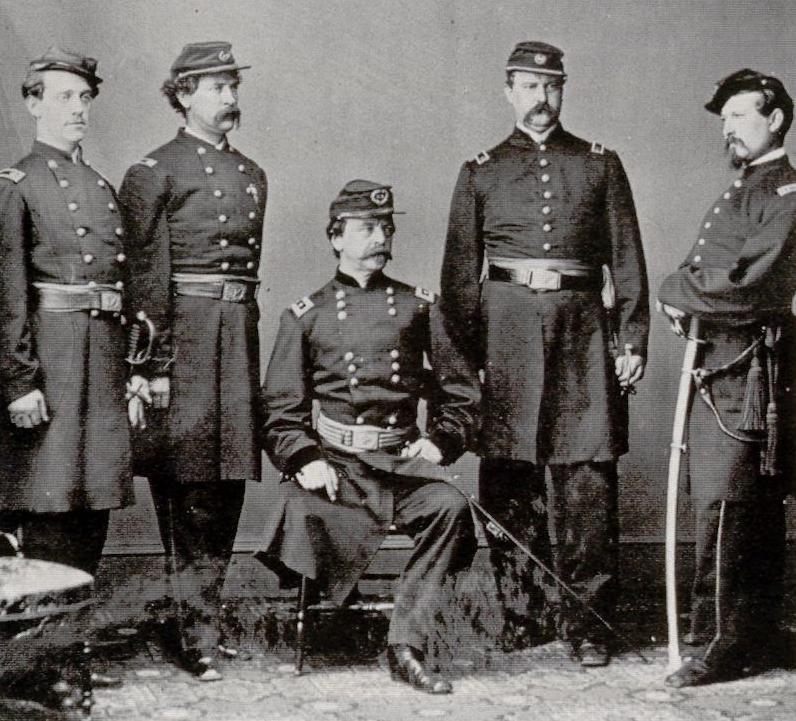
Few actions at Gettysburg have drawn more sustained criticism than Maj. Gen. Daniel E. Sickles’s decision to move the Union III Corps forward from its intended position along Cemetery Ridge to the Peach Orchard–Emmitsburg Road line on the afternoon of July 2, 1863. Often described as a single, rash act of insubordination, the movement is typically judged in hindsight as both unnecessary and disastrous. Yet such characterizations flatten what was, in reality, a gradual process shaped by terrain, elevation, and perceived tactical vulnerability. When examined closely, the advance of the III Corps appears less as a sudden lunge forward and more as a series of incremental decisions driven by the ground itself.
The Intended Position and Its Problems
The III Corps was originally meant to occupy the southern extension of the Union line along Cemetery Ridge, tying in with the II Corps to the north and anchoring the army’s left toward Little Round Top. On maps, this position appears logical and continuous. On the ground, however, it presented problems that would have been immediately apparent to an officer responsible for holding it with limited manpower.
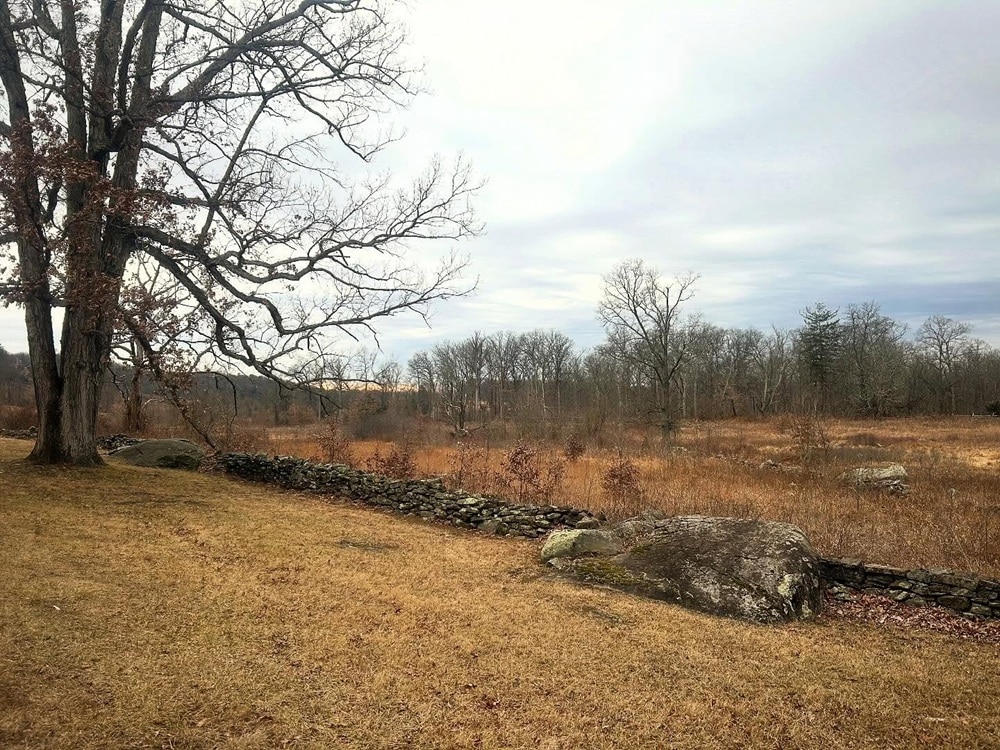
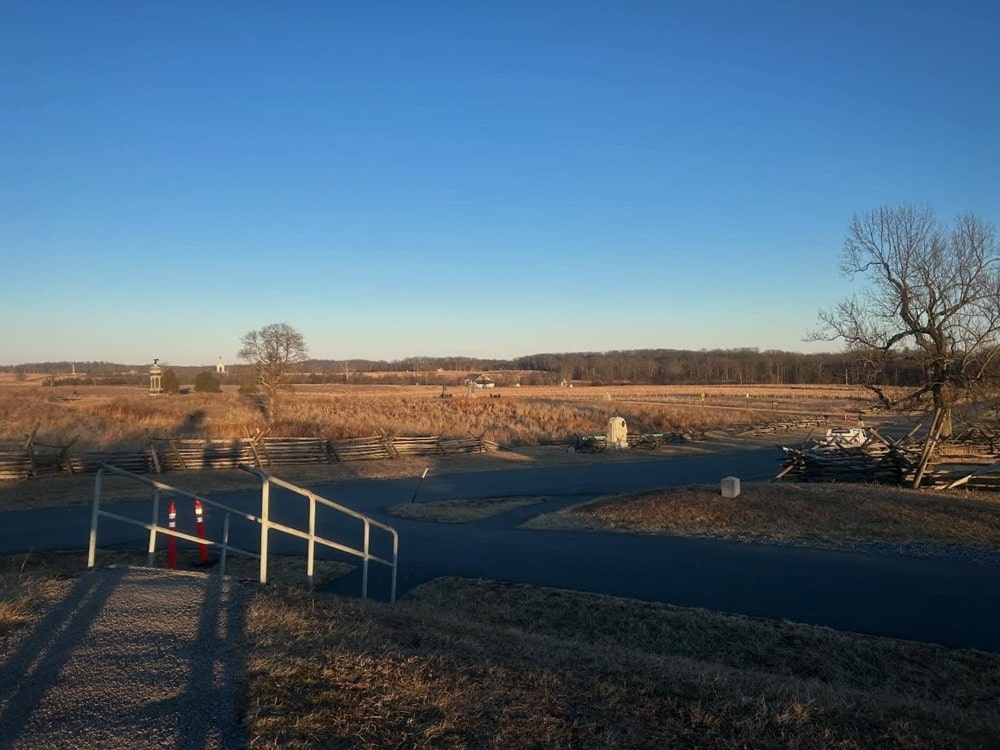
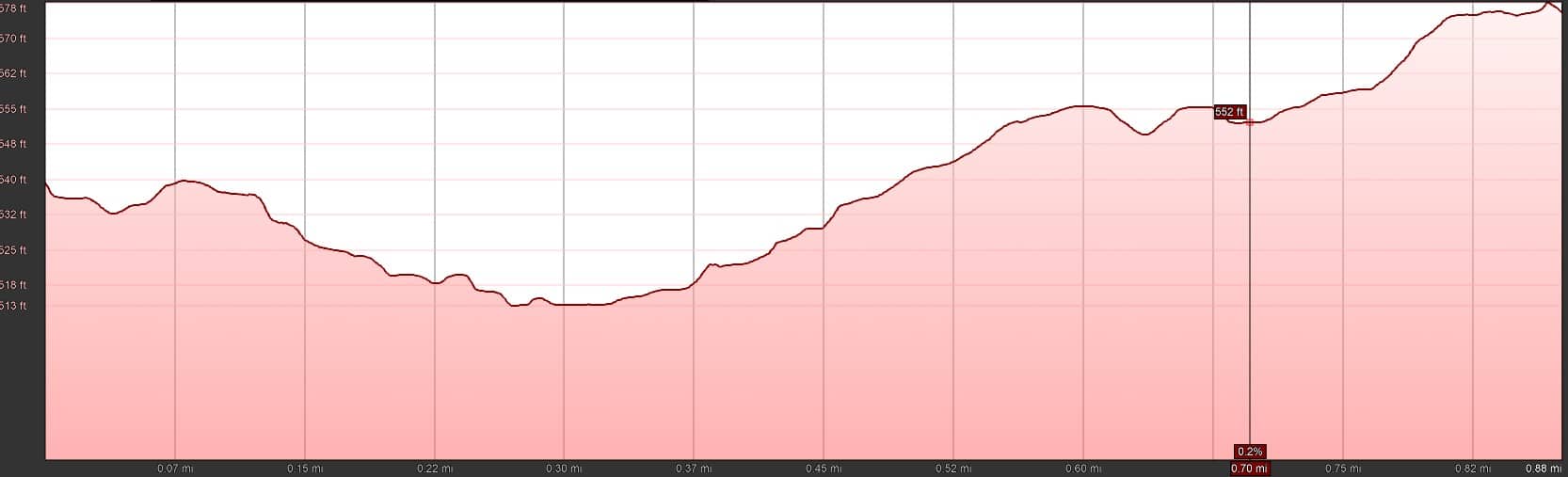
The low ground along the Emmitsburg Road corridor and the undulating terrain east of it created areas of dead ground that obscured observation and invited enemy approach. From Sickles’s perspective, the slight rise at the Peach Orchard—where the Emmitsburg and Wheatfield roads intersected—offered superior visibility and a seemingly stronger artillery platform. The higher elevation west of the intended line suggested that Confederate forces advancing from Seminary Ridge or the southern ridges might gain tactical advantage if left uncontested.[1]
Terrain Composition and Artillery Logic
Artillery considerations played a critical role in shaping Sickles’s thinking. Civil War commanders routinely sought elevated ground not merely for defense, but for observation and counter-battery fire. The Peach Orchard ridge, though modest in height, provided clearer fields of fire and fewer obstructions than the low, irregular ground closer to Cemetery Ridge.
Once artillery began to occupy forward positions, infantry alignment followed almost inevitably. Guns placed ahead of the main line required protection, and regiments deployed to support them gradually extended the corps outward. In this sense, the movement of the III Corps did not begin as a wholesale relocation, but as a tactical adjustment that gathered momentum.[2]
An Incremental Advance, Not a Single Decision
Descriptions of Sickles’s action often imply a single moment of decision; a deliberate rejection of orders followed by an immediate advance. The deployment itself, however, suggests something more gradual. Units were shifted forward in stages, positions assessed and adjusted as the line extended south and west. Each step forward appeared to resolve a local problem; improving visibility here, strengthening artillery placement there, while simultaneously committing the corps more deeply to an exposed salient.
As the corps stretched along the Emmitsburg Road and angled east toward the Wheatfield, opportunities for easy withdrawal diminished. The line’s length increased, reserves thinned, and lateral support weakened. What began as a series of adjustments became, cumulatively, an overextension that could not be easily undone once Confederate pressure mounted.[3]
Consequences and Context
Recognizing the incremental nature of Sickles’s movement does not absolve him of responsibility for the III Corps’ vulnerable position or the heavy casualties that followed. The final alignment created a pronounced salient, exposed to attack from multiple directions and difficult to reinforce. Yet understanding how terrain and step-by-step deployment shaped the decision-making process complicates the narrative of recklessness often associated with the advance.
Rather than a single act of defiance, Sickles’s movement reflects the challenges of translating abstract orders into practical dispositions on contested ground. Terrain, elevation, and the perceived need to deny key features to the enemy exerted a powerful influence—one that helps explain how the III Corps arrived at the Peach Orchard not all at once, but through a sequence of decisions that, taken individually, appeared tactically sound.
Corey Brehm is a Military History major at American Military University with a focus on Civil War studies. His first article will appear in Gettysburg Magazine #74 in Spring 2026, reflecting his research into tactical decisions and historical analysis.
Endnotes:
[1] Harry W. Pfanz, Gettysburg: The Second Day (Chapel Hill: University of North Carolina Press, 1987), 91–92.
[2] James A. Hessler, Sickles at Gettysburg: The Controversial Civil War General Who Committed Murder, Abandoned Little Round Top, and Declared Himself the Hero of Gettysburg (El Dorado Hills, CA: Savas Beatie, 2010), 132.
[3] Stephen W. Sears, Gettysburg (Boston: Houghton Mifflin, 2003), 263–266.


Very interesting analysis, but what it lacks are primary sources backing up the assertion that Sickle’s redeployment happened peacemeal or naturally followed from forward deployment of artillery. Surely Sickles himself wrote a justification of his actions that day? Writing about military decisions without quoting the decision makers themselves seems … incomplete. I do appreciate the data-driven terrain analysis though. It’s something critically lacking from the usual narratives. Just don’t forget the human element.
Not being in the military or being in Sickle’s shoes, but as stated before, he was learning how to command a Corps on the fly. I think the one big painful and deadly lesson that he learned was his experience at Hazel Grove, where the Confederate artillery gained this high ground and as a result pummeled his Corps deployed at a lower position just 2 months before at Chancellorsville. I think he wanted to avoid this situation from repeating itself at Gettysburg.
Sickle’s certainly remembered the disaster at Hazel grove (Chancellorsville) and felt he knew the best location for his corps. In my view, the incremental moves made first by artillery, followed by Birney’s Division, and finally the move forward by Humphrey’s Division in grand fashion seen by the Union II Corps may have been to intentionally screen his insubordination of Meade’s orders. Sickles had sent for several confirmations and avoided direct meetings with Meade earlier in the day stating that he simply did not know where to place his corps. These orders were clear and not difficult to understand. His actions were intentional, but may have been with good intentions.
Interesting but the statement “a sequence of decisions that, taken individually, appeared tactically sound” exposes Sickles’ incompetence as a corps commander. Those “decisions” – even if one can appropriately break things down that way – resulted in (1) doubling the length of a line already thinly-held; (2) removing the connection of his right flank with II Corps; and (3) creating a flawed salient. All based on his fixation with the “higher ground”, oblivious to everything else.
How long of an evolution, in hours, was it from Sickles first movement of his artillery until his entire Corps had been redeployed?
Topographic assessment very helpful! Well done!
I think he was drinking from the same canteen as Barlow.
I cover this in detail in “Stand to It and Give Them Hell.” (Savas Beatie, 2014). Sickles started reconnaissance and fence destruction as early as 9 am on July 2. Skirmish activity along the Emmitsburg Road indicate something was going on along the Confederate line. The terrain, according to my research, affected his decision to occupy the Emmitsburg Road. He had skirmishes out along his front clear to the southern ends of his line.