Abraham Lincoln’s visit to Fredericksburg
ECW welcomes guest author Natalie Suding.
In May 1862, the American Civil War had been going on for a year, and the Union’s plan to end the war in the Eastern Theater was to move southward towards Richmond and seize the Confederate capital. From April to May, Maj. Gen. Irvin McDowell, along with 30,000 soldiers, moved into Fredericksburg, Virginia in hopes of moving southward.[1]
This occupation was a peaceful one, per orders of the appointed military governor, Brig. Gen. Marsena Patrick, who prohibited looting or destruction of any homes or property in the town.[2] The troops flew a flag over town and created a headquarters close to the railroad at the bank called “Farmer’s Bank.” Also, when the Union troops were in the town, over ten thousand enslaved people from the nearby area took the opportunity to escape to Union lines for their freedom.[3] Soon, these troops were moved west in May to assist in the Shenandoah Valley.
Hoping to boost morale and review the troops, on May 23, 1862, President Abraham Lincoln visited the city along with Secretary of War Edwin Stanton.

Lincoln visited Chatham, a plantation house that the Union occupied as a headquarters during this time and during the battle of Fredericksburg. At Chatham he was given an artillery review, visited commanders and troops, and provided dinner. It was likely he looked over the Rappahannock River and took in the view of the town. They then crossed the river and went to the headquarters to meet with Fredericksburg’s military governor, Brig. Gen. Marsena Patrick. After speaking with Patrick, Lincoln and Stanton left the building to give a speech.
An account of this reads: “After taking lunch with General Patrick and in response to the calls of some troops present, President Lincoln from the front steps made a short but splendid address. The writer of this, sat on the steps of the St. George’s Church, on the opposite side of the street and heard President Lincoln’s speech.”[4]
James Hunnicut, a journalist of the Christian Banner, remembered how Lincoln and Stanton “rode in a carriage drawn by four fine iron-gray horses. They crossed the Rappahannock River on the canal-boat bridge, and passed up Princess Anne Street to the Farmer’s Bank, the head-quarters of General Patrick, where the carriage stopped about five minutes, and then moved off, as we were informed, to visit some camp of soldiers out of the town. A large escort accompanied the distinguished visitors. There were no demonstrations of joy, however, from any of the citizens.”[5]
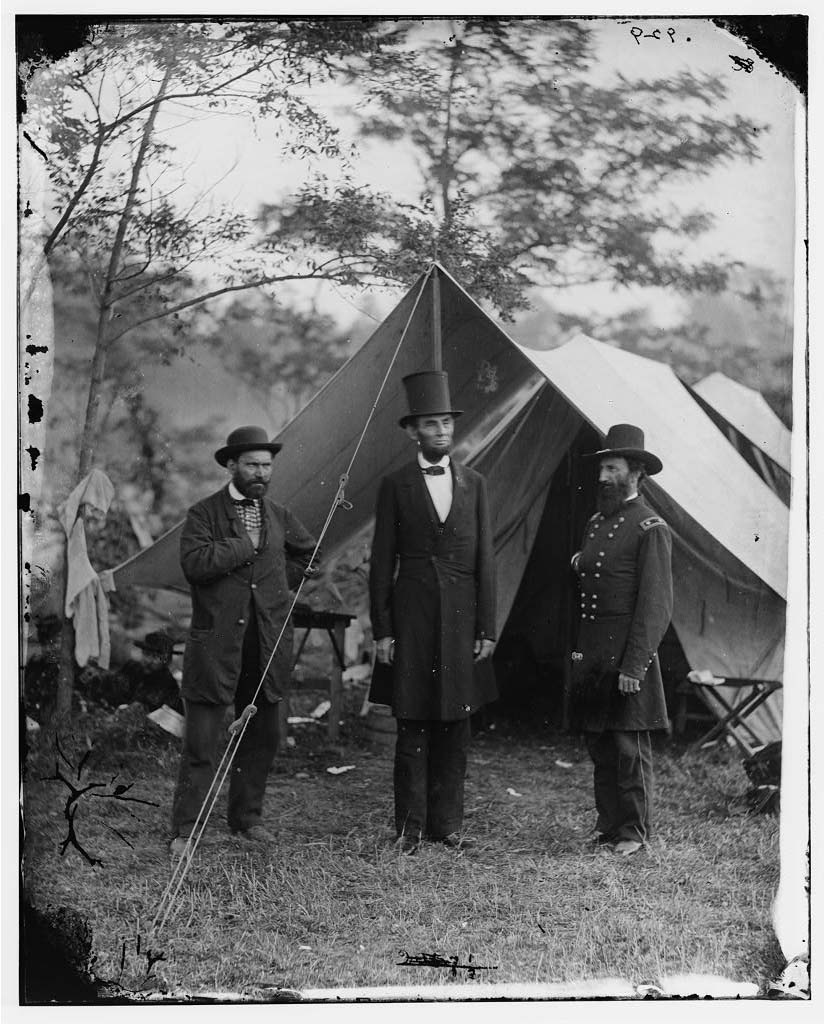
There is no account of what this speech was about, other than that it was to boost the morale of the Union soldiers on campaign.
Betty Herndon Maury, who was known in the town to be pro-Confederate, remembered that Fredericksburg’s mayor “did not call on him [Lincoln], and I did not hear a cheer as he passed along the streets. The streets are full of wagons and soldiers.”[6] Many citizens of Fredericksburg were not happy that the president came to the city, and many, according to the account, refused to go out in the streets to meet the president.
Patrick took Lincoln to see some troops at Marye’s Heights, a future landmark of the battle of Fredericksburg. As historian Edmund Raus wrote about this visit in his history of the 23rd New York Volunteers, “‘the troops presented arms, the colors drooped, officers saluted, drums beat, trumpets sounded, and a salute of twenty-one guns [was] fired.’ Whenever the soldiers caught sight of the president they spontaneously cheered… At one point Lincoln walked his horse along the line of a brigade, asking the name of each regiment and ‘talking with the boys as though they were old friends.’”[7]
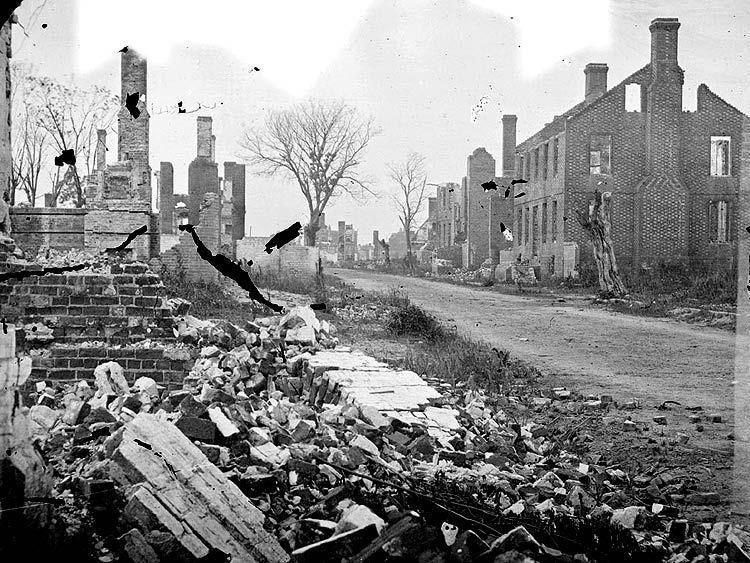
After seeing troops and the landscape, little did Lincoln know that he saw what would be a battlefield in a few short months, one that became a major loss for the Union with 12,600 Federal casualties and a decline in morale across the Army of the Potomac.
Natalie Suding is a podcaster for The Rabbit Hole History and loves to study history in her free time. She studied history in college and has always had a passion for Abraham Lincoln since she was little.
Endnotes:
[1] “National Park Civil War Series: The Battle of Fredericksburg,” n.d. https://npshistory.com/publications/civil_war_series/15/sec5.htm.
[2] “War First Came to Fredericksburg in the Spring of 1862.” season-01 1862. https://pubs.nps.gov/eTIC/EVER-GARI/FRSP_326_147377_0001_of_0001.pdf.
[3] Henderson, Steward. “Self-Emancipation: The Act of Freeing Oneself from Slavery.” American Battlefield Trust, November 2, 2020. https://www.battlefields.org/learn/articles/self-emancipation-act-freeing-oneself-slavery.
[4] John T. Goolrick. Historic Fredericksburg: The Story of an Old Town (Richmond, VA: Whittet & Shepardson, 1922), 162
[5] James Hunnicut. Christian Banner, May 27, 1862.
[6] Betty Herndon Maury Maury. Betty Herndon Maury Maury diary. 1861. Manuscript/Mixed Material. https://www.loc.gov/item/mm77093930/.
[7] Edmund J. Raus, Jr. Banners South: A Northern Community at War (Kent, OH: Kent State University Press, 2005), 162.


And royally pissed off McClellan when he didn’t send McDowell south to join him. One of numerous excuses he had for his failure.
The Union troops took more souvenirs in December, when their sojourn was much less pleasant.
Did Lincoln travel by train to Fredericksburg? Did he stop anywhere along the way there or back? The ECW battlefield tour was Fredericksburg City last year, and I recall the mayor’s home being one of the stops. Thank you for a nice article.