John Brown in Lake Placid
Every four years, the Winter Olympics never fails to take my mind back to the 1980 games in Lake Placid, where a young and inexperienced U.S. hockey team defeated the Soviet Union in the Miracle on Ice.
Lake Placid will always be tied to that triumphant event in the Cold War, but the town’s significance to American history long predates its Olympic legacy. From 1849 to 1859, present-day Lake Placid served as the homestead of infamous abolitionist John Brown.
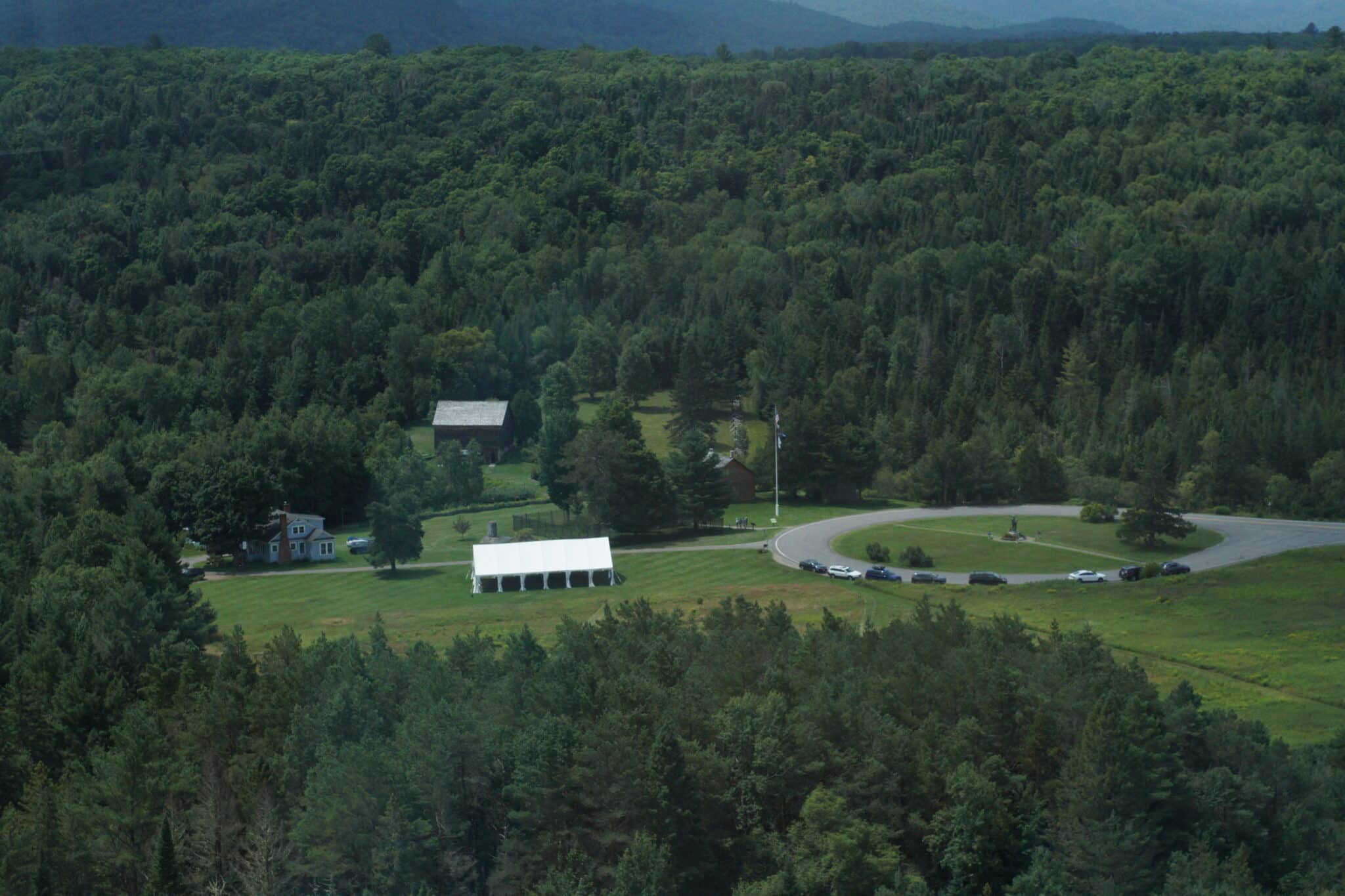
Brown arrived in upstate New York following a period of financial strife. Several failed business forays had squandered his fortunes, and the Panic of 1837 multiplied his losses. He followed a lead from fellow abolitionist and reformer Gerrit Smith, who had begun buying large tracts of land in the Adirondack Mountains to give to free Blacks. Brown convinced Smith to sell him a small piece of land just south of present-day Lake Placid. (The nearby town of North Elba, New York was not incorporated until the following year in 1850.)[1]
There, Brown intended to help enfranchise free African Americans by lobbying for their right to vote and teaching them valuable skills like clearing land. For two years, the family rented a small cabin from a local man named Flanders while they built their permanent farm.[2]
Brown called his home and the surrounding community “Timbuctoo” because it was so remote. In 1859, a visitor to the homestead described the surrounding area:
On opening the front door, a glorious sight saluted me. Directly in front, apparently—perhaps from the thinness of the atmosphere—within two or three miles, but really much further off, looms up a rugged chain of the Adirondacks; broken, jagged[,] massive, and wonderfully picturesque. Off the left stands, in solitary grandeur, the towering pyramid called “White Face”—deriving its name from the color of the rock, on its summit. The Saranac and Ausable flow at each side of it; and just at its base, they tell us, is Lake Placid, a sheet of water famed through all this country of fine lakes for its exquisite beauty.[3]
Much of this land remains the same today. (White Face Mountain even hosted alpine skiing during the 1980 Winter Olympics.) However, the region’s remoteness also had its drawbacks. Much like his previous endeavors, Brown largely failed to encourage many African Americans to permanently settle in the area, and the rugged terrain proved challenging to clear and farm. Instead, Brown and his family aided free Blacks and fugitive slaves in seeking freedom in nearby Canada.[4]
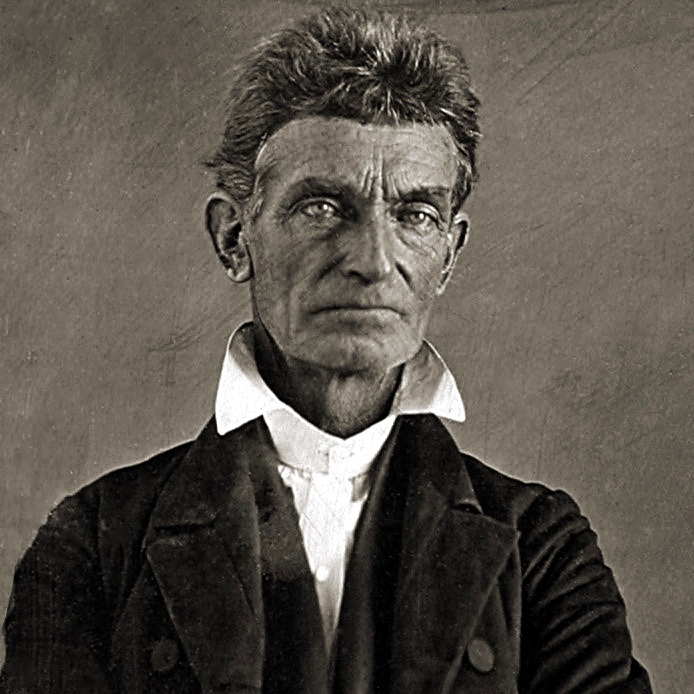
For the next several years, Brown remained on his New York farm in between his travels to Ohio and Kansas. Over the course of a decade, he only lived on the homestead for six inconsecutive months. Nonetheless, the farm and its remote location provided a haven for his family away from the public eye.
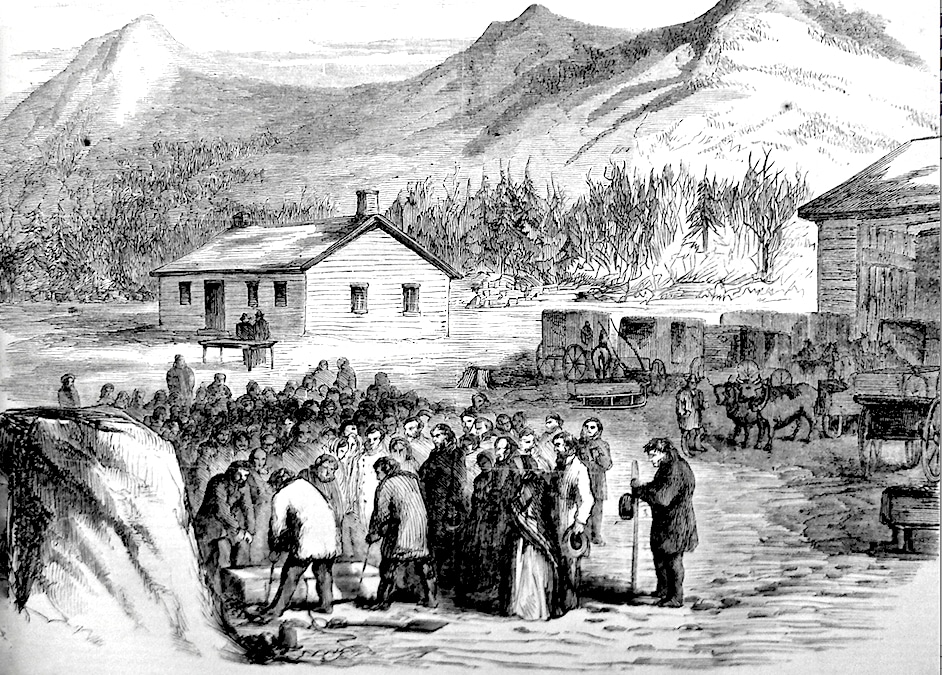
Following Brown’s raid on Harpers Ferry and his subsequent execution, his wife Mary brought his body back to New York and arranged for his burial on their farm. On July 4, 1860, the farm was the site of a large memorial service. Over 1,000 people attended, including several of Brown’s followers and prominent abolitionists.

Contrary to Brown’s wishes, his family did not remain in New York for long. By 1860, his three oldest sons had departed to live in Ohio. In 1863, Mary Brown followed their son Salmon and his family to live in California. In her absence, she leased the farm to Alexis Hinckley, Salmon’s brother-in-law. Two years later, in 1865, he purchased the property from her but allowed her ownership of the small parcel of land that contained her husband’s grave.
By the end of the Civil War, the farm—where John Brown’s body lay “a-mouldering in the grave”—had become a place of pilgrimage for abolitionists, African-Americans, and tourists. In 1870, journalist Kate Field purchased the home, alongside nineteen co-sponsors, for the purpose of preserving it as a historic site. Field’s newly formed John Brown Memorial Association oversaw the property for nearly two decades until the state of New York acquired it in 1896. The farmhouse underwent a restoration in the mid-twentieth century that returned it to its 1850s appearance.[5] There it stands today, adjacent to the martyred abolitionist’s storied grave, and marking Lake Placid’s firm place in American history.
[1] W.E.B. DuBois, John Brown: A Biography, ed. John David Smith, (New York: M.E. Sharpe, Inc., 1997), 51.
[2] Oswald Garrison Villard, John Brown, 1800-1859, A Biography Fifty Years After (New York: Houghton Mifflin, 1910), 72.
[3] “The Burial of John Brown,” New-York Tribune, December 12, 1859, Newspapers.com, (accessed February 16, 2026).
[4] Sandra Weber, John Brown in New York: The Man, His Family, and the Adirondack Landscape (Albany, NY: State University of New York Press, 2025), 74.
[5] “John Brown’s Home Undergoes a Century of Change,” Lake Placid News, February 22, 1968, NYS Historic Newspapers, (accessed February 17, 2026).


“Martyred abolitionist”? He attacked a Federal armory in search of weapons to use in a planned massacre of thousands of US citizens. However anyone feels about slaughter as a pathway to social justice, going after a US installation wasn’t a rational idea, even if his thought was that they’d agree with him and hand weapons over willingly. Before anyone mentions Sumter, there is a difference between warning shots to deliver a message that was refused in verbal form repeatedly, with no intent of anything besides ending an association, and having Brown’s specific intent to slaughter as many people as possible.
I don’t know that I would consider the attack on Fort Sumter as “warning shots,” but I do agree John Brown leaves behind a very complicated legacy. I’m not saying I believe he should be “martyred,” necessarily, but the fact is that he was indeed martyred by many like-minded radical abolitionists. Therefore, his grave (and Lake Placid home) became the site yearly pilgrimages for some who considered him a martyr to the cause of abolition.