Two Letters to John Slidell
ECW welcomes back guest author Walt Young.
Recently, I attended a Civil War Roundtable talk covering the life of Confederate Gen. Edmund Kirby Smith. The speaker discussed Smith’s cause, and that of his fellow Confederates, as consistent with the Declaration of Independence’s license for a people to throw off a “despotic”, or dictatorial, government. Students of the Civil War will likely be familiar with, for example, Jefferson Davis’s use of “the consent of the governed” in justifying Confederate secession from the U.S. They will also be able to grasp the irony of Confederates deploying this argument while they aggressively defended an inherently despotic system of slavery.[1]
However, I wanted to evaluate the speaker’s claim in a different context: the Confederacy’s foreign policy. The way a country, or prospective country, presents itself to the world can tell us a lot about its values, such as its attitude toward human freedom and despotic governments in areas where it might have influence. While the Confederacy spent almost its entire history engaged in the Civil War (and therefore unable to project large amounts of power abroad), one nearby conflict presents just such a case study. That conflict is the French invasion of Mexico, which resulted in the installation of a foreign dictator, Emperor Maximilian I.
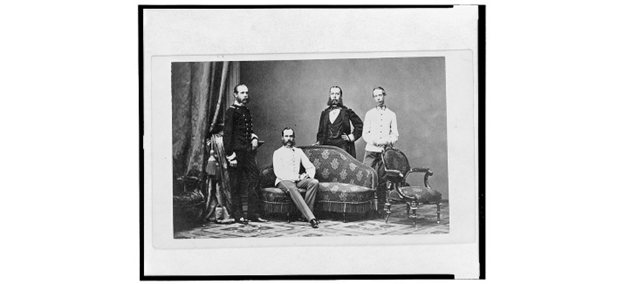
Two very different letters to John Slidell, a Confederate diplomat in Paris, illustrate connected, but different, potential Confederate approaches to this conflict. Their decisions would say a lot about the contradictions in Confederate values and presentation to the world.
Because of France’s power on the world stage, and Mexico’s close location, both the United States and the Confederacy had to tread carefully. By June 1863, France, despite early setbacks, had taken Mexico City and deposed President Benito Juarez, with an invitation to Maximilian soon to come. Under pre-war U.S. policy, this action would have met U.S. opposition. In 1823, President James Monroe laid out his famous Monroe Doctrine, treating future European colonial projects in the Western Hemisphere as illegitimate, in an address to Congress.[2] The Confederacy was not bound by previous U.S. policy, but often sought to tie its project to the legacy of the American Revolution, in which Americans had thrown off a European colonial government. [3]
A letter to Slidell, written in August 1863, recommends that Slidell use the threat of the Monroe Doctrine to secure better treatment of the Confederacy by European powers. The writer of this letter signs his name only as “Gustave.” However, context clues such as the date and location of the letter (August 17 in Charleston, South Carolina), and the inclusion of military details in the ongoing U.S. siege of Charleston, suggest that the writer could be Gen. P.G.T. Beauregard, who rarely used his first initial in correspondence. “Gustave” writes the following:
“As it is evidently to the interest of England that we should mutually destroy each other, and the policy of the European powers that the Union should never be reconstructed, is it not then our true policy to take advantage of our late reverses to speak out boldly and fearlessly to France, England, and Spain, and to inform them that unless we are immediately recognized we shall take steps to put an end to this exhausting struggle, and reassert at once the Monroe doctrine, and in the course of time proclaim the independence of the Canadas and of Cuba. All of which we shall be able to effect when once reunited. Nations, like individuals, are only influenced by their own interests. Hence let us shape our course accordingly. Not that I am, however, in favor of reconstruction. I would sooner die!” [4]
Gustave’s letter does not commit the Confederacy to a course of opposition to French designs on Mexico. However, it takes for granted that unless the Confederacy’s material interests are helped by the French, Southerners would join Northerners in opposition to France’s imperial projects.

The second letter to Slidell, from Kirby Smith, is dated September 2, 1863. It takes a different approach to the same dilemma. Smith’s letter makes some of the same arguments as Gustave – that the possibility of Confederate defeat would leave the French with “a hostile power established on their frontier, of exhaustless resources and great military strength, impelled by revenge and the traditional policy of its Government to overthrow all foreign influences on the American continent.”[5]
Smith then lays out a plan of action for how the French should help the Confederacy: “The intervention of the French Government can alone save Mexico from having on its border a grasping, haughty, and imperious neighbor. If the policy of the Emperor looks to an intervention in our affairs, he should take immediate military possession of the east bank of the Rio Grande, and open to us the only channel (since the loss of the Mississippi) by which supplies and munitions of war can be introduced into the department. The whole cotton trade west of the Mississippi will thus be secured to the French market, and the enemy will be anticipated in making a lodgment on the Rio Grande, from which he could not be driven without great difficulty.”[6]
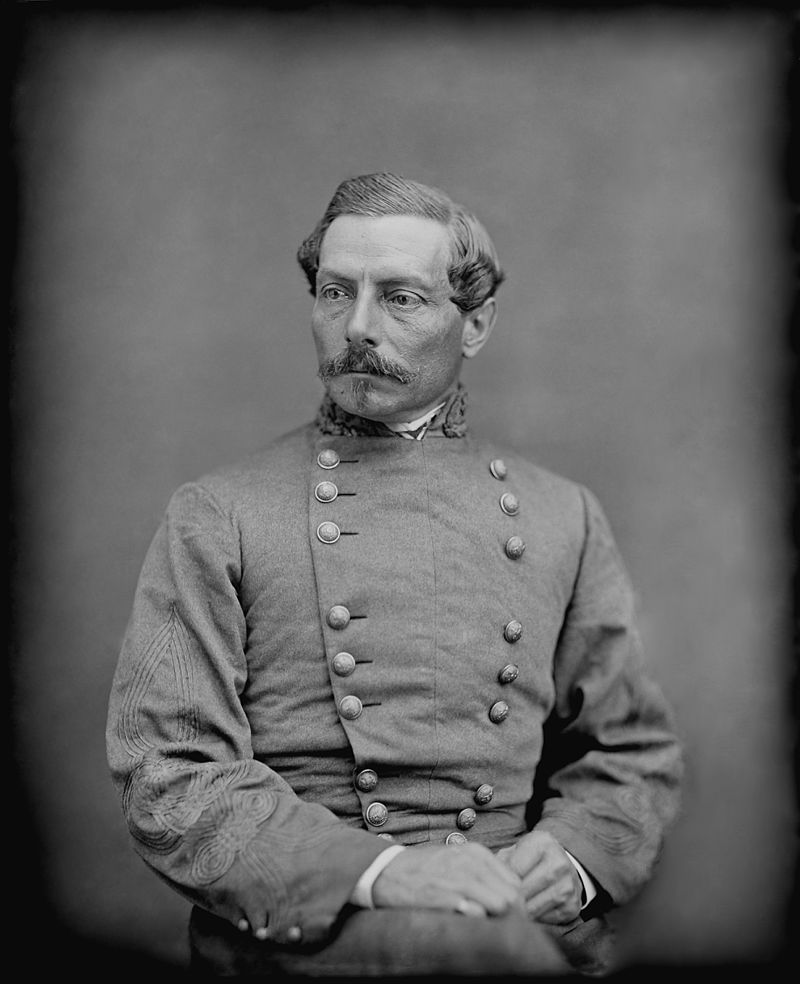
This goes one step further than Gustave’s demands, which fit within traditional Confederate requests for European recognition. Smith is welcoming the French to take over land on the “east bank of the Rio Grande” – which lies inside the borders of Texas.
The two letters share the same goals – French political and economic support for the Confederate cause. They use a “carrot and stick” approach – Gustave emphasizes the stick of the potential application of the Monroe Doctrine under a reunited U.S., while Smith dangles the carrot of increased Confederate military cooperation with Mexico.
However, they also illustrate two very different ideas of what values the Confederacy should hold. Gustave suggests that “we” – meaning ex-Confederates – would be among those potentially asserting the Monroe Doctrine and supporting the independence of neighboring European colonies. Smith, in contrast, anticipates that even if the United States should re-take much of Texas, the French would still be justified in holding both banks of the Rio Grande. In this formulation, whatever remained of the Confederacy would be justified in supporting French imperialism in opposition to the democratic American project.
Different Confederates held each of these ideologies. However, on the ground near the Rio Grande, U.S. forces made alliances with anti-French Mexicans, while Confederates like Smith and his subordinates made alliances with pro-French factions. Confederate correspondence, including letters from one of Smith’s subordinates to Slidell, make frequent mention of pro-French governors who were friendly to the Confederate cause.[7]
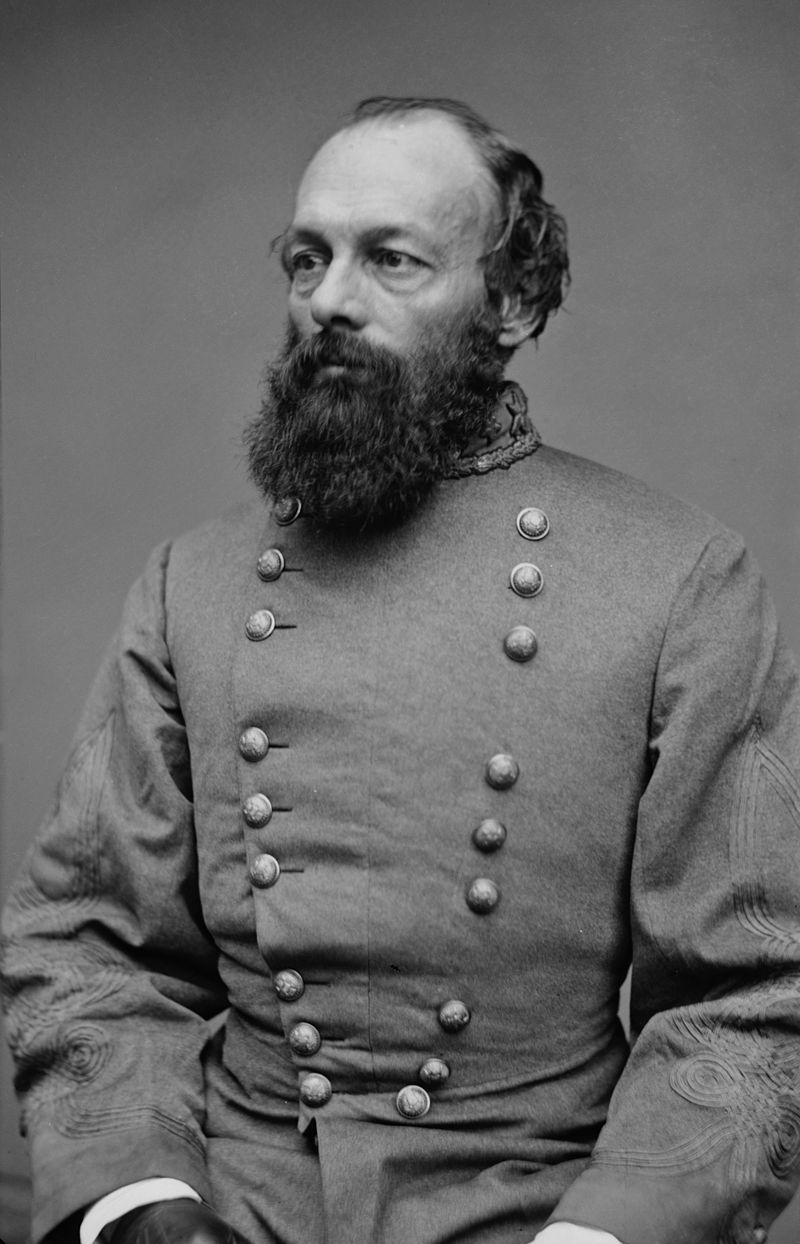
As the war came to an end, Kirby Smith intensified his efforts to secure French intervention. He continued writing to Slidell [8] and instructed businessmen traveling to Mexico City to contact Emperor Maximilian’s government. [9] As late as April 28, 1865, Confederate General J.B. Magruder wrote to Kirby Smith: “As long as we can receive supplies by that route, and as long as the door is left open for us to co-operate with Mexico against the United States, our army will possess a moral influence very disproportioned to its numbers… Our relations with the Imperial authorities are of the most cordial nature; therefore the garrison need not be lost.”[10]
Smith’s efforts did not result in French recognition of the Confederacy, or long-lasting material support. Even so, several of Smith’s subordinates later fought in the continuing Mexican civil war on the pro-French side. As Smith predicted, the United States government supported President Juarez’s government in their successful war against the French.
The Confederacy’s unofficial, but very real, military connections to French imperial ambitions cast doubt on any consistent support for the “consent of the governed.” Perceived military necessity has often led countries to part with their alleged values: in this case, necessity
required that the Confederates develop alliances to keep trade routes into Mexico open, but it did not require Confederate commanders to ally with forces which sought to destroy a democratic Mexican government, and replace it with an old-world prince. This is consistent with the great historical irony of the Confederacy – that the rights they desired for themselves required the domination and subjugation of others.
Walt Young has loved learning about the Civil War since visiting Harpers Ferry, West Virginia on a childhood trip. When not studying history, he enjoys hikes, mysteries, and Baltimore sports.
Endnotes:
[1] Jefferson Davis, “First Inaugural Address.” Montgomery, AL, Feb. 18, 1861. https://jeffersondavis.rice.edu/archives/documents/jefferson-davis-first-inaugural-address.
[2] Message of President James Monroe at the commencement of the first session of the 18th Congress (The Monroe Doctrine), 12/02/1823; Presidential Messages of the 18th Congress, ca. 12/02/1823-ca. 03/03/1825; Record Group 46; Records of the United States Senate, 1789-1990; National Archives.
[3] “The Palmetto Guard Flag.” National Park Service, May 11, 2025. https://www.nps.gov/articles/000/the-palmetto-guard-flag.htm.
[4] The War of the Rebellion: The Official Records of the Union and Confederate Armies, Series 1, Vol. XXVIII, part II, 288.
[5] OR, Series 1, Vol. XXII, part II, 992-993. Credit to Phillip Whiteman for tipping me to this source.
[6] OR, Series 1, Vol. XXII, part II, 992-993.
[7] OR, Series 1, vol. XXVI, part II, 449-450; OR, Series 1, vol. XXXIV, part III, 775-776, 796.
[8] OR, Series 1, vol. XLVIII, part I, 1319-20; part II, 1277.
[9] OR, Series 1, vol. XLVIII, part I, 1343, 1358-1359, 1379-1380.
[10] OR, Series 1, vol. XLVIII, part II, 1289.


Walt, thanks for this excellent piece. Not only did the Confederacy bastardize the principles of the Declaration of Independence and US Constitution in proclaiming a “Jeffersonian right” to unlawfully secede and destroy the Union – your analysis of the Slidell letters shows their willingness to subvert yet another founding principle – the Monroe Doctrine- of the American Republic.