My Wife Read One of Admiral David Dixon Porter’s Romance Novels So You Don’t Have To
At Emerging Civil War, readers are well aware that we value the odd research interest and unusual anecdote. This one may take the prize for least expected thing produced from a Civil War veteran: a romance novel written by Admiral David Dixon Porter himself.
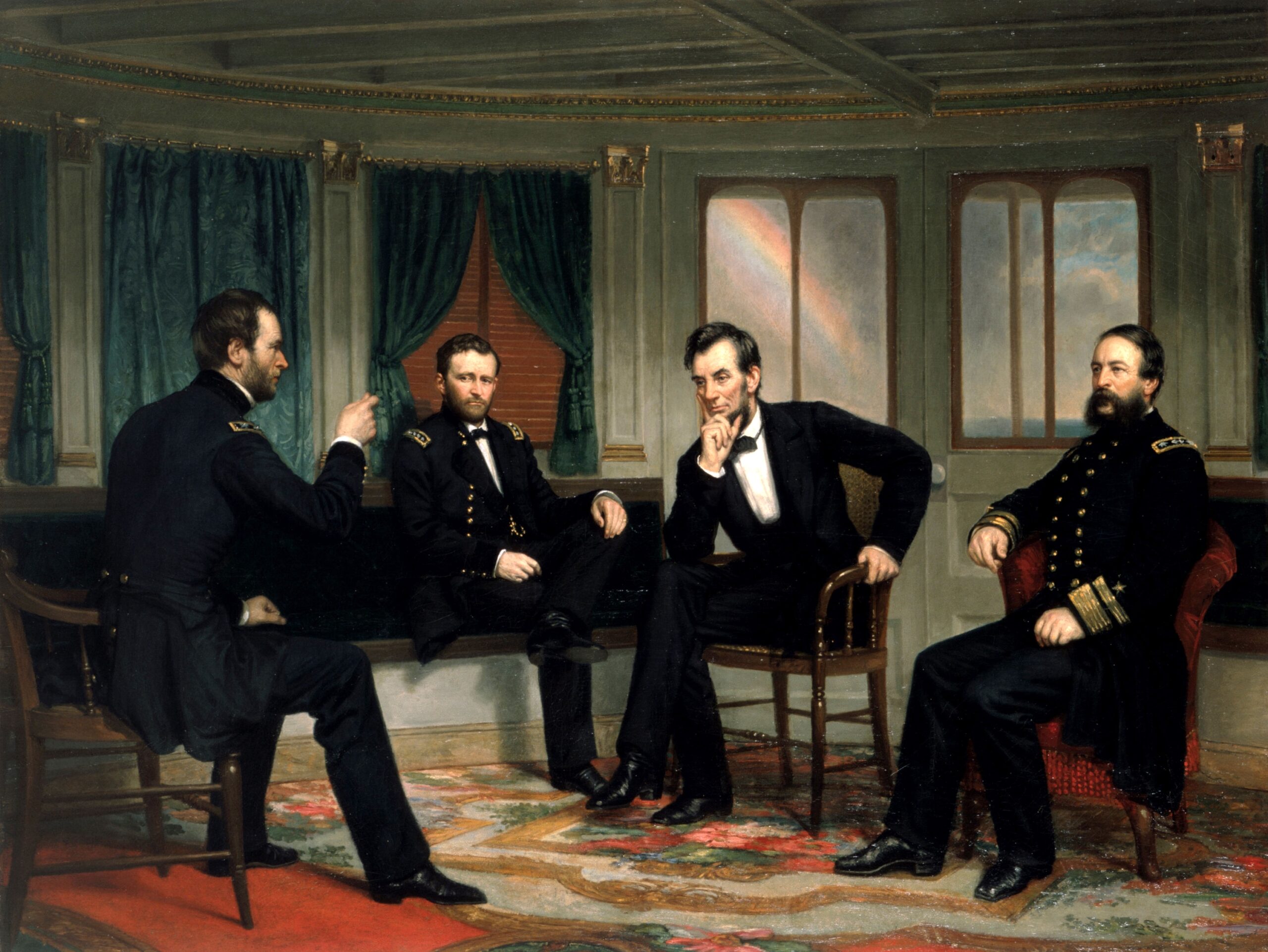
David Dixon Porter’s Civil War record is one of the most esteemed of any officer in the conflict. He started the war commanding USS Powhatan as the ship was supposed to be simultaneously involved in efforts to relieve Forts Sumter and Pickens in 1861. He then oversaw the mortar flotilla attached to David Farragut’s squadron in the 1862 New Orleans campaign. By 1863, he was an acting rear admiral commanding the Mississippi River Squadron, working with Ulysses Grant to capture Vicksburg. From there, he oversaw the squadron in the disastrous 1864 Red River expedition before shifting to command the North Atlantic Blockading Squadron in the capture of Fort Fisher in 1865. He ended the war personally escorting Abraham Lincoln into Richmond when Confederates evacuated the city.
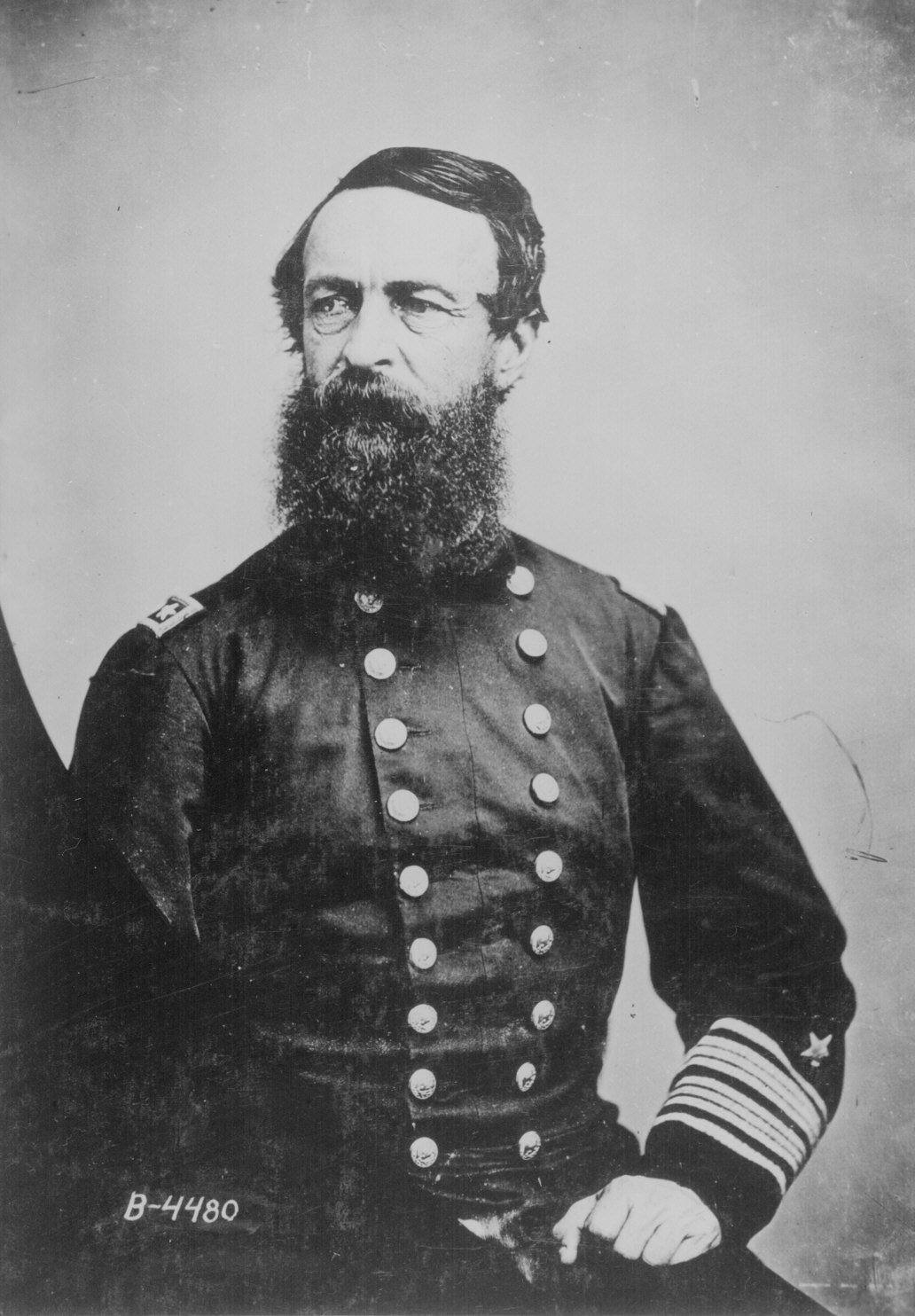
Postwar, Porter commanded the U.S. Naval Academy and was promoted to the grade of admiral, the second such officer to ever hold the position. By 1875, he reached mandatory retirement age, remained on active duty, though he became essentially pushed aside with no assignment or responsibilities.
With little to do, Porter prolifically wrote in his last years One newspaper claimed he did so “because he wanted something to occupy his mind.”[1] In 1875 he wrote Memoir of Commodore David Porter, of the United States Navy, looking at his father’s career. His 1885 Incidents and Anecdotes of the Civil War is his true personal memoir, though the 1886 The Naval History of the Civil War remains the more popular (and more embellished) wartime musing. He also contributed as editor for The Pictorial Battle History of the Civil War, published in 1885.
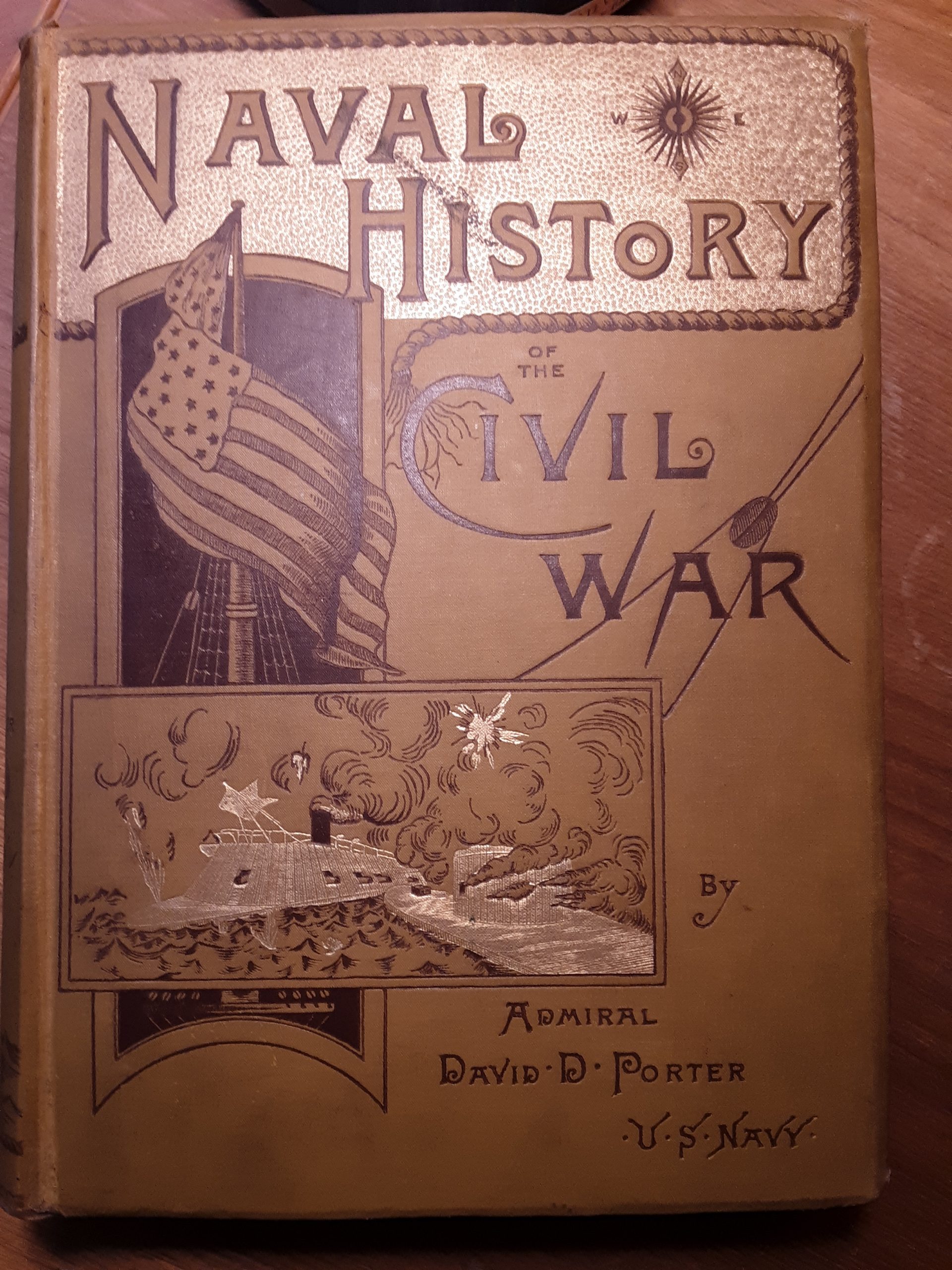
What no one remembers is that Porter also wrote sea fiction and romance novels. Two books came out in 1885. The Adventures of Harry Marline followed a fictional midshipman’s coming of age akin to Horatio Hornblower. Porter admitted these adventures “were written thirty years” before the 1885 publication and were “loaned about in the navy” for sailors to read. The book was released in chapters in United States Magazine before being bundled into a single book.[2] Also released in 1885 was the romance novel Allan Dare and Robert le Diable, the subject of today’s exploration. Four years later, Porter released a second romance novel titled Arthur Merton, a Romance.
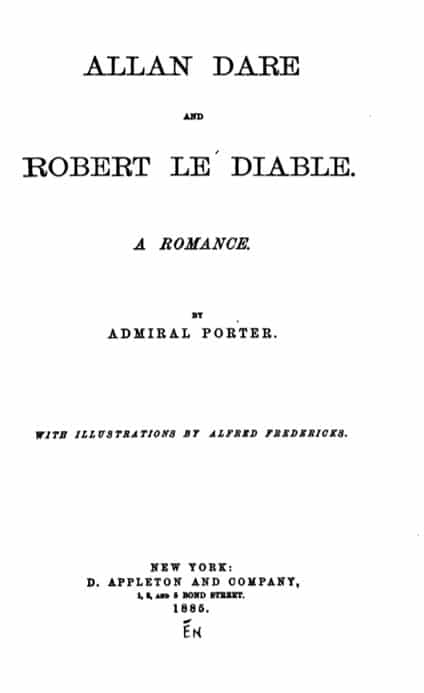
Allan Dare and Robert le Diable was initially sold in nine fortnightly segments for a quarter a piece. A year later, it was sold as one collected manuscript – a whopping 876 pages in the version my wife looked at. D Appleton and Company claimed the initial segmented release was made because of the book’s initial length. Much of the book jumps from character to character however, and I imagine that the segmented release was made to help readers focus on one section at a time.
Newspapers praised the admiral’s work. The San Francisco Chronicle proclaimed Allan Dare and Robert le Diable “a good, old-fashioned story of love and adventure,” while The Philadelphia Inquirer declared it “a romance … full of stirring incident and vigorous life.”[3] Publishers D. Appleton packed newspapers with advertisements boasting it was “the first of its kind in American literature” and “it is extremely interesting and no one should miss it.”[4] Unsurprisingly, characters often find themselves travelling at sea, and there is even a race between two ships from China to Boston, earning Porter “a good deal of praise” from reviewers for its nautical authenticity.[5]
***
So about a year ago, I told my wife Brittany that there were these romance novels written by a Civil War admiral. She seemed skeptical that they could be anything but awful, especially compared to modern romance writing. Nonetheless she told me that if I found a copy of one, she would read it. This became our own inside joke. No one else seemed to know the books existed; we even brought them up to the owner of a used and rare bookstore in Annapolis, near the Naval Academy that Porter once oversaw, and they were oblivious. Fast forward a year and I finally found a reprint of Allan Dare and Robert le Diable. It just came in and Brittany dove into the book, hoping it would be as good as Porter’s naval career.
Let’s just say she was not impressed. What follows is a brief interview (edited for language – we are a naval family after all) about her thoughts on Porter’s first romance novel.
First for some background. What other 19th century books have you read? Which did you like and which did you hate?
Brittany: I really liked Frankenstein, Pride and Prejudice, and Kate Chopin’s The Awakening. Not a fan of anything by Mark Twain. I also did not like Wuthering Heights.
Can you briefly describe the book’s overall plot
Brittany: Twin brothers are separated as children from their family and one another. They lead vastly different lives and 20 years later their lives intertwine with each other again by chance. Most of the story takes place during the 1820s.
So how much romance was in this romance novel? How is this romance novel different from modern romance novels?
Brittany: Well, three couples end up married in the end, so there are some love stories present, and there is a happily ever after for the main characters. So, ultimately, I guess it is a romance. But I did some digging and discovered that the definition of a romance novel in the 19th century is not anchored in a love story. It is a genre of fiction characterized by extraordinary, imaginative, or marvelous adventures, often set in the past or exotic locales. This book definitely follows that definition, not a modern one.
How did the book’s organization impact how you experienced it?
Brittany: It was awkward and disjointed. There was a constant narration by Porter as characters were left or rejoined. Knowing that it was originally released in sections makes the text make more sense, but reading it as one book makes everything disjointed.
How does Porter’s writing style compare with romance writers today?
Brittany: It’s actually interesting. He writes men in a way women might want to read about men physically, but the men are mostly focused on being strong. So, they have no real personality. Women are described as just vapid and materialistic and physically they all have small feet, which is apparently what men desired in the 19th century. Few of the women were very strong in character. All of this is in direct contrast to modern romance novels where women have a large depth of character, which highlights the difference between a female author and a male author writing a romance.
Porter was an admiral, so were there any obvious links to ships or the U.S. Navy in the book?
Brittany: Yes. One of the characters was a naval officer. Aside from that, there are times in the book where main characters are on ships and you get very detailed accounts of what is happening on the ship and on the water. So, you can tell the author is very familiar with life at sea.
What was the best part of the book?
Brittany: None of it was particularly enjoyable.
What did you not enjoy about the book?
Brittany: The entire book. I would say more, but it would spoil the plot for any potential readers.
Would you recommend other romance novel readers take a chance with Admiral David Dixon Porter’s writings?
Brittany: Absolutely not.
Who do you think was the book’s intended audience?
Brittany: I actually don’t know. There was a lot of action, adventure, and some mystery involved. There was very little romance, so maybe this was intended for young men. I do not think it was intended for women to read.
For any potential readers, Porter did not include content warnings like modern authors do. Are there any content warnings you would have liked to see at the beginning of Allan Dare and Robert le Diable?
Brittany: Let me preface this by saying that everything in the book was appropriate for the time, but in today’s day and age, there are some things in the text I think are problematic. That includes things like racism and stereotypes, inappropriate relationships between a ward and caretaker, and semi-incestuous relationships between first cousins. In modern parlance, this is not an open-door or explicit romance.
Final thing. Rate the book. How many stars?
Brittany: Two out of Five stars.
Endnotes:
[1] “Admiral Porter,” Buffalo Commercial Advertiser, Buffalo, NY, October 3, 1884.
[2] David Dixon Porter, The Adventures of harry Marlene: Notes from an American Midshipman’s Lucky Bag (New York: D. Appleton and Company, 1885), Preface.
[3] “Miscellaneous,” The Sunday Chronicle, San Francisco, CA, November 30, 1884; “New Publications,” The Philadelphia Inquirer, Philadelphia, PA, October 7, 1884.
[4] “Allan Dare and Robert Le Diable” The Boston Daily Globe, Boston, MA, December 22, 1884.
[5] “Recent Novels,” The Union, Brooklyn, NY, October 8, 1864.


Kudos to Brittany for even attempting to read it!
This is great! And a year in the making – what a payoff. Last year, when I was doing research for my article on Civil War (literary) ghost stories, I really struggled to find fiction written by CW veterans. You would think that out of the hundreds of thousands of veterans, more than a few would become authors. I’m sure there are more out there. That could be another article in itself. Anyway, thank you for the enjoyable read. I’m curious if your wife had a favorite quote or piece of dialogue from the book.
I do not want to speak for her, but there was a lot of discussion between us about why every female character needed to have small feet and how their feet were described in the book.
Damn! That’s one I can scratch-off the summer reading list. Thanks for the post.
Neil (and especially Brittany), thank you for taking on this project. Now I know that I should skip the book and wait for the movie.
The title of this post alone made it awesome, but I really thought it was brilliant overall. Nicely done!